Are facial dimples determined by genetics?
Meets Patient’s editorial guidelines
- DownloadDownload
- Share
- Language
- Discussion
- Ask Patient
- Audio Version
- Add to preferred sources on Google
Dimples—indentations on the cheeks—tend to occur in families, and this trait is assumed to be inherited. Dimples are usually considered a dominant genetic trait, which means that one copy of the altered gene in each cell is sufficient to cause dimples. However, some researchers say that there is no proof that dimples are inherited. Little research has been done to explore the genetics of dimples and it is not known which gene or genes may be involved.
Video picks for Understanding geneticsVideo library
Overview
Dimples—indentations on the cheeks—tend to occur in families, and this trait is assumed to be inherited. Dimples are usually considered a dominant genetic trait, which means that one copy of the altered gene in each cell is sufficient to cause dimples. However, some researchers say that there is no proof that dimples are inherited. Little research has been done to explore the genetics of dimples and it is not known which gene or genes may be involved.
A dimple is an anomaly of the muscle that causes a dent in the cheek, especially when the individual smiles. Some people have dimples in both cheeks, others in just one cheek. Babies are likely to have dimples caused by baby fat in their cheeks. When they lose their baby fat as they get older, their dimples disappear. Other children do not have them at birth but may develop them later in childhood. In some people, dimples last only until adolescence or young adulthood, while in others they are a lifetime trait.
Dimples that have a similar appearance can occur in successive generations of a family. For example, in one family, it was observed that the siblings, their father, uncles, grandfather, and great-grandfather all had similar-looking dimples in both cheeks. In other families, dimples may occur in a child but are not seen in more than one generation.
Patient picks for Understanding genetics
Skin, nail and hair health
Why is my facial eczema worse in summer?
People prone to facial eczema can experience flare ups all year round, but for some, summer can bring on more bouts of irritation, red patches, and itchiness. If you find your face is affected more in the warmer months, you're probably prone to one or more of these common summertime triggers.
by Amberley Davis
Brain and nerves
Young-onset dementia is linked to health and lifestyle, as well as genetics
Many of us fear dementia, not to mention developing it while we're young, but little is known about whether we can prevent it. However, a breakthrough study has identified 15 significant factors linked to young-onset dementia, which develops before the age of 65. And many of these are influenced by your health and lifestyle choices. With around 370,000 people developing young-onset dementia each year worldwide, experts believe this research brings us closer to finding ways to prevent, identify, and treat this devastating disease.
by Amberley Davis
Heart health and blood vessels
Breasts aren't barriers - the St John Ambulance 'CPR Bra' campaign
If someone needed cardiopulmonary resuscitation (CPR) and you had the skills, you’d give it to them without wasting a second, right? Wrong. Almost a third of men say they would hesitate to perform CPR on a woman for fear of being accused of inappropriate touching. A similar number also worry about accidentally hurting women, and almost a quarter are concerned they could make the situation worse. So, to remind everyone that it’s ok to touch someone’s chest when you’re trying to save their life, we’re raising awareness with St John Ambulance.
by Claire Kenny
Treatment and medication
What are weight loss injections and are they safe?
Weight loss injections have been used by celebrities like Amy Schumer, Meghan Trainor, and Rebel Wilson - but are they really an option for everyone? The UK government is expanding access to weight loss jabs to some people to reduce obesity-related illnesses. This would mean that some so-called skinny-jabs - such as Wegovy - could be given at your local doctor's clinic rather than at a hospital. Here we look at which weight loss injections are already available, which may soon be, and what having the jabs entails.
by Victoria Raw

Treatment and medication
Are facial workouts good for sleep, speech and oral health?
Myofunctional therapy is like a workout for your face and mouth. It's said it can help ease conditions such as sleep apnoea, swallowing difficulties and jaw misalignment. We look at what this therapy entails and hear some expert thoughts on whether it works or not.
by Victoria Raw
Infections
Find out if you are eligible for a free NHS flu vaccination
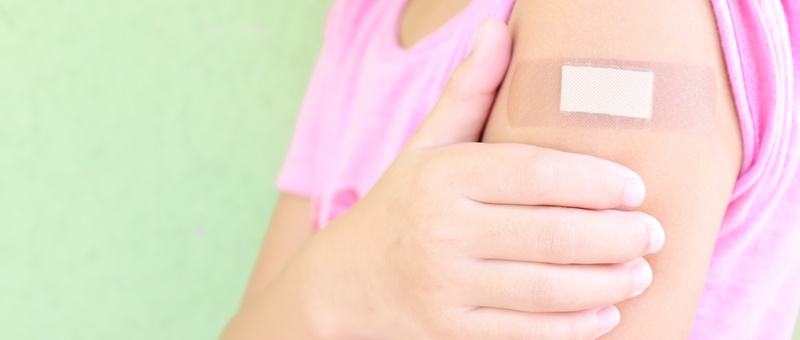
Open the flu jab Is the flu vaccine free for you this winter? The flu vaccine is free on the NHS for people most likely to get seriously ill from flu, and for those who could easily pass it on to someone at risk. Whether you qualify depends on your age, your health, and a few other things such as being pregnant or caring for someone. The groups change a little each year, and some people can book earlier than others. For the 2026 to 2027 season, most people who are offered a free flu vaccine can get it from either 1 September 2026 or 1 October 2026. Use the free checker above to find out in under a minute whether you, or a child you look after, can get a free NHS flu vaccine this winter — and the date you can book from.
Related patient information and medicines

Patient information leaflet
Turner syndrome
Turner syndrome is a genetic condition that only affects girls. The most characteristic features of the syndrome are being short, having certain physical features (detailed below), and ovaries that do not work properly. Although there is no cure, there are treatments that can hel... It describes a set of features which occur when a female has only.

Patient information leaflet
Cri du chat syndrome
Cri du chat syndrome is a chromosome problem caused by a missing piece of chromosome 5. The syndrome is called cri du chat (French for cry of the cat) because affected babies often have a high-pitched cry. Understanding chromosomes and cell division Chromosomes are found in the centre (nucleus) of a cell. They carry genetic information in the form.
Patient information leaflet
Facelifts
This leaflet is provided by the British Association of Aesthetic Plastic Surgeons , the professional body responsible for the advancement of education and safety in aesthetic plastic surgery. The rate at which this happens varies from one person to another and is probably determined by our genes. Aging of the skin of the face does not necessarily.
Patient information leaflet
Cleft lip and palate
Cleft lip and palate are facial abnormalities which can affect babies at birth. They are common worldwide and can affect the lip, the palate or both. There are now a number of organisations... It is thought to involve a mixture of genetic and environmental factors affecting the baby in the womb (uterus). 'Genetic' means that the condition is.

Patient information leaflet
Down's syndrome
Down's syndrome (also known as Down syndrome) is a genetic chromosome problem. Someone with Down's syndrome has an extra copy of chromosome 21 in the cells of their body. ... It cannot be cured but treatment and support can help someone with Down's syndrome to lead an active life. A number of advice and support groups are available for people with.

Patient information leaflet
Angio-oedema
Episodes of angio-oedema (sometimes written as angioedema) cause swelling of deeper skin tissues, most commonly around the eyes and mouth. Sometimes the tongue and throat are affected which may mean that you have trouble breathing. There are various causes. Some people have recurring episodes. Each episode usually clears within a few days..
Further reading and references
- Are facial dimples determined by genetics?; MedlinePlus, National Library of Medicine.
Share your thoughts or experiences with others in our patient communities.
Simple access to trusted treatments and health services online.
Common conditions
Get help with common conditions through the NHS, without a GP appointment.





Sign up to the Patient newsletter
Your weekly dose of clear, trustworthy health advice - written to help you feel informed, confident and in control.
By subscribing you accept our Privacy Policy. You can unsubscribe at any time. We never sell your data.