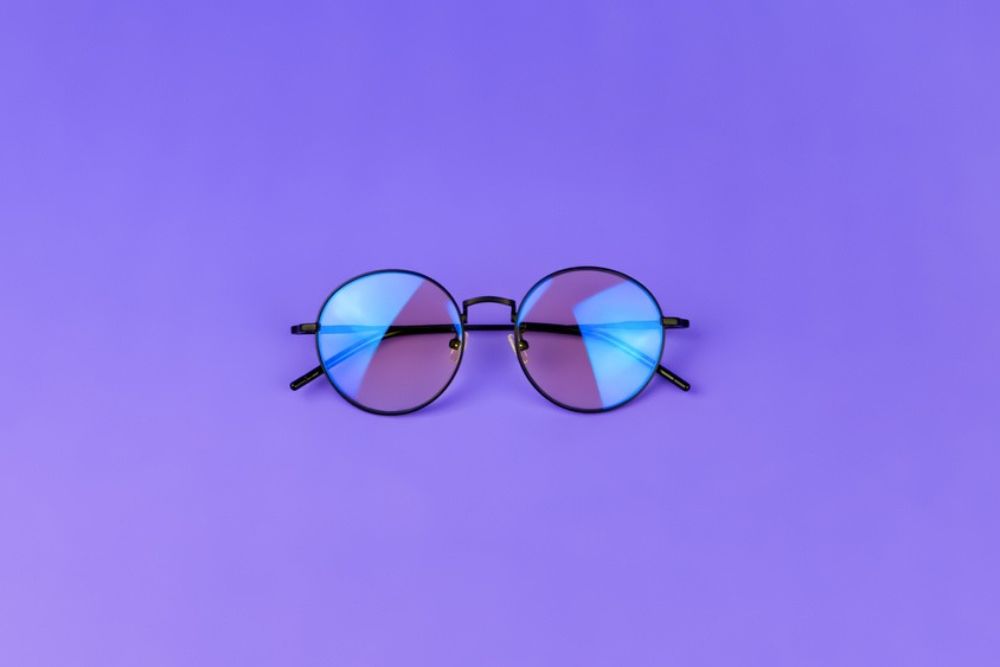
Blue light filters: do they really work?
Peer reviewed by Dr Colin Tidy, MRCGPLast updated by Lynn StephenLast updated 15 Oct 2026
Meets Patient’s editorial guidelines
- DownloadDownload
- Share
- Language
- Discussion
- Ask Patient
- Audio Version
- Add to preferred sources on Google
Most of us spend several hours looking at digital screens every day, all of which emit varying levels of blue light. There's debate about the damage and effects blue light has on our vision and health, and if blue light filters help.
We investigate the science to find out.
Video picks for Online and social mediaVideo library
What is blue light?
Around one-third of all the light you see is blue light, with sunlight being the main source. Blue light is also known as high-energy visible (HEV) light.
Unlike other types of light, your eyes cannot filter it on their own. This means blue light can reach your retina without restriction.
The most common sources of artificial blue light are:
Flat-screen LED televisions.
Fluorescent lights.
LEDs.
Compact fluorescent light (CFL) bulbs.
Smartphones.
Computer screens.
Tablets.
What is a blue light filter?
A blue light filter is designed to protect your eyes from any harmful effects of blue lights.
People spend around seven hours a day looking at digital screens. As this has raised safety concerns, blue light filters are now commonplace across a range of products to increase safety for long-term use - they can be used on everything from phones to blue light blocking sunglasses.
How does blue light affect your eyes?
Potential damage to the retina
Studies show that high levels of blue light, over prolonged periods, have the potential to damage the retina - and that blue light blocking glasses could help prevent up to 80% of this damage.1 An injured retina can lead to vision loss and distortion.
But when it comes to a smaller amount of blue light, it's less about eye damage and more about how it affects your body.
Eye strain
One of the most common issues people have with looking at screens a lot is digital eye strain. This happens because you blink less when looking at screens, which reduces the amount of moisture in your eyes.
Symptoms of digital eye strain include dry eyes, headaches, nausea, neck pain, and more. This is often mistaken for the effects of blue light. At present, there's no evidence that blue light filters can help prevent or ease digital eye strain.2
If you experience symptoms of digital eye strain, the following may help:
Adjust your screen's brightness.
Eliminate screen glare.
Ensure your screen isn't brighter than the other lighting in the room.
Use filters to adjust colour warmth throughout the day, as this reduces eye strain in the evening.
Don't sit too close to the screen.
Benefits of blue light filters
Blue light can cause retinal damage, but the evidence for this involves extreme exposure over consistent and long periods.3
In truth, the effects of day-to-day blue light exposure are not yet fully understood - and we don't yet know how beneficial blue light filters are.
Bhavin Shah is a behavioural optometrist at Central Vision Opticians, London. He says that the evidence for blue light filters is inconclusive, and instead opts for a spectral filter on his personal sunglasses.
"This filters out more than blue in the spectrum of light and makes my eyes more comfortable when I'm driving in overcast weather," he explains.
Improved sleep
Blue light exposure affects your circadian rhythm - your body's internal clock.3 Light is critical for how it behaves and adjusts to environmental factors - for example, day and night. This is why too much exposure to artificial light before bedtime, such as blue light from a screen, can make it hard to fall asleep.
Blue light stimulates your eyes and brain, sending signals to your body's internal clock. This in turn affects how your body produces melatonin - the sleep-inducing hormone. So, if you find yourself scrolling through your phone or watch TV before bed to wind down at bedtime, you're actually making your body more alert.
Reducing or cutting out screen time before bed is beneficial for improved sleep and a healthy sleep pattern. For screen-time you do have, blue light filters can help limit blue light exposure.
Patient picks for Online and social media
Healthy living
Doomscrolling: Is the news bad for your mental health?
Watching the news during troublesome times can take a toll on our mental health. When major world events are taking place, we can find ourselves hooked on the news and feeling as though we need to know everything, but this behaviour, known as doomscrolling, can be to the detriment of our mental health.
by Emily Jane Bashforth

Healthy living
Is social media addictive?
This year, the news has been reporting extensively on the bellwether trials involving Meta, its CEO, Mark Zuckerberg, and several of the world’s most influential companies behind the rise of social media platforms. These trials are expected to develop further in the coming months. However, the case currently attracting the most attention revolves around a crucial question: Is social media addictive? To explore this issue further, we spoke with a neurologist to find out if social media is genuinely addictive and how its use may affect your brain.
by Victoria Raw

Healthy living
What are sleep trackers and do they work?
Sleep trackers have experienced a surge in popularity over recent years. As a nation, we seem to be extremely curious about what's happening with our bodies while we sleep. But, before you start spending money on sleep tracking devices or downloading apps, it may be helpful to understand a bit more about how and whether they work.
by Emily Jane Bashforth
Skin, nail and hair health
Do LED face masks really work?
LED face masks are everywhere right now, promising to blast away acne and smooth out fine lines with nothing but wavelengths of light. But do these products promise more than they actually deliver? We asked a dermatologist for their take.
by Victoria Raw

Heart health and blood vessels
What happens to your blood pressure when you're not measuring it?
Think about the last time you had your blood pressure checked. Perhaps you were sitting in your GP's surgery, waiting for the cuff to inflate. Seconds later, two numbers appeared on the screen. Those numbers provide useful information about your blood pressure at that moment. But blood pressure changes throughout the day and night. Some people even have higher readings at the GP's surgery than at home - known as white coat hypertension - while others have normal readings in the surgery but higher blood pressure elsewhere (masked hypertension).
by Hilo
Skin, nail and hair health
Does caffeine shampoo really work for hair loss?
Caffeine shampoos that stimulate hair growth (if you believe the marketing claims) are becoming more popular - but do they really work and can they cause skin or scalp problems? We ask a consultant dermatologist for her take on the issue.
by Julian Turner
Further reading and references
- Theruveethi N, Bui BV, Joshi MB, et al; Blue Light-Induced Retinal Neuronal Injury and Amelioration by Commercially Available Blue Light-Blocking Lenses. Life (Basel). 2022 Feb 7;12(2):243. doi: 10.3390/life12020243.
- Singh et al.; Do Blue-blocking Lenses Reduce Eye Strain From Extended Screen Time? A Double-Masked Randomized Controlled Trial; American Journal of Ophthalmology
- Yvan Touitou; Effects and mechanisms of action of light-emitting diodes on the human retina and internal clock
About the authorView full bio
Updated by

Lynn Stephen
Content developer
MA (Hons)
Lynn joined Patient in 2023 and her role includes checking all the professional leaflets, patient information leaflets and medicine leaflets, to ensure consistency of spelling, grammar, reference material and brand style, working with the medical authors and clinical director to coordinate the authoring and peer reviewing of the leaflets.
Authored by
Matt Binny
Feature writer
BA Applied Media
About the reviewerView full bio

Dr Colin Tidy, MRCGP
General Practitioner, Medical Author
MBBS, MRCGP, MRCP (Paediatrics), DCH
Dr Colin Tidy is an NHS Doctor, based in Oxfordshire.
Article history
Article also available in English, German, Spanish, French, Italian, Portuguese, Hindi, Hebrew, Arabic, and Swedish.
Next review due: 14 Oct 2029
15 Oct 2026 | Latest version
3 Jul 2023 | Originally published
Authored by:
Matt Binny
Share your thoughts or experiences with others in our patient communities.
Sign up to the Patient newsletter
Your weekly dose of clear, trustworthy health advice - written to help you feel informed, confident and in control.
By subscribing you accept our Privacy Policy. You can unsubscribe at any time. We never sell your data.