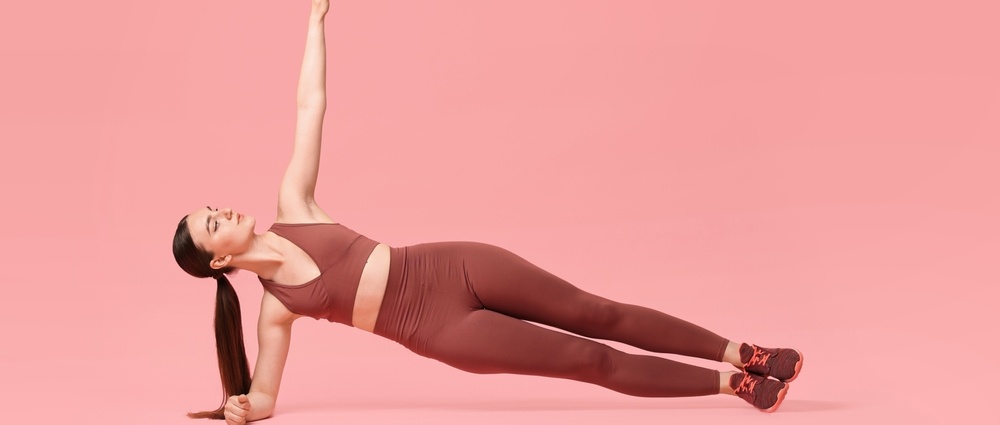
How to strengthen your core
Peer reviewed by Dr Colin Tidy, MRCGPLast updated by Lynn StephenLast updated 15 Sept 2026
Meets Patient’s editorial guidelines
- DownloadDownload
- Share
- Language
- Discussion
- Ask Patient
- Audio Version
- Add to preferred sources on Google
When it comes to building muscle, improving your core muscle strength has benefits that extend beyond toned abs. Core strength exercises can also give you better balance, stability, and good posture, and prevent or treat back pain. Better still, they can be performed in the comfort of your home, and there are many to choose from and incorporate into your exercise routine.
Video picks for Exercise and physical activityVideo library
What is core strength?
When people talk about core strength, most think about the abdominal muscles located in your stomach region. In fact, your core muscles include numerous muscles throughout your body including your trunk, chest, back, and glutes.
Your core strength is involved in almost every movement you make, whether your core muscles initiate a move, provide crucial stability, or transfer force to other parts of the body. Most of these muscles are located around your trunk, protecting and holding your internal organs in place.
The main core muscles
These include:
Transverse abdominis - the deepest of the abdominal muscles located between your ribs and pelvis. It supports your torso, stabilising both your spine and pelvis which is needed for any movement of your limbs.
Multifidus - located on either side of your spinal column providing it with stability.
External obliques - one of the outermost abdominal muscles contributing to a wide range of essential functions, such as twisting and rotating your spine.
Internal obliques - found on the sides of your abdomen and also involved in rotation and bending as well as reducing chest volume during exhalation.
Erector spinae - formed of three muscles that extend up your spine, helping to straighten and rotate your back.
Diaphragm - separates your abdomen from your chest and contracts when you inhale.
Pelvic floor muscles - located across the bottom of your pelvis, these muscles stabilise your spine, aid lifting and straining, and support your bladder, bowel, and uterus.
Rectus abdominis - a muscle that reaches across the anterior abdominal wall from your rib cage to your pubic bone, also commonly known as the abs. Supports movement in this region, tensing the abdomen wall, and flexing the spinal column.
Minor core muscles - the lats (latissimus dorsi) muscle connects your arms to your vertebral column; the glutes (gluteal muscles) support your lower back, pelvic alignment, and propulsion during walking and running; the trap (trapezius) muscle helps to move your head, neck, arms, shoulders, and torso and support your spine.
Why is core strength important?
Your core muscles are crucial in most physical activities. Therefore, learning how to strengthen your core has benefits that extend far beyond achieving a particular aesthetic - such as creating 'six-pack abs'.
Louise Richardson, physiotherapist, explains that building your core strength is essential for maintaining your posture, balance, and muscles, all of which provide you with the strength and mobility needed for daily life.
Josh Piercy, online director at Core Balance, also highlights how essential your core muscles are in everyday life.
"Although it can be easy to forget, the core enables you to perform many movements such as reaching for items on a higher shelf, bending to tie your laces, and carrying items," he says.
Creating strong abdominal muscles through core strength training can also aid sporting performance by reducing your chance of muscle and joint injuries.
How do I strengthen my core?
If you are wondering how to strengthen your core, the good news is that it’s possible to do this from the comfort of your own home. Core strength training can also be performed without exercise equipment. For home workouts you may want to invest in an exercise mat as many exercises involve lying or sitting on the floor.
This said, choosing to incorporate weights can increase both difficulty and core strength. If you are a beginner, it's important to do this gradually in order to avoid injury. As your core muscles become stronger, one way of doing this is to add equipment into your exercises.
"By holding a dumbbell while performing sit-ups, the difficulty will be increased and lead to better results," advises Piercy. "Furthermore, a balance board can be used when performing plank holds, challenging your balance and requiring your abdominal muscles to contract further."
Core strengthening exercises
There is a wide range of exercises that build core strength. It is recommended that you use a combination of exercises to achieve the best results.
The following are some of the most common core exercises you can do:
Sit-ups
What: one of the most commonly known core exercises, sit-ups involve lying face-up with your knees bent at a 90° angle and your feet on the floor. You engage your core by lifting your upper body off the ground towards your knees, holding for a moment, and slowly lowering back down.
Why: sit-ups mainly work your abdominals as well as your hip flexors, lower back, chest, and neck.
Crunches
What: for a standard crunch, start in the same position as a sit-up and then lift your shoulders and head off the floor, hold, and return.
Why: while this doesn't engage as many core muscles as a sit-up, the intense muscle isolation can help to tone the upper abdominals, creating the six-pack ab effect.
Plank holds
What: to perform a plank hold, face the floor and then hold the trunk part of your body off the ground in a straight line, only touching the floor with your toes and your forearms. These should be positioned shoulder-width apart. Hold for 30-60 seconds, depending on difficulty level.
Why: plank holds enlist multiple core muscle groups at the same time, whilst also working your shoulders and arms.
Leg raises
What: a leg raise starts by lying face-up with your legs straight and together. Keeping them straight, lift your legs until your bottom raises off the floor, slowly lower them until they are hovering just above the floor, and hold for a moment.
Why: this exercise targets your lower abdominals and improves the strength and flexibility of your hips and lower back.
Russian twists
What: to perform a Russian twist, sit on the floor with your legs bent slightly at the knee and heels touching the ground. To engage your core, lean back slightly so that your torso and legs form a V-like shape, and then slowly twist your torso from side to side without moving your legs.
Why: engaging all the muscles in your core, the Russian twist is a total core-strengthening exercise that improves your balance, builds muscle in your mid-section, and increases spinal stability.
Pilates
What: Pilates is inspired by yoga, calisthenics, and ballet. According to Rebecca Convey, fitness expert and owner of Kinetic Pilates, it is a series of exercises designed to build strong, lean muscles and create length in the body.
Why: "Pilates helps to lift your core in and up, create a lifted spine and a long narrow waist," she adds. "By using the correct muscles, you will not only stand taller with better posture, but your abdominals will become stronger."
"Flexibility can be gained in the chest, shoulders, and spine, giving you more access to good posture and the ability to correctly activate your core."
Weak core strength issues
How do you know if you have a weak core? Richardson says that you most likely have a weak core if you're experiencing lower back pain, poor posture, shortness of breath, or an uneven balance.
"This is because these issues can impact your muscles and ability to retain a strong core," she adds.
Balance and instability
Strong and flexible core muscles act as the scaffolding holding you together - the stronger they are, the better balance and stability you have. This is what allows you to move in any direction or to stand still without losing your balance. As such, core strength training is proven to improve core stability and this can reduce your likelihood of falls and injuries during both sports activities and everyday tasks.
Poor posture
If your core muscles are weak, you are also more likely to slouch and develop poor posture. In turn, this can lead to your core muscles becoming less efficient as they need more energy to move, resulting in a cycle that's hard to break.
As well as causing some of your muscles to work harder while others become weak, poor posture can lead to back pain, make you more susceptible to muscle injuries, and increase wear and tear on your spine and joints.
Back pain
Poor balance and posture are a common cause of lower back pain, an issue that can be hugely debilitating. Experts have found that core stability can impact load balance within the spine, pelvis, and kinetic chain - the connected series of joints that create and enable movement.1
Importantly, core strength training has been found to be more effective than typical resistance training for alleviating chronic low back pain. Healthcare professionals may prescribe core strength training in order to build core stability and alleviate persistent lower back pain.1
Patient picks for Exercise and physical activity
Healthy living
What are the benefits of strength exercises?
When we think of getting fit, most of us picture walking, running, and other cardiovascular-based exercise. Although these are great ways to be active, many of us tend to avoid strength exercises. Here, we explore the many health benefits they can bring.
by Lynn Stephen

Healthy living
Exercise snacking - how small bursts of movement can boost your mindset
As schedules expand and attention spans decrease, it’s no wonder fitting a 60‑minute workout into your day feels increasingly unrealistic and outdated. Enter exercise snacking - a way of exercising that breaks movement into short, manageable bursts. We speak to a psychotherapist about how taking the pressure off could help you make movement a regular part of your day.
by Claire Kenny
Preventative health
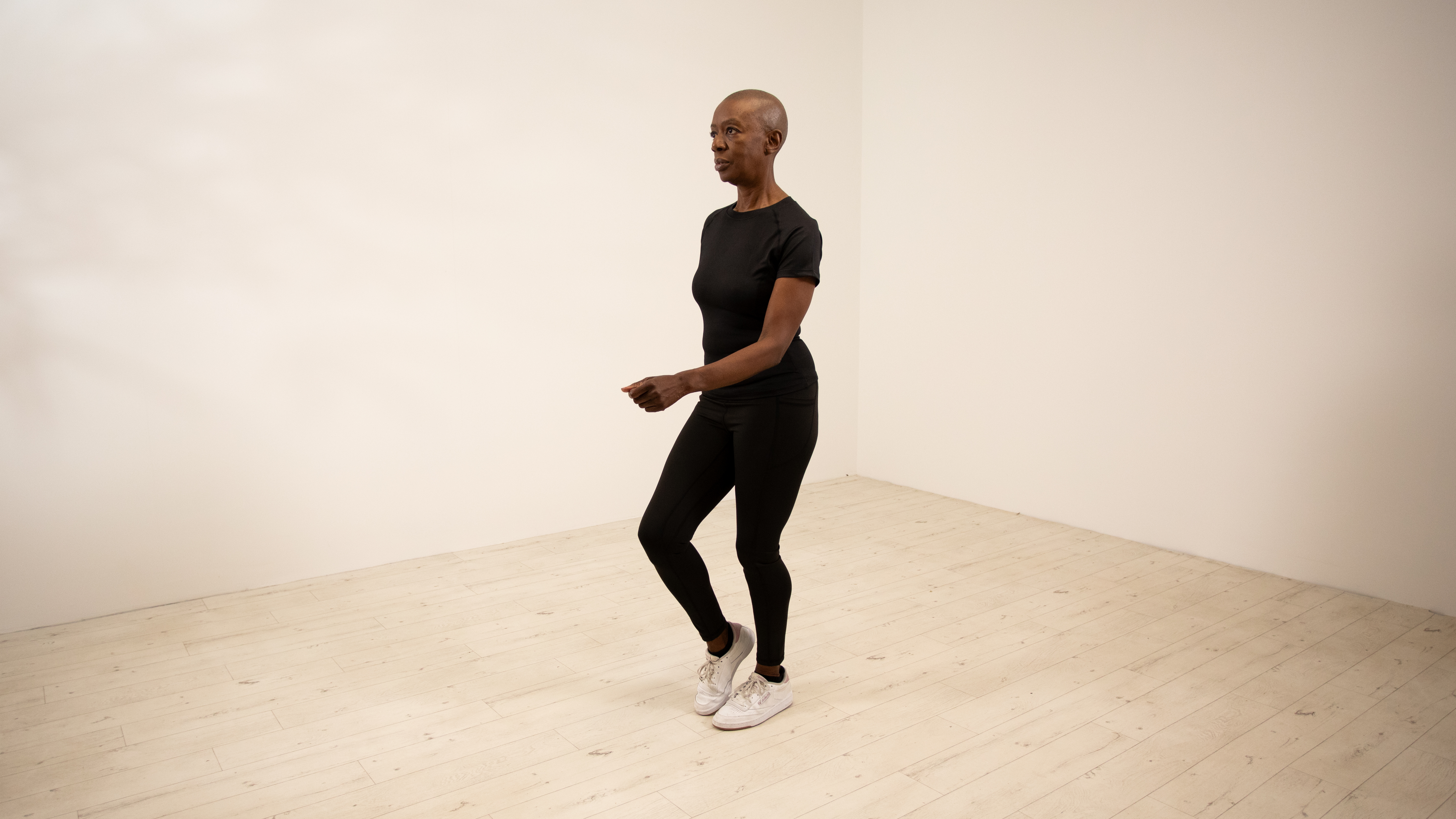
Core Activation Walk
The Core Activation Walk is a gentle, mindful movement that strengthens core engagement and postural awareness. Walk at a steady pace or step in place while consciously activating and gently tightening your core muscles. Stand tall and draw your belly button slightly toward your spine without holding your breath. Maintain steady, natural breathing, focusing on expanding your ribcage as you inhale. This exercise improves core stability, posture, and body awareness.
Full body strength & conditioning exercises
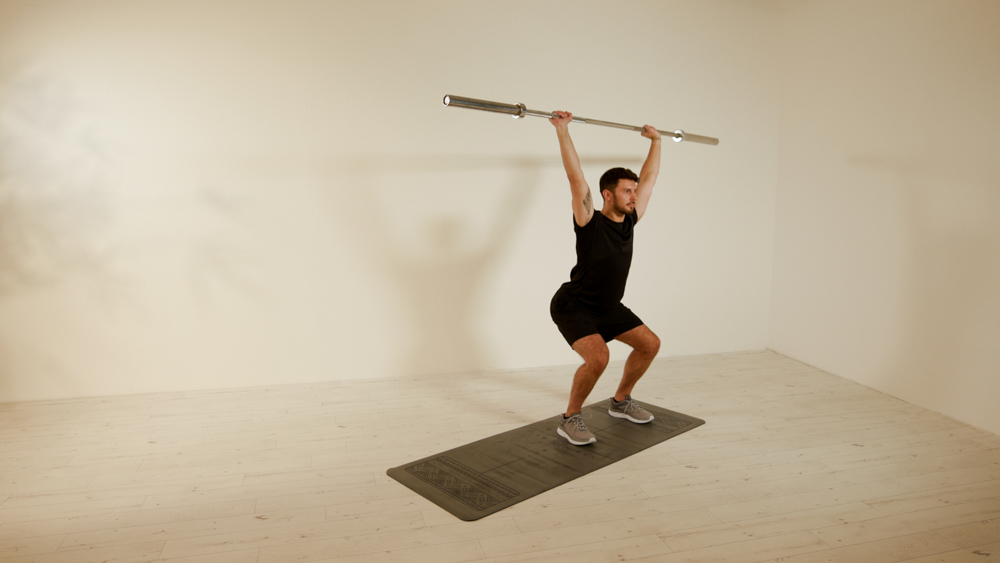
Barbell Overhead Squat
Strengthen your legs, core, and shoulder stability with the Barbell Overhead Squat. Perform squats while holding a Barbell overhead, engaging multiple muscle groups for a full-body workout.
Mental health
Mind and body control - how to channel your ‘internal telekinesis’
The dark nights have arrived, and right on cue, Mike Flanagan has turned his attention to one of Stephen King’s most iconic tales of teenage torment and supernatural terror... Carrie. The story of a schoolgirl with telekinetic powers - the fictional ability to move objects using the mind alone - has gripped our morbid imaginations for decades. Little wonder, then, that this horror classic is getting a new lease of life in a television adaptation. But while we ourselves may not be able to bend spoons or move furniture, we do possess our own real-world form of ‘internal-telekinesis’. Through mental focus and controlled breathing, we can influence our heart rate and help calm an overworked nervous system.
by Hannah Boynton-Forshaw
Core strength & conditioning exercises
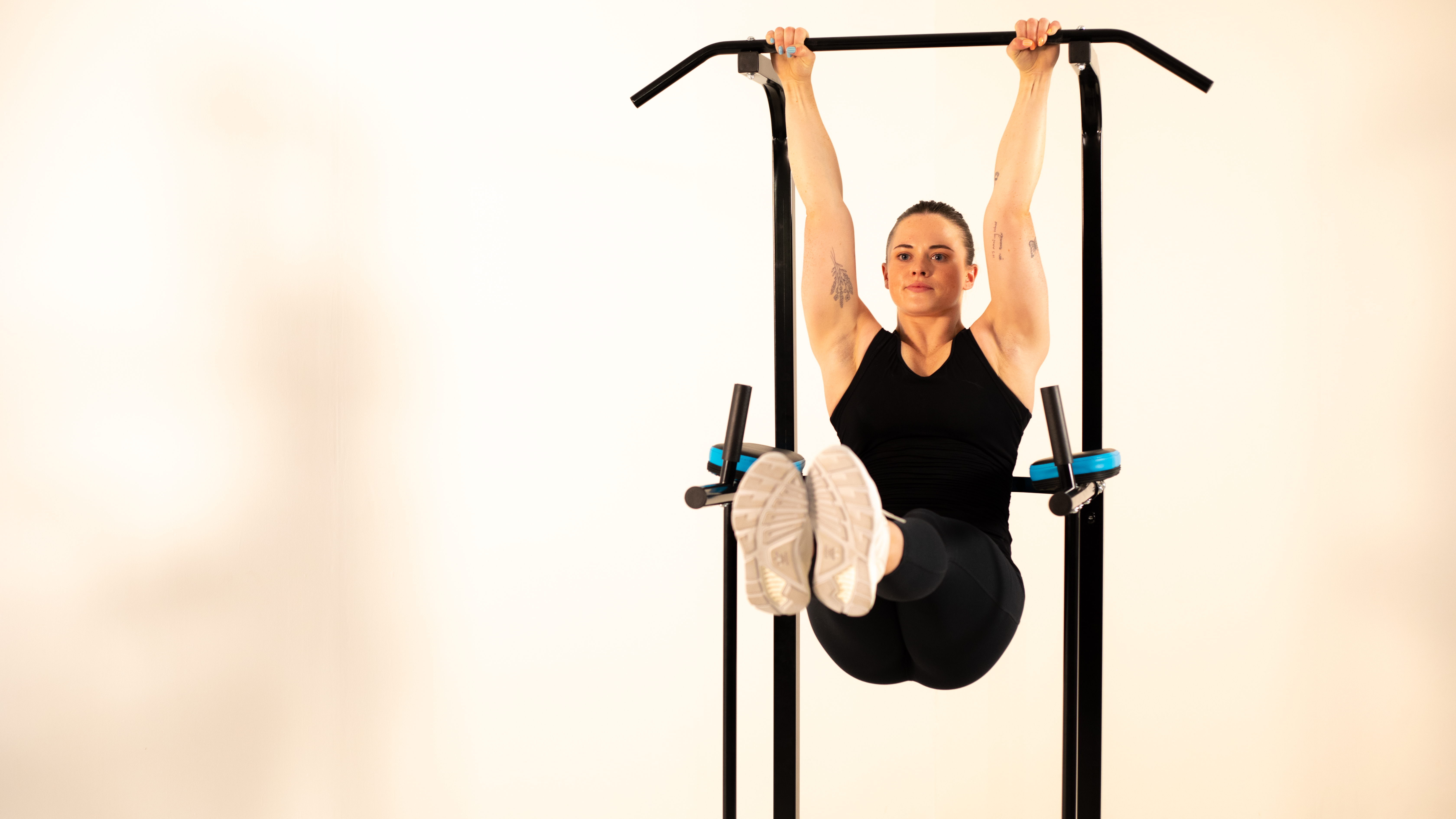
Hanging Leg Raise (L Shape)
The Pull-Up Bar Hanging Leg Raise (L Shape) is a core exercise that targets the lower abs and hip flexors. It involves hanging from a pull-up bar with an overhand grip and lifting your legs straight out in front of you to form an "L" shape with your body. By holding this position and raising your legs, you engage the lower abdominal muscles and hip flexors while maintaining a stable core. This exercise enhances core strength, flexibility, and grip endurance.
Further reading and references
- Chang WD, Lin HY, Lai PT; Core strength training for patients with chronic low back pain. J Phys Ther Sci. 2015 Mar;27(3):619-22. doi: 10.1589/jpts.27.619. Epub 2015 Mar 31.
About the authorView full bio
Updated by

Lynn Stephen
Content developer
MA (Hons)
Lynn joined Patient in 2023 and her role includes checking all the professional leaflets, patient information leaflets and medicine leaflets, to ensure consistency of spelling, grammar, reference material and brand style, working with the medical authors and clinical director to coordinate the authoring and peer reviewing of the leaflets.
Authored by

Amberley Davis
Senior writer
BA (Hons), CPD
Amberley is a senior writer with Patient and has written extensively on a range of health and wellbeing topics.
About the reviewerView full bio

Dr Colin Tidy, MRCGP
General Practitioner, Medical Author
MBBS, MRCGP, MRCP (Paediatrics), DCH
Dr Colin Tidy is an NHS Doctor, based in Oxfordshire.
Article history
Article also available in English, German, Spanish, French, Italian, Portuguese, Hindi, Hebrew, Arabic, and Swedish.
Next review due: 15 Sept 2029
15 Sept 2026 | Latest version
18 Jan 2022 | Originally published
Authored by:
Amberley Davis
Share your thoughts or experiences with others in our patient communities.
Sign up to the Patient newsletter
Your weekly dose of clear, trustworthy health advice - written to help you feel informed, confident and in control.
By subscribing you accept our Privacy Policy. You can unsubscribe at any time. We never sell your data.