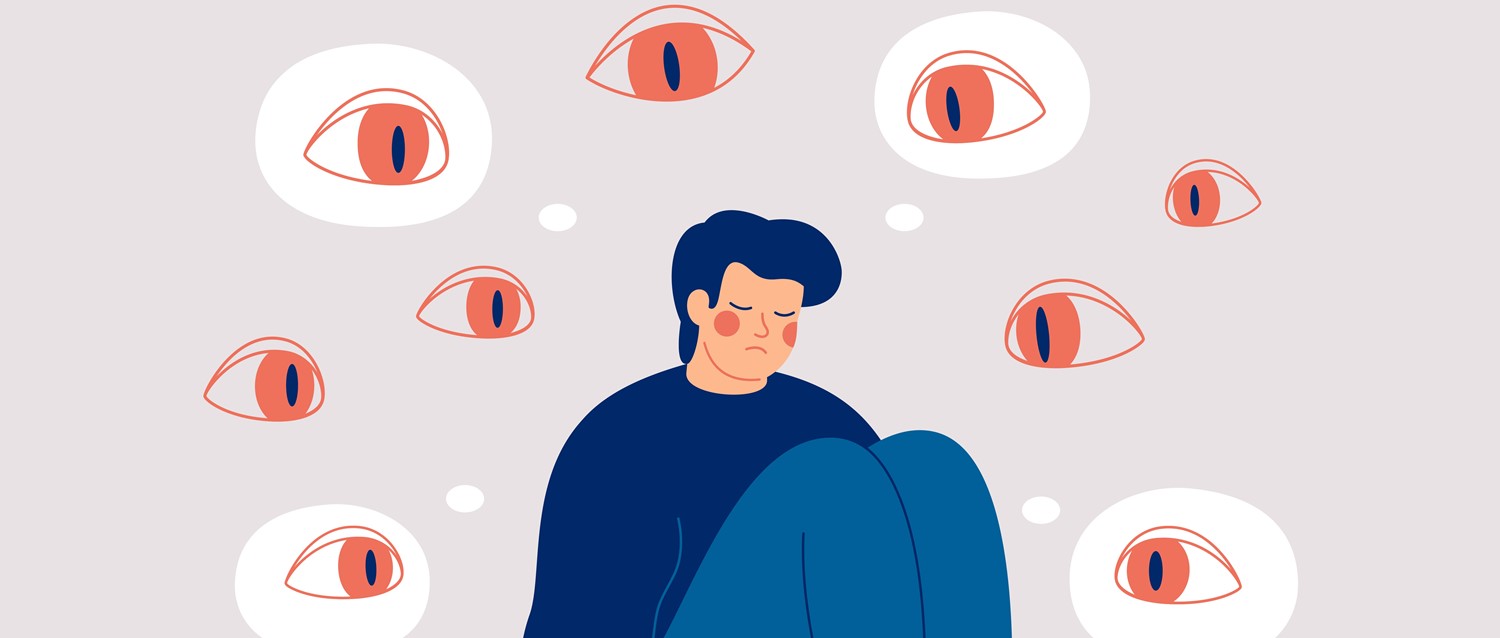
What it's like living with schizophrenia
Peer reviewed by Dr Krishna Vakharia, MRCGPAuthored by Emily Jane BashforthOriginally published 8 Jul 2022
Meets Patient’s editorial guidelines
- DownloadDownload
- Share
- Language
- Discussion
- Ask Patient
- Audio Version
- Add to preferred sources on Google
Despite the fact that millions of people have schizophrenia, it is still widely misunderstood. In this article, we're going to explore what living with schizophrenia is like from the perspective of someone who was diagnosed over 30 years ago.
Mental health support for adults and children
Online CBT and psychological therapy for adults and children aged 8–17. Onebright’s accredited clinicians support people experiencing anxiety, depression and other emotional challenges.
Trigger warning: this article contains references to self-harm and suicide
.
What is schizophrenia?
Schizophrenia is a long-term mental health disorder. While its cause is not clear, we do know that the symptoms of schizophrenia include hallucinations, delusions, disordered thinking, trouble conveying and processing feelings, and problems with behaviour and motivation.
Schizophrenia is treated by medication and social support.
According to the World Health Organization (WHO)1, schizophrenia affects approximately 24 million people worldwide. This rate is 1 in 222 people (0.45%) among adults.
Meet Graham ...
Meet Graham Morgan

Graham Morgan is 59 years old. He was diagnosed with schizophrenia over 30 years ago after an initial diagnosis of borderline personality disorder. He describes his younger self as ridden with "angst, loneliness, fear, and anger", as he grew up to believe there was "no point in life". He struggled with self-harm and suicide attempts, as well as admission to a psychiatric hospital.
A few years after his initial diagnosis of schizophrenia, Graham had travelled, participated in voluntary work, married and welcomed a child. However, he harboured a lot of anxieties about being a father, a partner, and his ability to work.
He experienced intrusive thoughts that told him he was a bad person, but he did not want to think this way. As part of his hallucinations, he became convinced that there were spirits in his home. Eventually, Graham was sectioned.
Getting diagnosed with schizophrenia
"Getting diagnosed with schizophrenia was not a surprise. I worked in mental health and sort of knew the likelihood of this news," admits Graham.
However, the process wasn't easy, as he had a short appointment with a psychiatrist and didn't feel as supported as he would've liked.
"Those days are vague in my mind, but I saw a psychiatrist every couple of months, maybe every month. I still needed support in coming to terms with my past but, since this was 30 years ago, at the time there didn't seem to be much available in terms of research into psychosis. The main concern of practitioners was that I took medication. Unfortunately, I often didn't and suffered as a consequence, so I was put on to a depot injection."
A depot injection is a slow-release form of medication. They can be used for various types of drugs, including some antipsychotics.
Pursuing schizophrenia treatment and rebuilding a life
Graham spent the next few years in and out of hospitals and was sectioned again. He had support from the Community Mental Health Team and continued to work and help raise his child, but still felt that his life was "falling to pieces".
He says his family life became toxic and, soon enough, he had no contact with either his ex-wife or his son. This took a huge mental toll on Graham, so he started seeing a Community Psychiatric Nurse (CPN), who he says was very good at supporting him and helping him work through his emotions.
After leaving the hospital, Graham was put on a community-based Compulsory Treatment Order. This is where conditions are set for his treatment. He has remained on this treatment plan for the last 12 years.
"I bought a very small house and regained a relationship with my family which had been shaky before I left my wife. I started to make friends in my own right and started to live more independently. I gained another wonderful CPN, saw a psychologist, and began tackling my drinking problem too," Graham shares.
He now lives with his partner, Wendy, and her twins, along with Dash the dog, and two rabbits. He works part-time, has written three books and is gearing up to celebrate his 60th birthday next year, which at one point in time he didn't think would be possible.
"My life is wonderful. I get good support from the mental health team, but I also love going to a well-being hub local to me. My main support is from my family and the network of friends I have."
A typical day living with schizophrenia
Graham says there is no "typical" day with schizophrenia, and each can be different. Some days he engages in activism work, speaking at conferences, and meeting with others who have mental health disorders. Other days, Graham does mundane things such as taking his partner to the station for work and meeting up with friends.
Graham also has fortnightly appointments for therapy and has extra support from a specialist team to tackle elements of his past. He adds that these spaces are important to him, as they make him feel safe to cry and talk about his feelings.
"When I feel low, I remind myself that soon Wendy will be home; we will kiss and cuddle and talk about work and I will annoy her by asking what to make for tea. The children might be with their dad, but they give me a big hug when they come back, and we share inside jokes."
Graham still struggles with alcohol dependency - which he says worsened following the death of his dad - and has disturbed sleep. He often feels detached from his emotions and struggles with feeling like global catastrophes are solely his fault. Luckily, he has people in his life who are able to notice when he is not engaged and to remind him of the joys of everyday life.
"I now feel like I have purpose and I realise that my life is immensely privileged. I have at long last realised that my family has always loved me despite some of the sadness in my life, and my professional support means I feel less alone," he says.
What other people should know about schizophrenia
Something Graham wants other people to know about schizophrenia is that life can still be wonderful alongside a diagnosis. However, it's important to understand that life isn't easy for everyone and showing compassion and dismantling misconceptions around schizophrenia are important.
"Sometimes my life has been horrendous, but despite that I have skied in the mountains, sailed over oceans, and walked in meadows. But that isn't everyone's reality - far from it. The illness is horrendous, but the prejudice and the way we are often treated by society can leave us lonely, poor, and incredibly sad indeed.
"I would love to see my peers given more chances and possibilities and helped to realise that they are valuable wonderful people."
If you suspect that you have schizophrenia, you should consult your GP as soon as possible - the earlier schizophrenia is diagnosed and treatment is started, the better. You can be referred for a mental health assessment by a team of professionals who will review your symptoms and check that they aren't the result of other causes. They may also assess you for other mental disorders.
If you suspect schizophrenia in a loved one and they are reluctant to seek help, it might be worth persuading them to see their GP or, in the instance of a rapidly worsening schizophrenic episode, you may need to go to A&E. In severe cases, people can be compulsorily detained in hospital under the Mental Health Act (2007)2.
Whatever your situation, whether a loved one or a patient, it's important to remember that you aren't alone.
Further reading
Patient picks for Other mental health problems

Mental health
What it's like to experience psychosis
Psychosis, also called a psychotic episode, is a mental health problem which describes when someone experiences reality in a different way to those around them. People who experience psychosis are said to 'lose touch' with reality, which may involve seeing things, hearing voices or having delusions. These can be extremely frightening, or make someone feel confused or threatened. Although it is a misunderstood term, around one in every 100 people will experience a psychotic episode in their lifetime, according to the charity Rethink Mental Illness.
by Lydia Smith
Mental health
What it's like to experience claustrophobia
I first experienced claustrophobia on a hot, packed Tube train when I was 22. As it left the station, it stopped at a red light in a tunnel. I knew this was normal. But after a few seconds, I began to feel strange.
by Lydia Smith

Mental health
What it's like to work for a suicide prevention helpline
Opening up to anyone when you're in a vulnerable state can be difficult, let alone a faceless stranger on the end of a telephone line. But what's it like receiving these calls? We speak to two Samaritans volunteers about what they've learnt about the art of listening and helping those in need.
by Ashwin Bhandari

Health news
TikTok’s ‘nonnamaxxing’ trend explained: here’s how living like an Italian grandma can benefit health and wellbeing
The key to better wellbeing is acting like an Italian grandmother, according to social media’s “nonnamaxxing” trend. Proponents of the trend say that adopting the lifestyle habits of an Italian nonna will help improve your health and mental wellbeing. The core principles of the trend are simple: make time for your friends and loved ones, eat foods grown from your own garden and cook hearty meals at home. This latest trend borrows from lifestyle medicine research which shows the same practices being advocated by nonnamaxxing enthusiasts can not only add years to your life, but add life to your years. So instead of jumping on the nonnamaxxing bandwagon until the next trend rolls around, here are some examples of how you can adopt these habits for life.
by Trudy Meehan

General health and lifestyle
What it's like to work in mental health services when you have a mental illness
When we seek help from mental health services, the staff are there to help and support us. However, we can forget that healthcare professionals also have their own struggles, and it can be easy to assume they have everything together. 1 in 4 people in the UK experience a mental health problem each year. In this piece, we're going to explore what it's like to work in mental health services when you have a mental illness yourself.
by Emily Jane Bashforth

Signs and symptoms
What does living with chronic pain really feel like?
Nearly half of the UK population - around 28 million adults - lives with some form of chronic pain. With chronic pain described as 'a major cause of disability and distress', what exactly is causing so many people to live in constant pain, and how does it impact on their everyday lives?
by Sarah Graham
About the authorView full bio
Authored by

Emily Jane Bashforth
Feature Writer
NCTJ
Emily is a Feature Writer with Patient, writing articles on a variety of topics relating to health and well-being.
About the reviewerView full bio

Dr Krishna Vakharia, MRCGP
Chief Medical Officer for Health, Optum UK
MBChB, MRCGP(2013), BMedSci (hons), DFSRH, DRCOG, PGDipDerm (Distn)
Dr Krishna Vakharia is an NHS GP. She is also a regular examiner for the postgraduate Diploma in Practical Dermatology at Cardiff University as well as being the Chief Medical Officer for health at Optum UK.
Article history
Article also available in English, German, Spanish, French, Italian, Portuguese, Hindi, Hebrew, Arabic, and Swedish.
8 Jul 2022 | Originally published
Authored by:
Emily Jane BashforthPeer reviewed by
Dr Krishna Vakharia, MRCGP
Share your thoughts or experiences with others in our patient communities.
Sign up to the Patient newsletter
Your weekly dose of clear, trustworthy health advice - written to help you feel informed, confident and in control.
By subscribing you accept our Privacy Policy. You can unsubscribe at any time. We never sell your data.