
What it's like to experience psychosis
Peer reviewed by Dr Sarah JarvisAuthored by Lydia SmithOriginally published 6 Sept 2018
Meets Patient’s editorial guidelines
- DownloadDownload
- Share
- Language
- Discussion
- Ask Patient
- Audio Version
- Add to preferred sources on Google
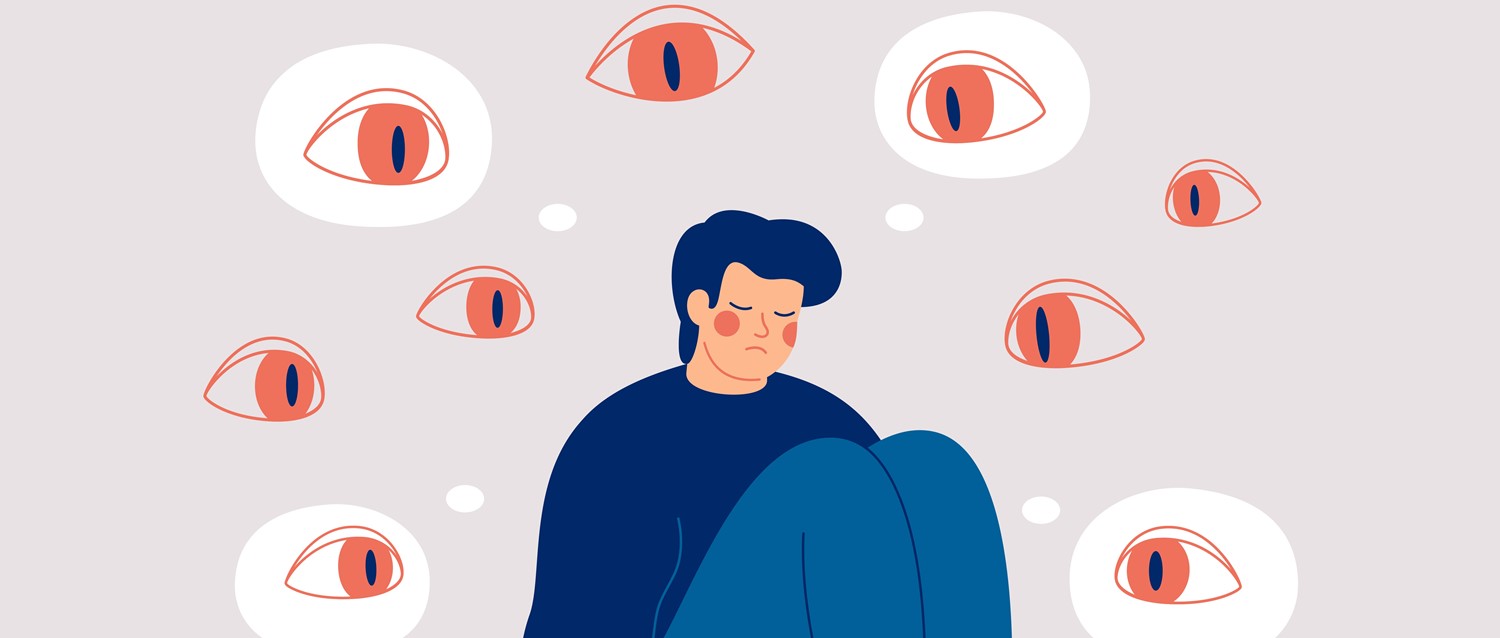
Psychosis, also called a psychotic episode, is a mental health problem which describes when someone experiences reality in a different way to those around them. People who experience psychosis are said to 'lose touch' with reality, which may involve seeing things, hearing voices or having delusions. These can be extremely frightening, or make someone feel confused or threatened.
Although it is a misunderstood term, around one in every 100 people will experience a psychotic episode in their lifetime, according to the charity Rethink Mental Illness.
Mental health support for adults and children
Online CBT and psychological therapy for adults and children aged 8–17. Onebright’s accredited clinicians support people experiencing anxiety, depression and other emotional challenges.
Austin, 20, experienced psychosis in his late teens.
"My psychosis was comprised of audio and visual hallucinations. I believed my mind was split, with different personas holding a hierarchy of control over my thoughts, feelings, and actions," he says.
"It started with whispers, these bursts of incredibly violent thoughts of self-harm or suicide. Then these voices grew louder, bickering, arguing and eventually assuming their own form of control over who I was as a person. In my mind, I was a bystander to someone else at the wheel of an oncoming car."
Austin says his behaviour became increasingly erratic until he saw his doctor.
"They immediately recommended further treatment by CAMHS (Child and Adolescent Mental Health Services). It was an incredible struggle to get any words out at all, but I had to fight my case to get some help with them," he says.
What causes psychosis?
Anne Cooke, clinical psychologist and lecturer at Canterbury Christ Church University explains: "The term psychosis is sometimes used to refer to experiences like: hearing voices when there is no one there (sometimes called hallucinations), holding beliefs that others do not share (sometimes called delusions), or appearing out of touch with reality."
This may mean seeing things which others don't, experiencing sensations that have no cause, hearing voices or having false beliefs.
Psychotic episodes are often assumed to be the result of a mental health problem such as schizophrenia or bipolar disorder, but this isn't always the case.
"They can often be a reaction to trauma, abuse or deprivation," Cooke adds.
"Whilst for some, experiences such as hearing voices or feeling paranoid can be very distressing and even life-changing," she explains. "For many people, though not all, experiences such as hearing voices or feeling paranoid are short-lived. Even people who continue to experience them nevertheless often lead happy and successful lives."
"Some people find it useful to think of themselves as having an illness. Others prefer to think of their problems as, for example, an aspect of their personality which sometimes gets them into trouble but which they would not want to be without."
There are a lot of misunderstandings surrounding the term psychosis and people often think the word psychotic means dangerous, which is not true.
"It is a myth that people who have these experiences are much more likely than others to be violent," Cooke says.
Although there is no quick and simple cure for psychosis, it's possible to manage symptoms and recover with the right treatment.
"Each individual's experiences are unique - no one person's problems, or ways of coping with them, are exactly the same as anyone else's," Cooke says.
If you are experiencing symptoms of psychosis, you should visit your GP, who will be able to refer you to a mental health specialist for an assessment and treatment.
Talking therapies
Cognitive behavioural therapy (CBT) can help people understand their experiences and make sense of why the symptoms can be distressing.
"Psychological therapies - talking treatments - are very helpful for many people," Cooke says. "The National Institute for Health and Care Excellence recommends that everyone with a diagnosis of psychosis or schizophrenia should be offered talking therapy."
"More generally, it is vital that services offer people the chance to talk in detail about their experiences and to make sense of what has happened to them," she adds.
For Austin, therapy allowed him to control his symptoms.
"I was given CBT which built me a framework to dismantle my psychosis. These whispers are still around. They're just whispers and I'm okay with that."
A type of therapy called family intervention can help people with psychosis and their family to cope with the condition. The therapy involves giving advice on support and problem-solving.
Trauma
Clinical psychologist Lucy Johnstone says a 'trauma-informed approach' may help someone identify why they experience symptoms.
"Recent thinking has identified the role of traumatic events and life circumstances in some cases of psychosis. This may include abuse, bullying, neglect, bereavement, and so on. The trauma-informed approach sees the unusual psychotic experiences as, in some cases, clues to earlier traumas," she says.
Someone may hear the voice of someone who abused them, for example.
"This approach gives hope for identifying and working through some of the unresolved emotional issues, either through self-help organisations like the Hearing Voices Network, or through trauma-focused therapy when the person is stable enough to engage in it."
Medication
Antipsychotic medicines work primarily by blocking the effect of the brain chemical dopamine which transmits messages. These medicines may be recommended as the first treatment for psychosis. Around 50% of people need to take long-term medication to prevent symptoms recurring, according to the NHS.
"Many people find that 'antipsychotic' medication helps to make the experiences less frequent, intense or distressing. However, there is no evidence that it corrects an underlying biological abnormality," Cooke says.
Stephen Buckley, head of information at the charity Mind, says: "Most people diagnosed with a psychotic illness will be offered antipsychotic drugs. While not a cure, they can help control the symptoms and stop the distress caused by them."
Social support
It's important to ensure people who experience psychosis have the right support when it comes to employment and accommodation, as well as other social factors which can trigger anxiety or stress.
"It’s important that those prescribing treatment don't take a one-size-fits-all approach and offer people a choice of treatment options that may include medication, talking therapies, alternatives such as arts therapy or exercise, or a combination of some or all of these," Buckley says.
"What people find helpful in managing their mental health will vary from person to person, and what works for one individual may not for another."
Self-care
Mind also stresses the importance of self-care, which can help alongside other treatments. Looking after yourself and managing your stress is important, as it can help you manage pressure. Peer support can help tackle loneliness and fear by talking to others who have had similar experiences, through organisations such as the Hearing Voices Network and Bipolar UK.
It's also key to recognise any triggers, such as sleeping problems, your diet or your mood. Understanding warning signs can help you avoid certain triggers or find out what has worked for you previously.
Mind also recommends having a 'crisis plan' prepared so people - friends, family or professionals - can help you when you're unwell. This can involve writing down the signs of a crisis or who your family should contact in a crisis.
Patient picks for Other mental health problems
Mental health
What it's like living with schizophrenia
Despite the fact that millions of people have schizophrenia, it is still widely misunderstood. In this article, we're going to explore what living with schizophrenia is like from the perspective of someone who was diagnosed over 30 years ago.
by Emily Jane Bashforth

General health and lifestyle
What it's like to work in mental health services when you have a mental illness
When we seek help from mental health services, the staff are there to help and support us. However, we can forget that healthcare professionals also have their own struggles, and it can be easy to assume they have everything together. 1 in 4 people in the UK experience a mental health problem each year. In this piece, we're going to explore what it's like to work in mental health services when you have a mental illness yourself.
by Emily Jane Bashforth

Sexual health
What it's like to be a recovering sex addict
As of July, compulsive sexual behaviour is now officially recognised as a medical condition by the World Health Organization (WHO). More commonly generalised as 'sex addiction', the disorder is a complex one, difficult to define and to diagnose. While the idea of being addicted to sex is both mocked and sensationalised in media and popular culture, the condition can in fact be debilitating for sufferers - and the shame and stigma only make matters worse.
by Sarah Graham

Mental health
What it's like to work for a suicide prevention helpline
Opening up to anyone when you're in a vulnerable state can be difficult, let alone a faceless stranger on the end of a telephone line. But what's it like receiving these calls? We speak to two Samaritans volunteers about what they've learnt about the art of listening and helping those in need.
by Ashwin Bhandari

Ear, nose and throat
When it feels like something is stuck in your throat
Some patients tell me that they would sooner have constant pain than put up with swallowing difficulties. I suppose it's because long-term pain is something the brain can 'tune out' whereas a symptom that occurs in connection with an activity such as swallowing or that comes and goes is less easy to ignore. Also, whatever the cause of pain, the supermarket shelves are stuffed with tablets to help relieve it. You can't say the same about swallowing problems.
by Dr Laurence Knott

Mental health
What it's like to experience claustrophobia
I first experienced claustrophobia on a hot, packed Tube train when I was 22. As it left the station, it stopped at a red light in a tunnel. I knew this was normal. But after a few seconds, I began to feel strange.
by Lydia Smith
About the authorView full bio
Authored by

Lydia Smith
Feature writer
BA, MA, MSc
Lydia Smith is an award-winning journalist and feature writer who has written extensively on women's health and mental health. She is currently studying for an MSc in psychology.
About the reviewerView full bio

Dr Sarah Jarvis
Clinical Consultant
MA (Cantab), BM, BCh (Oxon), DRCOG, FRCGP, MBE
After training in medicine at Cambridge and Oxford, Dr Sarah Jarvis MBE became a GP.
Article history
Article also available in English, German, Spanish, French, Italian, Portuguese, Hindi, Hebrew, Arabic, and Swedish.
6 Sept 2018 | Originally published
Authored by:
Lydia SmithPeer reviewed by
Dr Sarah Jarvis
Share your thoughts or experiences with others in our patient communities.
Sign up to the Patient newsletter
Your weekly dose of clear, trustworthy health advice - written to help you feel informed, confident and in control.
By subscribing you accept our Privacy Policy. You can unsubscribe at any time. We never sell your data.