5-alpha reductase deficiency
Last updated 6 Mar 2025
Meets Patient’s editorial guidelines
- DownloadDownload
- Share
- Language
- Discussion
- Ask Patient
- Audio Version
- Add to preferred sources on Google
5-alpha reductase deficiency is a condition that affects sexual development before birth and during puberty. People with this condition are genetically male, with one X and one Y chromosome in each cell, and they have male gonads (testes). Their bodies, however, do not produce enough of a hormone called dihydrotestosterone (DHT). DHT has a critical role in male sexual development, and a shortage of this hormone disrupts the formation of the external sex organs before birth.
Video picks for Genetic conditionsVideo library
Description
5-alpha reductase deficiency is a condition that affects sexual development before birth and during puberty. People with this condition are genetically male, with one X and one Y chromosome in each cell, and they have male gonads (testes). Their bodies, however, do not produce enough of a hormone called dihydrotestosterone (DHT). DHT has a critical role in male sexual development, and a shortage of this hormone disrupts the formation of the external sex organs before birth.
Many people with 5-alpha reductase deficiency have external genitalia that appears female. In other cases, affected infants have male-typical external genitalia, often an unusually small penis (micropenis) and the urethra opening on the underside of the penis (hypospadias). Still other affected infants have external genitalia do not look clearly male or clearly female.
During puberty, an increase in the levels of male sex hormones leads to the development of some secondary sex characteristics, such as increased muscle mass, deepening of the voice, development of pubic hair, and a growth spurt. The penis and scrotum (the sac of skin that holds the testes) may grow larger. People with 5-alpha reductase deficiency do not develop much facial or body hair. Most affected individuals are unable to have biological children (infertile) without assisted reproduction.
Inheritance patterns
The source lists the following possible inheritance patterns: Autosomal recessive. More than one pattern can apply in different cases.
Related genes
Other names
PPSH
Pseudovaginal perineoscrotal hypospadias
Steroid 5-alpha-reductase deficiency
Patient picks for Genetic conditions
Treatment and medication
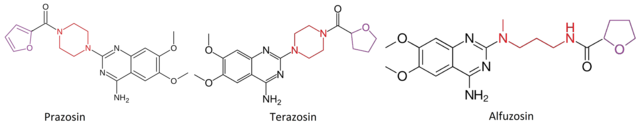
Alpha-blockers
Alpha-blockers are medicines that are mainly used to treat high blood pressure (hypertension) and problems with passing urine in men who have enlargement of the prostate gland. Prostate gland enlargement is also called benign prostatic hyperplasia (BPH).
by Dr Doug McKechnie, MRCGP

Diet and nutrition
Vitamin C: benefits, sources, and deficiency
Most of us know vitamin C is good for us, but do you know all the ways that this essential nutrient benefits your health? Here you can find out how easy it is to get enough vitamin C, as well as what happens when you consume too little and too much.
by Lynn Stephen

Eye health
Colour vision deficiency
Colour vision deficiency, also called colour blindness, is when you are unable to see certain colours. The most common form of the condition is red-green colour vision deficiency.
by Dr Hayley Willacy, FRCGP

Children's health
Alpha-1 antitrypsin deficiency
Alpha-1 antitrypsin deficiency is an inherited genetic condition. A genetic condition is one that can be passed on from parents through genes. In alpha-1 antitrypsin deficiency the result of a genetic abnormality leads to lung and, in some people, liver damage. Lung symptoms are the most common and include shortness of breath, cough and wheezing. Symptoms can worsen over time. At present, there is no cure for alpha-1 antitrypsin deficiency. Treatment aims at slowing down the progression of the disease.
by Dr Philippa Vincent, MRCGP

Healthy living
Vitamin A deficiency
Vitamins are a group of substances needed in small amounts by the body to maintain health. Vitamin A cannot be made by the human body and so it is an essential part of the diet. Vitamin A is important for healthy eyes, good eyesight (vision), healthy skin and to help you fight infections. Vitamin A is sometimes also called retinol. Foods that contain vitamin A include liver, milk, eggs and fish-liver oils. Another substance called beta carotene (which is found in green leafy and orange/yellow vegetables and fruits) can also be converted by your body to vitamin A. Mild forms of vitamin A deficiency can usually be treated without any long-term problems. Vitamin A deficiency is much more common in low-income countries, where it is often very severe and can cause loss of vision and even death.
by Dr Toni Hazell, FRCGP
Hormones
Iodine deficiency
Iodine is essential for the body to make thyroid hormone. Low levels of iodine may cause an underactive thyroid gland and symptoms of hypothyroidism (eg, tiredness, constipation and weight gain). Iodine deficiency in pregnant women may cause problems for the baby, including learning disability. There has been a worldwide campaign to prevent iodine deficiency by using salt containing added iodine. However, iodine deficiency is still a widespread problem in many countries. Mild iodine deficiency may still affect some people in the UK.
by Dr Rosalyn Adleman, MRCGP
Related patient information and medicines

Patient information leaflet
Prostate problems
Prostate and uret... There are various treatments for the symptoms of BPH, including drugs such as alfuzosin/doxazosin (alpha-blockers), dutasteride/finasteride (5-alpha reductase inhibitors), oxybutinin/tolterodine/fesoterodine/darifenacin/solifenacin/trospium (antimuscarinics), mirabegron (for overactive bladder) and desmopressin (for frequent.

Patient information leaflet
Enlarged prostate
It occurs in less than 1 in 100 men. Medicines The decision to treat with medicines usually dep... There are two groups of medicines that may help: Alpha-blockers. 5-alpha reductase inhibitors. Medicines do not cure the problem, nor do they usually make symptoms go completely. Alpha-blocker medicines Alpha-blockers. This can improve the flow of.

Patient information leaflet
Blood in semen
Haematospermia means there is blood in the semen. Usually there are no other symptoms such as pain. The haematospermia itself does not need any treatment. Medicines If you have persistent haematospermia without an identified cause then a type of medicine called a 5-alpha reductase inhibitor such as finasteride Finasteride for prostate gland.

Patient information leaflet
Liver function tests
What can cause liver function tests to be abnormal. Your liver function tests can be abnormal because: There is a build-up of fat in the liver, due to being overweight or obese (called non-alcoholic fatty liver disease Non-alcoholic fatty liver disease , or NAFLD). However this does not always cause abnormal liver function tests, and can also be.
Patient information leaflet
Liver failure
Diseases of the veins in the liver Some diseases (for example, Budd-Chiari syndrom... Metabolic diseases Some rare metabolic diseases may cause acute liver failure. These include haemochromatosis Haemochromatosis , alpha-1 antitrypsin deficiency Alpha-1 antitrypsin deficiency , Wilson's disease Wilson's disease , fructose intolerance,.

Patient information leaflet
Restless legs syndrome
However, the symptoms tend to return shortly after resting again. Usually affect both legs. Occasionally, the arms are affected too, or another part of the body, but the legs are affected first and more severely than other body parts. ServiceUpsellPlaceholder What causes restless legs syndrome. The cause is not known in most cases This is called.
Further reading and references
- 5-alpha reductase deficiency; MedlinePlus, National Library of Medicine.
- Bahceci M, Ersay AR, Tuzcu A, Hiort O, Richter-Unruh A, Gokalp D. A novel missense mutation of 5-alpha reductase type 2 gene (SRD5A2) leads to severe male pseudohermaphroditism in a Turkish family. Urology. 2005 Aug;66(2):407-10. doi: 10.1016/j.urology.2005.02.021.
- Baldinotti F, Majore S, Fogli A, Marrocco G, Ghirri P, Vuerich M, Tumini S, Boscherini B, Vetri M, Scommegna S, Rinaldi R, Simi P, Grammatico P. Molecular characterization of 6 unrelated Italian patients with 5alpha-reductase type 2 deficiency. J Androl. 2008 Jan-Feb;29(1):20-8. doi: 10.2164/jandrol.107.002592. Epub 2007 Jul 3.
- Cohen-Kettenis PT. Gender change in 46,XY persons with 5alpha-reductase-2 deficiency and 17beta-hydroxysteroid dehydrogenase-3 deficiency. Arch Sex Behav. 2005 Aug;34(4):399-410. doi: 10.1007/s10508-005-4339-4.
- Hackel C, Oliveira LE, Ferraz LF, Tonini MM, Silva DN, Toralles MB, Stuchi-Perez EG, Guerra-Junior G. New mutations, hotspots, and founder effects in Brazilian patients with steroid 5alpha-reductase deficiency type 2. J Mol Med (Berl). 2005 Jul;83(7):569-76. doi: 10.1007/s00109-005-0651-7. Epub 2005 Mar 16.
- Lee PA, Houk CP, Ahmed SF, Hughes IA; International Consensus Conference on Intersex organized by the Lawson Wilkins Pediatric Endocrine Society and the European Society for Paediatric Endocrinology. Consensus statement on management of intersex disorders. International Consensus Conference on Intersex. Pediatrics. 2006 Aug;118(2):e488-500. doi: 10.1542/peds.2006-0738. No abstract available.
- Okeigwe I, Kuohung W. 5-Alpha reductase deficiency: a 40-year retrospective review. Curr Opin Endocrinol Diabetes Obes. 2014 Dec;21(6):483-7. doi: 10.1097/MED.0000000000000116.
- Sultan C, Lumbroso S, Paris F, Jeandel C, Terouanne B, Belon C, Audran F, Poujol N, Georget V, Gobinet J, Jalaguier S, Auzou G, Nicolas JC. Disorders of androgen action. Semin Reprod Med. 2002 Aug;20(3):217-28. doi: 10.1055/s-2002-35386.
Share your thoughts or experiences with others in our patient communities.
Simple access to trusted treatments and health services online.
Common conditions
Get help with common conditions through the NHS, without a GP appointment.





Sign up to the Patient newsletter
Your weekly dose of clear, trustworthy health advice - written to help you feel informed, confident and in control.
By subscribing you accept our Privacy Policy. You can unsubscribe at any time. We never sell your data.