Blepharophimosis, ptosis, and epicanthus inversus syndrome
Last updated 17 Apr 2024
Meets Patient’s editorial guidelines
- DownloadDownload
- Share
- Language
- Discussion
- Ask Patient
- Audio Version
- Add to preferred sources on Google
Blepharophimosis, ptosis, and epicanthus inversus syndrome (BPES) is a condition that mainly affects development of the eyelids. People with this condition have a narrowing of the eye opening (blepharophimosis), droopy eyelids (ptosis), and an upward fold of the skin of the lower eyelid near the inner corner of the eye (epicanthus inversus). In addition, there is an increased distance between the inner corners of the eyes (telecanthus). Because of these eyelid abnormalities, the eyelids cannot open fully, and vision may be limited.
Video picks for Genetic conditionsVideo library
Description
Blepharophimosis, ptosis, and epicanthus inversus syndrome (BPES) is a condition that mainly affects development of the eyelids. People with this condition have a narrowing of the eye opening (blepharophimosis), droopy eyelids (ptosis), and an upward fold of the skin of the lower eyelid near the inner corner of the eye (epicanthus inversus). In addition, there is an increased distance between the inner corners of the eyes (telecanthus). Because of these eyelid abnormalities, the eyelids cannot open fully, and vision may be limited.
Other structures in the eyes and face may be mildly affected by BPES. Affected individuals are at an increased risk of developing vision problems such as nearsightedness (myopia) or farsightedness (hyperopia) beginning in childhood. They may also have eyes that do not point in the same direction (strabismus) or "lazy eye" (amblyopia) affecting one or both eyes. People with BPES may also have distinctive facial features including a broad nasal bridge, low-set ears, or a shortened distance between the nose and upper lip (a short philtrum).
There are two types of BPES, which are distinguished by their signs and symptoms. Both types I and II include the eyelid malformations and other facial features. Type I is also associated with an early loss of ovarian function (primary ovarian insufficiency) in women, which causes their menstrual periods to become less frequent and eventually stop before age 40. Primary ovarian insufficiency can lead to difficulty conceiving a child (subfertility) or a complete inability to conceive (infertility).
Inheritance patterns
The source lists the following possible inheritance patterns: Autosomal dominant. More than one pattern can apply in different cases.
Related genes
Other names
Blepharophimosis syndrome
Blepharophimosis, ptosis, and epicanthus inversus
BPES
Patient picks for Genetic conditions

Tests and investigations
CT scan
Note: the information below is a general guide only. The arrangements, and the way tests are performed, may vary between different hospitals. Always follow the instructions given by your doctor or local hospital.
by Dr Rachel Hudson, MRCGP

Allergies, blood and immune system
Sjögren's syndrome
Sjögren's syndrome is an autoimmune disease that causes the glands that produce tears and saliva to stop working. It is a life-long condition but treatments can help control symptoms such as dry eyes and dry mouth.
by Dr Doug McKechnie, MRCGP

Infections
6-in-1 vaccine
The 6-in-1 vaccine is part of routine childhood immunisations and protects babies against six different serious illnesses. Three doses are given. Further boosters without all six components are given at other times later in childhood and in adult life. The 6-in-1 vaccine used to be given as the 3-in-1 vaccine DTaP along with the polio vaccine which was given by mouth, but has gradually been extended so that it now protects against even more diseases. It is given in one single injection into the thigh from one single syringe. This leaflet explains when this vaccine is given and why. It also explains which components of the 6-in-1 vaccine are given later in the UK immunisation schedule as the 4-in-1, 3-in-1 etc.
by Dr Philippa Vincent, MRCGP

Pregnancy
Multiple pregnancy
In a multiple pregnancy, there is more than one baby growing in the womb (uterus) at the same time. Being pregnant with twins is the most common example. Both mother and babies need extra monitoring during pregnancy as the risks are higher than in a singleton pregnancy.
by Dr Toni Hazell, FRCGP
Pregnancy
Cervical insufficiency and suture
Cervical insufficiency (sometimes called cervical incompetence) occurs when the neck of the womb (the cervix) softens, shortens and opens without any other symptoms of labour. This may be in the second trimester or early in the third, leading to premature delivery of the baby. Cervical suture - also called cervical cerclage or cervical stitch - is a stitch placed in/around the cervix. This is to try to prevent late miscarriage or premature birth in women who are felt to be at high risk of cervical insufficiency.
by Dr Hayley Willacy, FRCGP
Cancer
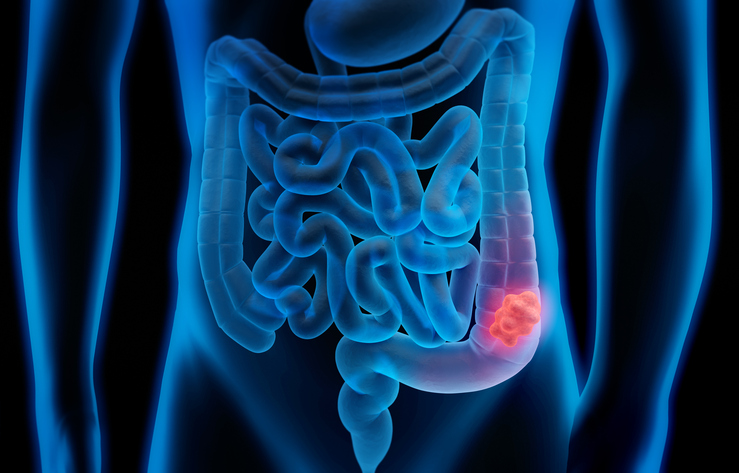
Bowel cancer
Colon cancer and rectal cancer (also called colorectal cancer) are common in the UK. The colon and rectum are parts of your bowel. Most cases occur in people aged over 50. If bowel cancer is diagnosed at an early stage, there is a good chance of a cure. In general, the more advanced the cancer (the more it has grown and spread), the less chance that treatment will be curative. However, treatment can often slow the progress of the cancer.
by Dr Doug McKechnie, MRCGP
Related patient information and medicines

Patient information leaflet
Fetal alcohol syndrome
FAS is a pattern of disabilities that can develop in a baby as it grows in the womb (uterus) because the mother drank alcohol whilst pregnant and the baby is therefore exposed to alcohol before birth. Fetal alcohol syndrome (FAS) is part of a group of conditions called fetal alcohol spectrum disorders (FASDs). These are a range of disabilities a.

Patient information leaflet
Cushing's syndrome
Cushing's syndrome is caused by too high a level of glucocorticoid in the body. Symptoms usually develop gradually and so the diagnosis (other tha... The most common cause of excess cortisol is a small, non-cancerous tumour in the pituitary gland which makes too much of a hormone called ACTH which stimulates the adrenal glands to make too much.

Patient information leaflet
Osler-Weber-Rendu syndrome
Osler-Weber-Rendu syndrome is a disorder of the blood vessels that can cause excessive bleeding. Osler-Weber-Rendu syndrome is also called hereditary haemorrhagic telangiectasia. The abnormal blood vessels can cause bleeding both into the skin and inside your body. What is Osler-Weber-Rendu syndrome. People with Osler-Weber-Rendu syndrome can.
Patient information leaflet
Sjögren's syndrome
Sjögren's syndrome is an autoimmune disease that causes the glands that produce tears and saliva to stop working. It is a life-long condition but treatments can help control symptoms such as dry eyes and dry mouth. Key points Sjögren’s syndrome is... It can also affect other organs including the lungs, kidneys, skin and the nervous system..
Patient information leaflet
Cri du chat syndrome
Cri du chat syndrome is a chromosome problem caused by a missing piece of chromosome 5. The syndrome is called cri du chat (French for cry of the cat) because affected babies often have a high-pitched cry. Not all babies with the missing piece of chromosome 5 will develop cri du chat syndrome. Cri du chat syndrome may cause a variety of.

Patient information leaflet
Nephrotic syndrome
Nephrotic syndrome is a condition where the 'filters' in the kidney become 'leaky' and large amounts of protein leak from the blood into the urine. Various diseases can cause nephrotic syndrome, some more serious than others. Treatment and outcome (prognosis) vary, depending on the cause... What is nephrotic syndrome. Nephrotic syndrome is not a.
Further reading and references
- Blepharophimosis, ptosis, and epicanthus inversus syndrome; MedlinePlus, National Library of Medicine.
- Allen CE, Rubin PA. Blepharophimosis-ptosis-epicanthus inversus syndrome (BPES): clinical manifestation and treatment. Int Ophthalmol Clin. 2008 Spring;48(2):15-23. doi: 10.1097/IIO.0b013e3181694eee. No abstract available.
- Beysen D, De Jaegere S, Amor D, Bouchard P, Christin-Maitre S, Fellous M, Touraine P, Grix AW, Hennekam R, Meire F, Oyen N, Wilson LC, Barel D, Clayton-Smith J, de Ravel T, Decock C, Delbeke P, Ensenauer R, Ebinger F, Gillessen-Kaesbach G, Hendriks Y, Kimonis V, Laframboise R, Laissue P, Leppig K, Leroy BP, Miller DT, Mowat D, Neumann L, Plomp A, Van Regemorter N, Wieczorek D, Veitia RA, De Paepe A, De Baere E. Identification of 34 novel and 56 known FOXL2 mutations in patients with Blepharophimosis syndrome. Hum Mutat. 2008 Nov;29(11):E205-19. doi: 10.1002/humu.20819.
- Beysen D, De Paepe A, De Baere E. FOXL2 mutations and genomic rearrangements in BPES. Hum Mutat. 2009 Feb;30(2):158-69. doi: 10.1002/humu.20807.
- Beysen D, Raes J, Leroy BP, Lucassen A, Yates JR, Clayton-Smith J, Ilyina H, Brooks SS, Christin-Maitre S, Fellous M, Fryns JP, Kim JR, Lapunzina P, Lemyre E, Meire F, Messiaen LM, Oley C, Splitt M, Thomson J, Van de Peer Y, Veitia RA, De Paepe A, De Baere E. Deletions involving long-range conserved nongenic sequences upstream and downstream of FOXL2 as a novel disease-causing mechanism in blepharophimosis syndrome. Am J Hum Genet. 2005 Aug;77(2):205-18. doi: 10.1086/432083. Epub 2005 Jun 16.
- Choi KH, Kyung S, Oh SY. The factors influencing visual development in blepharophimosis-ptosis-epicanthus inversus syndrome. J Pediatr Ophthalmol Strabismus. 2006 Sep-Oct;43(5):285-8. doi: 10.3928/01913913-20060901-03.
- D'haene B, Nevado J, Pugeat M, Pierquin G, Lowry RB, Reardon W, Delicado A, Garcia-Minaur S, Palomares M, Courtens W, Stefanova M, Wallace S, Watkins W, Shelling AN, Wieczorek D, Veitia RA, De Paepe A, Lapunzina P, De Baere E. FOXL2 copy number changes in the molecular pathogenesis of BPES: unique cohort of 17 deletions. Hum Mutat. 2010 May;31(5):E1332-47. doi: 10.1002/humu.21233.
- Dipietromaria A, Benayoun BA, Todeschini AL, Rivals I, Bazin C, Veitia RA. Towards a functional classification of pathogenic FOXL2 mutations using transactivation reporter systems. Hum Mol Genet. 2009 Sep 1;18(17):3324-33. doi: 10.1093/hmg/ddp273. Epub 2009 Jun 10.
- Taylor A, Strike PW, Tyers AG. Blepharophimosis-ptosis-epicanthus inversus syndrome: objective analysis of surgical outcome in patients from a single unit. Clin Exp Ophthalmol. 2007 Apr;35(3):262-9. doi: 10.1111/j.1442-9071.2006.01448.x.
Share your thoughts or experiences with others in our patient communities.
Simple access to trusted treatments and health services online.
Common conditions
Get help with common conditions through the NHS, without a GP appointment.





Sign up to the Patient newsletter
Your weekly dose of clear, trustworthy health advice - written to help you feel informed, confident and in control.
By subscribing you accept our Privacy Policy. You can unsubscribe at any time. We never sell your data.