Lafora progressive myoclonus epilepsy
Last updated 18 Aug 2020
Meets Patient’s editorial guidelines
- DownloadDownload
- Share
- Language
- Discussion
- Ask Patient
- Audio Version
- Add to preferred sources on Google
Lafora progressive myoclonus epilepsy is a brain disorder characterised by recurrent seizures (epilepsy) and a decline in intellectual function. The signs and symptoms of the disorder usually appear in late childhood or adolescence and worsen with time.
Video picks for Genetic conditionsVideo library
Description
Lafora progressive myoclonus epilepsy is a brain disorder characterised by recurrent seizures (epilepsy) and a decline in intellectual function. The signs and symptoms of the disorder usually appear in late childhood or adolescence and worsen with time.
Myoclonus is a term used to describe episodes of sudden, involuntary muscle jerking or twitching that can affect part of the body or the entire body. Myoclonus can occur when an affected person is at rest, and it is made worse by motion, excitement, or flashing light (photic stimulation). In the later stages of Lafora progressive myoclonus epilepsy, myoclonus often occurs continuously and affects the entire body.
Several types of seizures commonly occur in people with Lafora progressive myoclonus epilepsy. Generalized tonic-clonic seizures (also known as grand mal seizures) affect the entire body, causing muscle rigidity, convulsions, and loss of consciousness. Affected individuals may also experience occipital seizures, which can cause temporary blindness and visual hallucinations. Over time, the seizures worsen and become more difficult to treat. A life-threatening seizure condition called status epilepticus may also develop. Status epilepticus is a continuous state of seizure activity lasting longer than several minutes.
About the same time seizures begin, intellectual function starts to decline. Behavioural changes, depression, confusion, and speech difficulties (dysarthria) are among the early signs and symptoms of this disorder. As the condition worsens, a continued loss of intellectual function (dementia) impairs memory, judgement, and thought. Affected people lose the ability to perform the activities of daily living by their mid-twenties, and they ultimately require comprehensive care. People with Lafora progressive myoclonus epilepsy generally survive up to 10 years after symptoms first appear.
Inheritance patterns
The source lists the following possible inheritance patterns: Autosomal recessive. More than one pattern can apply in different cases.
Related genes
Other names
Epilepsy, progressive myoclonic, Lafora
Lafora body disease
Lafora disease
Lafora progressive myoclonic epilepsy
Lafora type progressive myoclonic epilepsy
Myoclonic epilepsy of Lafora
Progressive myoclonic epilepsy type 2
Progressive myoclonus epilepsy, Lafora type
Patient picks for Genetic conditions
Brain and nerves
Types of seizures
A seizure is a condition caused by a sudden burst of electrical activity in the brain. There are different types of seizures. This leaflet gives some information about what your doctor may wish to know and what tests may be advised after such an event.
by Dr Doug McKechnie, MRCGP

Pregnancy
Is it safe to take epilepsy medication during pregnancy?
Hannah* was first prescribed sodium valproate to control her epilepsy when she was 13 years old. "At the time, I wasn't told about any of the risks and then I fell pregnant at 16," she says. "The pregnancy miscarried at four months, due to severe abnormalities with the baby, which were caused by my medication." More than 20 years later, UK drug regulator the MHRA last month announced a ban on prescribing sodium valproate to women and girls of childbearing age, unless they sign a form to say they understand the risks.
by Sarah Graham

Brain and nerves
Focal seizures
There are different types of epilepsy, and different types of seizures.. This leaflet is about focal seizures, which used to be called partial seizures.
by Dr Doug McKechnie, MRCGP

Tests and investigations
Electroencephalograph
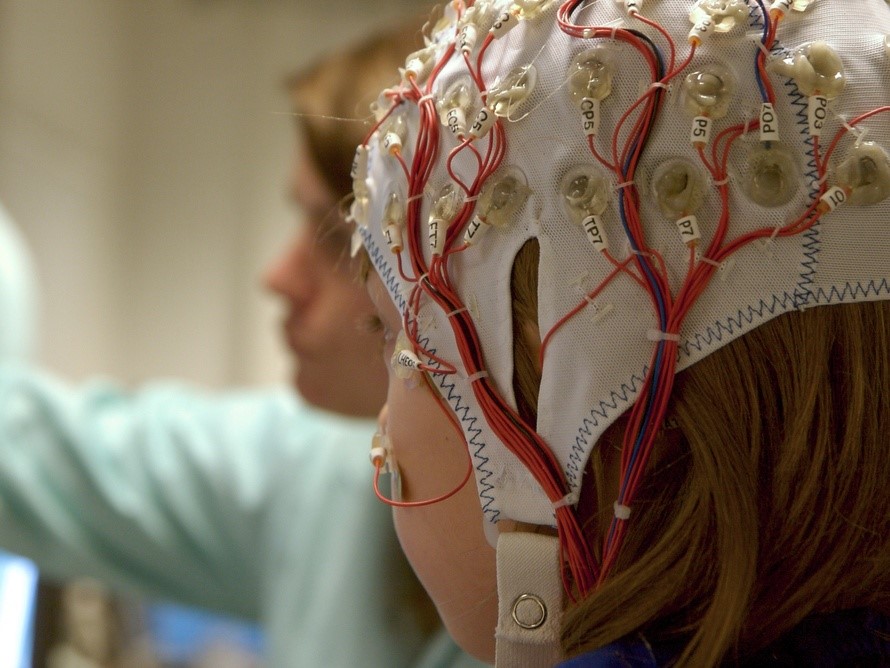
An electroencephalograph is a useful test to help diagnose epilepsy. It records the electrical activity of the brain. However, a normal result does not rule out epilepsy. Note: the information below is a general guide only. The arrangements, and the way tests are performed, may vary between different hospitals. Always follow the instructions given by your doctor or local hospital.
by Dr Colin Tidy, MRCGP
Brain and nerves
Tonic-clonic seizures
At least 1 in 30 people in the UK develop epilepsy at some stage. It most commonly starts in infancy and in people over the age of 50. However, epilepsy can begin at any age. Seizures are well controlled by treatment for most people with epilepsy. There are different types of epilepsy. This leaflet is about epilepsy with tonic-clonic seizures.
by Dr Doug McKechnie, MRCGP

Brain and nerves
Epilepsy
About 1 in 30 people in the UK develop epilepsy at some stage in their lives. It most commonly starts in childhood and in people aged over 60. However, epilepsy can begin at any age. In general, seizures are well controlled by treatment in about 4 in 5 cases.
by Dr Doug McKechnie, MRCGP
Related patient information and medicines

Patient information leaflet
Generic medicines vs brand names
This cuts out the risk of delays in the patient receiving their treatme... A few medicines, however, are always prescribed by the specific brand. This is because there are significant differences between the different brands in the amount you end up having in your body (bioavailability). Examples of these type of medicines are: Some epilepsy.

Patient information leaflet
Living with a long-term condition
A long-term condition cannot be cured but its symptoms and complications may be controlled with treatment. A long-term condition is an illness that cannot be cured but can u... Examples of long-term conditions include arthritis Arthritis , asthma Asthma , diabetes Diabetes , epilepsy Epilepsy , angina Angina , heart failure Heart failure , and.

Patient information leaflet
Spina bifida
Some types of medicine have been linked to an... These medicines include sodium valproate Sodium valproate for epilepsy , carbamazepine Carbamazepine for epilepsy and lamotrigine Lamotrigine for epilepsy. These medicines are used to treat epilepsy Epilepsy medication and side-effects and some other disorders, such as bipolar disorder Bipolar.
Patient information leaflet
Types of seizures
A seizure is a condition caused by a sudden burst of electrical activity in the brain. There are different types of seizures. This leaflet gives some information about what your doctor may wish to know and what tests may be advised after such an event. What is a seizure. They are more common in children than in adults. Myoclonic seizures involve a.

Patient information leaflet
Temporal lobe lesions
The temporal lobe of the brain is involved in understanding and remembering what we see (vision), understanding speech and language, and understanding emotions. The temporal lobe can be affected by various conditions, particularly a stroke, brain tum... Temporal lobe epilepsy Seizures which begin in the temporal lobe can cause a wide variety of.

Patient information leaflet
Can I take Amlodipine and Tramadol together?
Important precautions Epilepsy or history of seizures Tramadol can increase the risk of having a seizure, especially if you have a history of epilepsy or are taking other medicines that lower the seizure threshold. Our Medicines Interaction Checker helps you check whether your prescriptions, over-the-counter medicines, and supplements are safe to.
Further reading and references
- Lafora progressive myoclonus epilepsy; MedlinePlus, National Library of Medicine.
- Andrade DM, Turnbull J, Minassian BA. Lafora disease, seizures and sugars. Acta Myol. 2007 Jul;26(1):83-6.
- Delgado-Escueta AV. Advances in lafora progressive myoclonus epilepsy. Curr Neurol Neurosci Rep. 2007 Sep;7(5):428-33. doi: 10.1007/s11910-007-0066-7.
- Ganesh S, Puri R, Singh S, Mittal S, Dubey D. Recent advances in the molecular basis of Lafora's progressive myoclonus epilepsy. J Hum Genet. 2006;51(1):1-8. doi: 10.1007/s10038-005-0321-1. Epub 2005 Nov 26.
- Girard JM, Turnbull J, Ramachandran N, Minassian BA. Progressive myoclonus epilepsy. Handb Clin Neurol. 2013;113:1731-6. doi: 10.1016/B978-0-444-59565-2.00043-5.
- Kalviainen R. Progressive Myoclonus Epilepsies. Semin Neurol. 2015 Jun;35(3):293-9. doi: 10.1055/s-0035-1552620. Epub 2015 Jun 10.
- Lohi H, Turnbull J, Zhao XC, Pullenayegum S, Ianzano L, Yahyaoui M, Mikati MA, Quinn NP, Franceschetti S, Zara F, Minassian BA. Genetic diagnosis in Lafora disease: genotype-phenotype correlations and diagnostic pitfalls. Neurology. 2007 Mar 27;68(13):996-1001. doi: 10.1212/01.wnl.0000258561.02248.2f.
- Minassian B. Progressive Myoclonus Epilepsy, Lafora Type. 2007 Dec 28 [updated 2025 Jan 23]. In: Adam MP, Bick S, Mirzaa GM, Wallace SE, Amemiya A, editors. GeneReviews(R) [Internet]. Seattle (WA): University of Washington, Seattle; 1993-2026. Available from http://www.ncbi.nlm.nih.gov/books/NBK1389/
- Singh S, Ganesh S. Lafora progressive myoclonus epilepsy: a meta-analysis of reported mutations in the first decade following the discovery of the EPM2A and NHLRC1 genes. Hum Mutat. 2009 May;30(5):715-23. doi: 10.1002/humu.20954.
Share your thoughts or experiences with others in our patient communities.
Simple access to trusted treatments and health services online.
Common conditions
Get help with common conditions through the NHS, without a GP appointment.





Sign up to the Patient newsletter
Your weekly dose of clear, trustworthy health advice - written to help you feel informed, confident and in control.
By subscribing you accept our Privacy Policy. You can unsubscribe at any time. We never sell your data.