NHL repeat containing E3 ubiquitin protein ligase 1
Last updated 18 Aug 2020
Meets Patient’s editorial guidelines
- DownloadDownload
- Share
- Language
- Discussion
- Ask Patient
- Audio Version
- Add to preferred sources on Google
The NHLRC1 gene provides instructions for making a protein called malin. Although this protein is active in cells throughout the body, it appears to play a critical role in the survival of nerve cells (neurons) in the brain.
Video picks for GenesVideo library
Normal function
The NHLRC1 gene provides instructions for making a protein called malin. Although this protein is active in cells throughout the body, it appears to play a critical role in the survival of nerve cells (neurons) in the brain.
Malin is part of the cell machinery that breaks down (degrades) unwanted proteins within cells. The protein tags damaged and excess proteins with a molecule called ubiquitin, which serves as a signal to degrade these proteins. This process, which is known as the ubiquitin-proteasome system, acts as the cell's quality control system by disposing of damaged, misshapen, and excess proteins. This system also regulates the level of proteins involved in several critical cell activities such as the timing of cell division and growth. Malin belongs to a group of proteins in the ubiquitin-proteasome system called E3 protein-ubiquitin ligases.
Malin targets several proteins for degradation, including laforin (which is produced from the EPM2A gene). The interaction between malin and laforin likely plays a critical role in regulating the production of a complex sugar called glycogen. Glycogen is a major source of stored energy in the body. The body stores this sugar in the liver and muscles, breaking it down when it is needed for fuel. Researchers believe that malin and laforin may prevent a potentially damaging buildup of glycogen in tissues that do not normally store this molecule, such as those of the nervous system.
Conditions referring to this gene or chromosome
Other names
bA204B7.2
EPM2B
MALIN
MGC119262
MGC119264
MGC119265
NHL repeat containing 1
NHLC1_HUMAN
Patient picks for Genes

Diet and nutrition
How a protein-packed breakfast can boost your health
When we think of breakfast, we often picture a bowl of cornflakes with milk. While it’s a classic morning staple, it might not be the most effective way to start your day, as it lacks protein. Adding more protein to your breakfast can boost your energy levels and help keep you feeling full for longer.
by Victoria Raw
Healthy living
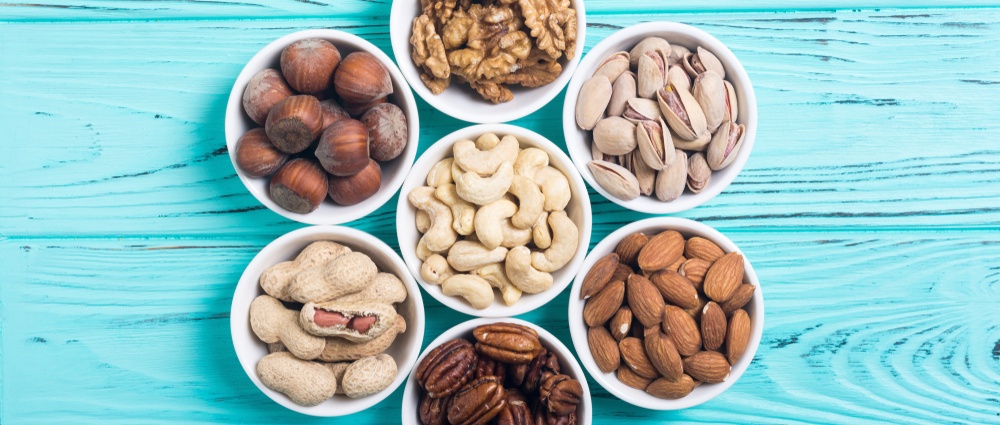
8 high-protein nuts to boost your strength
Packed with protein, delicious, easy to eat, and versatile - nuts are a great source of fuel for people building their fitness and strength. But not all nuts are created equal, which is why we count down the top eight nuts you should eat while strength training and serve these up with tasty recipe ideas.
by Lynn Stephen
Healthy living
Natural protein verses protein powder: which is better for strength training?
Consuming enough protein is essential for building strong muscles. Protein powder shakes are not a complete replacement for natural protein sources found in your food. However, you may consider supplementing your diet and strength-training regime with protein shakes. Before you decide if this is right for you, there are several benefits and considerations to take into account.
by Amberley Davis

Diet and nutrition
How much protein do you need to build muscle?
If you wish to build muscle, there is no escaping the importance of protein. Why do we need protein to build muscle, and how much protein intake do we need to maximise muscle gain?
by Amberley Davis
Diet and nutrition
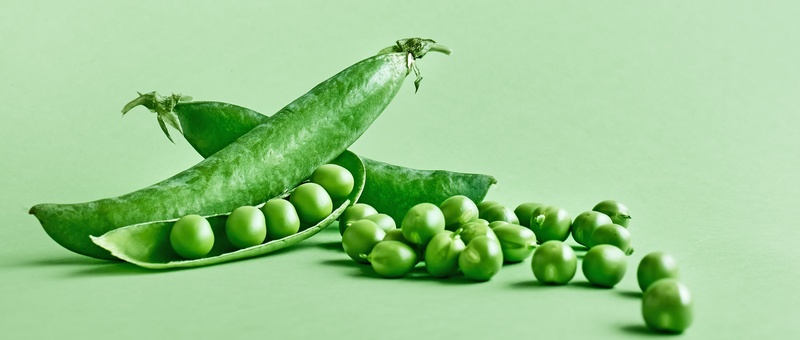
Plant-based proteins could help prevent high blood pressure
Eating a greater amount of minimally processed plant-based proteins - such as beans, nuts and lentils - may lower your chance of developing high blood pressure, according to new research.
by Laura Williamson

Healthy living
Walk, jog, repeat: what is Jeffing?
No, it’s not about perfecting your best Jeff Goldblum impression, and it’s not a quirky new social media challenge either. Jeffing is actually a fitness method created in the 1970s by Olympian Jeff Galloway. Also known as the run-walk-run method, Jeffing combines running with short walking breaks to make exercise easier and more manageable. We spoke with an expert to break down what it’s all about and if it’s actually good for your health and fitness.
by Victoria Raw
Related patient information and medicines

Patient information leaflet
Healthy eating
You can reduce your intake of trans fats by avoiding or reducing the amount of fried foods, high-fat snacks and ... A 2019 review by the SACN (The Scientific Advisory Committee on Nutrition) determined that reducing your intake of saturated fats lowers your risk of developing coronary heart disease, although there was no evidence that it reduces.
Patient information leaflet
Blood tests
The main reasons to know your blood group are if you need to have a blood transfusion or if you are pregnant. You cannot request a blood test just to know your blood group on the NHS. What is blood made up of. Blood cells These can be seen under a microscope and make up about 40% of the blood's volume. Blood cells are made in the bone marrow by.

Patient information leaflet
Liver function tests
The usual liver function tests typically include the following: Bilirubin. Albumin. Total protein. Transferases (AST or SGOT and ALT or SGPT). Gamma GT. Creatine kinase. Prothrombin time or International Normalised Ratio (INR). Serum ferritin and transferrin saturation (measures of iron storage and management by your body). Alpha-fetoprotein.

Patient information leaflet
Food allergy and intolerance
Food intolerance A food intolerance is not the same as a food allergy. Many people incorrectly use the words interchangeably. Food intolerance happens because the body has difficulty digesting certain substances in food, or because certain substances have a direct effect on the body in some way. Food intolerance can cause symptoms such as.

Patient information leaflet
Nephrotic syndrome
Nephrotic syndrome is a condition where the 'filters' in the kidney become 'leaky' and large amounts of protein leak from the blood into the urine. The main symptom is fluid retention (oedema) which is mainly due to the low protein level in the blood. Various diseases can cause nephrotic syndrome, some more serious than others. Nephrotic syndrome.
Patient information leaflet
Blood tests to detect inflammation
If you have inflammation in a part of your body then certain types of extra protein are often released from the site of inflammation and circulate in the bloodstream. Healthcare professionals use a blood test for inflammation to assess if any inflammation is happening in a person's body. In this way they are used as markers of inflammation. Note :.
Further reading and references
- NHL repeat containing E3 ubiquitin protein ligase 1; MedlinePlus, National Library of Medicine.
- Chan EM, Young EJ, Ianzano L, Munteanu I, Zhao X, Christopoulos CC, Avanzini G, Elia M, Ackerley CA, Jovic NJ, Bohlega S, Andermann E, Rouleau GA, Delgado-Escueta AV, Minassian BA, Scherer SW. Mutations in NHLRC1 cause progressive myoclonus epilepsy. Nat Genet. 2003 Oct;35(2):125-7. doi: 10.1038/ng1238. Epub 2003 Sep 7.
- Garyali P, Siwach P, Singh PK, Puri R, Mittal S, Sengupta S, Parihar R, Ganesh S. The malin-laforin complex suppresses the cellular toxicity of misfolded proteins by promoting their degradation through the ubiquitin-proteasome system. Hum Mol Genet. 2009 Feb 15;18(4):688-700. doi: 10.1093/hmg/ddn398. Epub 2008 Nov 25.
- Gentry MS, Worby CA, Dixon JE. Insights into Lafora disease: malin is an E3 ubiquitin ligase that ubiquitinates and promotes the degradation of laforin. Proc Natl Acad Sci U S A. 2005 Jun 14;102(24):8501-6. doi: 10.1073/pnas.0503285102. Epub 2005 Jun 1.
- Gomez-Abad C, Gomez-Garre P, Gutierrez-Delicado E, Saygi S, Michelucci R, Tassinari CA, Rodriguez de Cordoba S, Serratosa JM. Lafora disease due to EPM2B mutations: a clinical and genetic study. Neurology. 2005 Mar 22;64(6):982-6. doi: 10.1212/01.WNL.0000154519.10805.F7.
- Singh S, Ganesh S. Lafora progressive myoclonus epilepsy: a meta-analysis of reported mutations in the first decade following the discovery of the EPM2A and NHLRC1 genes. Hum Mutat. 2009 May;30(5):715-23. doi: 10.1002/humu.20954.
- Singh S, Sethi I, Francheschetti S, Riggio C, Avanzini G, Yamakawa K, Delgado-Escueta AV, Ganesh S. Novel NHLRC1 mutations and genotype-phenotype correlations in patients with Lafora's progressive myoclonic epilepsy. J Med Genet. 2006 Sep;43(9):e48. doi: 10.1136/jmg.2005.039479.
- Solaz-Fuster MC, Gimeno-Alcaniz JV, Ros S, Fernandez-Sanchez ME, Garcia-Fojeda B, Criado Garcia O, Vilchez D, Dominguez J, Garcia-Rocha M, Sanchez-Piris M, Aguado C, Knecht E, Serratosa J, Guinovart JJ, Sanz P, Rodriguez de Cordoba S. Regulation of glycogen synthesis by the laforin-malin complex is modulated by the AMP-activated protein kinase pathway. Hum Mol Genet. 2008 Mar 1;17(5):667-78. doi: 10.1093/hmg/ddm339. Epub 2007 Nov 20.
- Vilchez D, Ros S, Cifuentes D, Pujadas L, Valles J, Garcia-Fojeda B, Criado-Garcia O, Fernandez-Sanchez E, Medrano-Fernandez I, Dominguez J, Garcia-Rocha M, Soriano E, Rodriguez de Cordoba S, Guinovart JJ. Mechanism suppressing glycogen synthesis in neurons and its demise in progressive myoclonus epilepsy. Nat Neurosci. 2007 Nov;10(11):1407-13. doi: 10.1038/nn1998. Epub 2007 Oct 21.
- Worby CA, Gentry MS, Dixon JE. Malin decreases glycogen accumulation by promoting the degradation of protein targeting to glycogen (PTG). J Biol Chem. 2008 Feb 15;283(7):4069-76. doi: 10.1074/jbc.M708712200. Epub 2007 Dec 10.
Share your thoughts or experiences with others in our patient communities.
Simple access to trusted treatments and health services online.
Common conditions
Get help with common conditions through the NHS, without a GP appointment.





Sign up to the Patient newsletter
Your weekly dose of clear, trustworthy health advice - written to help you feel informed, confident and in control.
By subscribing you accept our Privacy Policy. You can unsubscribe at any time. We never sell your data.