Ulcerative colitis
Last updated 28 Aug 2023
Meets Patient’s editorial guidelines
- DownloadDownload
- Share
- Language
- Discussion
- Ask Patient
- Audio Version
- Add to preferred sources on Google
Ulcerative colitis is a chronic disorder that affects the digestive system. This condition is characterised by abnormal inflammation of the inner surface (epithelium) of the rectum and colon. The rectum and colon make up most of the length of the large intestine. The inflammation usually causes open sores (ulcers) to develop in the large intestine. Ulcerative colitis usually appears between the age of 15 and 30, although it can develop at any age. The inflammation tends to flare up multiple times throughout a person's life, which causes recurring signs and symptoms.
Video picks for Genetic conditionsVideo library
Description
Ulcerative colitis is a chronic disorder that affects the digestive system. This condition is characterised by abnormal inflammation of the inner surface (epithelium) of the rectum and colon. The rectum and colon make up most of the length of the large intestine. The inflammation usually causes open sores (ulcers) to develop in the large intestine. Ulcerative colitis usually appears between the age of 15 and 30, although it can develop at any age. The inflammation tends to flare up multiple times throughout a person's life, which causes recurring signs and symptoms.
The most common symptoms of ulcerative colitis are cramping abdominal pain and frequent diarrhea, often with blood, pus, or mucus in the stool. Other signs and symptoms include nausea, loss of appetite, bowel urgency, fatigue, and fevers. Chronic bleeding from the inflamed and ulcerated intestinal tissue can cause a shortage of red blood cells (anaemia) in some affected individuals. People with this disorder have difficulty absorbing enough fluids and nutrients from their diet and often experience weight loss. Affected children usually grow more slowly than normal. Less commonly, ulcerative colitis causes problems with the skin, joints, eyes, kidneys, or liver, which are most likely due to abnormal inflammation.
Toxic megacolon is a rare complication of ulcerative colitis that can be life-threatening. Toxic megacolon involves a widening (dilation) of the colon and an overwhelming inflammatory response. Ulcerative colitis also increases the risk of developing colon cancer, especially in people whose entire colon is inflamed and in those who have had ulcerative colitis for 8 years or more.
Ulcerative colitis is one common form of inflammatory bowel disease (IBD). Another type of IBD, Crohn's disease, also causes chronic inflammation of the intestines. Unlike ulcerative colitis, which affects only the inner surface of the large intestine, Crohn's disease can cause inflammation in any part of the digestive system, and the inflammation extends deeper into the intestinal tissue.
Inheritance patterns
The source lists the following possible inheritance patterns: Pattern unknown. More than one pattern can apply in different cases.
Related genes
Other names
Colitis gravis
Idiopathic proctocolitis
Inflammatory bowel disease, ulcerative colitis type
UC
Patient picks for Genetic conditions

Digestive health
Ulcerative colitis
Ulcerative colitis is a disease where inflammation develops in the colon and the rectum (the large intestine). The most common symptom when the disease flares up is diarrhoea mixed with blood. Treatment can usually ease a flare-up of symptoms. The disease can often be prevented from flaring up by taking medication, usually mesalazine, each day. Surgery to remove the colon is needed in some cases.
by Dr Colin Tidy, MRCGP
Medicine
Beclometasone tablets for ulcerative colitis
Beclometasone belongs to a class of medicines known as corticosteroids (more commonly called steroids). Depending on the length of your course of treatment, your pharmacist may give you a blue steroid treatment card. If so, carry this with you at all times while you are taking beclometasone tablets. If you need any medical treatment, make sure the person treating you knows that you are taking a steroid tablet.
by Michael Stewart, MRPharmS
Medicine
Olsalazine for ulcerative colitis
Take olsalazine tablets or capsules with a meal or after a snack. It is important that you keep your regular appointments with your doctor so that your progress can be checked. You will need to have regular blood tests. Common side-effects tend to be minor, but on occasions, olsalazine can cause more serious problems. You should tell your doctor immediately if you have any unexplained bleeding, bruising, red or purple discolorations of your skin, a sore throat, a high temperature (fever) or you feel generally unwell.
by Michael Stewart, MRPharmS
Related patient information and medicines
Patient information leaflet
Ulcerative colitis
Ulcerative colitis is a disease where inflammation develops in the colon and the rectum (the large intestine). The most common symptom when the disease flares up is diarrhoea mixed with blood. Ulcerative colitis is a disease of the colon and the rectum (the large intestine). Ulcers that occur in ulcerative colitis develop in the large intestine.

Patient information leaflet
Rectal bleeding
Ulcerative colitis and other forms of colitis Ulcerative colitis (UC) is a disease where inflammation develops in the colon and rectum. A common symptom when the disease flares up is diarrhoea mixed with blood. The blood comes from ulcers that develop on the lining of the inflamed gut. There are other rare causes of inflammation of the colon.

Patient information leaflet
Oral steroids
These include steroids such as: Prednisolone. Prednisolone Betamethasone. What are oral steroids used for. Oral steroids are used to treat a large number of conditions, usually by reducing inflammation or the effect of the immune system. Some examples include: Inflammatory bowel diseases (for example, Crohn's disease Crohn's disease , ulcerative.
Patient information leaflet
Left upper quadrant pain
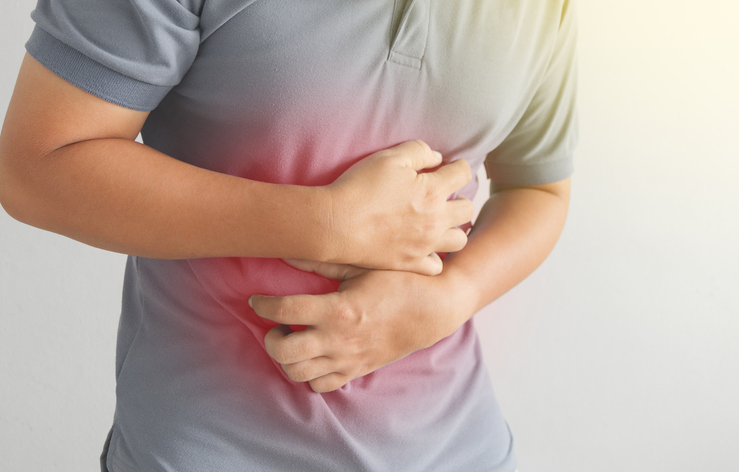
Left upper quadrant (LUQ) pain is pain located in the upper part of the abdomen on your left-hand side. There are many causes of LUQ pain. Key points Left upper quadrant (LUQ) pain is felt in the upper left section of the abdomen, under the ribs, and may radiate to the back or shoulder. It usually comes with a temperature ( fever ) and a change in.

Patient information leaflet
Inflammatory bowel disease
Inflammatory Bowel Disease (IBD) is a term used to describe people who either have either of the two main types of IBD (Crohn's disease and ulcerative colitis). Both these conditions can cause inflammation of the colon and rectum (large bowel or large intestine) with similar symptoms, such as bloody diarrhoea, tummy (abdominal) pain, we... How.

Patient information leaflet
Rectal bleeding in children
Inflammatory bowel disease (Crohn's disease or ulcerative colitis) Inflammatory bowel disease (IBD) is a term used for two long-term conditions that cause inflammation of the gut (digestive tract). See also the leaflets on Crohn's disease Crohn's disease and Ulcerative colitis Ulcerative colitis. Gastroenteritis Gastroenteritis Gastroenteritis in.
Further reading and references
- Ulcerative colitis; MedlinePlus, National Library of Medicine.
- Anderson CA, Boucher G, Lees CW, Franke A, D'Amato M, Taylor KD, Lee JC, Goyette P, Imielinski M, Latiano A, Lagace C, Scott R, Amininejad L, Bumpstead S, Baidoo L, Baldassano RN, Barclay M, Bayless TM, Brand S, Buning C, Colombel JF, Denson LA, De Vos M, Dubinsky M, Edwards C, Ellinghaus D, Fehrmann RS, Floyd JA, Florin T, Franchimont D, Franke L, Georges M, Glas J, Glazer NL, Guthery SL, Haritunians T, Hayward NK, Hugot JP, Jobin G, Laukens D, Lawrance I, Lemann M, Levine A, Libioulle C, Louis E, McGovern DP, Milla M, Montgomery GW, Morley KI, Mowat C, Ng A, Newman W, Ophoff RA, Papi L, Palmieri O, Peyrin-Biroulet L, Panes J, Phillips A, Prescott NJ, Proctor DD, Roberts R, Russell R, Rutgeerts P, Sanderson J, Sans M, Schumm P, Seibold F, Sharma Y, Simms LA, Seielstad M, Steinhart AH, Targan SR, van den Berg LH, Vatn M, Verspaget H, Walters T, Wijmenga C, Wilson DC, Westra HJ, Xavier RJ, Zhao ZZ, Ponsioen CY, Andersen V, Torkvist L, Gazouli M, Anagnou NP, Karlsen TH, Kupcinskas L, Sventoraityte J, Mansfield JC, Kugathasan S, Silverberg MS, Halfvarson J, Rotter JI, Mathew CG, Griffiths AM, Gearry R, Ahmad T, Brant SR, Chamaillard M, Satsangi J, Cho JH, Schreiber S, Daly MJ, Barrett JC, Parkes M, Annese V, Hakonarson H, Radford-Smith G, Duerr RH, Vermeire S, Weersma RK, Rioux JD. Meta-analysis identifies 29 additional ulcerative colitis risk loci, increasing the number of confirmed associations to 47. Nat Genet. 2011 Mar;43(3):246-52. doi: 10.1038/ng.764. Epub 2011 Feb 6.
- Danese S, Fiocchi C. Ulcerative colitis. N Engl J Med. 2011 Nov 3;365(18):1713-25. doi: 10.1056/NEJMra1102942. No abstract available.
- Di Sabatino A, Biancheri P, Rovedatti L, Macdonald TT, Corazza GR. Recent advances in understanding ulcerative colitis. Intern Emerg Med. 2012 Apr;7(2):103-11. doi: 10.1007/s11739-011-0719-z. Epub 2011 Nov 9.
- Fairbrass KM, Costantino SJ, Gracie DJ, Ford AC. Prevalence of irritable bowel syndrome-type symptoms in patients with inflammatory bowel disease in remission: a systematic review and meta-analysis. Lancet Gastroenterol Hepatol. 2020 Dec;5(12):1053-1062. doi: 10.1016/S2468-1253(20)30300-9. Epub 2020 Oct 2.
- McGuckin MA, Eri R, Simms LA, Florin TH, Radford-Smith G. Intestinal barrier dysfunction in inflammatory bowel diseases. Inflamm Bowel Dis. 2009 Jan;15(1):100-13. doi: 10.1002/ibd.20539.
- Pigneur B, Escher J, Elawad M, Lima R, Buderus S, Kierkus J, Guariso G, Canioni D, Lambot K, Talbotec C, Shah N, Begue B, Rieux-Laucat F, Goulet O, Cerf-Bensussan N, Neven B, Ruemmele FM. Phenotypic characterization of very early-onset IBD due to mutations in the IL10, IL10 receptor alpha or beta gene: a survey of the Genius Working Group. Inflamm Bowel Dis. 2013 Dec;19(13):2820-8. doi: 10.1097/01.MIB.0000435439.22484.d3.
- Podolsky DK. Inflammatory bowel disease. N Engl J Med. 2002 Aug 8;347(6):417-29. doi: 10.1056/NEJMra020831. No abstract available.
- Shim JO, Seo JK. Very early-onset inflammatory bowel disease (IBD) in infancy is a different disease entity from adult-onset IBD; one form of interleukin-10 receptor mutations. J Hum Genet. 2014 Jun;59(6):337-41. doi: 10.1038/jhg.2014.32. Epub 2014 May 1.
- UK IBD Genetics Consortium; Barrett JC, Lee JC, Lees CW, Prescott NJ, Anderson CA, Phillips A, Wesley E, Parnell K, Zhang H, Drummond H, Nimmo ER, Massey D, Blaszczyk K, Elliott T, Cotterill L, Dallal H, Lobo AJ, Mowat C, Sanderson JD, Jewell DP, Newman WG, Edwards C, Ahmad T, Mansfield JC, Satsangi J, Parkes M, Mathew CG; Wellcome Trust Case Control Consortium 2; Donnelly P, Peltonen L, Blackwell JM, Bramon E, Brown MA, Casas JP, Corvin A, Craddock N, Deloukas P, Duncanson A, Jankowski J, Markus HS, Mathew CG, McCarthy MI, Palmer CN, Plomin R, Rautanen A, Sawcer SJ, Samani N, Trembath RC, Viswanathan AC, Wood N, Spencer CC, Barrett JC, Bellenguez C, Davison D, Freeman C, Strange A, Donnelly P, Langford C, Hunt SE, Edkins S, Gwilliam R, Blackburn H, Bumpstead SJ, Dronov S, Gillman M, Gray E, Hammond N, Jayakumar A, McCann OT, Liddle J, Perez ML, Potter SC, Ravindrarajah R, Ricketts M, Waller M, Weston P, Widaa S, Whittaker P, Deloukas P, Peltonen L, Mathew CG, Blackwell JM, Brown MA, Corvin A, McCarthy MI, Spencer CC, Attwood AP, Stephens J, Sambrook J, Ouwehand WH, McArdle WL, Ring SM, Strachan DP. Genome-wide association study of ulcerative colitis identifies three new susceptibility loci, including the HNF4A region. Nat Genet. 2009 Dec;41(12):1330-4. doi: 10.1038/ng.483. Epub 2009 Nov 15.
- Xavier RJ, Podolsky DK. Unravelling the pathogenesis of inflammatory bowel disease. Nature. 2007 Jul 26;448(7152):427-34. doi: 10.1038/nature06005.
Share your thoughts or experiences with others in our patient communities.
Simple access to trusted treatments and health services online.
Common conditions
Get help with common conditions through the NHS, without a GP appointment.





Sign up to the Patient newsletter
Your weekly dose of clear, trustworthy health advice - written to help you feel informed, confident and in control.
By subscribing you accept our Privacy Policy. You can unsubscribe at any time. We never sell your data.