ATPase Na+/K+ transporting subunit alpha 3
Last updated 23 Apr 2024
Meets Patient’s editorial guidelines
- DownloadDownload
- Share
- Language
- Discussion
- Ask Patient
- Audio Version
- Add to preferred sources on Google
The ATP1A3 gene provides instructions for making one part (the alpha-3 subunit) of a protein known as Na+/K+ ATPase or the sodium pump. This protein uses energy from a molecule called adenosine triphosphate (ATP) to transport charged atoms (ions) into and out of cells. Specifically, it pumps sodium ions (Na+) out of cells and potassium ions (K+) into cells.
Video picks for GenesVideo library
Normal function
The ATP1A3 gene provides instructions for making one part (the alpha-3 subunit) of a protein known as Na+/K+ ATPase or the sodium pump. This protein uses energy from a molecule called adenosine triphosphate (ATP) to transport charged atoms (ions) into and out of cells. Specifically, it pumps sodium ions (Na+) out of cells and potassium ions (K+) into cells.
Na+/K+ ATPases that include the alpha-3 subunit are critical for normal function of nerve cells in the brain (neurons). The movement of sodium and potassium ions helps regulate the electrical activity of these cells and plays an important role in the signaling process that controls muscle movement. The activity of Na+/K+ ATPase also helps regulate cell size (volume).
Additionally, Na+/K+ ATPase helps regulate a process called neurotransmitter reuptake. Neurotransmitters are chemical messengers that transmit signals from one neuron to another. After a neurotransmitter has had its effect, it must be removed quickly from the space between the neurons. The reuptake of neurotransmitters is carefully controlled to ensure that signals are sent and received accurately throughout the nervous system.
Conditions referring to this gene or chromosome
Other names
AT1A3_HUMAN
ATPase, Na+/K+ transporting, alpha 3 polypeptide
Na+/K+ -ATPase alpha 3 subunit
Na+/K+ ATPase 3
sodium pump 3
sodium-potassium-ATPase, alpha 3 polypeptide
sodium/potassium-transporting ATPase alpha-3 chain
Patient picks for Genes

Children's health
Alpha-1 antitrypsin deficiency
Alpha-1 antitrypsin deficiency is an inherited genetic condition. A genetic condition is one that can be passed on from parents through genes. In alpha-1 antitrypsin deficiency the result of a genetic abnormality leads to lung and, in some people, liver damage. Lung symptoms are the most common and include shortness of breath, cough and wheezing. Symptoms can worsen over time. At present, there is no cure for alpha-1 antitrypsin deficiency. Treatment aims at slowing down the progression of the disease.
by Dr Philippa Vincent, MRCGP
Treatment and medication
Alpha-blockers
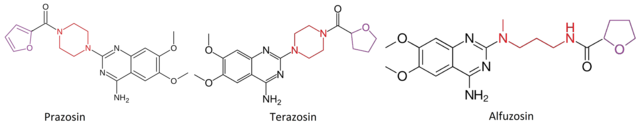
Alpha-blockers are medicines that are mainly used to treat high blood pressure (hypertension) and problems with passing urine in men who have enlargement of the prostate gland. Prostate gland enlargement is also called benign prostatic hyperplasia (BPH).
by Dr Doug McKechnie, MRCGP
Medicine
Phenoxybenzamine - an alpha-blocker
Adults will normally start with one capsule a day. This dose may then be increased over the next few days. It is common to feel dizzy or light-headed initially. This should soon settle. You may be given other medicines to take alongside phenoxybenzamine.
by Michael Stewart, MRPharmS

Medicine
Alfacalcidol capsules and drops
Alfacalcidol is a type of vitamin D. You will need to have regular blood tests while you are taking the medicine so that your doctor can adjust your dose. Make sure you know the symptoms of too much calcium in your blood - these are losing your appetite, feeling thirsty, being sick (vomiting), feeling tired and losing weight. Please let your doctor know if you develop these symptoms.
by Michael Stewart, MRPharmS

Medicine
Prazosin - an alpha-blocker
Your first dose of prazosin may make you feel dizzy or faint, or start sweating. Take your first dose at bedtime and remain lying down until these symptoms have completely passed. Prazosin can cause dizziness which may affect your ability to drive. Make sure your reactions are normal before you drive and before you use tools or machines.
by Michael Stewart, MRPharmS
Medicine
Indoramin - an alpha-blocker
Indoramin is prescribed for two different medical conditions: 20 mg strength tablets are prescribed for men with prostate problems, and 25 mg strength tablets are prescribed for people with high blood pressure. You are advised not to drink alcohol while you are on indoramin. Do not drive and do not use tools or machines if you feel tired or dizzy.
by Michael Stewart, MRPharmS
Related patient information and medicines

Patient information leaflet
Can I take Rivaroxaban and Tamsulosin together?
However, both medicines can occasionally cause dizziness or lightheadedness,... Taking them together might slightly increase the chance of feeling faint. Why this happens Rivaroxaban is an anticoagulant (blood thinner) and tamsulosin is an alpha-blocker used for prostate symptoms. They are processed by different pathways in the liver and do not.

Patient information leaflet
Peripheral vasodilators
Peripheral vasodilators are medicines that are used to treat conditions that affect blood vessels in outer (peripheral) parts of the body such as the arms and legs. For example, they are used to treat peripheral arterial disease and Raynaud's phenomenon. They ease the symptoms of these conditions by dilating the blood vessels, preventing them from.

Patient information leaflet
Can I take Lansoprazole and Tamsulosin together?
There are no known significant interactions between... It is generally considered safe to take these two medicines together. Why this happens Lansoprazole is a proton pump inhibitor (PPI) used to reduce stomach acid, and tamsulosin is an alpha-blocker used to help with urinary symptoms. They are processed by different pathways in the liver and do.

Patient information leaflet
Blood in semen
Haematospermia means there is blood in the semen. Usually there are no other symptoms such as pain. In men under 40 years old it is usually harmless and resolves without any treatment. However, it can also be caused by a number of conditions that need investigations and treatment. How common is blood in semen. Blood in semen (haematospermia) is.

Patient information leaflet
Thalassaemia
Thalassaemia is an inherited condition affecting the blood. Thalassaemia is an inherited (genetic) condition affecting the blood. Depending on which type you have, thalassaemia may cause no illness at all, or may be a serious lifelong condition requiring treatment. Haemoglobin is made out of different parts. The main parts are called alpha chains.

Patient information leaflet
Chronic prostatitis
Prostatitis means that you have inflammation of your prostate gland. There are two main types of prostatitis: short-lived (acute) or persistent (chronic). It may be that some antibiotics have anti-inflammatory properties as well or that they may clear some germs (bacteria) that are difficult to find when your uri... Alpha-blockers Alpha-blockers -.
Further reading and references
- ATPase Na+/K+ transporting subunit alpha 3; MedlinePlus, National Library of Medicine.
- Blanco-Arias P, Einholm AP, Mamsa H, Concheiro C, Gutierrez-de-Teran H, Romero J, Toustrup-Jensen MS, Carracedo A, Jen JC, Vilsen B, Sobrido MJ. A C-terminal mutation of ATP1A3 underscores the crucial role of sodium affinity in the pathophysiology of rapid-onset dystonia-parkinsonism. Hum Mol Genet. 2009 Jul 1;18(13):2370-7. doi: 10.1093/hmg/ddp170. Epub 2009 Apr 7.
- Brashear A, Dobyns WB, de Carvalho Aguiar P, Borg M, Frijns CJ, Gollamudi S, Green A, Guimaraes J, Haake BC, Klein C, Linazasoro G, Munchau A, Raymond D, Riley D, Saunders-Pullman R, Tijssen MA, Webb D, Zaremba J, Bressman SB, Ozelius LJ. The phenotypic spectrum of rapid-onset dystonia-parkinsonism (RDP) and mutations in the ATP1A3 gene. Brain. 2007 Mar;130(Pt 3):828-35. doi: 10.1093/brain/awl340. Epub 2007 Feb 4.
- Brashear A, Sweadner KJ, Haq I, Napoli E, Ozelius L. ATP1A3-Related Disorder. 2008 Feb 7 [updated 2024 Dec 5]. In: Adam MP, Bick S, Mirzaa GM, Wallace SE, Amemiya A, editors. GeneReviews(R) [Internet]. Seattle (WA): University of Washington, Seattle; 1993-2026. Available from http://www.ncbi.nlm.nih.gov/books/NBK1115/
- de Carvalho Aguiar P, Sweadner KJ, Penniston JT, Zaremba J, Liu L, Caton M, Linazasoro G, Borg M, Tijssen MA, Bressman SB, Dobyns WB, Brashear A, Ozelius LJ. Mutations in the Na+/K+ -ATPase alpha3 gene ATP1A3 are associated with rapid-onset dystonia parkinsonism. Neuron. 2004 Jul 22;43(2):169-75. doi: 10.1016/j.neuron.2004.06.028.
- Haq IU, Snively BM, Sweadner KJ, Suerken CK, Cook JF, Ozelius LJ, Miller C, McCall WV, Whitlow CT, Brashear A. Revising rapid-onset dystonia-parkinsonism: Broadening indications for ATP1A3 testing. Mov Disord. 2019 Oct;34(10):1528-1536. doi: 10.1002/mds.27801. Epub 2019 Jul 30.
- Heinzen EL, Swoboda KJ, Hitomi Y, Gurrieri F, Nicole S, de Vries B, Tiziano FD, Fontaine B, Walley NM, Heavin S, Panagiotakaki E; European Alternating Hemiplegia of Childhood (AHC) Genetics Consortium; Biobanca e Registro Clinico per l'Emiplegia Alternante (I.B.AHC) Consortium; European Network for Research on Alternating Hemiplegia (ENRAH) for Small and Medium-sized Enterpriese (SMEs) Consortium; Fiori S, Abiusi E, Di Pietro L, Sweney MT, Newcomb TM, Viollet L, Huff C, Jorde LB, Reyna SP, Murphy KJ, Shianna KV, Gumbs CE, Little L, Silver K, Ptacek LJ, Haan J, Ferrari MD, Bye AM, Herkes GK, Whitelaw CM, Webb D, Lynch BJ, Uldall P, King MD, Scheffer IE, Neri G, Arzimanoglou A, van den Maagdenberg AM, Sisodiya SM, Mikati MA, Goldstein DB. De novo mutations in ATP1A3 cause alternating hemiplegia of childhood. Nat Genet. 2012 Sep;44(9):1030-4. doi: 10.1038/ng.2358. Epub 2012 Jul 29.
- Kamm C, Fogel W, Wachter T, Schweitzer K, Berg D, Kruger R, Freudenstein D, Gasser T. Novel ATP1A3 mutation in a sporadic RDP patient with minimal benefit from deep brain stimulation. Neurology. 2008 Apr 15;70(16 Pt 2):1501-3. doi: 10.1212/01.wnl.0000310431.41036.e0. No abstract available.
- Rodacker V, Toustrup-Jensen M, Vilsen B. Mutations Phe785Leu and Thr618Met in Na+,K+-ATPase, associated with familial rapid-onset dystonia parkinsonism, interfere with Na+ interaction by distinct mechanisms. J Biol Chem. 2006 Jul 7;281(27):18539-48. doi: 10.1074/jbc.M601780200. Epub 2006 Apr 21.
- Rosewich H, Thiele H, Ohlenbusch A, Maschke U, Altmuller J, Frommolt P, Zirn B, Ebinger F, Siemes H, Nurnberg P, Brockmann K, Gartner J. Heterozygous de-novo mutations in ATP1A3 in patients with alternating hemiplegia of childhood: a whole-exome sequencing gene-identification study. Lancet Neurol. 2012 Sep;11(9):764-73. doi: 10.1016/S1474-4422(12)70182-5. Epub 2012 Jul 30.
- Zanotti-Fregonara P, Vidailhet M, Kas A, Ozelius LJ, Clot F, Hindie E, Ravasi L, Devaux JY, Roze E. [123I]-FP-CIT and [99mTc]-HMPAO single photon emission computed tomography in a new sporadic case of rapid-onset dystonia-parkinsonism. J Neurol Sci. 2008 Oct 15;273(1-2):148-51. doi: 10.1016/j.jns.2008.06.033. Epub 2008 Aug 3.
Share your thoughts or experiences with others in our patient communities.
Simple access to trusted treatments and health services online.
Common conditions
Get help with common conditions through the NHS, without a GP appointment.





Sign up to the Patient newsletter
Your weekly dose of clear, trustworthy health advice - written to help you feel informed, confident and in control.
By subscribing you accept our Privacy Policy. You can unsubscribe at any time. We never sell your data.