bolA family member 3
Last updated 18 Aug 2020
Meets Patient’s editorial guidelines
- DownloadDownload
- Share
- Language
- Discussion
- Ask Patient
- Audio Version
- Add to preferred sources on Google
The BOLA3 gene provides instructions for making a protein whose function is not well understood. The BOLA3 protein is thought to be involved in the formation of molecules called iron-sulfur (Fe-S) clusters or in the attachment of these clusters to other proteins. Certain proteins require attachment of Fe-S clusters to function properly.
Video picks for GenesVideo library
Normal function
The BOLA3 gene provides instructions for making a protein whose function is not well understood. The BOLA3 protein is thought to be involved in the formation of molecules called iron-sulfur (Fe-S) clusters or in the attachment of these clusters to other proteins. Certain proteins require attachment of Fe-S clusters to function properly.
Two versions (isoforms) of the BOLA3 protein are produced from the BOLA3 gene. One version is found in cellular structures called mitochondria. Mitochondria are the energy-producing centers of cells. In these structures, several proteins carry out a series of chemical steps to convert the energy in food into a form that cells can use. Many of the proteins involved in this process require Fe-S clusters to function, including protein complexes called complex I, complex II, and complex III.
Fe-S clusters are also required for another mitochondrial protein to function; this protein is involved in the modification of additional proteins that aid in energy production in mitochondria, including the pyruvate dehydrogenase complex and the alpha-ketoglutarate dehydrogenase complex. This modification is also critical to the function of the glycine cleavage system, a set of proteins that breaks down a protein building block (amino acid) called glycine when levels become too high.
The other version of the BOLA3 protein is found in the fluid-filled space inside the cell (the cytoplasm). While this protein is likely involved in Fe-S cluster formation in the cytoplasm, the role of this isoform is not well understood.
Conditions referring to this gene or chromosome
Other names
bolA homolog 3
bolA-like protein 3
bolA-like protein 3 isoform 1
bolA-like protein 3 isoform 2
BOLA3_HUMAN
MMDS2
Patient picks for Genes
Podcasts
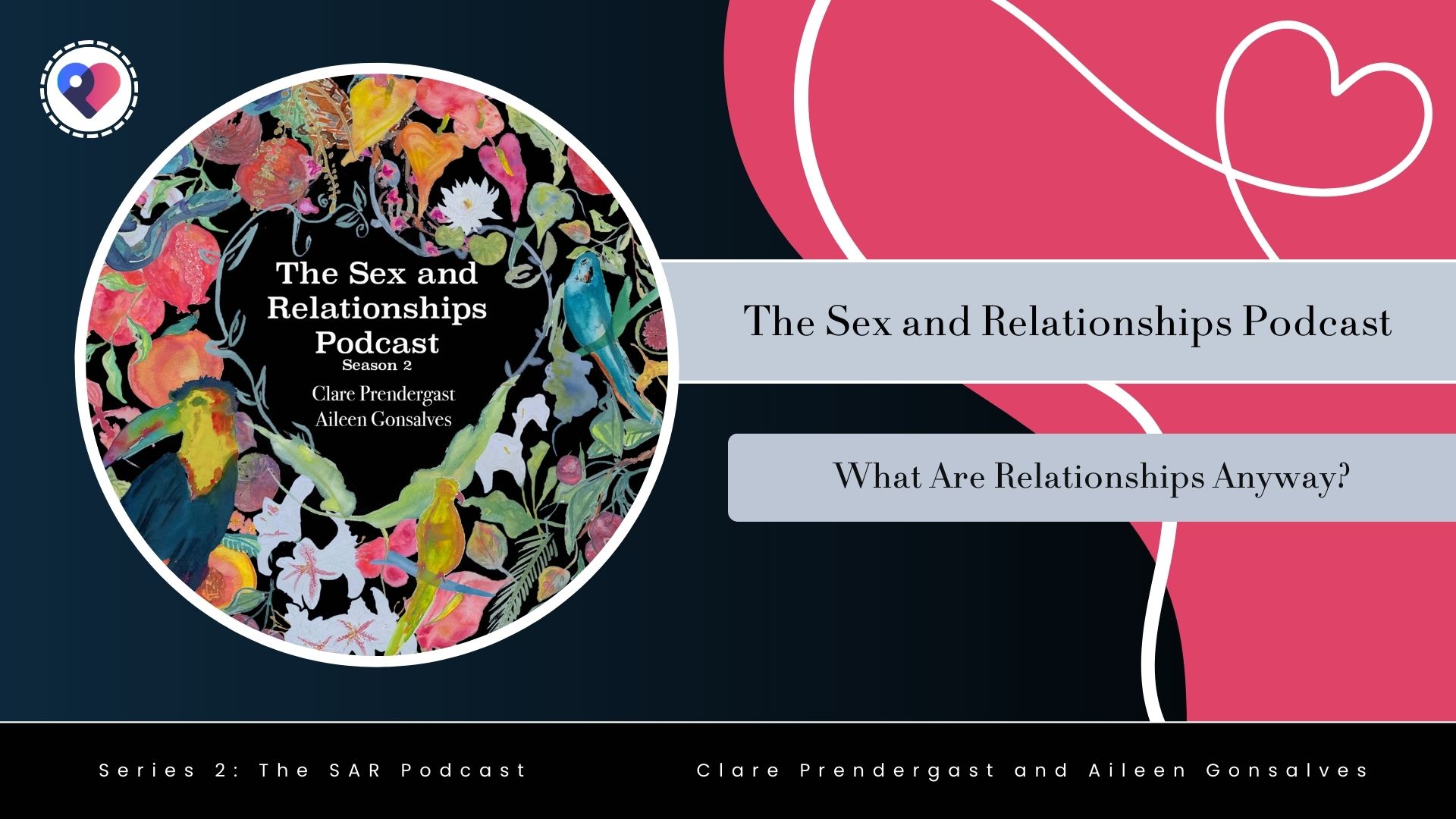
What are relationships anyway?
Relationships – what are they? We often think of relationships as intimate with a partner and yet we actually have hundreds of relationships with friends, family, at work, at play even with nature and beyond. Clare and Aileen kick off the season by discussing the breadth of relationships.
by Thomas Andrew Porteus, MBCS

Podcasts
The parental minefield
How often have you said something quite ordinary to a parent, or they’ve said something to you and suddenly the room feels like it’s about to explode? Welcome to the parental nightmare. It’s not just about conflict, it’s about what’s hidden underneath these relationships – family secrets, unspoken stories, patterns of behaviour passed from one generation to the next. In this episode Clare and Aileen explore the complex, often lifelong, relationship we have with our parents and discuss practical strategies to help you navigate this important relationship.
by Thomas Andrew Porteus, MBCS

Mental health
Not quite 'back to normal': a guide to post-pandemic family healing
When news broke in late 2019 of a virus spreading rapidly across the globe, the word ‘unprecedented’ quickly became part of everyday vocabulary in the months that followed. The outbreak of Covid-19 marked the world’s most significant public health crisis in at least a century, shaking the foundations of the one place we usually feel most secure - the home. It is no surprise that years of disrupted routines have left a lasting mark on the family unit. From the sudden loss of support networks to the blurring of boundaries between home, school, and work, the pandemic reshaped how families function. We spoke with a psychotherapist to explore these long-term psychological ripples and why reflecting on that period is essential for understanding - and healing - the family dynamic today.
by Victoria Raw

Children's health
Pearson syndrome: how one family learned to live in the present
Pearson syndrome is a rare and serious mitochondrial disorder that typically affects infants and young children. There is currently no cure, and it is usually life-threatening. We follow one family’s journey of living with the condition, exploring how it shapes their everyday lives, the challenges they face, and what it truly means to cherish every moment.
by Victoria Raw
COVID-19
COVID-19: how to support vulnerable friends and family during the coronavirus pandemic
Current coronavirus lockdown measures are especially challenging for older people and those with mental health issues and underlying health conditions. We look at how to support vulnerable loved ones during the COVID-19 pandemic.
by Sally Turner

COVID-19
How to meet friends and family safely outdoors
Across the UK, lockdowns are easing and we're allowed to see friends and family outside (and indoors too if you live in England or Scotland). But that doesn't mean the risk of spreading COVID-19 has vanished; you still need to take precautions to keep yourself and your loved ones safe.
by Andrea Downey
Related patient information and medicines

Patient information leaflet
Retinoblastoma
Retinoblastoma is a tumour which usually affects children aged under 5. Most commonly, it affects children aged under 2, including newborn babies. Even though retinoblastoma is a genetic disease, most of these cases occur in families who have never had a family member with retinoblastoma. Siblings of an affected child in a family in which... See.

Patient information leaflet
Ebola
Ebola is a viral infection, which mainly occurs in West and Equatorial Africa. There is as yet no vaccine or cure for Ebola, and about 4 out of 10 of those infected die of the disease. The risk of becoming infected with Ebola in the UK is very small. Ebola is spread by close contact with an infected person. People with Ebola become infectious when.
Patient information leaflet
Alcohol use disorder
Many people drink alcohol. For some, alcohol is something that they enjoy in moderation. Other people drink alcoho... Some people can find it very difficult to control, or stop, their drinking. What is alcohol use disorder. Alcohol use disorder means drinking alcohol in a way that causes harm. If you or a family member has alcohol use disorder.
Patient information leaflet
Huntington's disease
What causes Huntington's disease. Huntington's disease is caused by a defective gene that you inherit from your parents. Huntington's disease is an autosomal dominant condition, meaning you can inherit the disease from just one of your parents. If one of your parents has a faulty copy of the gene, there is a 50:50 chance that each child they have.
Patient information leaflet
Breast cancer facts and risk factors
Most cases of breast cancer occur by chance. What are the risk factors for breast ... Dr Sarah Jarvis MBE Although breast cancer can develop for no apparent reason, there are certain risk factors which increase the chance that breast cancer will develop..
Patient information leaflet
Anxiety in children
Parents and carers can get help and advice about children's mental health from Young Minds' free parent helpline on 0808 802 5544, from Monday to Friday, 9.30 am to 4 pm. Tre... Some treatments are offered by local child mental health services and some might be offered by support organisations such as Barnado's or MIND (a mental health charity)..
Further reading and references
- bolA family member 3; MedlinePlus, National Library of Medicine.
- Bargagna B, Banci L, Camponeschi F. Understanding the Molecular Basis of the Multiple Mitochondrial Dysfunctions Syndrome 2: The Disease-Causing His96Arg Mutation of BOLA3. Int J Mol Sci. 2023 Jul 21;24(14):11734. doi: 10.3390/ijms241411734.
- Cameron JM, Janer A, Levandovskiy V, Mackay N, Rouault TA, Tong WH, Ogilvie I, Shoubridge EA, Robinson BH. Mutations in iron-sulfur cluster scaffold genes NFU1 and BOLA3 cause a fatal deficiency of multiple respiratory chain and 2-oxoacid dehydrogenase enzymes. Am J Hum Genet. 2011 Oct 7;89(4):486-95. doi: 10.1016/j.ajhg.2011.08.011. Epub 2011 Sep 22.
- Haack TB, Rolinski B, Haberberger B, Zimmermann F, Schum J, Strecker V, Graf E, Athing U, Hoppen T, Wittig I, Sperl W, Freisinger P, Mayr JA, Strom TM, Meitinger T, Prokisch H. Homozygous missense mutation in BOLA3 causes multiple mitochondrial dysfunctions syndrome in two siblings. J Inherit Metab Dis. 2013 Jan;36(1):55-62. doi: 10.1007/s10545-012-9489-7. Epub 2012 May 5.
- Mayr JA, Feichtinger RG, Tort F, Ribes A, Sperl W. Lipoic acid biosynthesis defects. J Inherit Metab Dis. 2014 Jul;37(4):553-63. doi: 10.1007/s10545-014-9705-8. Epub 2014 Apr 29.
- Rouault TA. Biogenesis of iron-sulfur clusters in mammalian cells: new insights and relevance to human disease. Dis Model Mech. 2012 Mar;5(2):155-64. doi: 10.1242/dmm.009019.
Share your thoughts or experiences with others in our patient communities.
Simple access to trusted treatments and health services online.
Common conditions
Get help with common conditions through the NHS, without a GP appointment.





Sign up to the Patient newsletter
Your weekly dose of clear, trustworthy health advice - written to help you feel informed, confident and in control.
By subscribing you accept our Privacy Policy. You can unsubscribe at any time. We never sell your data.