dynein cytoplasmic 2 heavy chain 1
Last updated 10 Apr 2023
Meets Patient’s editorial guidelines
- DownloadDownload
- Share
- Language
- Discussion
- Ask Patient
- Audio Version
- Add to preferred sources on Google
The DYNC2H1 gene provides instructions for making a protein that is part of a group (complex) of proteins called dynein-2. The dynein-2 complex is found in cell structures known as cilia. Cilia are microscopic, finger-like projections that stick out from the surface of cells. Dynein-2 is involved in a process called intraflagellar transport (IFT), by which materials are carried within cilia. Specifically, dynein-2 is a motor that uses energy from the molecule ATP to power the transport of materials from the tip of cilia to the base.
Video picks for GenesVideo library
Normal function
The DYNC2H1 gene provides instructions for making a protein that is part of a group (complex) of proteins called dynein-2. The dynein-2 complex is found in cell structures known as cilia. Cilia are microscopic, finger-like projections that stick out from the surface of cells. Dynein-2 is involved in a process called intraflagellar transport (IFT), by which materials are carried within cilia. Specifically, dynein-2 is a motor that uses energy from the molecule ATP to power the transport of materials from the tip of cilia to the base.
IFT is essential for the assembly and maintenance of cilia. These cell structures play central roles in many different chemical signaling pathways, including a series of reactions called the Sonic Hedgehog pathway. These pathways are important for the growth and division (proliferation) and maturation (differentiation) of cells. In particular, Sonic Hedgehog appears to be essential for the proliferation and differentiation of cells that ultimately give rise to cartilage and bone.
Conditions referring to this gene or chromosome
Other names
DHC1b
DHC2
DYH1B
dynein, cytoplasmic 2, heavy chain 1
hdhc11
Patient picks for Genes

Women's health
What causes heavy periods and abnormal vaginal bleeding?
Whether you're 13 or 53, abnormal or unexpected vaginal bleeding can be a massive source of stress, worry and confusion. But, while it could be an early sign of uterine or cervical cancer, it may also be a sign of something far more benign. The difficulty is knowing how to tell the difference! We speak to specialist gynae nurse Tracie Miles, from charity The Eve Appeal, to find out what your bleeding might be a symptom of, and when you should be concerned.
by Sarah Graham

Women's health
Heavy periods
Heavy periods are common. In most cases no cause can be found. In some cases a cause is found - these can include endometriosis, fibroids and other conditions. There are a number of ways of improving heavy periods and making them more manageable. Options include medication to reduce bleeding, use of an intra-uterine system (sometimes known as a hormonal coil) or an operation.
by Dr Philippa Vincent, MRCGP

Women's health
Is adenomyosis the cause of your heavy, painful periods?
BBC newsreader Naga Munchetty has recently shared her adenomyosis diagnosis after 35 years of not knowing the cause for her severely painful, heavy periods and vomiting. Menstrual cramps are something many of us handle with painkillers, warm baths and a hot water bottle. For some women, though, extremely painful, heavy periods are caused by a lesser-known condition which can have a serious impact on their lives. Adenomyosis is where the tissue that grows on the lining of the uterus - the endometrium - is also present on the inside muscular wall of the uterus. Nobody knows exactly how many are affected, but the NHS estimates it is one in 10 women in the UK.
by Lydia Smith
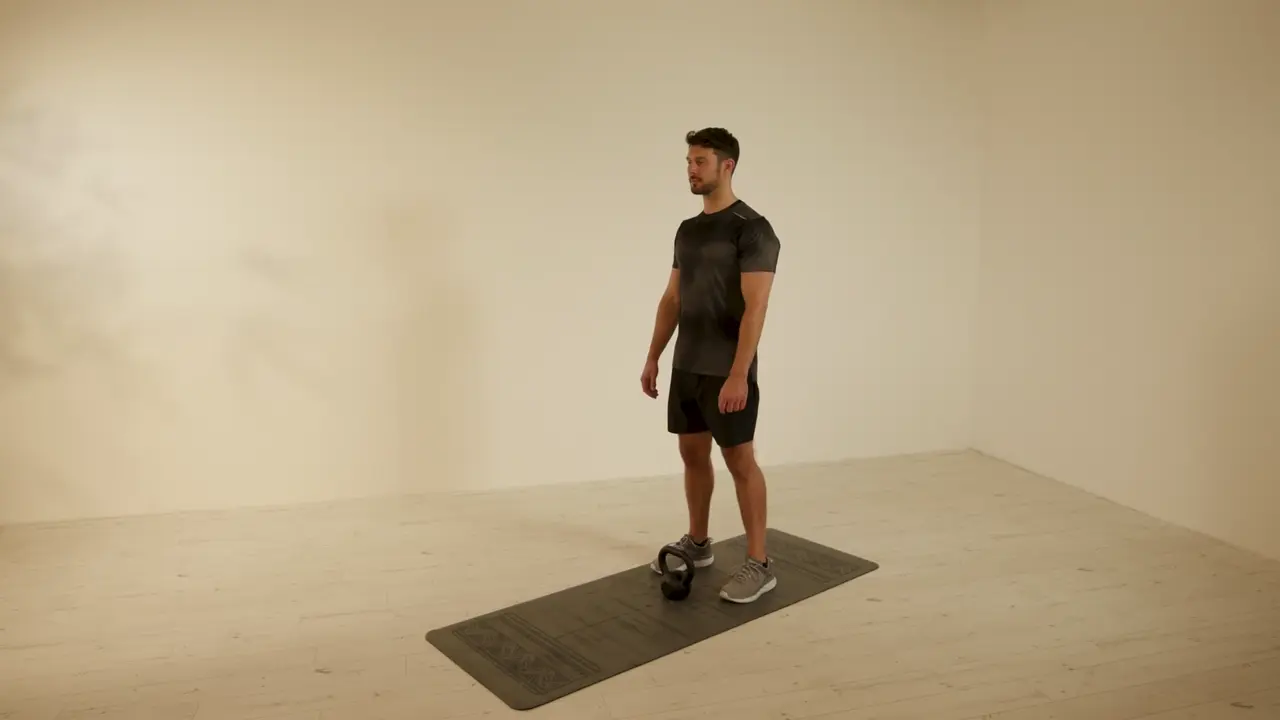
Full body strength & conditioning exercises
Russian Kettlebell Swing
Improve hip power and glute strength with the Russian Kettlebell Swing. This exercise combines a hip hinge and swing motion, engaging your posterior chain muscles.

Drug interactions checker
Can I take Evana heavy period relief and Mefenamic acid together?
Taking these two medicines together significantly increases your risk of serious stomach problems, such as stomach ulcers, bleeding, or irritation of the stomach lining. It can also put extra strain on your kidneys.

Chest and lungs
When do I need a chest X-Ray if I have a cough?
Dr Sarah Jarvis MBE The doctor will want to know how long your cough has lasted and whether you have any other symptoms. The doctor will particularly ask about symptoms which may suggest an underlying serious condition ('red flags'). [https://patient.info/health/cough-leaflet#nav-2](https://patient.info/health/cough-leaflet#nav-2)
by Dr Sarah Jarvis
Related patient information and medicines

Patient information leaflet
Colposcopy and cervical treatments
See the separate leaflet called Cervical Screening (Cervical Smear Test) for more details Cervical screening. Cervical screening has been proven to reduce the number of cases of cervical cancer. This is why there is a National Screening Programme throughout the UK. A cervical screening test can be performed more quickly than colposcopy so it is a.

Patient information leaflet
Granulomatosis with polyangiitis
In the condition called granulomatosis with polyangiitis, the walls of small and medium-sized blood vessels become inflamed. Granulomatosis with polyangiitis (GPA) is one of a group of conditions that causes inflammation of the blood vessels of the body (vasculitis). ServiceUpsellPlaceholder ... In most people with GPA, antineutrophil cytoplasmic.

Patient information leaflet
Myeloma
Dr Krishna Vakharia , 10th April 2025 The National Institute for Health and Care Excellence (NICE) has updated its guidance on assessment for myeloma in all ages including those under 60 years of age if they have persistent bone pain, especially back pain, or an unexplained fracture. Dr Krishna Vakharia , 16th October 2023 The National Institute.

Patient information leaflet
Ectopic pregnancy
What is the cause of an ectopic pregnancy. Is an ectopic pregnancy hereditary. What does an ectopic pregnancy feel like. What is an ectopic pregnancy. An ectopic pregnancy is when a fertilised egg implants and matures outside the womb (uterine cavity). Most ectopic pregnancies occur in one of the fallopian tubes. How common are ectopic.

Patient information leaflet
Sickle cell trait
If you inherit a gene from one of your parents, called a sickle cell gene, you have a condition called sickle cell trait. If you inherit a sickle cell gene from both parents, you get a double dose of the sickle cell gene. This causes a condition called sickle cell d... What is sickle cell trait. Sickle cell trait means having one gene for a.

Patient information leaflet
Antiphospholipid syndrome
The exact cause is unknown; however, APS seems to be related to the presence of antiphospholipid antibodies in the blood. Normally, the immune system makes proteins called antibodies that are helpful and do jobs such as fighting infection. In APS, unhelpful antibodies are formed as well and these attack a normal substance called phospholipid.
Further reading and references
- dynein cytoplasmic 2 heavy chain 1; MedlinePlus, National Library of Medicine.
- Dagoneau N, Goulet M, Genevieve D, Sznajer Y, Martinovic J, Smithson S, Huber C, Baujat G, Flori E, Tecco L, Cavalcanti D, Delezoide AL, Serre V, Le Merrer M, Munnich A, Cormier-Daire V. DYNC2H1 mutations cause asphyxiating thoracic dystrophy and short rib-polydactyly syndrome, type III. Am J Hum Genet. 2009 May;84(5):706-11. doi: 10.1016/j.ajhg.2009.04.016.
- El Hokayem J, Huber C, Couve A, Aziza J, Baujat G, Bouvier R, Cavalcanti DP, Collins FA, Cordier MP, Delezoide AL, Gonzales M, Johnson D, Le Merrer M, Levy-Mozziconacci A, Loget P, Martin-Coignard D, Martinovic J, Mortier GR, Perez MJ, Roume J, Scarano G, Munnich A, Cormier-Daire V. NEK1 and DYNC2H1 are both involved in short rib polydactyly Majewski type but not in Beemer Langer cases. J Med Genet. 2012 Apr;49(4):227-33. doi: 10.1136/jmedgenet-2011-100717.
- Merrill AE, Merriman B, Farrington-Rock C, Camacho N, Sebald ET, Funari VA, Schibler MJ, Firestein MH, Cohn ZA, Priore MA, Thompson AK, Rimoin DL, Nelson SF, Cohn DH, Krakow D. Ciliary abnormalities due to defects in the retrograde transport protein DYNC2H1 in short-rib polydactyly syndrome. Am J Hum Genet. 2009 Apr;84(4):542-9. doi: 10.1016/j.ajhg.2009.03.015.
- Okamoto T, Nagaya K, Kawata Y, Asai H, Tsuchida E, Nohara F, Okajima K, Azuma H. Novel compound heterozygous mutations in DYNC2H1 in a patient with severe short-rib polydactyly syndrome type III phenotype. Congenit Anom (Kyoto). 2015 Aug;55(3):155-7. doi: 10.1111/cga.12098.
- Schmidts M, Arts HH, Bongers EM, Yap Z, Oud MM, Antony D, Duijkers L, Emes RD, Stalker J, Yntema JB, Plagnol V, Hoischen A, Gilissen C, Forsythe E, Lausch E, Veltman JA, Roeleveld N, Superti-Furga A, Kutkowska-Kazmierczak A, Kamsteeg EJ, Elcioglu N, van Maarle MC, Graul-Neumann LM, Devriendt K, Smithson SF, Wellesley D, Verbeek NE, Hennekam RC, Kayserili H, Scambler PJ, Beales PL; UK10K; Knoers NV, Roepman R, Mitchison HM. Exome sequencing identifies DYNC2H1 mutations as a common cause of asphyxiating thoracic dystrophy (Jeune syndrome) without major polydactyly, renal or retinal involvement. J Med Genet. 2013 May;50(5):309-23. doi: 10.1136/jmedgenet-2012-101284. Epub 2013 Mar 1.
Share your thoughts or experiences with others in our patient communities.
Simple access to trusted treatments and health services online.
Common conditions
Get help with common conditions through the NHS, without a GP appointment.





Sign up to the Patient newsletter
Your weekly dose of clear, trustworthy health advice - written to help you feel informed, confident and in control.
By subscribing you accept our Privacy Policy. You can unsubscribe at any time. We never sell your data.