establishment of sister chromatid cohesion N-acetyltransferase 2
Last updated 18 Aug 2020
Meets Patient’s editorial guidelines
- DownloadDownload
- Share
- Language
- Discussion
- Ask Patient
- Audio Version
- Add to preferred sources on Google
The ESCO2 gene provides instructions for making a protein that is important for proper chromosome separation during cell division. Before cells divide, they must copy all of their chromosomes. The copied DNA from each chromosome is arranged into two identical structures, called sister chromatids. The ESCO2 protein plays an important role in establishing the glue that holds the sister chromatids together until the chromosomes are ready to separate.
Video picks for GenesVideo library
Normal function
The ESCO2 gene provides instructions for making a protein that is important for proper chromosome separation during cell division. Before cells divide, they must copy all of their chromosomes. The copied DNA from each chromosome is arranged into two identical structures, called sister chromatids. The ESCO2 protein plays an important role in establishing the glue that holds the sister chromatids together until the chromosomes are ready to separate.
Conditions referring to this gene or chromosome
Other names
EFO2
ESCO2_HUMAN
establishment of cohesion 1 homolog 2
establishment of cohesion 1 homolog 2 (S. cerevisiae)
Patient picks for Genes

Women's health
Endometrial hyperplasia
Endometrial hyperplasia is a thickening of the womb (uterus) lining. The womb lining is called the endometrium. Hyperplasia means over ("hyper" in Latin) growth ("plasia" in Latin).
by Dr Philippa Vincent, MRCGP
Pregnancy
Ovulation calculator
Open the ovulation calculator
by Patient infomatics team

MSK
Harmonising the Qi
In pulsing or harmonising the Qi, the arms float in front of the chest as the knee bends and the hips draw back on an inhale. Then as you breathe out, the crown of the head lifts, the arms drop and the knees move towards straight. This form helps support the liver meridian and can help release feelings of frustration.

Senior health
How to talk about your end of life care wishes
You might not like to think about it but there may come a time when you're too unwell to tell those caring for you what you do and don't want.
by Sarah Malik

Podcasts
The parental minefield
How often have you said something quite ordinary to a parent, or they’ve said something to you and suddenly the room feels like it’s about to explode? Welcome to the parental nightmare. It’s not just about conflict, it’s about what’s hidden underneath these relationships – family secrets, unspoken stories, patterns of behaviour passed from one generation to the next. In this episode Clare and Aileen explore the complex, often lifelong, relationship we have with our parents and discuss practical strategies to help you navigate this important relationship.
by Thomas Andrew Porteus, MBCS
Podcasts
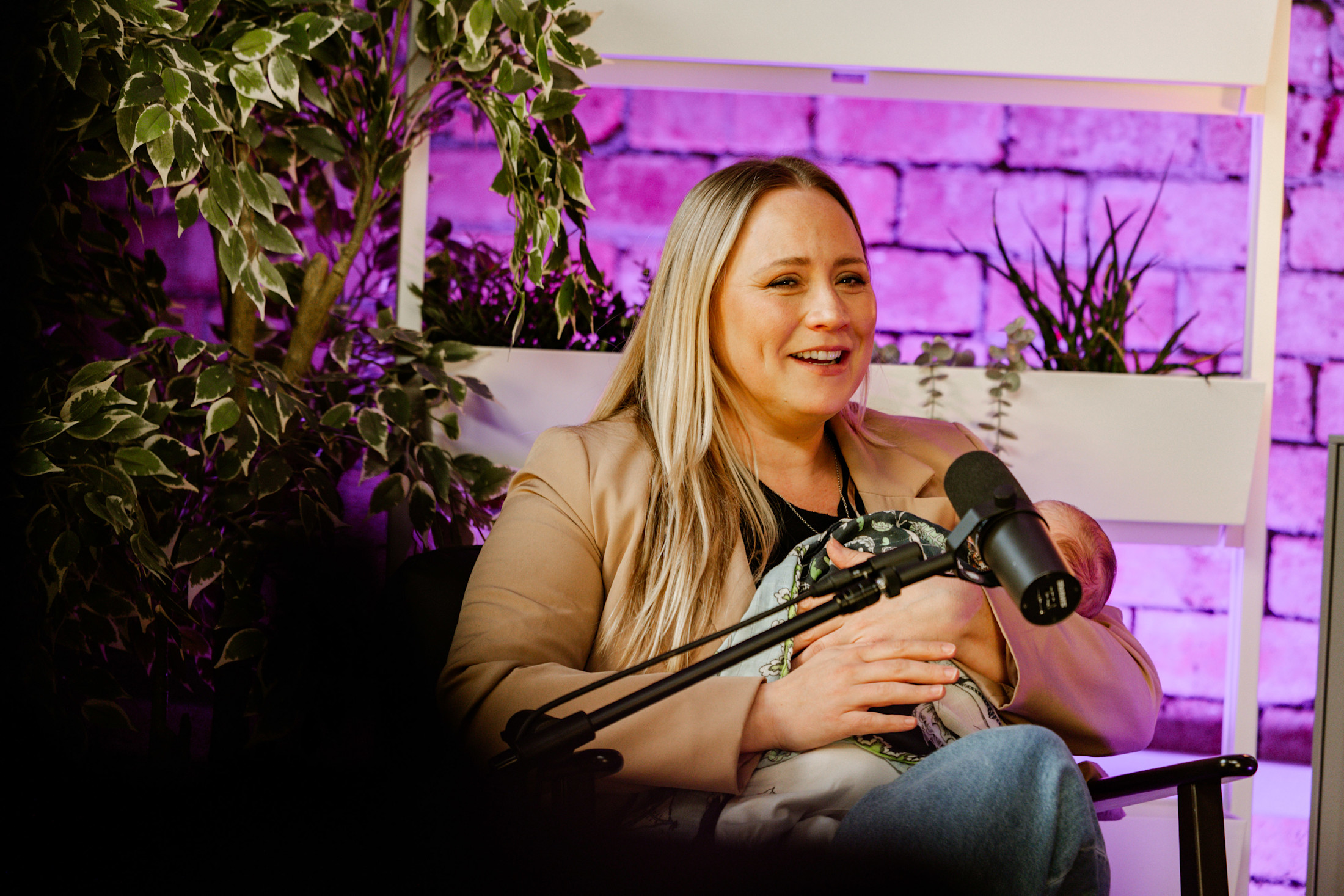
Amy Walsh: Life on Emmerdale, Baby Nell & the Walsh Sisters
In this warm and honest conversation, Amy opens up about becoming a mum for the second time, how Emmerdale viewers reacted to her pregnancy news, and what it's been like bringing the complex character of Tracy to life.
by Thomas Andrew Porteus, MBCS
Related patient information and medicines

Patient information leaflet
Wilson's disease
Wilson's disease is a genetic disorder in which copper builds up in the body, mainly in the liver and brain. Without any treatment, the build-up of copper can cause serious symptoms. Treatment is with medication to remove the excess copper and/or to prevent a further build-up of copper. What is Wilson's disease. Wilson's disease is a condition.

Patient information leaflet
BRCA genes
There are a few known gene changes (mutations) that can increase the risk of certain cancers, and tests available for some of them, including BRCA1 and BRCA2 gene mutations. The BRCA1 and BRCA2 genes normally protect against certain cancers, particularly breast cancer and ovarian cancer. If there is a mutation in one of these genes then this may.

Patient information leaflet
Breast cancer facts and risk factors
What are the risk factors for breast cancer. Dr Sarah Jarvis MBE Although breast cancer can develop for no apparent reason, there are certain risk factors which increase the chance that breast cancer will develop. [https://patient.info/health/breast-cancer-leaflet](https://patient.info/health/breast-cancer-leaflet) Most cases of breast cancer.
Patient information leaflet
Diabetes and pregnancy
This is called gestational diabetes. What is diabetes. Diabetes mellitus (just called diabetes from now on) occurs when the level of sugar (glucose) in the blood becomes higher than normal. There are two main types of diabetes. These are type 1 diabetes (this usually starts in childhood or adolescence and requires insulin treatment from the start).
Patient information leaflet
Kawasaki disease
Kawasaki disease is a rare condition that affects small to medium-sized blood vessels in the body. Kawasaki disease causes the the walls of the blood vessels to become inflamed and swollen (vasculitis). Kawasaki disease mainly affects children less than 5 years old. The exact cause of Kawasaki disease remains unknown. Kawasaki disease causes a.

Patient information leaflet
Haemochromatosis
If treatment is started early, before complications occur, then the outlook for people with haemochromatosis is very good. What is haemochromatosis. Dr Sarah Jarvis MBE, GP and Clinical Director of Patient.info Haemochromatosis is an inherited (genetic) disorder causing the body to absorb too much iron from the diet. The excess iron is then stored.
Further reading and references
- establishment of sister chromatid cohesion N-acetyltransferase 2; MedlinePlus, National Library of Medicine.
- Dorsett D. Roles of the sister chromatid cohesion apparatus in gene expression, development, and human syndromes. Chromosoma. 2007 Feb;116(1):1-13. doi: 10.1007/s00412-006-0072-6. Epub 2006 Jul 4.
- Gordillo M, Vega H, Trainer AH, Hou F, Sakai N, Luque R, Kayserili H, Basaran S, Skovby F, Hennekam RC, Uzielli ML, Schnur RE, Manouvrier S, Chang S, Blair E, Hurst JA, Forzano F, Meins M, Simola KO, Raas-Rothschild A, Schultz RA, McDaniel LD, Ozono K, Inui K, Zou H, Jabs EW. The molecular mechanism underlying Roberts syndrome involves loss of ESCO2 acetyltransferase activity. Hum Mol Genet. 2008 Jul 15;17(14):2172-80. doi: 10.1093/hmg/ddn116. Epub 2008 Apr 14.
- Hou F, Zou H. Two human orthologues of Eco1/Ctf7 acetyltransferases are both required for proper sister-chromatid cohesion. Mol Biol Cell. 2005 Aug;16(8):3908-18. doi: 10.1091/mbc.e04-12-1063. Epub 2005 Jun 15.
- McNairn AJ, Gerton JL. Cohesinopathies: One ring, many obligations. Mutat Res. 2008 Dec 1;647(1-2):103-11. doi: 10.1016/j.mrfmmm.2008.08.010. Epub 2008 Aug 22.
- Resta N, Susca FC, Di Giacomo MC, Stella A, Bukvic N, Bagnulo R, Simone C, Guanti G. A homozygous frameshift mutation in the ESCO2 gene: evidence of intertissue and interindividual variation in Nmd efficiency. J Cell Physiol. 2006 Oct;209(1):67-73. doi: 10.1002/jcp.20708.
- Schule B, Oviedo A, Johnston K, Pai S, Francke U. Inactivating mutations in ESCO2 cause SC phocomelia and Roberts syndrome: no phenotype-genotype correlation. Am J Hum Genet. 2005 Dec;77(6):1117-28. doi: 10.1086/498695. Epub 2005 Oct 31.
- Vega H, Gordillo M, Jabs EW. ESCO2 Spectrum Disorder. 2006 Apr 18 [updated 2025 Aug 14]. In: Adam MP, Bick S, Mirzaa GM, Wallace SE, Amemiya A, editors. GeneReviews(R) [Internet]. Seattle (WA): University of Washington, Seattle; 1993-2026. Available from http://www.ncbi.nlm.nih.gov/books/NBK1153/
- Vega H, Trainer AH, Gordillo M, Crosier M, Kayserili H, Skovby F, Uzielli ML, Schnur RE, Manouvrier S, Blair E, Hurst JA, Forzano F, Meins M, Simola KO, Raas-Rothschild A, Hennekam RC, Jabs EW. Phenotypic variability in 49 cases of ESCO2 mutations, including novel missense and codon deletion in the acetyltransferase domain, correlates with ESCO2 expression and establishes the clinical criteria for Roberts syndrome. J Med Genet. 2010 Jan;47(1):30-7. doi: 10.1136/jmg.2009.068395. Epub 2009 Jul 1.
- Vega H, Waisfisz Q, Gordillo M, Sakai N, Yanagihara I, Yamada M, van Gosliga D, Kayserili H, Xu C, Ozono K, Jabs EW, Inui K, Joenje H. Roberts syndrome is caused by mutations in ESCO2, a human homolog of yeast ECO1 that is essential for the establishment of sister chromatid cohesion. Nat Genet. 2005 May;37(5):468-70. doi: 10.1038/ng1548. Epub 2005 Apr 10.
- Whelan G, Kreidl E, Wutz G, Egner A, Peters JM, Eichele G. Cohesin acetyltransferase Esco2 is a cell viability factor and is required for cohesion in pericentric heterochromatin. EMBO J. 2012 Jan 4;31(1):71-82. doi: 10.1038/emboj.2011.381. Epub 2011 Nov 18.
Share your thoughts or experiences with others in our patient communities.
Simple access to trusted treatments and health services online.
Common conditions
Get help with common conditions through the NHS, without a GP appointment.





Sign up to the Patient newsletter
Your weekly dose of clear, trustworthy health advice - written to help you feel informed, confident and in control.
By subscribing you accept our Privacy Policy. You can unsubscribe at any time. We never sell your data.