galactosidase alpha
Last updated 18 Aug 2020
Meets Patient’s editorial guidelines
- DownloadDownload
- Share
- Language
- Discussion
- Ask Patient
- Audio Version
- Add to preferred sources on Google
The GLA gene provides instructions for making an enzyme called alpha-galactosidase A. This enzyme is active in lysosomes, which are structures that act as recycling centers within cells. Lysosomes use digestive enzymes to process worn-out cell components and recycle usable parts.
Video picks for GenesVideo library
Normal function
The GLA gene provides instructions for making an enzyme called alpha-galactosidase A. This enzyme is active in lysosomes, which are structures that act as recycling centers within cells. Lysosomes use digestive enzymes to process worn-out cell components and recycle usable parts.
Alpha-galactosidase A breaks down a molecule called globotriaosylceramide, which consists of three sugars attached to a fatty substance. This molecule is degraded as part of the normal recycling of old red blood cells (erythrocytes) and other types of cells.
Conditions referring to this gene or chromosome
Other names
AGAL_HUMAN
Agalsidase alfa
Alpha-D-galactosidase A
alpha-D-galactoside galactohydrolase
Alpha-galactosidase
alpha-Galactosidase A
ceramidetrihexosidase
GALA
galactosidase, alpha
Melibiase
Patient picks for Genes
Treatment and medication
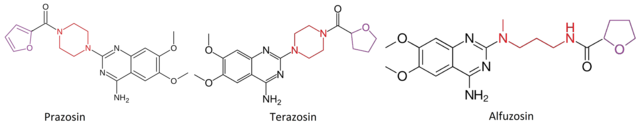
Alpha-blockers
Alpha-blockers are medicines that are mainly used to treat high blood pressure (hypertension) and problems with passing urine in men who have enlargement of the prostate gland. Prostate gland enlargement is also called benign prostatic hyperplasia (BPH).
by Dr Doug McKechnie, MRCGP

Children's health
Alpha-1 antitrypsin deficiency
Alpha-1 antitrypsin deficiency is an inherited genetic condition. A genetic condition is one that can be passed on from parents through genes. In alpha-1 antitrypsin deficiency the result of a genetic abnormality leads to lung and, in some people, liver damage. Lung symptoms are the most common and include shortness of breath, cough and wheezing. Symptoms can worsen over time. At present, there is no cure for alpha-1 antitrypsin deficiency. Treatment aims at slowing down the progression of the disease.
by Dr Philippa Vincent, MRCGP

Medicine
Indoramin - an alpha-blocker
Indoramin is prescribed for two different medical conditions: 20 mg strength tablets are prescribed for men with prostate problems, and 25 mg strength tablets are prescribed for people with high blood pressure. You are advised not to drink alcohol while you are on indoramin. Do not drive and do not use tools or machines if you feel tired or dizzy.
by Michael Stewart, MRPharmS

Medicine
Phenoxybenzamine - an alpha-blocker
Adults will normally start with one capsule a day. This dose may then be increased over the next few days. It is common to feel dizzy or light-headed initially. This should soon settle. You may be given other medicines to take alongside phenoxybenzamine.
by Michael Stewart, MRPharmS

Medicine
Terazosin - an alpha-blocker
Take terazosin once every day. Your first dose of terazosin may make you feel dizzy or faint, or start sweating. Take your first dose at bedtime and remain lying down until these symptoms have completely passed. Terazosin can cause dizziness which may affect your ability to drive. Make sure your reactions are normal before you drive and before you use tools or machines.
by Michael Stewart, MRPharmS

Medicine
Alfacalcidol capsules and drops
Alfacalcidol is a type of vitamin D. You will need to have regular blood tests while you are taking the medicine so that your doctor can adjust your dose. Make sure you know the symptoms of too much calcium in your blood - these are losing your appetite, feeling thirsty, being sick (vomiting), feeling tired and losing weight. Please let your doctor know if you develop these symptoms.
by Michael Stewart, MRPharmS
Related patient information and medicines

Patient information leaflet
Liver failure
Diseases of the veins in the liver Some diseases (for example, Budd-Chiari syndrom... Metabolic diseases Some rare metabolic diseases may cause acute liver failure. These include haemochromatosis Haemochromatosis , alpha-1 antitrypsin deficiency Alpha-1 antitrypsin deficiency , Wilson's disease Wilson's disease , fructose intolerance,.

Patient information leaflet
Primary liver cancer
This is a rare cancer which occurs in some young children. Angiosarcoma . This is rare. It develops from blood vessel cells within the liver. See the separate leaflet called Cancer for more general information about cancer Cancer. Liver cancer symptoms There may be no symptoms in the early stage of the disease. As the cancer grows, the first.

Patient information leaflet
Testicular cancer
Testicular cancer is a cancer that arises from a testicle (testis). Around half of all cases occur in men aged under 35 but testicular cancer rarely occurs before puberty. Another useful test i... The tumour markers commonly tested for are alpha-fetoprotein (AFP), beta human chorionic gonadotrophin (beta-hCG), lactic dehydrogenase (LDH) and.

Patient information leaflet
Chronic prostatitis
Prostatitis means that you have inflammation of your prostate gland. There are two main types of prostatitis: short-lived (acute) or persiste... It may be that some antibiotics have anti-inflammatory properties as well or that they may clear some germs (bacteria) that are difficult to find when your urine is tested. Alpha-blockers Alpha-blockers -.

Patient information leaflet
Liver function tests
Liver function tests are a set of blood tests commonly done to check on the health of your liver. Changes in liver function tests give a clue as to whether your liver is under strain, inflamed, infected or diseased, and how badly. The pattern of the liver function tests can give a clue to the cause and can allow early detection of unsuspected.

Patient information leaflet
Polymorphic light eruption
Polymorphic light eruption is a skin rash that can happen when you go out in the sun. Polymorphic light eruption symptoms Polymorphic light eruption (PMLE) is a rash which comes on after being in strong sunlight. It looks like reddened skin with raised red spots or small blisters. It is generally itchy and uncomfortable. It can feel sore or.
Further reading and references
- galactosidase alpha; MedlinePlus, National Library of Medicine.
- Feldt-Rasmussen U, Rasmussen AK, Mersebach H, Rosenberg KM, Hasholt L, Sorensen SA. Fabry disease--a metabolic disorder with a challenge for endocrinologists? Horm Res. 2002;58(6):259-65. doi: 10.1159/000066443.
- Garman SC, Garboczi DN. The molecular defect leading to Fabry disease: structure of human alpha-galactosidase. J Mol Biol. 2004 Mar 19;337(2):319-35. doi: 10.1016/j.jmb.2004.01.035.
- Matsuzawa F, Aikawa S, Doi H, Okumiya T, Sakuraba H. Fabry disease: correlation between structural changes in alpha-galactosidase, and clinical and biochemical phenotypes. Hum Genet. 2005 Aug;117(4):317-28. doi: 10.1007/s00439-005-1300-5. Epub 2005 May 28.
- Mehta A, Hughes DA. Fabry Disease. 2002 Aug 5 [updated 2024 Apr 11]. In: Adam MP, Bick S, Mirzaa GM, Wallace SE, Amemiya A, editors. GeneReviews(R) [Internet]. Seattle (WA): University of Washington, Seattle; 1993-2026. Available from http://www.ncbi.nlm.nih.gov/books/NBK1292/
- Pastores GM, Lien YH. Biochemical and molecular genetic basis of Fabry disease. J Am Soc Nephrol. 2002 Jun;13 Suppl 2:S130-3. No abstract available.
- Schafer E, Baron K, Widmer U, Deegan P, Neumann HP, Sunder-Plassmann G, Johansson JO, Whybra C, Ries M, Pastores GM, Mehta A, Beck M, Gal A. Thirty-four novel mutations of the GLA gene in 121 patients with Fabry disease. Hum Mutat. 2005 Apr;25(4):412. doi: 10.1002/humu.9327.
Share your thoughts or experiences with others in our patient communities.
Simple access to trusted treatments and health services online.
Common conditions
Get help with common conditions through the NHS, without a GP appointment.





Sign up to the Patient newsletter
Your weekly dose of clear, trustworthy health advice - written to help you feel informed, confident and in control.
By subscribing you accept our Privacy Policy. You can unsubscribe at any time. We never sell your data.