hemoglobin subunit alpha 1
Last updated 11 Apr 2023
Meets Patient’s editorial guidelines
- DownloadDownload
- Share
- Language
- Discussion
- Ask Patient
- Audio Version
- Add to preferred sources on Google
The HBA1 gene provides instructions for making a protein called alpha-globin. This protein is also produced from a nearly identical gene called HBA2. These two alpha-globin genes are located close together in a region of chromosome 16 known as the alpha-globin locus.
Video picks for GenesVideo library
Normal function
The HBA1 gene provides instructions for making a protein called alpha-globin. This protein is also produced from a nearly identical gene called HBA2. These two alpha-globin genes are located close together in a region of chromosome 16 known as the alpha-globin locus.
Alpha-globin is a component (subunit) of a larger protein called hemoglobin, which is the protein in red blood cells that carries oxygen to cells and tissues throughout the body. Hemoglobin is made up of four subunits: two subunits of alpha-globin and two subunits of another type of globin. Alpha-globin is a component of both fetal hemoglobin, which is active only before birth and in the newborn period, and adult hemoglobin, which is active throughout the rest of life.
Each of the four protein subunits of hemoglobin carries an iron-containing molecule called heme. Heme molecules are necessary for red blood cells to pick up oxygen in the lungs and deliver it to the body's tissues. A complete hemoglobin protein is capable of carrying four oxygen molecules at a time (one attached to each heme molecule). Oxygen attached to hemoglobin gives blood its bright red colour.
Conditions referring to this gene or chromosome
Other names
alpha 1 globin
alpha one globin
alpha-1 globin
alpha-1-globin
CD31
HBA-T3
HBA_HUMAN
hemoglobin alpha 1 globin chain
hemoglobin alpha-1 chain
hemoglobin, alpha 1
MGC126895
MGC126897
Patient picks for Genes

Children's health
Alpha-1 antitrypsin deficiency
Alpha-1 antitrypsin deficiency is an inherited genetic condition. A genetic condition is one that can be passed on from parents through genes. In alpha-1 antitrypsin deficiency the result of a genetic abnormality leads to lung and, in some people, liver damage. Lung symptoms are the most common and include shortness of breath, cough and wheezing. Symptoms can worsen over time. At present, there is no cure for alpha-1 antitrypsin deficiency. Treatment aims at slowing down the progression of the disease.
by Dr Philippa Vincent, MRCGP
Treatment and medication
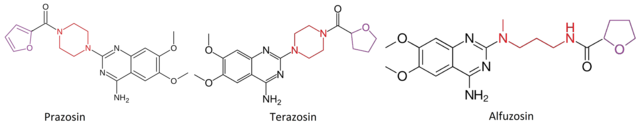
Alpha-blockers
Alpha-blockers are medicines that are mainly used to treat high blood pressure (hypertension) and problems with passing urine in men who have enlargement of the prostate gland. Prostate gland enlargement is also called benign prostatic hyperplasia (BPH).
by Dr Doug McKechnie, MRCGP
Medicine
Phenoxybenzamine - an alpha-blocker
Adults will normally start with one capsule a day. This dose may then be increased over the next few days. It is common to feel dizzy or light-headed initially. This should soon settle. You may be given other medicines to take alongside phenoxybenzamine.
by Michael Stewart, MRPharmS
Medicine
Indoramin - an alpha-blocker
Indoramin is prescribed for two different medical conditions: 20 mg strength tablets are prescribed for men with prostate problems, and 25 mg strength tablets are prescribed for people with high blood pressure. You are advised not to drink alcohol while you are on indoramin. Do not drive and do not use tools or machines if you feel tired or dizzy.
by Michael Stewart, MRPharmS
Medicine
Alfacalcidol capsules and drops
Alfacalcidol is a type of vitamin D. You will need to have regular blood tests while you are taking the medicine so that your doctor can adjust your dose. Make sure you know the symptoms of too much calcium in your blood - these are losing your appetite, feeling thirsty, being sick (vomiting), feeling tired and losing weight. Please let your doctor know if you develop these symptoms.
by Michael Stewart, MRPharmS
Medicine
Prazosin - an alpha-blocker
Your first dose of prazosin may make you feel dizzy or faint, or start sweating. Take your first dose at bedtime and remain lying down until these symptoms have completely passed. Prazosin can cause dizziness which may affect your ability to drive. Make sure your reactions are normal before you drive and before you use tools or machines.
by Michael Stewart, MRPharmS
Related patient information and medicines
Patient information leaflet
Blood tests
One drop of blood contains ... A constant new supply of red blood cells is needed to replace old cells that break down. Millions of red blood cells are made each day. Red cells contain a chemical called haemoglobin. This binds to oxygen and takes oxygen from the lungs to all parts of the body. White cells (leukocytes) There are different types of.

Patient information leaflet
Thalassaemia
What causes thalassaemia. The cause is an inherited (genetic) change, involving the genes which tell the body how to make an important chemical called haemoglobin. Haemoglobin is the chemical which carries oxygen in the blood - it is the one which gives blood its red colour. Haemoglobin is located in cells called red blood cells which are part of.

Patient information leaflet
Diabetes
Many people with type 2 diabetes do not have any sy... There are several ways of diagnosing diabetes. These include: A blood test to look at the level of glucose in the blood. A different blood test for glycosylated haemoglobin (haemoglobin A1c, or HbA1c). HbA1c measures the average level of blood sugar over the last 3 months. This is very.
Patient information leaflet
Gilbert's syndrome
The condition is... What is bilirubin. Bilirubin is constantly being made. It is a breakdown product of haemoglobin. Haemoglobin is a chemical that is in red blood cells and carries oxygen to the tissues. Many red blood cells break down each day releasing haemoglobin, and bilirubin is one of the waste products. Bilirubin is carried in the.

Patient information leaflet
Porphyria
The porphyrias are a group of disorders in which there is a problem with the production of haem (also spelled heme) within the body. Haem is used to make haemoglobin in red blood cells. There are seven different types of porphyria and in most cases they run in families (are inherited). It is important that the type of porphyria that you have.
Patient information leaflet
Sickle cell trait
If you inherit a gene from one of your parents, called a sickle cell gene, you have a condition called sickle cell trait. ... You inherit haemoglobin genes from both parents. One sickle cell gene gives you sickle cell trait; two sickle cell genes give you SCD. The result of these genes is that an important body chemical called haemoglobin is.
Further reading and references
- hemoglobin subunit alpha 1; MedlinePlus, National Library of Medicine.
- Harteveld CL, Kriek M, Bijlsma EK, Erjavec Z, Balak D, Phylipsen M, Voskamp A, di Capua E, White SJ, Giordano PC. Refinement of the genetic cause of ATR-16. Hum Genet. 2007 Nov;122(3-4):283-92. doi: 10.1007/s00439-007-0399-y. Epub 2007 Jun 28.
- Harvard University: Hemoglobin Synthesis
- Higgs DR, Weatherall DJ. The alpha thalassaemias. Cell Mol Life Sci. 2009 Apr;66(7):1154-62. doi: 10.1007/s00018-008-8529-9.
- Kalle Kwaifa I, Lai MI, Md Noor S. Non-deletional alpha thalassaemia: a review. Orphanet J Rare Dis. 2020 Jun 29;15(1):166. doi: 10.1186/s13023-020-01429-1.
- Ribeiro DM, Sonati MF. Regulation of human alpha-globin gene expression and alpha-thalassemia. Genet Mol Res. 2008 Oct 14;7(4):1045-53. doi: 10.4238/vol7-4gmr472.
- Tamary H, Greenberg-Kushnir N, Dgany O. Alpha-Thalassemia. 2005 Nov 1 [updated 2026 Apr 23]. In: Adam MP, Bick S, Mirzaa GM, Wallace SE, Amemiya A, editors. GeneReviews(R) [Internet]. Seattle (WA): University of Washington, Seattle; 1993-2026. Available from http://www.ncbi.nlm.nih.gov/books/NBK1435/
- Zhang HB, Liu DP, Liang CC. The control of expression of the alpha-globin gene cluster. Int J Hematol. 2002 Dec;76(5):420-6. doi: 10.1007/BF02982807.
Share your thoughts or experiences with others in our patient communities.
Simple access to trusted treatments and health services online.
Common conditions
Get help with common conditions through the NHS, without a GP appointment.





Sign up to the Patient newsletter
Your weekly dose of clear, trustworthy health advice - written to help you feel informed, confident and in control.
By subscribing you accept our Privacy Policy. You can unsubscribe at any time. We never sell your data.