host cell factor C1
Last updated 11 Apr 2023
Meets Patient’s editorial guidelines
- DownloadDownload
- Share
- Language
- Discussion
- Ask Patient
- Audio Version
- Add to preferred sources on Google
The HCFC1 gene provides instructions for making a protein, called HCF-1, that helps regulate the activity of other genes. HCF-1 interacts with proteins called transcription factors, which attach (bind) to specific regions of DNA and help control the activity of particular genes.
Video picks for GenesVideo library
Normal function
The HCFC1 gene provides instructions for making a protein, called HCF-1, that helps regulate the activity of other genes. HCF-1 interacts with proteins called transcription factors, which attach (bind) to specific regions of DNA and help control the activity of particular genes.
One of several functions of the HCF-1 protein is to control the activity of a gene called MMACHC that is involved in the processing of vitamin B12 (also known as cobalamin). This gene plays a role in the conversion of vitamin B12 into one of two molecules, adenosylcobalamin (AdoCbl) or methylcobalamin (MeCbl). AdoCbl is required for the normal function of an enzyme known as methylmalonyl CoA mutase. This enzyme helps break down certain protein building blocks (amino acids), fat building blocks (fatty acids), and cholesterol. AdoCbl is called a cofactor because it helps methylmalonyl CoA mutase carry out its function. MeCbl is also a cofactor, but for an enzyme known as methionine synthase. This enzyme converts the amino acid homocysteine to another amino acid, methionine. The body uses methionine to make proteins and other important compounds.
HCF-1 helps regulate genes that are important in other cellular processes, such as progression of cells through the step-by-step process it takes to replicate themselves (called the cell cycle). This protein also plays a role in the distribution of cells in developing tissues and organs, including the brain.
Conditions referring to this gene or chromosome
Other names
CFF
HCF
HCF-1
HCF1
HFC1
host cell factor 1
MGC70925
MRX3
PPP1R89
protein phosphatase 1, regulatory subunit 89
VCAF
VP16-accessory protein
Patient picks for Genes

Cancer
Breast cancer facts and risk factors
Most cases of breast cancer occur by chance. However, breast cancer does occur more often than usual in some families because of their genetic makeup.
by Dr Colin Tidy, MRCGP

Heart health and blood vessels
Dilated cardiomyopathy causes: what are the risk factors?
Having dilated cardiomyopathy means that your heart muscle is weakened, which affects how your heart pumps blood around your body. There are a wide range of dilated cardiomyopathy causes, including genetics, other health conditions, alcohol consumption and a poor diet. While we can't control some of these risk factors, we can make positive lifestyle changes to reduce our risk of developing dilated cardiomyopathy.
by Amberley Davis
Cancer
Stem cell transplant
A stem cell transplant is where blood stem cells (the cells produced by the bone marrow to turn into different types of blood cells) are put back into your body when your bone marrow has been destroyed and cannot make stem cells itself. The bone marrow can be destroyed by diseases such as cancer, chemotherapy or radiotherapy. It is used to increase the chance of a cure or remission if you have a particular type of cancer or blood disorder. It usually involves intense chemotherapy followed by an infusion of stem cells. The treatment requires close nursing and medical care for a number of weeks. Your specialist would advise when the likely benefits of this procedure outweigh the risks.
by Dr Philippa Vincent, MRCGP

Cancer
What to expect during a LLETZ procedure for abnormal cells
Post 25, regular cervical screening is part of many people's medical routine. Often, cervical cells are completely normal and no further action is taken; you're usually asked to come back for another smear test in three years time. But in others, abnormal cells are detected and further treatment is needed. One such treatment is the LLETZ. But what is it, how does it work, and what are its side effects?
by Emily Reynolds
Allergies, blood and immune system
Sickle cell disease
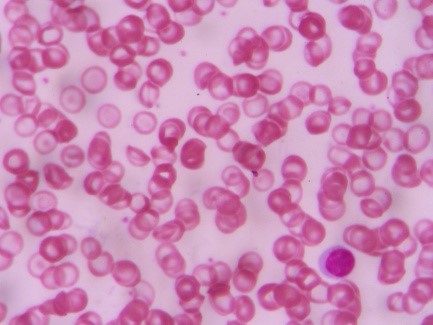
Sickle cell disease (SCD) is a serious, inherited condition affecting the blood and various organs in the body. It affects the red blood cells, causing episodes of 'sickling', which produce episodes of pain and other symptoms. In between episodes of sickling, people with SCD are normally well. Long-term complications can occur. Good treatment, started early in life, can prevent complications. So, early diagnosis and specialist treatment are advised for SCD. Sickle cell trait is not the same as sickle cell disease.
by Dr Hayley Willacy, FRCGP

Cancer
Women 'not warned' about side effects of treatment to remove precancerous cervical cells
New research suggests that women are not being informed about the potential side effects of treatment for abnormal cells following a cervical smear test.
by Milly Evans
Related patient information and medicines

Patient information leaflet
Angio-oedema
This is due to a lack of a blood protein called C1 esterase inhibitor. This condition is called hereditary C1 esterase deficiency. There are three different types of hereditary angio-oedema. About 1 person in 50,000 inherits the gene for C1 esterase deficiency. Acquired C1 esterase inhibitor deficiency People with angio-oedema due to acquired C1.

Patient information leaflet
Throat cancer
The specialist will examin... Dr Krishna Vakharia, 16th October 2023 The National Institute for Health and Care Excellence (NICE) has recommended that a person should receive a diagnosis or ruling out of cancer within 28 days of being referred urgently by their GP for suspected cancer. To confirm the diagnosis If anything suspicious is seen by the.

Patient information leaflet
Myelofibrosis
Myelofibrosis is a condition affecting the bone marrow and its blood cell production. What is myelofibrosis. Myelofibrosis belongs to a group of diseases called myeloproliferative disorders. Myelofibrosis is a serious bone marrow disorder that disrupts your body's normal production of blood cells. This leads to reduced levels of: Red blood cells.

Patient information leaflet
Barrett's oesophagus
In Barrett's oesophagus the cells that line the lower gullet (oesophagus) are abnormal. The main cause is long-standing reflux of acid from the stomach into the oesophagus. People with Barrett's oesophagus have an increased risk of developing cancer of the oesophagus. The risk is small. However, you may be advised to have regular endoscopies to.

Patient information leaflet
Breast cancer
About 48,000 cases occur in the UK each year. Breast cancer develops from a cancerous (malignant) cell which develops in the l... Breast cancer develops from a cancerous (malignant) cell which develops in the lining of a duct or lobule in one of the breasts..

Patient information leaflet
Penile cancer
Penile cancer is a cancer that develops on the penis. A cancerous (malignant) tumour starts from one abnormal cell. The exact reason why a cell becomes cancerous is unclear. It is thought that something damages or alters certain genes in the cell. This makes the cell abnormal and multiply 'out of control'. See the separate leaflet called Causes of.
Further reading and references
- host cell factor C1; MedlinePlus, National Library of Medicine.
- Gerard M, Morin G, Bourillon A, Colson C, Mathieu S, Rabier D, Billette de Villemeur T, Ogier de Baulny H, Benoist JF. Multiple congenital anomalies in two boys with mutation in HCFC1 and cobalamin disorder. Eur J Med Genet. 2015 Mar;58(3):148-53. doi: 10.1016/j.ejmg.2014.12.015. Epub 2015 Jan 13.
- Huang L, Jolly LA, Willis-Owen S, Gardner A, Kumar R, Douglas E, Shoubridge C, Wieczorek D, Tzschach A, Cohen M, Hackett A, Field M, Froyen G, Hu H, Haas SA, Ropers HH, Kalscheuer VM, Corbett MA, Gecz J. A noncoding, regulatory mutation implicates HCFC1 in nonsyndromic intellectual disability. Am J Hum Genet. 2012 Oct 5;91(4):694-702. doi: 10.1016/j.ajhg.2012.08.011. Epub 2012 Sep 20.
- Jolly LA, Nguyen LS, Domingo D, Sun Y, Barry S, Hancarova M, Plevova P, Vlckova M, Havlovicova M, Kalscheuer VM, Graziano C, Pippucci T, Bonora E, Sedlacek Z, Gecz J. HCFC1 loss-of-function mutations disrupt neuronal and neural progenitor cells of the developing brain. Hum Mol Genet. 2015 Jun 15;24(12):3335-47. doi: 10.1093/hmg/ddv083. Epub 2015 Mar 3.
- Parker JB, Yin H, Vinckevicius A, Chakravarti D. Host cell factor-1 recruitment to E2F-bound and cell-cycle-control genes is mediated by THAP11 and ZNF143. Cell Rep. 2014 Nov 6;9(3):967-82. doi: 10.1016/j.celrep.2014.09.051. Epub 2014 Oct 30.
- Yu HC, Sloan JL, Scharer G, Brebner A, Quintana AM, Achilly NP, Manoli I, Coughlin CR 2nd, Geiger EA, Schneck U, Watkins D, Suormala T, Van Hove JL, Fowler B, Baumgartner MR, Rosenblatt DS, Venditti CP, Shaikh TH. An X-linked cobalamin disorder caused by mutations in transcriptional coregulator HCFC1. Am J Hum Genet. 2013 Sep 5;93(3):506-14. doi: 10.1016/j.ajhg.2013.07.022.
- Zargar Z, Tyagi S. Role of host cell factor-1 in cell cycle regulation. Transcription. 2012 Jul-Aug;3(4):187-92. doi: 10.4161/trns.20711. Epub 2012 Jul 1.
Share your thoughts or experiences with others in our patient communities.
Simple access to trusted treatments and health services online.
Common conditions
Get help with common conditions through the NHS, without a GP appointment.





Sign up to the Patient newsletter
Your weekly dose of clear, trustworthy health advice - written to help you feel informed, confident and in control.
By subscribing you accept our Privacy Policy. You can unsubscribe at any time. We never sell your data.