hepatocyte nuclear factor 4 alpha
Last updated 18 Aug 2020
Meets Patient’s editorial guidelines
- DownloadDownload
- Share
- Language
- Discussion
- Ask Patient
- Audio Version
- Add to preferred sources on Google
The HNF4A gene provides instructions for making a protein called hepatocyte nuclear factor-4 alpha (HNF-4α). This protein plays an important role in the function of certain tissues and organs in the body. The HNF-4α protein acts as a transcription factor, which means it attaches (binds) to specific regions of DNA and helps control the activity of particular genes.
Video picks for GenesVideo library
Normal function
The HNF4A gene provides instructions for making a protein called hepatocyte nuclear factor-4 alpha (HNF-4α). This protein plays an important role in the function of certain tissues and organs in the body. The HNF-4α protein acts as a transcription factor, which means it attaches (binds) to specific regions of DNA and helps control the activity of particular genes.
The HNF-4α protein controls genes that are especially important for development and function of beta cells in the pancreas. Beta cells produce and release (secrete) the hormone insulin. Insulin helps regulate blood sugar levels by controlling how much sugar (in the form of glucose) is passed from the bloodstream into cells to be used as energy. The HNF-4α protein also controls genes involved in normal liver functions.
The structure of the HNF-4α protein includes several important regions. One of the regions, called the dimerization domain, is critical for protein interactions. This region allows molecules of HNF-4α to interact with each other, creating a two-protein unit (dimer) that functions as a transcription factor. Another region, known as the DNA binding domain, binds to specific areas of DNA, allowing the dimer to control gene activity.
Conditions referring to this gene or chromosome
Other names
HEPATOCYTE NUCLEAR FACTOR 4-ALPHA
HNF4-ALPHA
HNF4A gene
NR2A1
Nuclear Receptor Subfamily 2, Group A, Member 1
TCF14
TRANSCRIPTION FACTOR 14, HEPATIC NUCLEAR FACTOR
Patient picks for Genes

Children's health
Alpha-1 antitrypsin deficiency
Alpha-1 antitrypsin deficiency is an inherited genetic condition. A genetic condition is one that can be passed on from parents through genes. In alpha-1 antitrypsin deficiency the result of a genetic abnormality leads to lung and, in some people, liver damage. Lung symptoms are the most common and include shortness of breath, cough and wheezing. Symptoms can worsen over time. At present, there is no cure for alpha-1 antitrypsin deficiency. Treatment aims at slowing down the progression of the disease.
by Dr Philippa Vincent, MRCGP
Treatment and medication
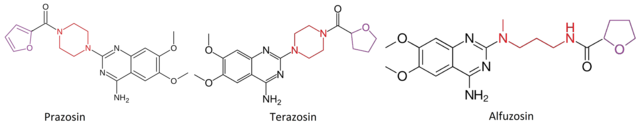
Alpha-blockers
Alpha-blockers are medicines that are mainly used to treat high blood pressure (hypertension) and problems with passing urine in men who have enlargement of the prostate gland. Prostate gland enlargement is also called benign prostatic hyperplasia (BPH).
by Dr Doug McKechnie, MRCGP

Heart health and blood vessels
Dilated cardiomyopathy causes: what are the risk factors?
Having dilated cardiomyopathy means that your heart muscle is weakened, which affects how your heart pumps blood around your body. There are a wide range of dilated cardiomyopathy causes, including genetics, other health conditions, alcohol consumption and a poor diet. While we can't control some of these risk factors, we can make positive lifestyle changes to reduce our risk of developing dilated cardiomyopathy.
by Amberley Davis

Cancer
Breast cancer facts and risk factors
Most cases of breast cancer occur by chance. However, breast cancer does occur more often than usual in some families because of their genetic makeup.
by Dr Colin Tidy, MRCGP

Medicine
Phenoxybenzamine - an alpha-blocker
Adults will normally start with one capsule a day. This dose may then be increased over the next few days. It is common to feel dizzy or light-headed initially. This should soon settle. You may be given other medicines to take alongside phenoxybenzamine.
by Michael Stewart, MRPharmS

Treatment and medication
What factors are causing antimicrobial resistance?
Following a recent study by health economists at the University of Manchester and the University of Southern Denmark, the tremendous pressure GPs are currently working under has been linked to increasing broad-spectrum antibiotic prescribing in England. Because excess antibiotic prescribing has been closely linked to antibiotic resistance, there are concerns that these higher prescribing levels may be contributing to antimicrobial resistance.
by Emily Jane Bashforth
Related patient information and medicines

Patient information leaflet
Liver function tests
If the liver is swollen, through inflammation or disease, it can swell out from under the ribs ... Liver function Liver function The liver is a factory for the production and breakdown of carbohydrates, fats, proteins, hormones and other essential body chemicals, and helps dispose of waste products. This work is mainly carried out by liver cells.
Patient information leaflet
Primary liver cancer
Primary liver cancer is uncommon in the UK but is common in other parts of the world. ...rticular, it is about hepatocellular carcinoma, the most common type of primary liver cancerHepatocellular carcinoma. This type of cancer originates from a liver cell (hepatocyte) which becomes cancerous. Most of the liver is made up from hepatocytes..
Patient information leaflet
Autoimmune hepatitis
The symptoms of each disease depend on which part or parts of the body are attacked by the ... In some autoimmune diseases it is antibodies which do the damage. In autoimmune hepatitis, it is white blood cells called lymphocytes which are mainly involved. The lymphocytes attack the liver cells (hepatocytes) which causes inflammation and damage..

Patient information leaflet
Wilson's disease
Wilson's disease is a genetic disorder in which copper builds. Without any treatment, the build-up of copper can cause serious symptoms. People with Wilson's disease cannot get rid of this excess copper and so it builds up in the body, mainly in the liver, the brain, the layer at the front of the eye (called the cornea) and the kidneys. Too much.

Patient information leaflet
Children's cancers
What are the causes of cancer in children. Much less is known about the causes of cancer in children than about cancers in adults. Liver cancer Liver cancers are rare in childhood. Most (about 4 in 5) childhood liver tumours are called hepatoblastomas and the rest are called hepatic carcinomas. The may present with swelling or pain in the tummy.

Patient information leaflet
Blood clotting tests
Blood clotting tests are used to diagnose and assess bleeding problems and to monitor people who take warfarin or other anticoagulant medicines. You may be advised to have blood clotting tests: If you have a suspected bleeding disorder. For example, if you bleed a lot after cuts, or if you bruise easily. If you have certain liver diseases that can.
Further reading and references
- hepatocyte nuclear factor 4 alpha; MedlinePlus, National Library of Medicine.
- Rha GB, Wu G, Chi YI. Probing the effect of MODY mutations near the co-activator-binding pocket of HNF4alpha. Biosci Rep. 2011 Oct;31(5):411-9. doi: 10.1042/BSR20110013.
- Singh P, Tung SP, Han EH, Lee IK, Chi YI. Dimerization defective MODY mutations of hepatocyte nuclear factor 4alpha. Mutat Res. 2019 Mar;814:1-6. doi: 10.1016/j.mrfmmm.2019.01.002. Epub 2019 Jan 9.
- Yamagata K. Roles of HNF1alpha and HNF4alpha in pancreatic beta-cells: lessons from a monogenic form of diabetes (MODY). Vitam Horm. 2014;95:407-23. doi: 10.1016/B978-0-12-800174-5.00016-8.
Share your thoughts or experiences with others in our patient communities.
Simple access to trusted treatments and health services online.
Common conditions
Get help with common conditions through the NHS, without a GP appointment.





Sign up to the Patient newsletter
Your weekly dose of clear, trustworthy health advice - written to help you feel informed, confident and in control.
By subscribing you accept our Privacy Policy. You can unsubscribe at any time. We never sell your data.