laminin subunit beta 3
Last updated 3 Apr 2025
Meets Patient’s editorial guidelines
- DownloadDownload
- Share
- Language
- Discussion
- Ask Patient
- Audio Version
- Add to preferred sources on Google
The LAMB3 gene provides instructions for making one part (subunit) of a protein called laminin 332 (formerly known as laminin 5). This protein is made up of three subunits, called alpha, beta, and gamma. The LAMB3 gene carries instructions for the beta subunit; the alpha and gamma subunits are produced from other genes.
Video picks for GenesVideo library
Normal function
The LAMB3 gene provides instructions for making one part (subunit) of a protein called laminin 332 (formerly known as laminin 5). This protein is made up of three subunits, called alpha, beta, and gamma. The LAMB3 gene carries instructions for the beta subunit; the alpha and gamma subunits are produced from other genes.
Laminins are a group of proteins that regulate cell growth, cell movement (motility), and the attachment of cells to one another (adhesion). They are also involved in the formation and organisation of basement membranes, which are thin, sheet-like structures that separate and support cells in many tissues. Laminin 332 has a particularly important role in the basement membrane that underlies the top layer of skin (the epidermis). This membrane gives strength and resiliency to the skin and creates an additional barrier between the body and its surrounding environment. Laminin 332 is a major component of fibers called anchoring filaments, which connect the two layers of the basement membrane and help hold the skin together.
Studies suggest that laminin 332 also has several other functions. This protein appears to be important for wound healing. Additionally, researchers have proposed roles for laminin 332 in the clear outer covering of the eye (the cornea) and in the development of tooth enamel.
Conditions referring to this gene or chromosome
Other names
BM600-125KDA
FLJ99565
kalinin B1 chain
kalinin-140kDa
LAM5, beta-3 subunit
LAMB3_HUMAN
laminin 5, beta-3 subunit
laminin B1k chain
laminin B3
laminin S B3 chain
laminin, beta 3
laminin, beta 3 precursor
laminin, beta-3
LAMNB1
nicein-125kDa
Patient picks for Genes

Drug interactions checker
Can I take Betahistine and Citalopram together?
There are no known significant interactions between betahistine and citalopram. It is generally considered safe to take these two medicines together.
Treatment and medication
Extended-spectrum beta-lactamases
Extended-spectrum beta-lactamases (ESBLs) have so far only been reported in certain bacteria called Gram-negative bacterial infections.
by Dr Colin Tidy, MRCGP
Treatment and medication
Beta-blockers
Beta-blockers are medicines that are used to treat a variety of conditions. Their full correct name is beta-adrenoceptor blocking medicines (or beta-adrenergic blocking agents), but they are commonly just called beta-blockers.
by Dr Rosalyn Adleman, MRCGP

Medicine
Pindolol - a beta-blocker
Treatment with pindolol is usually long-term. Continue to take the tablets regularly unless your doctor tells you to stop. The most common side-effects are feeling tired or dizzy, sleeping problems, and cold hands and feet.
by Michael Stewart, MRPharmS

Medicine
Atenolol - a beta-blocker
Atenolol belongs to the group of medicines known as beta-blockers. You are likely to have been prescribed it because you have high blood pressure, or chest pain (angina), or a fast uneven heartbeat. Treatment is usually long-term. Continue to take your doses regularly. The most common side effects are feeling tired, cold hands and feet, a slow heartbeat, and stomach upset. These are usually mild.
by Michael Stewart, MRPharmS

Medicine
Oxprenolol - a beta-blocker
Oxprenolol is used to treat a number of different conditions. If you are unsure why you are taking it, please speak with your doctor. Treatment with oxprenolol is usually long-term. Continue to take the tablets regularly unless your doctor tells you to stop. The most common side-effects are dry mouth and constipation.
by Michael Stewart, MRPharmS
Related patient information and medicines
Patient information leaflet
Can I take Lansoprazole and Mirabegron together?
There are no known significant interactions between lansopra... It is generally considered safe to take these two medications together. Why this happens Lansoprazole is a proton pump inhibitor used to reduce stomach acid, while mirabegron is a beta-3 adrenergic agonist used for overactive bladder. They are processed by different pathways in the.

Patient information leaflet
Can I take Alogliptin and Bisoprolol together?
It can also slightly increase the risk of your blood suga... Why this happens Bisoprolol is a beta-blocker. These medicines can mask the physical symptoms of low blood sugar, such as a fast heartbeat or tremors. Our Medicines Interaction Checker helps you check whether your prescriptions, over-the-counter medicines, and supplements are safe to.
Patient information leaflet
Can I take Adcal-D3 and Omega-3 together?
There is no known harmful interaction between Adcal-D3 and Omega-3 (fish oil) supplements. In fact, taking them together may be slightly beneficial for bone health. Why this happens Adcal-D3 contains calcium and vitamin D3. Omega-3 fatty acids do not interfere with how the body absorbs or processes calcium or vitamin D. Some studies suggest that.
Patient information leaflet
Alpha-blockers
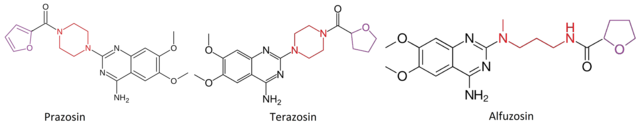
Alpha-blockers are medicines that are mainly used to treat high blood pressure (hypertension) and problems with passing urine in men who have enlargement of the prostate gland. Prostate gland enlargement is also called benign prostatic hyperplasia (BPH). For hi... Alpha-blockers are normally only started if: Other medicines such as beta-blockers.

Patient information leaflet
Can I take Bisoprolol and Trimbow together?
Bisoprolol and Trimbow (which contains formoterol) work in opposite ways on the airways. Why this happens Bisoprolol is a 'beta-blocker' and formoterol (in Trimbow) is a 'beta-agonist'. Important precautions Acute breathing distress Bisoprolol is a beta-blocker and can cause narrowing of the airways, potentially triggering a severe asthma attack.

Patient information leaflet
Can I take Bisoprolol and Metformin together?
Bisoprolol can hide the warning signs of low blood sugar (hypoglycaemia). It may also slightly change how your body manages blood sugar levels, potentially making metformin less effective or increasing the risk of a 'hypo'. Why this happens Bisoprolol is a beta-blocker. It works by slowing the heart rate and blocking certain stress hormones. These.
Further reading and references
- laminin subunit beta 3; MedlinePlus, National Library of Medicine.
- Aumailley M, Bruckner-Tuderman L, Carter WG, Deutzmann R, Edgar D, Ekblom P, Engel J, Engvall E, Hohenester E, Jones JC, Kleinman HK, Marinkovich MP, Martin GR, Mayer U, Meneguzzi G, Miner JH, Miyazaki K, Patarroyo M, Paulsson M, Quaranta V, Sanes JR, Sasaki T, Sekiguchi K, Sorokin LM, Talts JF, Tryggvason K, Uitto J, Virtanen I, von der Mark K, Wewer UM, Yamada Y, Yurchenco PD. A simplified laminin nomenclature. Matrix Biol. 2005 Aug;24(5):326-32. doi: 10.1016/j.matbio.2005.05.006.
- Hartwig B, Borm B, Schneider H, Arin MJ, Kirfel G, Herzog V. Laminin-5-deficient human keratinocytes: defective adhesion results in a saltatory and inefficient mode of migration. Exp Cell Res. 2007 May 1;313(8):1575-87. doi: 10.1016/j.yexcr.2007.02.003. Epub 2007 Feb 9.
- Muhle C, Jiang QJ, Charlesworth A, Bruckner-Tuderman L, Meneguzzi G, Schneider H. Novel and recurrent mutations in the laminin-5 genes causing lethal junctional epidermolysis bullosa: molecular basis and clinical course of Herlitz disease. Hum Genet. 2005 Jan;116(1-2):33-42. doi: 10.1007/s00439-004-1210-y. Epub 2004 Nov 5.
- Nakano A, Chao SC, Pulkkinen L, Murrell D, Bruckner-Tuderman L, Pfendner E, Uitto J. Laminin 5 mutations in junctional epidermolysis bullosa: molecular basis of Herlitz vs. non-Herlitz phenotypes. Hum Genet. 2002 Jan;110(1):41-51. doi: 10.1007/s00439-001-0630-1. Epub 2001 Nov 13.
- Nakano A, Pfendner E, Hashimoto I, Uitto J. Herlitz junctional epidermolysis bullosa: novel and recurrent mutations in the LAMB3 gene and the population carrier frequency. J Invest Dermatol. 2000 Sep;115(3):493-8. doi: 10.1046/j.1523-1747.2000.00086.x.
- Pulkkinen L, Gerecke DR, Christiano AM, Wagman DW, Burgeson RE, Uitto J. Cloning of the beta 3 chain gene (LAMB3) of human laminin 5, a candidate gene in junctional epidermolysis bullosa. Genomics. 1995 Jan 1;25(1):192-8. doi: 10.1016/0888-7543(95)80125-6.
- Pulkkinen L, Uitto J. Mutation analysis and molecular genetics of epidermolysis bullosa. Matrix Biol. 1999 Feb;18(1):29-42. doi: 10.1016/s0945-053x(98)00005-5.
- Schneider H, Muhle C, Pacho F. Biological function of laminin-5 and pathogenic impact of its deficiency. Eur J Cell Biol. 2007 Dec;86(11-12):701-17. doi: 10.1016/j.ejcb.2006.07.004. Epub 2006 Sep 26.
- Varki R, Sadowski S, Pfendner E, Uitto J. Epidermolysis bullosa. I. Molecular genetics of the junctional and hemidesmosomal variants. J Med Genet. 2006 Aug;43(8):641-52. doi: 10.1136/jmg.2005.039685. Epub 2006 Feb 10.
Share your thoughts or experiences with others in our patient communities.
Simple access to trusted treatments and health services online.
Common conditions
Get help with common conditions through the NHS, without a GP appointment.





Sign up to the Patient newsletter
Your weekly dose of clear, trustworthy health advice - written to help you feel informed, confident and in control.
By subscribing you accept our Privacy Policy. You can unsubscribe at any time. We never sell your data.