LIM domain binding 3
Last updated 30 Sept 2025
Meets Patient’s editorial guidelines
- DownloadDownload
- Share
- Language
- Discussion
- Ask Patient
- Audio Version
- Add to preferred sources on Google
The LDB3 gene provides instructions for making a protein that is found in heart (cardiac) muscle and in the muscles used for movement (skeletal muscle). Within muscle fibers, structures called sarcomeres generate the force needed for muscles to contract. Sarcomeres are linked together by structures called Z-discs to form myofibrils, which are the basic units of muscle fibers. The LDB3 protein helps to stabilize the sarcomeres by interacting with Z-discs. This organisation of the sarcomeres and myofibrils provides the strength and stability that is needed during repeated cycles of muscle contraction and relaxation.
Video picks for GenesVideo library
Normal function
The LDB3 gene provides instructions for making a protein that is found in heart (cardiac) muscle and in the muscles used for movement (skeletal muscle). Within muscle fibers, structures called sarcomeres generate the force needed for muscles to contract. Sarcomeres are linked together by structures called Z-discs to form myofibrils, which are the basic units of muscle fibers. The LDB3 protein helps to stabilize the sarcomeres by interacting with Z-discs. This organisation of the sarcomeres and myofibrils provides the strength and stability that is needed during repeated cycles of muscle contraction and relaxation.
Conditions referring to this gene or chromosome
Other names
cypher
KIAA0613
LIM domain-binding protein 3
oracle
PDLIM6
Z-band alternatively spliced PDZ motif protein
ZASP
Patient picks for Genes

Brain and nerves
Causes of peripheral neuropathy: from diabetes to vaccines
Neuropathy - also called peripheral neuropathy - can affect anyone but is more likely to develop as your age increases. In the UK, almost one in 10 people aged over 55 years have it. There are many possible causes of peripheral neuropathy, ranging from the most common to the very rare.
by Amberley Davis

Brain and nerves
Guillain-Barré syndrome
Guillain-Barré syndrome affects the nerves of the limbs and body and is usually triggered by an infection. The main symptom is sudden onset weakness of the muscles that are supplied by the affected nerves. It requires immediate hospital admission as it can rapidly become very serious. With appropriate treatment and monitoring, most people make a full recovery.
by Dr Colin Tidy, MRCGP
Brain and nerves
Are new treatments for MS on the horizon?
130,000 people in the UK are living with multiple sclerosis (MS). Though there are treatments which can ease and help to manage symptoms, MS is a condition which has no cure. But now, a groundbreaking trial is trying to find new treatments which could revolutionise care for people with MS.
by Ellie Broughton
Brain and nerves
Cauda equina syndrome
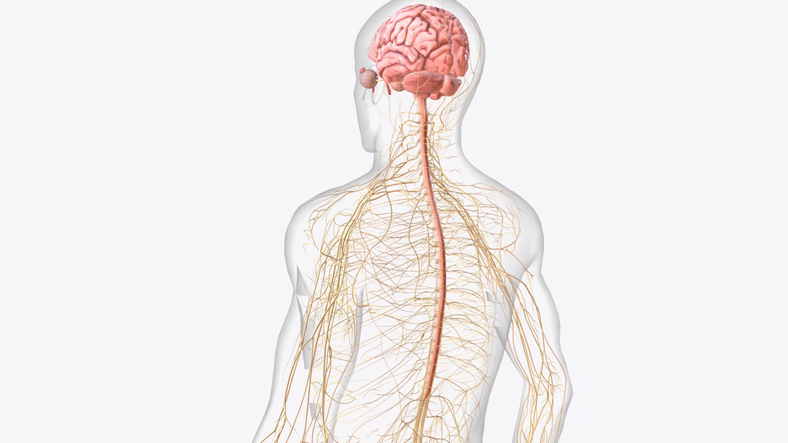
Cauda equina syndrome is a particularly serious type of nerve root problem. This is a rare disorder where there is pressure on the nerves at the very bottom of the spinal cord. The collection of nerves at the bottom of the spinal cord is called the cauda equina because it is said to look like a horse's tail. Cauda equina means horse's tail in Latin. The condition may cause low back pain and problems with bowel and bladder function (usually not being able to pass urine), numbness in the saddle area, which is around the back passage (anus), and weakness in one or both legs. It needs urgent investigation and treatment to prevent the nerves to the bladder and bowel from becoming permanently damaged. See a healthcare professional immediately if you suspect CES.
by Dr Colin Tidy, MRCGP
Brain and nerves
Motor neurone disease
Motor neurone disease (MND) is a neurological condition that causes a progressive weakness and wasting of many of the muscles in the body. There are various types of motor neurone disease. This leaflet is mainly about amyotrophic lateral sclerosis (ALS), which is the most common type of motor neurone disease. Although there is no cure for motor neurone disease, treatments can help to ease symptoms and disability.
by Dr Rachel Hudson, MRCGP

Brain and nerves
Living with Motor Neurone Disease - Louise's story
Please be aware that this article discusses sensitive topics related to MND and end of life. During a career helping patients living with Motor Neurone Disease (MND), Dr Louise Jordan was diagnosed herself. In her own written words, she shares with us her personal story of losing her speech, getting diagnosed, living with motor neurone disease, and receiving support, love, and care from partner Rob.
by Amberley Davis
Related patient information and medicines

Patient information leaflet
The immune system
These diseases are managed by the specialist who knows most about the system affected for that person - eg, multiple sclerosis is managed by a neurologist. What is the immune system. We are surrounded by millions of bacteria, viruses and other germs (microbes) that have the potential to enter our bodies and cause harm. The immune system is the.

Patient information leaflet
End of life care
End of life care is a term used to cover the issues you need to think about and plan for, when you are approaching death. In September 2021 the National Institute for Health and Care Excellence (NICE) issued new quality standards about what everyone should be able to expect from end of life care. You can find out more about the NICE quality.

Patient information leaflet
Can I take Levothyroxine and Fibre supplements together?
Taking fibre supplements at the same time as levothyroxine can stop your body from absorbing the medicine properly. Us... Our Medicines Interaction Checker helps you check whether your prescriptions, over-the-counter medicines, and supplements are safe to take together. Simply search for your medicines to see potential interactions and what to do.

Patient information leaflet
Can I take Anastrozole and Levothyroxine together?
Simply search for your medicines to see potential interactions and w... Disclaimer This information is for general educational purposes only and should not be relied upon as a substitute for professional medical advice. Always consult your GP, pharmacist, or another qualified healthcare professional before making decisions about your medications..

Patient information leaflet
Can I take Levothyroxine and Calcium together?
Taking calcium at the same time as levothyroxine can stop your thyroid medication from working properly. This can lead to symptoms of an underactive thyroid, such as feeling very tired, feeling cold, or gaini... Our Medicines Interaction Checker helps you check whether your prescriptions, over-the-counter medicines, and supplements are safe to.

Patient information leaflet
Primary biliary cholangitis
Primary biliary cholangitis (PBC) is a condition that slowly damages the bile ducts in your liver, leading to liver damage and, sometimes, liver scarring (cirrhosis). Primary biliary cholangitis (PBC) is an auto-immune condition in which your immune system gradually destroys the tiny tubes (bile ducts) which take bile from the liver to the gut.
Further reading and references
- LIM domain binding 3; MedlinePlus, National Library of Medicine.
- Du H, Chen Y, Zeng L, Wu R, Wu T, Zhu J. Myofibrillar myopathies due to a novel mutation in exon 8 of the LDB3 gene. Int J Rheum Dis. 2024 Feb;27(2):e15036. doi: 10.1111/1756-185X.15036.
- Ferrer I, Olive M. Molecular pathology of myofibrillar myopathies. Expert Rev Mol Med. 2008 Sep 3;10:e25. doi: 10.1017/S1462399408000793.
- Fichna JP, Maruszak A, Zekanowski C. Myofibrillar myopathy in the genomic context. J Appl Genet. 2018 Nov;59(4):431-439. doi: 10.1007/s13353-018-0463-4. Epub 2018 Sep 10.
- Lin C, Guo X, Lange S, Liu J, Ouyang K, Yin X, Jiang L, Cai Y, Mu Y, Sheikh F, Ye S, Chen J, Ke Y, Cheng H. Cypher/ZASP is a novel A-kinase anchoring protein. J Biol Chem. 2013 Oct 11;288(41):29403-13. doi: 10.1074/jbc.M113.470708. Epub 2013 Aug 31.
- Schroder R, Schoser B. Myofibrillar myopathies: a clinical and myopathological guide. Brain Pathol. 2009 Jul;19(3):483-92. doi: 10.1111/j.1750-3639.2009.00289.x.
- Selcen D, Engel AG. Mutations in ZASP define a novel form of muscular dystrophy in humans. Ann Neurol. 2005 Feb;57(2):269-76. doi: 10.1002/ana.20376.
Share your thoughts or experiences with others in our patient communities.
Simple access to trusted treatments and health services online.
Common conditions
Get help with common conditions through the NHS, without a GP appointment.





Sign up to the Patient newsletter
Your weekly dose of clear, trustworthy health advice - written to help you feel informed, confident and in control.
By subscribing you accept our Privacy Policy. You can unsubscribe at any time. We never sell your data.