LIF receptor subunit alpha
Last updated 5 Jul 2022
Meets Patient’s editorial guidelines
- DownloadDownload
- Share
- Language
- Discussion
- Ask Patient
- Audio Version
- Add to preferred sources on Google
The LIFR gene provides instructions for making the leukemia inhibitory factor receptor (LIFR) protein. This receptor spans the cell membrane, which allows it to attach (bind) to other proteins, called ligands, outside the cell and send signals inside the cell that help the cell respond to its environment. Ligands and receptors fit together like keys into locks.
Video picks for GenesVideo library
Normal function
The LIFR gene provides instructions for making the leukemia inhibitory factor receptor (LIFR) protein. This receptor spans the cell membrane, which allows it to attach (bind) to other proteins, called ligands, outside the cell and send signals inside the cell that help the cell respond to its environment. Ligands and receptors fit together like keys into locks.
LIFR acts as a receptor for a molecule known as leukemia inhibitory factor (LIF) as well as other ligands. LIFR signaling can control several cellular processes, including growth and division (proliferation), maturation (differentiation), and survival. First found to be important in blocking (inhibiting) growth of blood cancer (leukemia) cells, this signaling is also involved in the formation of bone and the development of nerve cells. It appears to play an important role in normal development and functioning of the autonomic nervous system, which controls involuntary body processes such as the regulation of breathing rate and body temperature.
Conditions referring to this gene or chromosome
Other names
CD118
CD118 antigen
leukemia inhibitory factor receptor alpha
leukemia inhibitory factor receptor precursor
LIF receptor
LIF-R
SJS2
STWS
SWS
Patient picks for Genes

Children's health
Alpha-1 antitrypsin deficiency
Alpha-1 antitrypsin deficiency is an inherited genetic condition. A genetic condition is one that can be passed on from parents through genes. In alpha-1 antitrypsin deficiency the result of a genetic abnormality leads to lung and, in some people, liver damage. Lung symptoms are the most common and include shortness of breath, cough and wheezing. Symptoms can worsen over time. At present, there is no cure for alpha-1 antitrypsin deficiency. Treatment aims at slowing down the progression of the disease.
by Dr Philippa Vincent, MRCGP

Health and wellness video library
Heart and blood videos
Your heart works tirelessly to keep you alive, so giving it the care and attention it deserves is key to a long, healthy life. Our heart and blood vessels video hub offers expert advice and information so you can understand your cardiovascular health, spot early warning signs, make informed lifestyle choices, and take steps to prevent serious conditions like heart disease, stroke, and high blood pressure.
by Victoria Raw
Treatment and medication
Alpha-blockers
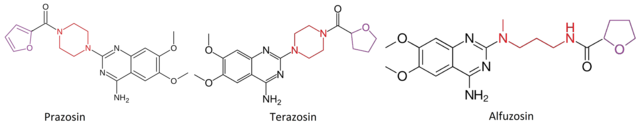
Alpha-blockers are medicines that are mainly used to treat high blood pressure (hypertension) and problems with passing urine in men who have enlargement of the prostate gland. Prostate gland enlargement is also called benign prostatic hyperplasia (BPH).
by Dr Doug McKechnie, MRCGP

Senior health
What not to say to someone who is dying
If a friend or family member is given a terminal diagnosis, it's natural to want to support them. But many of us are scared of saying the wrong thing. We look at potential pitfalls.
by Gillian Harvey

Sexual health
Can your diet and lifestyle improve fertility?
Our everyday habits have a powerful influence on our health - shaping everything from our energy levels and mood to our long-term wellbeing. But could those same lifestyle choices also affect fertility? We spoke with nutritional therapist Helena Barham-Coppola to explore how factors such as diet, exercise, and stress may influence your chances of conceiving, and what you can do to better support your reproductive health.
by Victoria Raw

Health and wellness video library
General health videos
Our general health video hub features expert-led videos on a range of health and wellbeing topics.
by Victoria Raw
Related patient information and medicines

Patient information leaflet
Diabetes and illness
Sick day diabetes guidelines The following guidance is provided by Diabetes UK: Contact your general practice or diabetes team who will help you if you have an... On SGLT-2 inhibitors ( canagliflozin Canagliflozin tablets for diabetes , dapagliflozin Dapagliflozin tablets , empagliflozin Empagliflozin tablets , ertugliflozin): may need to be.

Patient information leaflet
Diabetic kidney disease
What is diabetic kidney disease. Diabetic kidney disease (diabetic nephropathy) is a complication that occurs in some people with diabetes. Di... (For example, some people taking an ACE inhibitor develop a persistent cough.). SGLT2 inhibitors Examples of these medications include dapagliflozin Dapagliflozin tablets and empagliflozin Empagliflozin.

Patient information leaflet
Familial hypercholesterolaemia
Hypercholesterolaemia means cholesterol levels in your blood are too high. Too much cholesterol in your blood causes cholesterol deposits in your arteries and so an increased risk of early h... Dr Krishna Vakharia , 13th September 2024 The National Institute for Health and Care Excellence (NICE) is recommending evinacumab alongside diet and other.
Patient information leaflet
Alpha-1 antitrypsin deficiency
Alpha-1 antitrypsin deficiency is an inherited genetic condition. A genetic condition is one that can be passed on from parents through genes. In alpha-1 antitrypsin deficiency the result of a genetic abnormality leads to lung and, in some people, liver damage. What is alpha-1 antitrypsin. Alpha-1 antitrypsin (A1AT) is a protein made by cells in.

Patient information leaflet
Can I take Amlodipine and Doxadura together?
It is generally okay to take amlodipine Amlodipine tablets and doxadura (doxazosin) Doxazosin - an alpha-blocker together, however you should be cautious. Taking them together can cause your blood pressure to... Our Medicines Interaction Checker helps you check whether your prescriptions, over-the-counter medicines, and supplements are safe to.

Patient information leaflet
Can I take Lansoprazole and Tamsulosin together?
There are no known significant interactions between... It is generally considered safe to take these two medicines together. Why this happens Lansoprazole is a proton pump inhibitor (PPI) used to reduce stomach acid, and tamsulosin is an alpha-blocker used to help with urinary symptoms. They are processed by different pathways in the liver and do.
Further reading and references
- LIF receptor subunit alpha; MedlinePlus, National Library of Medicine.
- Dagoneau N, Scheffer D, Huber C, Al-Gazali LI, Di Rocco M, Godard A, Martinovic J, Raas-Rothschild A, Sigaudy S, Unger S, Nicole S, Fontaine B, Taupin JL, Moreau JF, Superti-Furga A, Le Merrer M, Bonaventure J, Munnich A, Legeai-Mallet L, Cormier-Daire V. Null leukemia inhibitory factor receptor (LIFR) mutations in Stuve-Wiedemann/Schwartz-Jampel type 2 syndrome. Am J Hum Genet. 2004 Feb;74(2):298-305. doi: 10.1086/381715. Epub 2004 Jan 21.
- Mikelonis D, Jorcyk CL, Tawara K, Oxford JT. Stuve-Wiedemann syndrome: LIFR and associated cytokines in clinical course and etiology. Orphanet J Rare Dis. 2014 Mar 12;9:34. doi: 10.1186/1750-1172-9-34.
- Tomida M. Structural and functional studies on the leukemia inhibitory factor receptor (LIF-R): gene and soluble form of LIF-R, and cytoplasmic domain of LIF-R required for differentiation and growth arrest of myeloid leukemic cells. Leuk Lymphoma. 2000 May;37(5-6):517-25. doi: 10.3109/10428190009058503.
- Voisin MB, Bitard J, Daburon S, Moreau JF, Taupin JL. Separate functions for the two modules of the membrane-proximal cytokine binding domain of glycoprotein 190, the leukemia inhibitory factor low affinity receptor, in ligand binding and receptor activation. J Biol Chem. 2002 Apr 19;277(16):13682-92. doi: 10.1074/jbc.M111624200. Epub 2002 Feb 7.
Share your thoughts or experiences with others in our patient communities.
Simple access to trusted treatments and health services online.
Common conditions
Get help with common conditions through the NHS, without a GP appointment.





Sign up to the Patient newsletter
Your weekly dose of clear, trustworthy health advice - written to help you feel informed, confident and in control.
By subscribing you accept our Privacy Policy. You can unsubscribe at any time. We never sell your data.