protein tyrosine phosphatase non-receptor type 22
Last updated 8 Sept 2025
Meets Patient’s editorial guidelines
- DownloadDownload
- Share
- Language
- Discussion
- Ask Patient
- Audio Version
- Add to preferred sources on Google
The PTPN22 gene provides instructions for making a protein that belongs to the PTP (protein tyrosine phosphatases) family. PTP proteins play a role in regulating a process called signal transduction. In signal transduction, the protein relays signals from outside the cell to the cell nucleus. These signals instruct the cell to grow and divide or to mature and take on specialized functions.
Video picks for GenesVideo library
Normal function
The PTPN22 gene provides instructions for making a protein that belongs to the PTP (protein tyrosine phosphatases) family. PTP proteins play a role in regulating a process called signal transduction. In signal transduction, the protein relays signals from outside the cell to the cell nucleus. These signals instruct the cell to grow and divide or to mature and take on specialized functions.
The PTPN22 protein is involved in signaling that helps control the activity of immune system cells called T cells. T cells identify foreign substances and defend the body against infection.
Conditions referring to this gene or chromosome
Other names
lymphoid phosphatase
lymphoid-specific protein tyrosine phosphatase
LYP
LYP1
LYP2
PEP
PEST-domain phosphatase
protein tyrosine phosphatase, non-receptor type 8
PTN22_HUMAN
PTPN8
tyrosine-protein phosphatase non-receptor type 22
Patient picks for Genes

Diabetes
Diabetes diet: managing type 2 diabetes
If you have type 2 diabetes it is often difficult to know which foods you should or should not eat. Here we explain the key elements of a diabetes diet to help you prevent or delay associated health problems, and address some common myths around eating with type 2 diabetes.
by Lawrence Higgins

Kidney and urinary tract
Proteinuria
Proteins are molecules that are found in almost every part of the body, including in the blood. The kidneys normally have a filter which stops protein from entering the urine, except in very tiny amounts; however, kidney problems can cause higher levels of protein to be found in the urine.
by Dr Doug McKechnie, MRCGP
Digestive health
Functional dyspepsia
Functional dyspepsia (non-ulcer dyspepsia) causes pain and sometimes other symptoms in your upper tummy (abdomen). The cause is often not clear. Medication to reduce stomach acid helps in some cases. Infection with Helicobacter pylori (H. pylori) may cause a small number of cases. Clearing this infection, if present, helps in some people.
by Dr Rosalyn Adleman, MRCGP
Healthy living
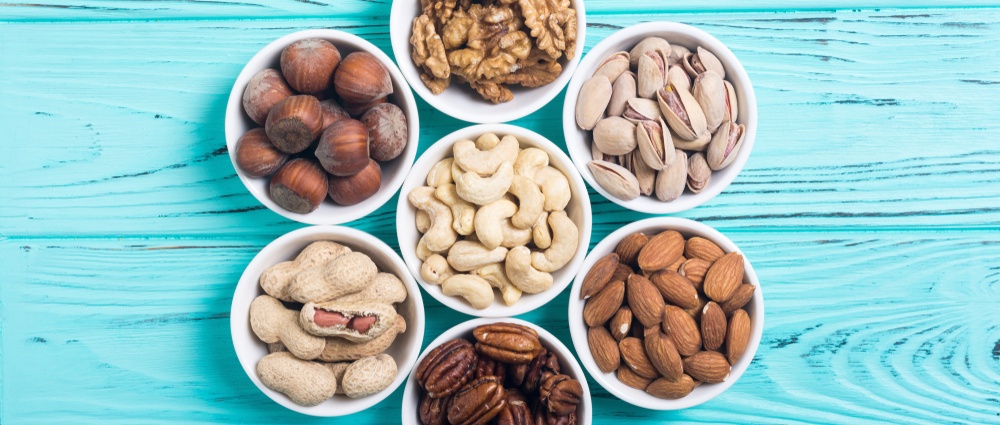
8 high-protein nuts to boost your strength
Packed with protein, delicious, easy to eat, and versatile - nuts are a great source of fuel for people building their fitness and strength. But not all nuts are created equal, which is why we count down the top eight nuts you should eat while strength training and serve these up with tasty recipe ideas.
by Lynn Stephen
Diabetes
MHRA approves teplizumab to delay progression of type 1 diabetes
Teplizumab (Tzield) has been approved by the Medicines and Healthcare products Regulatory Agency (MHRA) to help delay the onset of Stage 3 type 1 diabetes (T1D). Read on to see what this means if you are prescribed teplizumab and what it does for you.
by Lawrence Higgins

Diet and nutrition
10 sources of plant-based protein for bone health
Plant-based diets are growing in popularity. People choose this way of eating for various reasons - to boost their health, help animals, and protect the environment. But switching to a plant-based diet may mean you're missing out on vital, bone-friendly nutrients. One of these is protein.
by Victoria Raw
Related patient information and medicines

Patient information leaflet
Diabetic kidney disease
Diabetic kidney disease is one of the causes of chronic kidney disease Chronic kidney disease , a long-term condition where the kidneys do not work as well as they should. Because of this the kidneys 'leak' abnormal amounts of protein from the blood into the urine. The main protein that leaks out from the damaged kidneys is called albumin. In.

Patient information leaflet
Mastocytosis and mast cell disorders
A mast cell is a type of white blood cell. If the condition is severe, surgery to remove the spleen (splenectomy), medicines that have an effect on the immune system (suc... Dr Sarah Jarvis , 28th September 2021 Midostaurin for treating advanced systemic mastocytosis The National Institute for Health and Care Excellence (NICE) has brought out new.

Patient information leaflet
Liver function tests
Liver function tests are a set of blood tests commonly done to check on the health of your liver. Changes in liver function tests give a clue as to whether your liver is under strain, inflamed, infected or diseased, and how badly. The pattern of the liver function tests can give a clue to the cause and can allow early detection of unsuspected.

Patient information leaflet
Chronic myeloid leukaemia
Chronic myeloid leukaemia (CML) is sometimes called chronic myelogenous leukaemia, chronic granulocytic leukaemia, or chronic myelocytic leuk. What is chronic myeloid leukaemia. Chronic myeloid leukaemia (CML) is sometimes called chronic myelogenous ... You may be advised to have one or more of the following treatments: Imatinib tablets. This.

Patient information leaflet
Mouth cancer
Diagnosing mouth cancer Your healthcare professional may suspect mouth cancer if you have a lesion in your mouth (such as a sore, an ulcer or a lump) which has not healed for 3 wee... Dr Krishna Vakharia , 16th October 2023 The National Institute for Health and Care Excellence (NICE) has recommended that a person should receive a diagnosis or.
Patient information leaflet
Proteinuria
Proteins are molecules that are found in almost every part of the body, including in the blood. The kidneys normally have a filter which stops protein from entering the urine, except in very tiny amounts; however, kidney problems can cause higher levels of protein to be found in the urine. What is proteinuria. Proteinuria means that there is an.
Further reading and references
- protein tyrosine phosphatase non-receptor type 22; MedlinePlus, National Library of Medicine.
- Arechiga AF, Habib T, He Y, Zhang X, Zhang ZY, Funk A, Buckner JH. Cutting edge: the PTPN22 allelic variant associated with autoimmunity impairs B cell signaling. J Immunol. 2009 Mar 15;182(6):3343-7. doi: 10.4049/jimmunol.0713370.
- LaBerge GS, Bennett DC, Fain PR, Spritz RA. PTPN22 is genetically associated with risk of generalized vitiligo, but CTLA4 is not. J Invest Dermatol. 2008 Jul;128(7):1757-62. doi: 10.1038/sj.jid.5701233. Epub 2008 Jan 17.
- Laberge GS, Birlea SA, Fain PR, Spritz RA. The PTPN22-1858C>T (R620W) functional polymorphism is associated with generalized vitiligo in the Romanian population. Pigment Cell Melanoma Res. 2008 Apr;21(2):206-8. doi: 10.1111/j.1755-148X.2008.00443.x.
- Lee YH, Rho YH, Choi SJ, Ji JD, Song GG, Nath SK, Harley JB. The PTPN22 C1858T functional polymorphism and autoimmune diseases--a meta-analysis. Rheumatology (Oxford). 2007 Jan;46(1):49-56. doi: 10.1093/rheumatology/kel170. Epub 2006 Jun 7.
- Pradhan V, Borse V, Ghosh K. PTPN22 gene polymorphisms in autoimmune diseases with special reference to systemic lupus erythematosus disease susceptibility. J Postgrad Med. 2010 Jul-Sep;56(3):239-42. doi: 10.4103/0022-3859.68651.
- Spritz RA. The genetics of generalized vitiligo and associated autoimmune diseases. Pigment Cell Res. 2007 Aug;20(4):271-8. doi: 10.1111/j.1600-0749.2007.00384.x.
- Vang T, Miletic AV, Bottini N, Mustelin T. Protein tyrosine phosphatase PTPN22 in human autoimmunity. Autoimmunity. 2007 Sep;40(6):453-61. doi: 10.1080/08916930701464897.
Share your thoughts or experiences with others in our patient communities.
Simple access to trusted treatments and health services online.
Common conditions
Get help with common conditions through the NHS, without a GP appointment.





Sign up to the Patient newsletter
Your weekly dose of clear, trustworthy health advice - written to help you feel informed, confident and in control.
By subscribing you accept our Privacy Policy. You can unsubscribe at any time. We never sell your data.