Vitiligo
Last updated 19 Sept 2024
Meets Patient’s editorial guidelines
- DownloadDownload
- Share
- Language
- Discussion
- Ask Patient
- Audio Version
- Add to preferred sources on Google
Vitiligo is a condition that causes patchy loss of skin coloring (pigmentation). In addition, hair on these regions of skin can also lose pigment and appear white. The average age of onset of vitiligo is in the mid-twenties, but it can appear at any age. The size and number of patches varies from person to person. The condition tends to progress over time, with larger areas of the skin losing pigment. However, the patches can remain stable or even improve in some affected individuals.
Video picks for Genetic conditionsVideo library
Description
Vitiligo is a condition that causes patchy loss of skin coloring (pigmentation). In addition, hair on these regions of skin can also lose pigment and appear white. The average age of onset of vitiligo is in the mid-twenties, but it can appear at any age. The size and number of patches varies from person to person. The condition tends to progress over time, with larger areas of the skin losing pigment. However, the patches can remain stable or even improve in some affected individuals.
Researchers have identified several forms of vitiligo. Generalized vitiligo (also called nonsegmental vitiligo), which is the most common form, involves loss of pigment (depigmentation) in patches of skin all over the body. Depigmentation typically occurs on the face, neck, and scalp, and around body openings such as the mouth and genitals. Sometimes pigment is lost in mucous membranes, such as the lips. Loss of pigmentation is also frequently seen in areas that tend to experience rubbing, impact, or other trauma, such as the hands, arms, and places where bones are close to the skin surface (bony prominences). Another form of the condition, called segmental vitiligo, is associated with smaller patches of depigmented skin that appear on one side of the body in a limited area. This form occurs in about 10 percent of affected individuals.
Vitiligo is generally considered to be an autoimmune disorder. Autoimmune disorders occur when the immune system attacks the body's own tissues and organs. In people with vitiligo the immune system appears to attack the pigment cells (melanocytes) in the skin. About 15 to 25 percent of people with vitiligo are also affected by at least one other autoimmune disorder, particularly autoimmune thyroid disease, rheumatoid arthritis, type 1 diabetes, psoriasis, pernicious anaemia, Addison disease, systemic lupus erythematosus, celiac disease, Crohn's disease, or ulcerative colitis.
In the absence of other autoimmune conditions, vitiligo does not affect general health or physical functioning. However, concerns about appearance and ethnic identity are significant issues for many affected individuals.
Inheritance patterns
The source lists the following possible inheritance patterns: Pattern unknown. More than one pattern can apply in different cases.
Related genes
Patient picks for Genetic conditions
Related patient information and medicines

Patient information leaflet
Vitiligo
Vitiligo causes white patches on the skin which vary in size and number. There are usually no other symptoms, but it can have a significant effect on mood and self-esteem. Treatment... What is vitiligo. Vitiligo is due to a lack of colour (pigment) in the affected areas of the skin. This means that the immune system (which normally protects the.

Patient information leaflet
Alopecia areata
Alopecia areata is an 'autoimmune disease'. This is one of those conditions where the body's immune system, which... More often than not, no cause is found at all. People with alopecia areata have a slightly higher-than-average chance of developing other autoimmune diseases such as thyroid disease Underactive thyroid gland , pernicious anaemia.
Patient information leaflet
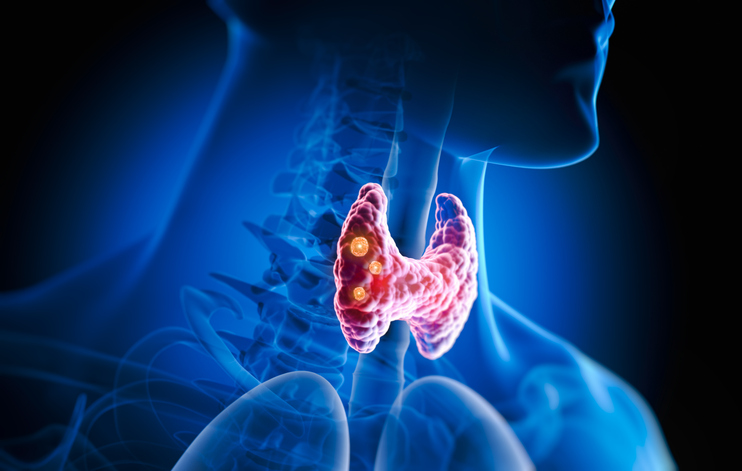
Underactive thyroid gland
A personal or family history of other autoimmune disorders - for example: Vitiligo Vitiligo. Also, people with autoimmune thyroiditis have a small increased risk of developing other autoimmune conditions such as vitiligo, pernicious anaemia, etc. Surgery or radioactive treatment to the thyroid gland If the thyroid gland has been damaged or.
Patient information leaflet
Vitamin B12 deficiency and pernicious anaemia
For example: Thyroid diseases Thyroid and parathyroid problems. Addison's disease Addison's disease. Vitiligo Vitiligo (a condition where white patches develop on the skin). The antibodies which cause pernicious anaemia can be detected by a blood test to confirm the diagnosis. Stomach or gut problems Various problems of the stomach or gut can be a.

Patient information leaflet
Addison's disease
Other diseases As mentioned above, if you have autoimmune Addison's disease, you have a h... For example, thyroid problems, vitiligo, and pernicious anaemia - the most common being thyroid disorders, which are treatable. If you have autoimmune Addison's disease you have a higher-than-average chance of other autoimmune diseases developing, such as.

Patient information leaflet
Skin rashes
This leaflet is a guide but if you have any concerns, you must seek urgent clinical assessment if: The rash doesn't quickly disappear. A brown macule may be a mole but ... A white macule may be due to a condition which causes pale patches of skin (called vitiligo Vitiligo ) or a skin complaint with flaky discoloured areas (called pityriasis.
Further reading and references
- Vitiligo; MedlinePlus, National Library of Medicine.
- Boissy RE, Spritz RA. Frontiers and controversies in the pathobiology of vitiligo: separating the wheat from the chaff. Exp Dermatol. 2009 Jul;18(7):583-5. doi: 10.1111/j.1600-0625.2008.00826.x. Epub 2009 Mar 6.
- Halder RM, Chappell JL. Vitiligo update. Semin Cutan Med Surg. 2009 Jun;28(2):86-92. doi: 10.1016/j.sder.2009.04.008.
- Jin Y, Birlea SA, Fain PR, Ferrara TM, Ben S, Riccardi SL, Cole JB, Gowan K, Holland PJ, Bennett DC, Luiten RM, Wolkerstorfer A, van der Veen JP, Hartmann A, Eichner S, Schuler G, van Geel N, Lambert J, Kemp EH, Gawkrodger DJ, Weetman AP, Taieb A, Jouary T, Ezzedine K, Wallace MR, McCormack WT, Picardo M, Leone G, Overbeck A, Silverberg NB, Spritz RA. Genome-wide association analyses identify 13 new susceptibility loci for generalized vitiligo. Nat Genet. 2012 May 6;44(6):676-80. doi: 10.1038/ng.2272.
- Jin Y, Birlea SA, Fain PR, Gowan K, Riccardi SL, Holland PJ, Mailloux CM, Sufit AJ, Hutton SM, Amadi-Myers A, Bennett DC, Wallace MR, McCormack WT, Kemp EH, Gawkrodger DJ, Weetman AP, Picardo M, Leone G, Taieb A, Jouary T, Ezzedine K, van Geel N, Lambert J, Overbeck A, Spritz RA. Variant of TYR and autoimmunity susceptibility loci in generalized vitiligo. N Engl J Med. 2010 May 6;362(18):1686-97. doi: 10.1056/NEJMoa0908547. Epub 2010 Apr 21.
- Jin Y, Birlea SA, Fain PR, Mailloux CM, Riccardi SL, Gowan K, Holland PJ, Bennett DC, Wallace MR, McCormack WT, Kemp EH, Gawkrodger DJ, Weetman AP, Picardo M, Leone G, Taieb A, Jouary T, Ezzedine K, van Geel N, Lambert J, Overbeck A, Spritz RA. Common variants in FOXP1 are associated with generalized vitiligo. Nat Genet. 2010 Jul;42(7):576-8. doi: 10.1038/ng.602. Epub 2010 Jun 6.
- Jin Y, Riccardi SL, Gowan K, Fain PR, Spritz RA. Fine-mapping of vitiligo susceptibility loci on chromosomes 7 and 9 and interactions with NLRP1 (NALP1). J Invest Dermatol. 2010 Mar;130(3):774-83. doi: 10.1038/jid.2009.273. Epub 2009 Sep 3.
- LaBerge GS, Bennett DC, Fain PR, Spritz RA. PTPN22 is genetically associated with risk of generalized vitiligo, but CTLA4 is not. J Invest Dermatol. 2008 Jul;128(7):1757-62. doi: 10.1038/sj.jid.5701233. Epub 2008 Jan 17.
- Laberge GS, Birlea SA, Fain PR, Spritz RA. The PTPN22-1858C>T (R620W) functional polymorphism is associated with generalized vitiligo in the Romanian population. Pigment Cell Melanoma Res. 2008 Apr;21(2):206-8. doi: 10.1111/j.1755-148X.2008.00443.x.
- Richmond JM, Frisoli ML, Harris JE. Innate immune mechanisms in vitiligo: danger from within. Curr Opin Immunol. 2013 Dec;25(6):676-82. doi: 10.1016/j.coi.2013.10.010. Epub 2013 Nov 12.
- Smith AG, Sturm RA. Multiple genes and locus interactions in susceptibility to vitiligo. J Invest Dermatol. 2010 Mar;130(3):643-5. doi: 10.1038/jid.2009.403.
- Spritz RA. Recent progress in the genetics of generalized vitiligo. J Genet Genomics. 2011 Jul 20;38(7):271-8. doi: 10.1016/j.jgg.2011.05.005. Epub 2011 Jun 12.
- Spritz RA. The genetics of generalized vitiligo. Curr Dir Autoimmun. 2008;10:244-57. doi: 10.1159/000131501.
Share your thoughts or experiences with others in our patient communities.
Simple access to trusted treatments and health services online.
Common conditions
Get help with common conditions through the NHS, without a GP appointment.





Sign up to the Patient newsletter
Your weekly dose of clear, trustworthy health advice - written to help you feel informed, confident and in control.
By subscribing you accept our Privacy Policy. You can unsubscribe at any time. We never sell your data.