NLR family pyrin domain containing 1
Last updated 8 May 2023
Meets Patient’s editorial guidelines
- DownloadDownload
- Share
- Language
- Discussion
- Ask Patient
- Audio Version
- Add to preferred sources on Google
The NLRP1 gene provides instructions for making a member of a family of proteins called nucleotide-binding domain and leucine-rich repeat containing (NLR) proteins. These proteins are involved in the immune system, helping to regulate the process of inflammation. Inflammation occurs when the immune system sends signaling molecules and white blood cells to a site of injury or disease to fight microbial invaders and facilitate tissue repair. The body then stops (inhibits) the inflammatory response to prevent damage to its own cells and tissues.
Video picks for GenesVideo library
Normal function
The NLRP1 gene provides instructions for making a member of a family of proteins called nucleotide-binding domain and leucine-rich repeat containing (NLR) proteins. These proteins are involved in the immune system, helping to regulate the process of inflammation. Inflammation occurs when the immune system sends signaling molecules and white blood cells to a site of injury or disease to fight microbial invaders and facilitate tissue repair. The body then stops (inhibits) the inflammatory response to prevent damage to its own cells and tissues.
The NLRP1 protein is involved in the assembly of a molecular complex called an inflammasome, which helps trigger the inflammatory process in response to the presence of bacteria or viruses. Researchers believe that the NLRP1 protein may also play a role in the self-destruction of cells (apoptosis).
Conditions referring to this gene or chromosome
Other names
CARD7
CLR17.1
DEFCAP
DKFZp586O1822
KIAA0926
NAC
NALP1
NALP1_HUMAN
NLR family, pyrin domain containing 1
SLEV1
VAMAS1
Patient picks for Genes
Sexual health
Natural family planning methods
Natural family planning is a method of preventing pregnancy that does not involve medicines or devices. The fertility awareness method is a type of natural family planning that involves being able to predict your fertile time. This is the time you are likely to conceive.
by Dr Jacqueline Payne, FRCGP

Mental health
Not quite 'back to normal': a guide to post-pandemic family healing
When news broke in late 2019 of a virus spreading rapidly across the globe, the word ‘unprecedented’ quickly became part of everyday vocabulary in the months that followed. The outbreak of Covid-19 marked the world’s most significant public health crisis in at least a century, shaking the foundations of the one place we usually feel most secure - the home. It is no surprise that years of disrupted routines have left a lasting mark on the family unit. From the sudden loss of support networks to the blurring of boundaries between home, school, and work, the pandemic reshaped how families function. We spoke with a psychotherapist to explore these long-term psychological ripples and why reflecting on that period is essential for understanding - and healing - the family dynamic today.
by Victoria Raw

Podcasts
What are relationships anyway?
Relationships – what are they? We often think of relationships as intimate with a partner and yet we actually have hundreds of relationships with friends, family, at work, at play even with nature and beyond. Clare and Aileen kick off the season by discussing the breadth of relationships.
by Thomas Andrew Porteus, MBCS
Podcasts
The parental minefield
How often have you said something quite ordinary to a parent, or they’ve said something to you and suddenly the room feels like it’s about to explode? Welcome to the parental nightmare. It’s not just about conflict, it’s about what’s hidden underneath these relationships – family secrets, unspoken stories, patterns of behaviour passed from one generation to the next. In this episode Clare and Aileen explore the complex, often lifelong, relationship we have with our parents and discuss practical strategies to help you navigate this important relationship.
by Thomas Andrew Porteus, MBCS

Children's health
Pearson syndrome: how one family learned to live in the present
Pearson syndrome is a rare and serious mitochondrial disorder that typically affects infants and young children. There is currently no cure, and it is usually life-threatening. We follow one family’s journey of living with the condition, exploring how it shapes their everyday lives, the challenges they face, and what it truly means to cherish every moment.
by Victoria Raw
COVID-19
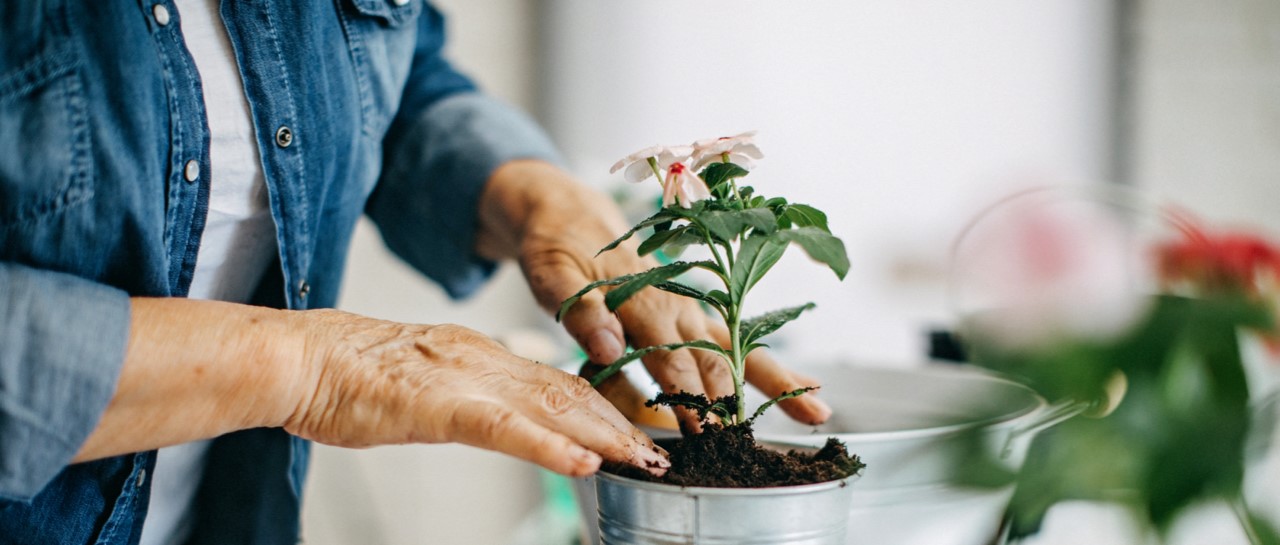
COVID-19: how to support vulnerable friends and family during the coronavirus pandemic
Current coronavirus lockdown measures are especially challenging for older people and those with mental health issues and underlying health conditions. We look at how to support vulnerable loved ones during the COVID-19 pandemic.
by Sally Turner
Related patient information and medicines

Patient information leaflet
Porphyria
In the porphyrias, the chemical process that is affected is the one that produces a substance called haem. Haem is mainly made in the liver and in bone marrow. Haem is used to make haemoglobin which transports oxygen around the body in red blood cells. Haem is also used to make a number of proteins in the body, needed for various important.

Patient information leaflet
Nut allergy
Symptoms often start quickly, within an hour of coming into contact with a nut, and sometimes within minutes. If you have a nut allergy, avoiding foods that contain nuts will prevent an allergic reaction. But, if you do come into contact with nuts, and a reaction starts then treating it quickly is important. If you have a severe allergic reaction,.
Patient information leaflet
Vitamin B12 deficiency and pernicious anaemia
What is vitamin B12 ... Vitamin B12 deficiency occurs when a person has insufficient vitamin B12. Vitamin B12, also known as cobalamin, is a vitamin that plays a crucial role in various bodily functions. It’s an essential nutrient that the body needs but cannot produce on its own, so it must be obtained through diet or supplements. Vitamin B12 is.

Patient information leaflet
Cri du chat syndrome
Cri du chat syndrome is a chromosome problem caused by a missing piece of chromosome 5. The syndrome is called cri du chat (French for cry of the cat) because affected babies often have a high-pitched cry. Not all babies with the missing piece of chromosome 5 will develop cri du chat syndrome. Cri du chat syndrome may cause a variety of.

Patient information leaflet
Bottle-feeding your baby
Bottle-feeding is something you need to prepare for by buying equipment, choosing formula and making up bottles in advance of needing them. NICE guidance on bottle-feeding The National Institute for Health and Care Excellence (NICE) recommend that if you are thinking about or need to bottle feed (with or without breastfeeding), you should: Have.
Patient information leaflet
Natural family planning methods
Natural family planning is a method of preventing pregnancy that does not involve medicines or devices. The fertility awareness method is a type of natural family planning that involves being able to predict your fertile time. ServiceUpsellPlaceholder Effect... Dr Rosemary Leonard Natural family planning is a method of preventing pregnancy that.
Further reading and references
- NLR family pyrin domain containing 1; MedlinePlus, National Library of Medicine.
- Jin Y, Birlea SA, Fain PR, Spritz RA. Genetic variations in NALP1 are associated with generalized vitiligo in a Romanian population. J Invest Dermatol. 2007 Nov;127(11):2558-62. doi: 10.1038/sj.jid.5700953. Epub 2007 Jul 19.
- Jin Y, Mailloux CM, Gowan K, Riccardi SL, LaBerge G, Bennett DC, Fain PR, Spritz RA. NALP1 in vitiligo-associated multiple autoimmune disease. N Engl J Med. 2007 Mar 22;356(12):1216-25. doi: 10.1056/NEJMoa061592.
- Jin Y, Riccardi SL, Gowan K, Fain PR, Spritz RA. Fine-mapping of vitiligo susceptibility loci on chromosomes 7 and 9 and interactions with NLRP1 (NALP1). J Invest Dermatol. 2010 Mar;130(3):774-83. doi: 10.1038/jid.2009.273. Epub 2009 Sep 3.
- Pontillo A, Brandao L, Guimaraes R, Segat L, Araujo J, Crovella S. Two SNPs in NLRP3 gene are involved in the predisposition to type-1 diabetes and celiac disease in a pediatric population from northeast Brazil. Autoimmunity. 2010 Dec;43(8):583-9. doi: 10.3109/08916930903540432. Epub 2010 Apr 7.
- Smith AG, Sturm RA. Multiple genes and locus interactions in susceptibility to vitiligo. J Invest Dermatol. 2010 Mar;130(3):643-5. doi: 10.1038/jid.2009.403.
- Spritz RA. The genetics of generalized vitiligo and associated autoimmune diseases. Pigment Cell Res. 2007 Aug;20(4):271-8. doi: 10.1111/j.1600-0749.2007.00384.x.
- Taieb A. NALP1 and the inflammasomes: challenging our perception of vitiligo and vitiligo-related autoimmune disorders. Pigment Cell Res. 2007 Aug;20(4):260-2. doi: 10.1111/j.1600-0749.2007.00393.x. No abstract available.
- Zurawek M, Fichna M, Januszkiewicz-Lewandowska D, Gryczynska M, Fichna P, Nowak J. A coding variant in NLRP1 is associated with autoimmune Addison's disease. Hum Immunol. 2010 May;71(5):530-4. doi: 10.1016/j.humimm.2010.02.004. Epub 2010 Mar 1.
Share your thoughts or experiences with others in our patient communities.
Simple access to trusted treatments and health services online.
Common conditions
Get help with common conditions through the NHS, without a GP appointment.





Sign up to the Patient newsletter
Your weekly dose of clear, trustworthy health advice - written to help you feel informed, confident and in control.
By subscribing you accept our Privacy Policy. You can unsubscribe at any time. We never sell your data.