ryanodine receptor 2
Last updated 25 Apr 2023
Meets Patient’s editorial guidelines
- DownloadDownload
- Share
- Language
- Discussion
- Ask Patient
- Audio Version
- Add to preferred sources on Google
The RYR2 gene provides instructions for making a protein called ryanodine receptor 2. This protein is part of a family of ryanodine receptors, which form channels that transport positively charged calcium atoms (calcium ions) within cells.
Video picks for GenesVideo library
Normal function
The RYR2 gene provides instructions for making a protein called ryanodine receptor 2. This protein is part of a family of ryanodine receptors, which form channels that transport positively charged calcium atoms (calcium ions) within cells.
Channels made with the ryanodine receptor 2 protein are found in heart (cardiac) muscle cells called myocytes. These channels are embedded in the outer membrane of a cell structure called the sarcoplasmic reticulum, which acts as a storage center for calcium ions. The RYR2 channel controls the flow of calcium ions out of the sarcoplasmic reticulum.
For the heart to beat normally, the cardiac muscle must tense (contract) and relax in a coordinated way. This cycle of muscle contraction and relaxation results from the precise control of calcium ions within myocytes. In response to certain signals, the RYR2 channel releases calcium ions from the sarcoplasmic reticulum into the surrounding cell fluid (the cytoplasm). The resulting increase in calcium ion concentration triggers the cardiac muscle to contract, which pumps blood out of the heart. Calcium ions are then transported back into the sarcoplasmic reticulum, and the cardiac muscle relaxes. In this way, the release and reuptake of calcium ions in myocytes produces a regular heart rhythm.
Conditions referring to this gene or chromosome
Other names
ARVC2
ARVD2
cardiac muscle ryanodine receptor
cardiac muscle ryanodine receptor-calcium release channel
CPVT1
ryanodine receptor 2 (cardiac)
VTSIP
Patient picks for Genes
Medicine
Irbesartan - an angiotensin receptor blocker
Take irbesartan once each day. You can take the tablets before or after meals. Side-effects are usually mild. They include feeling dizzy and mild stomach upset. Keep your regular appointments with your doctor to have your blood pressure measured. Some painkillers interfere with irbesartan, so ask a pharmacist for advice before you buy any medicines.
by Michael Stewart, MRPharmS
Medicine
Valsartan - an angiotensin receptor blocker
You can take valsartan either before or after a meal. Any side-effects are usually mild. The most common side-effect is dizziness. Some painkillers may interfere with valsartan and increase the risk of side-effects, so ask a pharmacist for advice before you buy any medicines.
by Michael Stewart, MRPharmS
Medicine
Azilsartan - an angiotensin receptor blocker
Take azilsartan once each day. You can take the tablets either before or after a meal. Any side-effects are usually mild. They include feeling dizzy and having diarrhoea. Keep your regular appointments with your doctor to have your blood pressure measured. Some painkillers can interfere with azilsartan and increase the risk of side-effects, so ask a pharmacist for advice before you buy any medicines 'over the counter'.
by Michael Stewart, MRPharmS
Medicine
Olmesartan - an angiotensin receptor blocker
Take olmesartan once each day. You can take your doses either before or after a meal. Keep your regular appointments with your doctor to have your blood pressure measured. Some painkillers can interfere with olmesartan and increase the risk of side-effects, so ask a pharmacist for advice before you buy any medicines 'over the counter'.
by Michael Stewart, MRPharmS
Medicine
Candesartan - an angiotensin receptor blocker
Take candesartan once each day. You can take the tablets either before or after a meal. Any side-effects are usually mild. They include headache and feeling dizzy. Some painkillers may interfere with candesartan and increase the risk of side-effects, so ask a pharmacist for advice before you buy any medicines.
by Michael Stewart, MRPharmS
Medicine
Losartan - an angiotensin receptor blocker
Take losartan once each day. You can take your doses either before or after a meal. Any side-effects are usually mild, and can include feeling dizzy or light-headed. Some painkillers can interfere with losartan and increase the risk of side-effects, so ask a pharmacist for advice before you buy any medicines 'over the counter'. Do not drink grapefruit juice whilst taking losartan. It can interact with the medicine and alter its effect.
by Michael Stewart, MRPharmS
Related patient information and medicines

Patient information leaflet
Diabetic kidney disease
An angiotensin-II receptor antagonist (AIIRA) There are several types and brands of this type of medication. The ones available in the UK are: azilsartan Azilsartan - an angiotensin receptor blocker , candesartan Candesartan - an angiotensin receptor blocker , eprosartan Eprosartan - an angiotensin receptor blocker , irbesartan Irbesartan - an.

Patient information leaflet
Mastocytosis and mast cell disorders
Triggers for mastocytosis symptoms Although not strictly speaking the cause of mastocytosis, a number of factors are. If the condition is severe, surgery to remove the sp... Dr Sarah Jarvis , 28th September 2021 Midostaurin for treating advanced systemic mastocytosis The National Institute for Health and Care Excellence (NICE) has brought out new.
Patient information leaflet
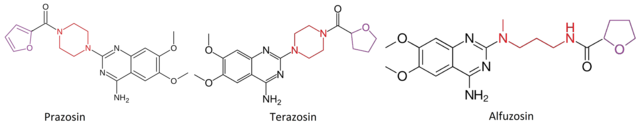
Alpha-blockers
Alpha-blockers are medicines that are mainly used to treat high blood pressure (hypertension) and problems with passing urine in men who have enlargement of the prostate gland. Prostate gland enlargement is also called benign prostatic hyperplasia (BPH). What are alpha-blockers used for. In the past, some alpha-blockers were also used to treat.
Patient information leaflet
Myasthenia gravis
Myasthenia gravis (MG) is a condition where muscles become easily tired and weak. It is due to a problem with how the nerves stimulate the muscles to tighten (contract). The muscles around the eyes are commonly affected first. What causes myasthenia gravis. Myasthenia gravis is an autoimmune disease. This means that the immune system The immune.
Patient information leaflet
Heart failure
If 41-49% of the blood is pumped out, this is called heart failure with minimally reduced ejection fraction. If more than 50% is pumped out, it is called heart failure with preserved ejection fraction. Distinguishing between the three groups is important as it will affect the treatment which is used. For further information about the heart itself,.

Patient information leaflet
Antihistamines
Antihistamines are a group of medicines which act to block the effects of the chemical called histamine in the body. Either H1 or H2 histamine receptors can be blocked by medicines, but the group commonly known as antihistamines blocks the H1 receptor. They have a number of uses, but are most often used to treat allergies. What are antihistamines..
Further reading and references
- ryanodine receptor 2; MedlinePlus, National Library of Medicine.
- Bhuiyan ZA, van den Berg MP, van Tintelen JP, Bink-Boelkens MT, Wiesfeld AC, Alders M, Postma AV, van Langen I, Mannens MM, Wilde AA. Expanding spectrum of human RYR2-related disease: new electrocardiographic, structural, and genetic features. Circulation. 2007 Oct 2;116(14):1569-76. doi: 10.1161/CIRCULATIONAHA.107.711606. Epub 2007 Sep 17.
- Cerrone M, Napolitano C, Priori SG. Catecholaminergic polymorphic ventricular tachycardia: A paradigm to understand mechanisms of arrhythmias associated to impaired Ca(2+) regulation. Heart Rhythm. 2009 Nov;6(11):1652-9. doi: 10.1016/j.hrthm.2009.06.033. Epub 2009 Jun 30.
- Gyorke S. Molecular basis of catecholaminergic polymorphic ventricular tachycardia. Heart Rhythm. 2009 Jan;6(1):123-9. doi: 10.1016/j.hrthm.2008.09.013. Epub 2008 Sep 16.
- Liu N, Priori SG. Disruption of calcium homeostasis and arrhythmogenesis induced by mutations in the cardiac ryanodine receptor and calsequestrin. Cardiovasc Res. 2008 Jan 15;77(2):293-301. doi: 10.1093/cvr/cvm004. Epub 2007 Aug 14.
- Paavola J, Viitasalo M, Laitinen-Forsblom PJ, Pasternack M, Swan H, Tikkanen I, Toivonen L, Kontula K, Laine M. Mutant ryanodine receptors in catecholaminergic polymorphic ventricular tachycardia generate delayed afterdepolarizations due to increased propensity to Ca2+ waves. Eur Heart J. 2007 May;28(9):1135-42. doi: 10.1093/eurheartj/ehl543. Epub 2007 Mar 8.
- Postma AV, Denjoy I, Kamblock J, Alders M, Lupoglazoff JM, Vaksmann G, Dubosq-Bidot L, Sebillon P, Mannens MM, Guicheney P, Wilde AA. Catecholaminergic polymorphic ventricular tachycardia: RYR2 mutations, bradycardia, and follow up of the patients. J Med Genet. 2005 Nov;42(11):863-70. doi: 10.1136/jmg.2004.028993.
- Priori SG, Napolitano C, Tiso N, Memmi M, Vignati G, Bloise R, Sorrentino V, Danieli GA. Mutations in the cardiac ryanodine receptor gene (hRyR2) underlie catecholaminergic polymorphic ventricular tachycardia. Circulation. 2001 Jan 16;103(2):196-200. doi: 10.1161/01.cir.103.2.196.
- Tiso N, Stephan DA, Nava A, Bagattin A, Devaney JM, Stanchi F, Larderet G, Brahmbhatt B, Brown K, Bauce B, Muriago M, Basso C, Thiene G, Danieli GA, Rampazzo A. Identification of mutations in the cardiac ryanodine receptor gene in families affected with arrhythmogenic right ventricular cardiomyopathy type 2 (ARVD2). Hum Mol Genet. 2001 Feb 1;10(3):189-94. doi: 10.1093/hmg/10.3.189.
Share your thoughts or experiences with others in our patient communities.
Simple access to trusted treatments and health services online.
Common conditions
Get help with common conditions through the NHS, without a GP appointment.





Sign up to the Patient newsletter
Your weekly dose of clear, trustworthy health advice - written to help you feel informed, confident and in control.
By subscribing you accept our Privacy Policy. You can unsubscribe at any time. We never sell your data.