sodium voltage-gated channel alpha subunit 2
Last updated 1 Jul 2025
Meets Patient’s editorial guidelines
- DownloadDownload
- Share
- Language
- Discussion
- Ask Patient
- Audio Version
- Add to preferred sources on Google
The SCN2A gene belongs to a family of genes that provide instructions for making sodium channels. These channels, which transport positively charged atoms (ions) of sodium into cells, play a key role in a cell's ability to generate and transmit electrical signals.
Video picks for GenesVideo library
Normal function
The SCN2A gene belongs to a family of genes that provide instructions for making sodium channels. These channels, which transport positively charged atoms (ions) of sodium into cells, play a key role in a cell's ability to generate and transmit electrical signals.
The SCN2A gene provides instructions for making one part (the alpha subunit) of a sodium channel called NaV1.2. These channels are primarily found in the brain, where they control the flow of sodium ions into nerve cells (neurons). NaV1.2 channels are involved in transmitting signals from one neuron to another. Communication between neurons depends on chemicals called neurotransmitters, which are released from one neuron and taken up by neighboring neurons. The flow of sodium ions through NaV1.2 channels helps determine when neurotransmitters will be released.
Conditions referring to this gene or chromosome
Other names
NAC2
NAV1.2
SCN2A1
SCN2A2
sodium channel, brain type II, alpha subunit
sodium channel, voltage gated, type II alpha subunit
sodium channel, voltage-gated, type II, alpha 1 polypeptide
sodium channel, voltage-gated, type II, alpha 2 polypeptide
sodium channel, voltage-gated, type II, alpha subunit
sodium voltage-gated channel, alpha subunit 2
Patient picks for Genes
Mental health
Mind and body control - how to channel your ‘internal telekinesis’
The dark nights have arrived, and right on cue, Mike Flanagan has turned his attention to one of Stephen King’s most iconic tales of teenage torment and supernatural terror... Carrie. The story of a schoolgirl with telekinetic powers - the fictional ability to move objects using the mind alone - has gripped our morbid imaginations for decades. Little wonder, then, that this horror classic is getting a new lease of life in a television adaptation. But while we ourselves may not be able to bend spoons or move furniture, we do possess our own real-world form of ‘internal-telekinesis’. Through mental focus and controlled breathing, we can influence our heart rate and help calm an overworked nervous system.
by Hannah Boynton-Forshaw

Treatment and medication
Calcium channel blockers
Calcium channel blockers (sometimes called calcium antagonists) are a group of medicines that affect the way calcium passes into certain muscle cells. They are commonly prescribed to manage high blood pressure, angina, Raynaud's phenomenon and some abnormal heart rhythms (arrhythmias). They are also used to try to stop premature labour in pregnancy. A calcium-channel blocker can be used alone. However, one is often combined with another medicine to treat high blood pressure or angina, when one medicine alone has not worked so well.
by Dr Toni Hazell, FRCGP
Healthy living
How much sodium should you have?
Sodium in the diet primarily comes from eating salt. While some of it comes from directly adding it to food, most of the salt we eat is already present in processed foods.
by Dr Hayley Willacy, FRCGP
Medicine
Phenoxybenzamine - an alpha-blocker
Adults will normally start with one capsule a day. This dose may then be increased over the next few days. It is common to feel dizzy or light-headed initially. This should soon settle. You may be given other medicines to take alongside phenoxybenzamine.
by Michael Stewart, MRPharmS
Treatment and medication
Alpha-blockers
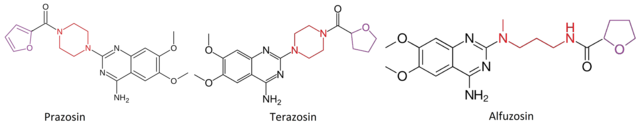
Alpha-blockers are medicines that are mainly used to treat high blood pressure (hypertension) and problems with passing urine in men who have enlargement of the prostate gland. Prostate gland enlargement is also called benign prostatic hyperplasia (BPH).
by Dr Doug McKechnie, MRCGP
Medicine
Sodium valproate for epilepsy
Read the information leaflet from inside your pack. Take sodium valproate regularly every day. Do not suddenly stop taking it as this can cause your symptoms to return. If you develop tummy (abdominal) pain, sickness, yellowing of your skin or of the whites of your eyes (jaundice) or any unexplained bruising or bleeding, tell your doctor straightaway.
by Michael Stewart, MRPharmS
Related patient information and medicines

Patient information leaflet
High blood pressure
High blood pressure (hypertension) happens when the force on the walls of blood vessels (caused by the blood within them) is more than normal. This means the heart has to work harder and the blood vessels are under more strain, making it a major risk factor for heart disease , stroke and other serious conditions. What is high blood pressure. High.
Patient information leaflet
Potassium-sparing diuretics
Diuretics are medicines which increase the amount of fluid removed from the body when we pass urine. Potassium-sparing diuretics are one type of diuretic. They are weak diuretics usually prescribed in combination with other types of diuretics. They are used to increase the amount of fluid passed from the body in urine, whilst also preventing too.

Patient information leaflet
Can I take Magnesium and Flecainide together?
In some cases, magnesium can actually be helpful for heart rhythm issues, but it must be balanced correctly. Why this happens Both magnesium and flecainide affect the electrical signals and mineral channels (like sodium and potassium) in your heart cells. While they don't usually stop each other from being absorbed, having too much or too little.

Patient information leaflet
Type 2 diabetes diet
The first-line treatment for type 2 diabetes involves making changes to your lifestyle, through diet, weight control and physical activity. Regular check-ups Type 2 diabetes and medication for diabetes (whether in tablet or injection form) definitely aren't the only way to control your blood sugar (glucose) levels. In fact, there is evidence that.
Patient information leaflet
Cystoscopy
A cystoscopy is a procedure which looks into the bladder with a special telescope called a cystoscope. Note : the information below is a general guide only. The arrangements, and the way tests are performed, may vary between different hospitals. Always follow the instructions given by your doctor or local hospital. Why is a cystoscopy done. To.
Patient information leaflet
Peripheral vasodilators
Peripheral vasodilators are medicines that are used to treat conditions that affect blood vessels in outer (peripheral) parts of the body such as the arms and legs. For example, they are used to treat peripheral arterial disease and Raynaud's phenomenon. They ease the symptoms of these conditions by dilating the blood vessels, preventing them from.
Further reading and references
- sodium voltage-gated channel alpha subunit 2; MedlinePlus, National Library of Medicine.
- Howell KB, McMahon JM, Carvill GL, Tambunan D, Mackay MT, Rodriguez-Casero V, Webster R, Clark D, Freeman JL, Calvert S, Olson HE, Mandelstam S, Poduri A, Mefford HC, Harvey AS, Scheffer IE. SCN2A encephalopathy: A major cause of epilepsy of infancy with migrating focal seizures. Neurology. 2015 Sep 15;85(11):958-66. doi: 10.1212/WNL.0000000000001926. Epub 2015 Aug 19.
- Thompson CH, Potet F, Abramova TV, DeKeyser JM, Ghabra NF, Vanoye CG, Millichap JJ, George AL. Epilepsy-associated SCN2A (NaV1.2) variants exhibit diverse and complex functional properties. J Gen Physiol. 2023 Oct 2;155(10):e202313375. doi: 10.1085/jgp.202313375. Epub 2023 Aug 14.
- Yang XR, Ginjupalli VKM, Theriault O, Poulin H, Appendino JP, Au PYB, Chahine M. SCN2A-related epilepsy of infancy with migrating focal seizures: report of a variant with apparent gain- and loss-of-function effects. J Neurophysiol. 2022 May 1;127(5):1388-1397. doi: 10.1152/jn.00309.2021. Epub 2022 Apr 13.
- Zeng Q, Yang Y, Duan J, Niu X, Chen Y, Wang D, Zhang J, Chen J, Yang X, Li J, Yang Z, Jiang Y, Liao J, Zhang Y. SCN2A-Related Epilepsy: The Phenotypic Spectrum, Treatment and Prognosis. Front Mol Neurosci. 2022 Mar 30;15:809951. doi: 10.3389/fnmol.2022.809951. eCollection 2022.
Share your thoughts or experiences with others in our patient communities.
Simple access to trusted treatments and health services online.
Common conditions
Get help with common conditions through the NHS, without a GP appointment.





Sign up to the Patient newsletter
Your weekly dose of clear, trustworthy health advice - written to help you feel informed, confident and in control.
By subscribing you accept our Privacy Policy. You can unsubscribe at any time. We never sell your data.