sodium voltage-gated channel alpha subunit 4
Last updated 5 Aug 2021
Meets Patient’s editorial guidelines
- DownloadDownload
- Share
- Language
- Discussion
- Ask Patient
- Audio Version
- Add to preferred sources on Google
The SCN4A gene belongs to a family of genes that provide instructions for making sodium channels. These channels, which transport positively charged sodium atoms (sodium ions) into cells, play a key role in a cell's ability to generate and transmit electrical signals.
Video picks for GenesVideo library
Normal function
The SCN4A gene belongs to a family of genes that provide instructions for making sodium channels. These channels, which transport positively charged sodium atoms (sodium ions) into cells, play a key role in a cell's ability to generate and transmit electrical signals.
The SCN4A gene provides instructions for making a critical part (the alpha subunit) of sodium channels that are abundant in muscles used for movement (skeletal muscles). For the body to move, these muscles must tense (contract) and relax in a coordinated way. Muscle contractions are triggered by the flow of ions, including sodium, into skeletal muscle cells. Channels made with the SCN4A protein control the flow of sodium ions into these cells.
Conditions referring to this gene or chromosome
Other names
Na(V)1.4
Nav1.4
SCN4A_HUMAN
skeletal muscle voltage-dependent sodium channel type IV alpha subunit
SkM1
sodium channel, voltage gated, type IV alpha subunit
sodium channel, voltage-gated, type IV, alpha
sodium channel, voltage-gated, type IV, alpha subunit
voltage-gated sodium channel type 4 alpha
Patient picks for Genes
Mental health
Mind and body control - how to channel your ‘internal telekinesis’
The dark nights have arrived, and right on cue, Mike Flanagan has turned his attention to one of Stephen King’s most iconic tales of teenage torment and supernatural terror... Carrie. The story of a schoolgirl with telekinetic powers - the fictional ability to move objects using the mind alone - has gripped our morbid imaginations for decades. Little wonder, then, that this horror classic is getting a new lease of life in a television adaptation. But while we ourselves may not be able to bend spoons or move furniture, we do possess our own real-world form of ‘internal-telekinesis’. Through mental focus and controlled breathing, we can influence our heart rate and help calm an overworked nervous system.
by Hannah Boynton-Forshaw

Treatment and medication
Calcium channel blockers
Calcium channel blockers (sometimes called calcium antagonists) are a group of medicines that affect the way calcium passes into certain muscle cells. They are commonly prescribed to manage high blood pressure, angina, Raynaud's phenomenon and some abnormal heart rhythms (arrhythmias). They are also used to try to stop premature labour in pregnancy. A calcium-channel blocker can be used alone. However, one is often combined with another medicine to treat high blood pressure or angina, when one medicine alone has not worked so well.
by Dr Toni Hazell, FRCGP

Preventative health
Seated Figure 4 Hamstring Stretch
The Seated Figure 4 Hamstring Stretch, is an effective and simple way to stretch your glutes, hips, hamstrings and lower back.
Healthy living
How much sodium should you have?
Sodium in the diet primarily comes from eating salt. While some of it comes from directly adding it to food, most of the salt we eat is already present in processed foods.
by Dr Hayley Willacy, FRCGP
Treatment and medication
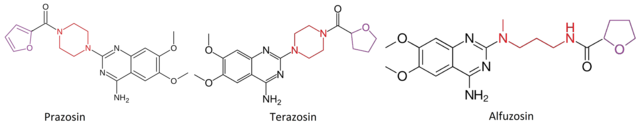
Alpha-blockers
Alpha-blockers are medicines that are mainly used to treat high blood pressure (hypertension) and problems with passing urine in men who have enlargement of the prostate gland. Prostate gland enlargement is also called benign prostatic hyperplasia (BPH).
by Dr Doug McKechnie, MRCGP
Medicine
Phenoxybenzamine - an alpha-blocker
Adults will normally start with one capsule a day. This dose may then be increased over the next few days. It is common to feel dizzy or light-headed initially. This should soon settle. You may be given other medicines to take alongside phenoxybenzamine.
by Michael Stewart, MRPharmS
Related patient information and medicines
Patient information leaflet
Migraine treatment
Dr Krishna Vakharia , 29th January 2024 The Medicines and Healthcare products Regulatory Agency (MHRA) has issued an update to the use of sodium valproate due to the risks associated with pregnancy and birth defects. Anticonvulsants Medicines called sodium valproate Sodium valproate for epilepsy and topiramate Topira... Sodium valproate is not.

Patient information leaflet
High blood pressure
High blood pressure (hypertension) happens when the force on the walls of blood vessels (caused by the blood within them) is more than normal. This means the heart has to work harder and the blood vessels are under more strain, making it a major risk factor for heart disease , stroke and other serious conditions. What is high blood pressure. High.

Patient information leaflet
Can I take Magnesium and Flecainide together?
In some cases, magnesium can actually be helpful for heart rhythm issues, but it must be balanced correctly. Why this happens Both magnesium and flecainide affect the electrical signals and mineral channels (like sodium and potassium) in your heart cells. While they don't usually stop each other from being absorbed, having too much or too little.

Patient information leaflet
ERCP
ERCP is a procedure that uses an endoscope and X-rays to look at the bile duct and the pancreatic duct. ERCP can also be used to remove gallstones or take small samples of tissue for analysis (a biopsy). Note : the information below is a general guide only. The arrangements and the way tests are performed may vary between different hospitals..

Patient information leaflet
Cystoscopy
A cystoscopy is a procedure which looks into the bladder with a special telescope called a cystoscope. Note : the information below is a general guide only. The arrangements, and the way tests are performed, may vary between different hospitals. Always follow the instructions given by your doctor or local hospital. Why is a cystoscopy done. To.
Patient information leaflet
Peripheral vasodilators
Peripheral vasodilators are medicines that are used to treat conditions that affect blood vessels in outer (peripheral) parts of the body such as the arms and legs. For example, they are used to treat peripheral arterial disease and Raynaud's phenomenon. They ease the symptoms of these conditions by dilating the blood vessels, preventing them from.
Further reading and references
- sodium voltage-gated channel alpha subunit 4; MedlinePlus, National Library of Medicine.
- Burge JA, Hanna MG. Novel insights into the pathomechanisms of skeletal muscle channelopathies. Curr Neurol Neurosci Rep. 2012 Feb;12(1):62-9. doi: 10.1007/s11910-011-0238-3.
- Carle T, Lhuillier L, Luce S, Sternberg D, Devuyst O, Fontaine B, Tabti N. Gating defects of a novel Na+ channel mutant causing hypokalemic periodic paralysis. Biochem Biophys Res Commun. 2006 Sep 22;348(2):653-61. doi: 10.1016/j.bbrc.2006.07.101. Epub 2006 Jul 28.
- Groome JR, Fujimoto E, Ruben PC. K-aggravated myotonia mutations at residue G1306 differentially alter deactivation gating of human skeletal muscle sodium channels. Cell Mol Neurobiol. 2005 Nov;25(7):1075-92. doi: 10.1007/s10571-005-8057-1.
- Jurkat-Rott K, Holzherr B, Fauler M, Lehmann-Horn F. Sodium channelopathies of skeletal muscle result from gain or loss of function. Pflugers Arch. 2010 Jul;460(2):239-48. doi: 10.1007/s00424-010-0814-4. Epub 2010 Mar 17.
- Jurkat-Rott K, Weber MA, Fauler M, Guo XH, Holzherr BD, Paczulla A, Nordsborg N, Joechle W, Lehmann-Horn F. K+-dependent paradoxical membrane depolarization and Na+ overload, major and reversible contributors to weakness by ion channel leaks. Proc Natl Acad Sci U S A. 2009 Mar 10;106(10):4036-41. doi: 10.1073/pnas.0811277106. Epub 2009 Feb 18.
- Maggi L, Bonanno S, Altamura C, Desaphy JF. Ion Channel Gene Mutations Causing Skeletal Muscle Disorders: Pathomechanisms and Opportunities for Therapy. Cells. 2021 Jun 16;10(6):1521. doi: 10.3390/cells10061521.
- Maggi L, Brugnoni R, Canioni E, Tonin P, Saletti V, Sola P, Piccinelli SC, Colleoni L, Ferrigno P, Pini A, Masson R, Manganelli F, Lietti D, Vercelli L, Ricci G, Bruno C, Tasca G, Pizzuti A, Padovani A, Fusco C, Pegoraro E, Ruggiero L, Ravaglia S, Siciliano G, Morandi L, Dubbioso R, Mongini T, Filosto M, Tramacere I, Mantegazza R, Bernasconi P. Clinical and Molecular Spectrum of Myotonia and Periodic Paralyses Associated With Mutations in SCN4A in a Large Cohort of Italian Patients. Front Neurol. 2020 Jul 29;11:646. doi: 10.3389/fneur.2020.00646. eCollection 2020.
- Miller TM, Dias da Silva MR, Miller HA, Kwiecinski H, Mendell JR, Tawil R, McManis P, Griggs RC, Angelini C, Servidei S, Petajan J, Dalakas MC, Ranum LP, Fu YH, Ptacek LJ. Correlating phenotype and genotype in the periodic paralyses. Neurology. 2004 Nov 9;63(9):1647-55. doi: 10.1212/01.wnl.0000143383.91137.00.
- Sun J, Luo S, Suetterlin KJ, Song J, Huang J, Zhu W, Xi J, Zhou L, Lu J, Lu J, Zhao C, Hanna MG, Mannikko R, Matthews E, Qiao K. Clinical and genetic spectrum of a Chinese cohort with SCN4A gene mutations. Neuromuscul Disord. 2021 Sep;31(9):829-838. doi: 10.1016/j.nmd.2021.03.014. Epub 2021 Apr 15.
- Tamaoka A. Paramyotonia congenita and skeletal sodium channelopathy. Intern Med. 2003 Sep;42(9):769-70. doi: 10.2169/internalmedicine.42.769. No abstract available.
- Tsujino A, Maertens C, Ohno K, Shen XM, Fukuda T, Harper CM, Cannon SC, Engel AG. Myasthenic syndrome caused by mutation of the SCN4A sodium channel. Proc Natl Acad Sci U S A. 2003 Jun 10;100(12):7377-82. doi: 10.1073/pnas.1230273100. Epub 2003 May 23.
- Vicart S, Sternberg D, Fontaine B, Meola G. Human skeletal muscle sodium channelopathies. Neurol Sci. 2005 Oct;26(4):194-202. doi: 10.1007/s10072-005-0461-x.
- Weber F, Lehmann-Horn F. Hypokalemic Periodic Paralysis. 2002 Apr 30 [updated 2018 Jul 26]. In: Adam MP, Bick S, Mirzaa GM, Pagon RA, Wallace SE, Amemiya A, editors. GeneReviews(R) [Internet]. Seattle (WA): University of Washington, Seattle; 1993-2026. Available from http://www.ncbi.nlm.nih.gov/books/NBK1338/
- Weber F. Hyperkalemic Periodic Paralysis. 2003 Jul 18 [updated 2021 Jul 1]. In: Adam MP, Bick S, Mirzaa GM, Wallace SE, Amemiya A, editors. GeneReviews(R) [Internet]. Seattle (WA): University of Washington, Seattle; 1993-2026. Available from http://www.ncbi.nlm.nih.gov/books/NBK1496/
Share your thoughts or experiences with others in our patient communities.
Simple access to trusted treatments and health services online.
Common conditions
Get help with common conditions through the NHS, without a GP appointment.





Sign up to the Patient newsletter
Your weekly dose of clear, trustworthy health advice - written to help you feel informed, confident and in control.
By subscribing you accept our Privacy Policy. You can unsubscribe at any time. We never sell your data.