sodium voltage-gated channel alpha subunit 5
Last updated 18 Aug 2020
Meets Patient’s editorial guidelines
- DownloadDownload
- Share
- Language
- Discussion
- Ask Patient
- Audio Version
- Add to preferred sources on Google
The SCN5A gene belongs to a family of genes that provide instructions for making sodium channels. These channels open and close at specific times to control the flow of positively charged sodium atoms (sodium ions) into cells. The sodium channels containing proteins produced from the SCN5A gene are abundant in heart (cardiac) muscle cells and play key roles in these cells' ability to generate and transmit electrical signals. These channels play a major role in signaling the start of each heartbeat, coordinating the contractions of the upper and lower chambers of the heart, and maintaining a normal heart rhythm.
Video picks for GenesVideo library
Normal function
The SCN5A gene belongs to a family of genes that provide instructions for making sodium channels. These channels open and close at specific times to control the flow of positively charged sodium atoms (sodium ions) into cells. The sodium channels containing proteins produced from the SCN5A gene are abundant in heart (cardiac) muscle cells and play key roles in these cells' ability to generate and transmit electrical signals. These channels play a major role in signaling the start of each heartbeat, coordinating the contractions of the upper and lower chambers of the heart, and maintaining a normal heart rhythm.
Conditions referring to this gene or chromosome
Other names
HH1
LQT3
Nav1.5
SCN5A_HUMAN
Sodium channel protein, cardiac muscle alpha-subunit
sodium channel, voltage gated, type V alpha subunit
sodium channel, voltage-gated, type V, alpha (long QT syndrome 3)
sodium channel, voltage-gated, type V, alpha subunit
SSS1
Patient picks for Genes
Mental health
Mind and body control - how to channel your ‘internal telekinesis’
The dark nights have arrived, and right on cue, Mike Flanagan has turned his attention to one of Stephen King’s most iconic tales of teenage torment and supernatural terror... Carrie. The story of a schoolgirl with telekinetic powers - the fictional ability to move objects using the mind alone - has gripped our morbid imaginations for decades. Little wonder, then, that this horror classic is getting a new lease of life in a television adaptation. But while we ourselves may not be able to bend spoons or move furniture, we do possess our own real-world form of ‘internal-telekinesis’. Through mental focus and controlled breathing, we can influence our heart rate and help calm an overworked nervous system.
by Hannah Boynton-Forshaw
Healthy living
How much sodium should you have?
Sodium in the diet primarily comes from eating salt. While some of it comes from directly adding it to food, most of the salt we eat is already present in processed foods.
by Dr Hayley Willacy, FRCGP
Treatment and medication
Calcium channel blockers
Calcium channel blockers (sometimes called calcium antagonists) are a group of medicines that affect the way calcium passes into certain muscle cells. They are commonly prescribed to manage high blood pressure, angina, Raynaud's phenomenon and some abnormal heart rhythms (arrhythmias). They are also used to try to stop premature labour in pregnancy. A calcium-channel blocker can be used alone. However, one is often combined with another medicine to treat high blood pressure or angina, when one medicine alone has not worked so well.
by Dr Toni Hazell, FRCGP
Medicine
Phenoxybenzamine - an alpha-blocker
Adults will normally start with one capsule a day. This dose may then be increased over the next few days. It is common to feel dizzy or light-headed initially. This should soon settle. You may be given other medicines to take alongside phenoxybenzamine.
by Michael Stewart, MRPharmS
Treatment and medication
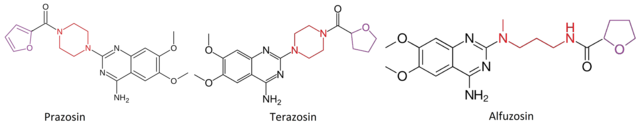
Alpha-blockers
Alpha-blockers are medicines that are mainly used to treat high blood pressure (hypertension) and problems with passing urine in men who have enlargement of the prostate gland. Prostate gland enlargement is also called benign prostatic hyperplasia (BPH).
by Dr Doug McKechnie, MRCGP
Medicine
Sodium valproate for epilepsy
Read the information leaflet from inside your pack. Take sodium valproate regularly every day. Do not suddenly stop taking it as this can cause your symptoms to return. If you develop tummy (abdominal) pain, sickness, yellowing of your skin or of the whites of your eyes (jaundice) or any unexplained bruising or bleeding, tell your doctor straightaway.
by Michael Stewart, MRPharmS
Related patient information and medicines
Patient information leaflet
Migraine treatment
Triptans work by imitating the action of a brain chemical called 5-hydroxytryptamine (5-HT). 5-HT is also known as serotonin. 5-HT gives instruction to cells by attaching to specific sites (receptors) on the outside of them, rather like a password triggering a computer programme or a key opening a lock. Dr Krishna Vakharia , 29th January 2024 The.

Patient information leaflet
High blood pressure
High blood pressure (hypertension) happens when the force on the walls of blood vessels (caused by the blood within them) is more than normal. This means the heart has to work harder and the blood vessels are under more strain, making it a major risk factor for heart disease , stroke and other serious conditions. What is high blood pressure. High.
Patient information leaflet
Can I take Magnesium and Flecainide together?
In some cases, magnesium can actually be helpful for heart rhythm issues, but it must be balanced correctly. Why this happens Both magnesium and flecainide affect the electrical signals and mineral channels (like sodium and potassium) in your heart cells. While they don't usually stop each other from being absorbed, having too much or too little.

Patient information leaflet
Enlarged prostate
The prostate gland commonly becomes larger in older men. Women do not have a prostate gland. This prostate gland enlargement is also called benign prostatic hypertrophy (or hyperplasia). It can cause problems with passing urine. Symptoms are often mild. Without treatment, symptoms do not always become worse and may even improve over time. If.
Patient information leaflet
ERCP
ERCP is a procedure that uses an endoscope and X-rays to look at the bile duct and the pancreatic duct. ERCP can also be used to remove gallstones or take small samples of tissue for analysis (a biopsy). Note : the information below is a general guide only. The arrangements and the way tests are performed may vary between different hospitals..

Patient information leaflet
Mallory-Weiss tear
Mallory-Weiss syndrome (also called Mallory-Weiss tear) is the name given to bleeding and other symptoms caused by a tear in the lining of the upper part of the gut (gastrointestinal tract). It is usually diagnosed by having a test called a gastroscopy (endoscopy). This involves a tube being passed down through the gullet (oesophagus) into the.
Further reading and references
- sodium voltage-gated channel alpha subunit 5; MedlinePlus, National Library of Medicine.
- Brugada P. Brugada syndrome: More than 20 years of scientific excitement. J Cardiol. 2016 Mar;67(3):215-20. doi: 10.1016/j.jjcc.2015.08.009. Epub 2015 Nov 25.
- Butters TD, Aslanidi OV, Inada S, Boyett MR, Hancox JC, Lei M, Zhang H. Mechanistic links between Na+ channel (SCN5A) mutations and impaired cardiac pacemaking in sick sinus syndrome. Circ Res. 2010 Jul 9;107(1):126-37. doi: 10.1161/CIRCRESAHA.110.219949. Epub 2010 May 6.
- Gui J, Wang T, Jones RP, Trump D, Zimmer T, Lei M. Multiple loss-of-function mechanisms contribute to SCN5A-related familial sick sinus syndrome. PLoS One. 2010 Jun 7;5(6):e10985. doi: 10.1371/journal.pone.0010985.
- Herfst LJ, Rook MB, Jongsma HJ. Trafficking and functional expression of cardiac Na+ channels. J Mol Cell Cardiol. 2004 Feb;36(2):185-93. doi: 10.1016/j.yjmcc.2003.11.014.
- Juang JM, Huang SK. Brugada syndrome--an under-recognized electrical disease in patients with sudden cardiac death. Cardiology. 2004;101(4):157-69. doi: 10.1159/000076693. Epub 2004 Feb 12.
- Kapplinger JD, Tester DJ, Alders M, Benito B, Berthet M, Brugada J, Brugada P, Fressart V, Guerchicoff A, Harris-Kerr C, Kamakura S, Kyndt F, Koopmann TT, Miyamoto Y, Pfeiffer R, Pollevick GD, Probst V, Zumhagen S, Vatta M, Towbin JA, Shimizu W, Schulze-Bahr E, Antzelevitch C, Salisbury BA, Guicheney P, Wilde AA, Brugada R, Schott JJ, Ackerman MJ. An international compendium of mutations in the SCN5A-encoded cardiac sodium channel in patients referred for Brugada syndrome genetic testing. Heart Rhythm. 2010 Jan;7(1):33-46. doi: 10.1016/j.hrthm.2009.09.069. Epub 2009 Oct 8.
- Lei M, Huang CL, Zhang Y. Genetic Na+ channelopathies and sinus node dysfunction. Prog Biophys Mol Biol. 2008 Oct-Nov;98(2-3):171-8. doi: 10.1016/j.pbiomolbio.2008.10.003. Epub 2008 Nov 5.
- Paulussen AD, Gilissen RA, Armstrong M, Doevendans PA, Verhasselt P, Smeets HJ, Schulze-Bahr E, Haverkamp W, Breithardt G, Cohen N, Aerssens J. Genetic variations of KCNQ1, KCNH2, SCN5A, KCNE1, and KCNE2 in drug-induced long QT syndrome patients. J Mol Med (Berl). 2004 Mar;82(3):182-8. doi: 10.1007/s00109-003-0522-z. Epub 2004 Feb 4.
- Plant LD, Bowers PN, Liu Q, Morgan T, Zhang T, State MW, Chen W, Kittles RA, Goldstein SA. A common cardiac sodium channel variant associated with sudden infant death in African Americans, SCN5A S1103Y. J Clin Invest. 2006 Feb;116(2):430-5. doi: 10.1172/JCI25618.
- Shimizu W, Aiba T, Kamakura S. Mechanisms of disease: current understanding and future challenges in Brugada syndrome. Nat Clin Pract Cardiovasc Med. 2005 Aug;2(8):408-14. doi: 10.1038/ncpcardio0268.
- Vatta M, Dumaine R, Varghese G, Richard TA, Shimizu W, Aihara N, Nademanee K, Brugada R, Brugada J, Veerakul G, Li H, Bowles NE, Brugada P, Antzelevitch C, Towbin JA. Genetic and biophysical basis of sudden unexplained nocturnal death syndrome (SUNDS), a disease allelic to Brugada syndrome. Hum Mol Genet. 2002 Feb 1;11(3):337-45. doi: 10.1093/hmg/11.3.337.
- Veerman CC, Wilde AA, Lodder EM. The cardiac sodium channel gene SCN5A and its gene product NaV1.5: Role in physiology and pathophysiology. Gene. 2015 Dec 1;573(2):177-87. doi: 10.1016/j.gene.2015.08.062. Epub 2015 Sep 8.
- Yang P, Kanki H, Drolet B, Yang T, Wei J, Viswanathan PC, Hohnloser SH, Shimizu W, Schwartz PJ, Stanton M, Murray KT, Norris K, George AL Jr, Roden DM. Allelic variants in long-QT disease genes in patients with drug-associated torsades de pointes. Circulation. 2002 Apr 23;105(16):1943-8. doi: 10.1161/01.cir.0000014448.19052.4c.
- Zaklyazminskaya E, Dzemeshkevich S. The role of mutations in the SCN5A gene in cardiomyopathies. Biochim Biophys Acta. 2016 Jul;1863(7 Pt B):1799-805. doi: 10.1016/j.bbamcr.2016.02.014. Epub 2016 Feb 23.
Share your thoughts or experiences with others in our patient communities.
Simple access to trusted treatments and health services online.
Common conditions
Get help with common conditions through the NHS, without a GP appointment.





Sign up to the Patient newsletter
Your weekly dose of clear, trustworthy health advice - written to help you feel informed, confident and in control.
By subscribing you accept our Privacy Policy. You can unsubscribe at any time. We never sell your data.