sodium voltage-gated channel alpha subunit 8
Last updated 1 May 2023
Meets Patient’s editorial guidelines
- DownloadDownload
- Share
- Language
- Discussion
- Ask Patient
- Audio Version
- Add to preferred sources on Google
The SCN8A gene belongs to a family of genes that provide instructions for making sodium channels. These channels allow positively charged sodium (Na) atoms (sodium ions) to pass into cells; they play a key role in a cell's ability to generate and transmit electrical signals.
Video picks for GenesVideo library
Normal function
The SCN8A gene belongs to a family of genes that provide instructions for making sodium channels. These channels allow positively charged sodium (Na) atoms (sodium ions) to pass into cells; they play a key role in a cell's ability to generate and transmit electrical signals.
The SCN8A gene provides instructions for making one part (the alpha subunit) of a sodium channel called Nav1.6. The alpha subunit forms the hole (pore) in the cell membrane through which sodium ions flow. Nav1.6 channels are primarily found in the nerve cells (neurons) of the brain and spinal cord (central nervous system) and neurons that connect the central nervous system to muscles and sensory cells that detect sensations such as touch, pain, heat, and sound (the peripheral nervous system). Nav1.6 channels control the flow of sodium ions into cells, which makes it possible for neurons to communicate by generating and transmitting electrical signals.
Conditions referring to this gene or chromosome
Other names
BFIS5
CERIII
CIAT
hNa6/Scn8a voltage-gated sodium channel
NaCh6
Nav1.6
sodium channel, voltage gated, type VIII, alpha subunit
voltage-gated sodium channel subunit alpha Nav1.6
voltage-gated sodium channel type VIII alpha protein
Patient picks for Genes

Mental health
Mind and body control - how to channel your ‘internal telekinesis’
The dark nights have arrived, and right on cue, Mike Flanagan has turned his attention to one of Stephen King’s most iconic tales of teenage torment and supernatural terror... Carrie. The story of a schoolgirl with telekinetic powers - the fictional ability to move objects using the mind alone - has gripped our morbid imaginations for decades. Little wonder, then, that this horror classic is getting a new lease of life in a television adaptation. But while we ourselves may not be able to bend spoons or move furniture, we do possess our own real-world form of ‘internal-telekinesis’. Through mental focus and controlled breathing, we can influence our heart rate and help calm an overworked nervous system.
by Hannah Boynton-Forshaw

Treatment and medication
Calcium channel blockers
Calcium channel blockers (sometimes called calcium antagonists) are a group of medicines that affect the way calcium passes into certain muscle cells. They are commonly prescribed to manage high blood pressure, angina, Raynaud's phenomenon and some abnormal heart rhythms (arrhythmias). They are also used to try to stop premature labour in pregnancy. A calcium-channel blocker can be used alone. However, one is often combined with another medicine to treat high blood pressure or angina, when one medicine alone has not worked so well.
by Dr Toni Hazell, FRCGP
Healthy living
How much sodium should you have?
Sodium in the diet primarily comes from eating salt. While some of it comes from directly adding it to food, most of the salt we eat is already present in processed foods.
by Dr Hayley Willacy, FRCGP
Yorkshire talks series 3
Gareth Gates: "I believed I was defective — my stammer was my superpower" | Yorkshire Talks
In our final episode of Series Three, our Yorkshire Talks guest is former Pop Idol star, producer and performer Gareth Gates. Bradford lad Gareth was first interviewed by Christine for a YTV talent show for young people nearly 30 years ago — so this episode was a bit of a reunion. Now all grown up, Gareth joins Matt and Christine to talk openly and honestly about his journey: from being bullied at school and living with a debilitating stammer, to reaching the final of the very first Pop Idol and having his whole life changed overnight. Gareth explains how taking part in the McGuire Programme has helped him manage his stammer, and how his experiences have shaped the work he does today. He also chats about his role in Boyband in the Buff, currently touring, his journey into becoming a music producer and entrepreneur, and his exciting new project — Speechless, a musical about stammering, due to hit the stage next year. Now a dad himself, with a daughter the same age he was when he first found fame, Gareth reflects on the last few decades with warmth, honesty and plenty of Yorkshire humour. 🎙️ It's a fascinating, funny and incredibly inspiring conversation — one you won't want to miss. If you enjoy the episode, don't forget to LIKE, SUBSCRIBE and leave us a comment. Follow Gareth: 📸 Instagram: @gareth_gates See Gareth on tour: 🎭 Boyband in the Buff is currently on tour. Find tour dates here: [paste official tour dates link] See Gareth in Beauty and the Beast: ✨ Gareth stars as the Beast in Beauty and the Beast at the Britannia Pier, Great Yarmouth, 8–31 December: britannia-pier.co.uk Follow the hosts: Matt Jameson: @matt_d_jameson Christine Talbot: @christineetalbot Yorkshire Talks is presented by Christine Talbot and Matt Jameson, and produced by Simon Fogal at Chapter 81 Studios in Leeds. Proudly sponsored by Patient.info.
Medicine
Phenoxybenzamine - an alpha-blocker
Adults will normally start with one capsule a day. This dose may then be increased over the next few days. It is common to feel dizzy or light-headed initially. This should soon settle. You may be given other medicines to take alongside phenoxybenzamine.
by Michael Stewart, MRPharmS
Treatment and medication
Alpha-blockers
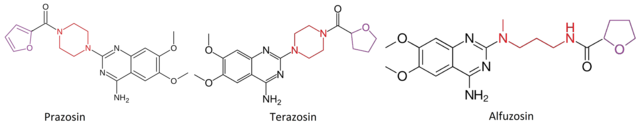
Alpha-blockers are medicines that are mainly used to treat high blood pressure (hypertension) and problems with passing urine in men who have enlargement of the prostate gland. Prostate gland enlargement is also called benign prostatic hyperplasia (BPH).
by Dr Doug McKechnie, MRCGP
Related patient information and medicines

Patient information leaflet
High blood pressure
This means the heart has to work harder and the blood vessels are under mor... Healthcare professionals sometimes call high blood pressure 'hypertension'. [https://patient.info/health/high-blood-pressure-hypertension](https://patient.info/health/high-blood-pressure-hypertension) Understanding a blood pressure reading Blood pressure readings are.

Patient information leaflet
Can I take Magnesium and Flecainide together?
In some cases, magnesium can actually be helpful for heart rhythm issues, but it must be balanced correctly. Why this happens Both magnesium and flecainide affect the electrical signals and mineral channels (like sodium and potassium) in your heart cells. While they don't usually stop each other from being absorbed, having too much or too little.

Patient information leaflet
Anal fissure
For example, as a complication of inflammatory bowel disease such as ... In these situations, other symptoms that are caused by the underlying condition are usually present. These types of fissures are not dealt with in this leaflet. ServiceUpsellPlaceholder How common are anal fissures. Anal fissures are common and probably affect about 1 in 350.

Patient information leaflet
ERCP
ERCP is a procedure that uses an endoscope and X-rays to look at the bile duct and the pancreatic duct. ERCP can also be used to remove gallstones or take small samples of tissue for analysis (a biopsy). Note : the information below is a general guide only. The arrangements and the way tests are performed may vary between different hospitals..

Patient information leaflet
Achalasia
Achalasia is an uncommon condition that affects the muscles of the gullet (oesophagus). It usually causes difficulty in swallowing both food and fluids. There are different treatments available which can improve symptoms. What is achalasia. Achalasia affects both the muscles and the nerves of the oesophagus, especially initially the nerves that.

Patient information leaflet
Cystoscopy
A cystoscopy is a procedure which looks into the bladder with a special telescope called a cystoscope. Note : the information below is a general guide only. The arrangements, and the way tests are performed, may vary between different hospitals. Always follow the instructions given by your doctor or local hospital. Why is a cystoscopy done. To.
Further reading and references
- sodium voltage-gated channel alpha subunit 8; MedlinePlus, National Library of Medicine.
- Butler KM, da Silva C, Shafir Y, Weisfeld-Adams JD, Alexander JJ, Hegde M, Escayg A. De novo and inherited SCN8A epilepsy mutations detected by gene panel analysis. Epilepsy Res. 2017 Jan;129:17-25. doi: 10.1016/j.eplepsyres.2016.11.002. Epub 2016 Nov 6.
- O'Brien JE, Meisler MH. Sodium channel SCN8A (Nav1.6): properties and de novo mutations in epileptic encephalopathy and intellectual disability. Front Genet. 2013 Oct 28;4:213. doi: 10.3389/fgene.2013.00213.
- Ohba C, Kato M, Takahashi S, Lerman-Sagie T, Lev D, Terashima H, Kubota M, Kawawaki H, Matsufuji M, Kojima Y, Tateno A, Goldberg-Stern H, Straussberg R, Marom D, Leshinsky-Silver E, Nakashima M, Nishiyama K, Tsurusaki Y, Miyake N, Tanaka F, Matsumoto N, Saitsu H. Early onset epileptic encephalopathy caused by de novo SCN8A mutations. Epilepsia. 2014 Jul;55(7):994-1000. doi: 10.1111/epi.12668. Epub 2014 Jun 2.
- Wagnon JL, Barker BS, Hounshell JA, Haaxma CA, Shealy A, Moss T, Parikh S, Messer RD, Patel MK, Meisler MH. Pathogenic mechanism of recurrent mutations of SCN8A in epileptic encephalopathy. Ann Clin Transl Neurol. 2015 Dec 21;3(2):114-23. doi: 10.1002/acn3.276. eCollection 2016 Feb.
Share your thoughts or experiences with others in our patient communities.
Simple access to trusted treatments and health services online.
Common conditions
Get help with common conditions through the NHS, without a GP appointment.





Sign up to the Patient newsletter
Your weekly dose of clear, trustworthy health advice - written to help you feel informed, confident and in control.
By subscribing you accept our Privacy Policy. You can unsubscribe at any time. We never sell your data.