ST3 beta-galactoside alpha-2,3-sialyltransferase 5
Last updated 18 Aug 2020
Meets Patient’s editorial guidelines
- DownloadDownload
- Share
- Language
- Discussion
- Ask Patient
- Audio Version
- Add to preferred sources on Google
The ST3GAL5 gene provides instructions for making an enzyme called GM3 synthase. This enzyme carries out a chemical reaction that is the first step in the production of certain fatty molecules (lipids) called gangliosides. Specifically, GM3 synthase converts a molecule called lactosylceramide to a simple ganglioside called GM3. Further reactions use GM3 to create more complex gangliosides.
Video picks for GenesVideo library
Normal function
The ST3GAL5 gene provides instructions for making an enzyme called GM3 synthase. This enzyme carries out a chemical reaction that is the first step in the production of certain fatty molecules (lipids) called gangliosides. Specifically, GM3 synthase converts a molecule called lactosylceramide to a simple ganglioside called GM3. Further reactions use GM3 to create more complex gangliosides.
Gangliosides are present on the surface of cells and tissues throughout the body, and they are particularly abundant in the nervous system. Although their exact functions are unclear, studies suggest that these molecules help regulate chemical signaling pathways that influence cell growth and division (proliferation), cell movement (motility), the attachment of cells to one another (adhesion), and cell survival. Gangliosides appear to be important for normal brain development and function.
Conditions referring to this gene or chromosome
Other names
alpha 2,3-sialyltransferase V
CMP-NeuAc:lactosylceramide alpha-2,3-sialyltransferase
ganglioside GM3 synthase
GM3 synthase
lactosylceramide alpha-2,3-sialyltransferase
lactosylceramide alpha-2,3-sialyltransferase isoform 1
lactosylceramide alpha-2,3-sialyltransferase isoform 2
SATI
sialyltransferase 9 (CMP-NeuAc:lactosylceramide alpha-2,3-sialyltransferase; GM3 synthase)
SIAT9
SIATGM3S
ST3Gal V
ST3GalV
Patient picks for Genes
Treatment and medication
Alpha-blockers
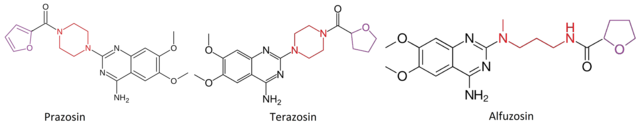
Alpha-blockers are medicines that are mainly used to treat high blood pressure (hypertension) and problems with passing urine in men who have enlargement of the prostate gland. Prostate gland enlargement is also called benign prostatic hyperplasia (BPH).
by Dr Doug McKechnie, MRCGP
Treatment and medication
Extended-spectrum beta-lactamases
Extended-spectrum beta-lactamases (ESBLs) have so far only been reported in certain bacteria called Gram-negative bacterial infections.
by Dr Colin Tidy, MRCGP
Drug interactions checker
Can I take Betahistine and Citalopram together?
There are no known significant interactions between betahistine and citalopram. It is generally considered safe to take these two medicines together.

Treatment and medication
Beta-blockers
Beta-blockers are medicines that are used to treat a variety of conditions. Their full correct name is beta-adrenoceptor blocking medicines (or beta-adrenergic blocking agents), but they are commonly just called beta-blockers.
by Dr Rosalyn Adleman, MRCGP

Children's health
Alpha-1 antitrypsin deficiency
Alpha-1 antitrypsin deficiency is an inherited genetic condition. A genetic condition is one that can be passed on from parents through genes. In alpha-1 antitrypsin deficiency the result of a genetic abnormality leads to lung and, in some people, liver damage. Lung symptoms are the most common and include shortness of breath, cough and wheezing. Symptoms can worsen over time. At present, there is no cure for alpha-1 antitrypsin deficiency. Treatment aims at slowing down the progression of the disease.
by Dr Philippa Vincent, MRCGP
Medicine
Indoramin - an alpha-blocker
Indoramin is prescribed for two different medical conditions: 20 mg strength tablets are prescribed for men with prostate problems, and 25 mg strength tablets are prescribed for people with high blood pressure. You are advised not to drink alcohol while you are on indoramin. Do not drive and do not use tools or machines if you feel tired or dizzy.
by Michael Stewart, MRPharmS
Related patient information and medicines

Patient information leaflet
Can I take Royal sun and Shiitake together?
Both Royal Sun (Agaricus blazei) and Shiitake (Lentinula edodes) mushrooms contain high levels of beta-glucans, which are substances that stimulate the immune system. These also contain compounds called beta-glucans and other chemicals that can improve insulin sensitivity and inhib... General Food Intake These medicinal mushrooms contain complex.
Patient information leaflet
Can I take Adcal-D3 and Omega-3 together?
There is no known harmful interaction between Adcal-D3 and Omega-3 (fish oil) supplements. Our Medicines Interaction Checker helps you check whether your prescriptions, over-the-counter medicines, and supplements are safe to take together. ...This information is for general educational purposes only and should not be relied upon as a substitute.

Patient information leaflet
Can I take Carbocisteine and Omega-3 together?
Omega-3 fatty acids are nutrients used by the body for various functions, including heart and brain health. Using othe... Our Medicines Interaction Checker helps you check whether your prescriptions, over-the-counter medicines, and supplements are safe to take together. Simply search for your medicines to see potential interactions and what to do.

Patient information leaflet
Telogen effluvium
Telogen effluvium (hair loss) is a condition where more than normal amounts of hair fall out. There is a general 'thinning' of the hair. Unlike some other hair and scalp conditions, it is temporary and the hair growth usually recovers. What is telogen effluvium. Telogen effluvium is rapid hair loss that is caused by stress or a change to your.

Patient information leaflet
Can I take Collagen and Omega-3 together?
Why this happens Collagen is a protein that is broken down into amino acids in the digestive tract, while omega-3 is a fatty acid. Our Medicines Interaction Checker helps you check whether your prescriptions, over-the-counter medicines, and supplements are safe to take together. Simply search for your medicines to see potential int... Disclaimer.

Patient information leaflet
High blood pressure
High blood pressure (hypertension) happens when the force on the walls of blood vessels (caused by the blood within them) is more than normal. Healthcare professionals sometimes call high blood pressure 'hypertension'. [https://patient.info/health/high-blood-pressure-hypertension](https://patient.info/health/high-blood-pressure-hypertension).
Further reading and references
- ST3 beta-galactoside alpha-2,3-sialyltransferase 5; MedlinePlus, National Library of Medicine.
- Fragaki K, Ait-El-Mkadem S, Chaussenot A, Gire C, Mengual R, Bonesso L, Beneteau M, Ricci JE, Desquiret-Dumas V, Procaccio V, Rotig A, Paquis-Flucklinger V. Refractory epilepsy and mitochondrial dysfunction due to GM3 synthase deficiency. Eur J Hum Genet. 2013 May;21(5):528-34. doi: 10.1038/ejhg.2012.202. Epub 2012 Sep 19.
- Ishii A, Ohta M, Watanabe Y, Matsuda K, Ishiyama K, Sakoe K, Nakamura M, Inokuchi J, Sanai Y, Saito M. Expression cloning and functional characterization of human cDNA for ganglioside GM3 synthase. J Biol Chem. 1998 Nov 27;273(48):31652-5. doi: 10.1074/jbc.273.48.31652.
- Kim KW, Kim SW, Min KS, Kim CH, Lee YC. Genomic structure of human GM3 synthase gene (hST3Gal V) and identification of mRNA isoforms in the 5'-untranslated region. Gene. 2001 Aug 8;273(2):163-71. doi: 10.1016/s0378-1119(01)00595-9.
- Liu Y, Su Y, Wiznitzer M, Epifano O, Ladisch S. Ganglioside depletion and EGF responses of human GM3 synthase-deficient fibroblasts. Glycobiology. 2008 Aug;18(8):593-601. doi: 10.1093/glycob/cwn039. Epub 2008 May 14.
- Prokazova NV, Samovilova NN, Gracheva EV, Golovanova NK. Ganglioside GM3 and its biological functions. Biochemistry (Mosc). 2009 Mar;74(3):235-49. doi: 10.1134/s0006297909030018.
- Simpson MA, Cross H, Proukakis C, Priestman DA, Neville DC, Reinkensmeier G, Wang H, Wiznitzer M, Gurtz K, Verganelaki A, Pryde A, Patton MA, Dwek RA, Butters TD, Platt FM, Crosby AH. Infantile-onset symptomatic epilepsy syndrome caused by a homozygous loss-of-function mutation of GM3 synthase. Nat Genet. 2004 Nov;36(11):1225-9. doi: 10.1038/ng1460. Epub 2004 Oct 24.
Share your thoughts or experiences with others in our patient communities.
Simple access to trusted treatments and health services online.
Common conditions
Get help with common conditions through the NHS, without a GP appointment.





Sign up to the Patient newsletter
Your weekly dose of clear, trustworthy health advice - written to help you feel informed, confident and in control.
By subscribing you accept our Privacy Policy. You can unsubscribe at any time. We never sell your data.