tubulin alpha 1a
Last updated 18 Aug 2020
Meets Patient’s editorial guidelines
- DownloadDownload
- Share
- Language
- Discussion
- Ask Patient
- Audio Version
- Add to preferred sources on Google
The TUBA1A gene provides instructions for making a protein called alpha-tubulin (α-tubulin). This protein is part of the tubulin family of proteins that form and organize structures called microtubules. Microtubules are rigid, hollow fibers that make up the cell's structural framework (the cytoskeleton). They are composed of α-tubulin and a similar protein called beta-tubulin (β-tubulin) that is produced from a different gene. Microtubules are necessary for cell division and movement.
Video picks for GenesVideo library
Normal function
The TUBA1A gene provides instructions for making a protein called alpha-tubulin (α-tubulin). This protein is part of the tubulin family of proteins that form and organize structures called microtubules. Microtubules are rigid, hollow fibers that make up the cell's structural framework (the cytoskeleton). They are composed of α-tubulin and a similar protein called beta-tubulin (β-tubulin) that is produced from a different gene. Microtubules are necessary for cell division and movement.
Most cells produce α-tubulin, but the protein is found in highest amounts in the developing brain. During brain development, α-tubulin partners with β-tubulin to form microtubules that move nerve cells (neurons) to their proper location (neuronal migration). Microtubules form scaffolding within the cell. The tubulin proteins that make up the microtubule are moved from one end of a microtubule to the other end. This protein transfer propels the microtubules in a specific direction, moving the cell.
Conditions referring to this gene or chromosome
Other names
B-ALPHA-1
TBA1A_HUMAN
TUBA3
tubulin alpha-1A chain
tubulin alpha-3 chain
tubulin B-alpha-1
tubulin, alpha 1a
tubulin, alpha, brain-specific
Patient picks for Genes

Children's health
Alpha-1 antitrypsin deficiency
Alpha-1 antitrypsin deficiency is an inherited genetic condition. A genetic condition is one that can be passed on from parents through genes. In alpha-1 antitrypsin deficiency the result of a genetic abnormality leads to lung and, in some people, liver damage. Lung symptoms are the most common and include shortness of breath, cough and wheezing. Symptoms can worsen over time. At present, there is no cure for alpha-1 antitrypsin deficiency. Treatment aims at slowing down the progression of the disease.
by Dr Philippa Vincent, MRCGP
Treatment and medication
Alpha-blockers
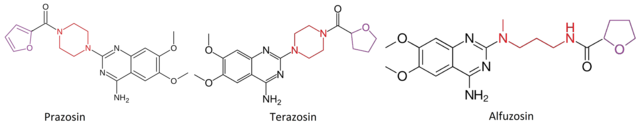
Alpha-blockers are medicines that are mainly used to treat high blood pressure (hypertension) and problems with passing urine in men who have enlargement of the prostate gland. Prostate gland enlargement is also called benign prostatic hyperplasia (BPH).
by Dr Doug McKechnie, MRCGP

Medicine
Alfacalcidol capsules and drops
Alfacalcidol is a type of vitamin D. You will need to have regular blood tests while you are taking the medicine so that your doctor can adjust your dose. Make sure you know the symptoms of too much calcium in your blood - these are losing your appetite, feeling thirsty, being sick (vomiting), feeling tired and losing weight. Please let your doctor know if you develop these symptoms.
by Michael Stewart, MRPharmS

Medicine
Phenoxybenzamine - an alpha-blocker
Adults will normally start with one capsule a day. This dose may then be increased over the next few days. It is common to feel dizzy or light-headed initially. This should soon settle. You may be given other medicines to take alongside phenoxybenzamine.
by Michael Stewart, MRPharmS

Medicine
Terazosin - an alpha-blocker
Take terazosin once every day. Your first dose of terazosin may make you feel dizzy or faint, or start sweating. Take your first dose at bedtime and remain lying down until these symptoms have completely passed. Terazosin can cause dizziness which may affect your ability to drive. Make sure your reactions are normal before you drive and before you use tools or machines.
by Michael Stewart, MRPharmS

Medicine
Indoramin - an alpha-blocker
Indoramin is prescribed for two different medical conditions: 20 mg strength tablets are prescribed for men with prostate problems, and 25 mg strength tablets are prescribed for people with high blood pressure. You are advised not to drink alcohol while you are on indoramin. Do not drive and do not use tools or machines if you feel tired or dizzy.
by Michael Stewart, MRPharmS
Related patient information and medicines

Patient information leaflet
Liver function tests
Copper/caeruloplasmin Wilson's disease (measures of coppe... Alpha-1 antitrypsin Alpha-1 antitrypsin deficiency (a hormone involved in protecting liver and lung cells from injury). Clotting factors Blood clotting tests (particularly if there is a suspicion that your blood is not clotting well or you have severe liver disease). Abnormal liver.

Patient information leaflet
Down's syndrome screening
A person with Down's syndrome can usually be recognised by their typical features. It can also cause learning disability and there are certain medical problems that someone with Down's syndrome has an increased chance of developing. These include a congenital heart defect (that is, a heart problem that you are born with), vision problems or growth.

Patient information leaflet
High blood pressure
This means the heart has to work harder and the blood vessels are under mor... Healthcare professionals sometimes call high blood pressure 'hypertension'. [https://patient.info/health/high-blood-pressure-hypertension](https://patient.info/health/high-blood-pressure-hypertension) Understanding a blood pressure reading Blood pressure readings are.

Patient information leaflet
Chronic obstructive pulmonary disease
The combination effect of long-term exposure at work to air pollutants and smoking increases the chances of developing COPD. A small number of people have a hereditary (genetic) risk of COPD due to very rare protein deficiencies that can lead to lung, liver and blood disorders. (The condition is called alpha-1-antitrypsin deficiency Alpha-1.

Patient information leaflet
Testicular cancer
Testicular cancer is a cancer that arises from a testicle (testis). Around half of all cases occur in men aged under 35 but testicular cancer rarely occurs before puberty. Another useful test i... The tumour markers commonly tested for are alpha-fetoprotein (AFP), beta human chorionic gonadotrophin (beta-hCG), lactic dehydrogenase (LDH) and.

Patient information leaflet
Bronchiectasis
Bronchiectasis is a problem with the lungs, where you cough up lots of phlegm, (sputum): far more than usual. It is usually caused by something that has already affected the lungs, like a bad infection; but sometimes no cause is found. Or a problem with how the lungs clear aw... Some other type of rare condition like Kartagener's syndrome. There.
Further reading and references
- tubulin alpha 1a; MedlinePlus, National Library of Medicine.
- Bahi-Buisson N, Poirier K, Boddaert N, Saillour Y, Castelnau L, Philip N, Buyse G, Villard L, Joriot S, Marret S, Bourgeois M, Van Esch H, Lagae L, Amiel J, Hertz-Pannier L, Roubertie A, Rivier F, Pinard JM, Beldjord C, Chelly J. Refinement of cortical dysgeneses spectrum associated with TUBA1A mutations. J Med Genet. 2008 Oct;45(10):647-53. doi: 10.1136/jmg.2008.058073. Epub 2008 Aug 26.
- Jansen AC, Oostra A, Desprechins B, De Vlaeminck Y, Verhelst H, Regal L, Verloo P, Bockaert N, Keymolen K, Seneca S, De Meirleir L, Lissens W. TUBA1A mutations: from isolated lissencephaly to familial polymicrogyria. Neurology. 2011 Mar 15;76(11):988-92. doi: 10.1212/WNL.0b013e31821043f5.
- Kumar RA, Pilz DT, Babatz TD, Cushion TD, Harvey K, Topf M, Yates L, Robb S, Uyanik G, Mancini GM, Rees MI, Harvey RJ, Dobyns WB. TUBA1A mutations cause wide spectrum lissencephaly (smooth brain) and suggest that multiple neuronal migration pathways converge on alpha tubulins. Hum Mol Genet. 2010 Jul 15;19(14):2817-27. doi: 10.1093/hmg/ddq182. Epub 2010 May 12.
- Tian G, Jaglin XH, Keays DA, Francis F, Chelly J, Cowan NJ. Disease-associated mutations in TUBA1A result in a spectrum of defects in the tubulin folding and heterodimer assembly pathway. Hum Mol Genet. 2010 Sep 15;19(18):3599-613. doi: 10.1093/hmg/ddq276. Epub 2010 Jul 5.
Share your thoughts or experiences with others in our patient communities.
Simple access to trusted treatments and health services online.
Common conditions
Get help with common conditions through the NHS, without a GP appointment.





Sign up to the Patient newsletter
Your weekly dose of clear, trustworthy health advice - written to help you feel informed, confident and in control.
By subscribing you accept our Privacy Policy. You can unsubscribe at any time. We never sell your data.