Are moles determined by genetics?
Meets Patient’s editorial guidelines
- DownloadDownload
- Share
- Language
- Discussion
- Ask Patient
- Audio Version
- Add to preferred sources on Google
Moles are very common, especially in people with fair skin. Moles are overgrowths of skin cells called melanocytes, but the genetic factors involved in their development are not well understood. Although moles, like tumours, are an overgrowth of cells, moles are almost always noncancerous (benign). Perhaps because most moles are benign, scientists have not studied them extensively, and not much is known about their genetics. Similar numbers of moles seem to occur on individuals of different generations of a family, so a tendency to develop moles seems to be inherited, but the inheritance pattern is not well understood.
Video picks for Understanding geneticsVideo library
Overview
Moles are very common, especially in people with fair skin. Moles are overgrowths of skin cells called melanocytes, but the genetic factors involved in their development are not well understood. Although moles, like tumours, are an overgrowth of cells, moles are almost always noncancerous (benign). Perhaps because most moles are benign, scientists have not studied them extensively, and not much is known about their genetics. Similar numbers of moles seem to occur on individuals of different generations of a family, so a tendency to develop moles seems to be inherited, but the inheritance pattern is not well understood.
Most moles occur on parts of the body that are exposed to the sun (ultraviolet radiation), and the number of moles an individual has may increase after extended time in the sun. Moles usually begin to occur in childhood. These moles are called acquired melanocytic nevi (and include the subtype
). It is common for new moles to appear during times when hormone levels change, such as adolescence and pregnancy. During an individual’s lifetime, moles may change in appearance; hair may grow out of them, and they can change in size and shape, darken, fade, or disappear. Infants and the elderly tend to have the fewest moles.
Sometimes, moles are present at birth or develop during infancy. These moles, which are called congenital nevi, are almost always benign. Rarely, a very large mole, called a giant congenital melanocytic nevus, is present at birth. In rare cases, the most serious type of skin cancer (called melanoma) may develop in this type of mole. Large, irregularly shaped and colored moles called dysplastic nevi or atypical moles can occur at any age. Although not common, they tend to be numerous, and they increase a person’s risk of melanoma. Heredity contributes to the development of dysplastic nevi and to having a higher-than-average number of benign moles. Spending a lot of time in the sun can also increase the number of moles a person has. However, moles are often found on areas of the body that are not exposed, which suggests that factors other than ultraviolet radiation from the sun, perhaps hormones or other biologic processes, are involved in triggering the development of acquired melanocytic nevi and dysplastic nevi.
Although the genetics of melanoma has been widely studied, much less is known about genes involved in the development of benign moles. Variations in several genes, including FGFR3, PIK3CA, HRAS, and BRAF, are involved with benign moles. The most-studied of these is the BRAF gene. A variant in BRAF leads to the production of an altered protein that causes melanocytes to aggregate into moles. This altered protein also triggers the production of a tumour-suppressor protein called p15 that stops moles from growing too big. In rare cases, BRAF gene variants together with loss (deletion) of the CDKN2A gene causes a lack of p15, which creates the potential for mole cells to grow uncontrollably and become cancerous (malignant). The formation of cancer is increasingly likely when combined with environmental factors, such as cell damage caused by ultraviolet radiation exposure.
In susceptible individuals (those with fair skin, light hair, skin that burns instead of tans, a family history of melanoma, and genetic risk factors such as deletion of or variants in the
CDKN2A
gene), ultraviolet radiation from repeated sun exposure can damage existing moles, increasing their risk of becoming malignant. Research has shown that individuals who have an abundance of moles are at an increased risk of melanoma. However, some people who are diagnosed with melanoma have few moles, and melanoma often develops in areas of the body that are not exposed to the sun. Researchers are working to identify additional susceptibility genes to better understand the genetics of moles and their relationship with cancer.
Patient picks for Understanding genetics

Skin, nail and hair health
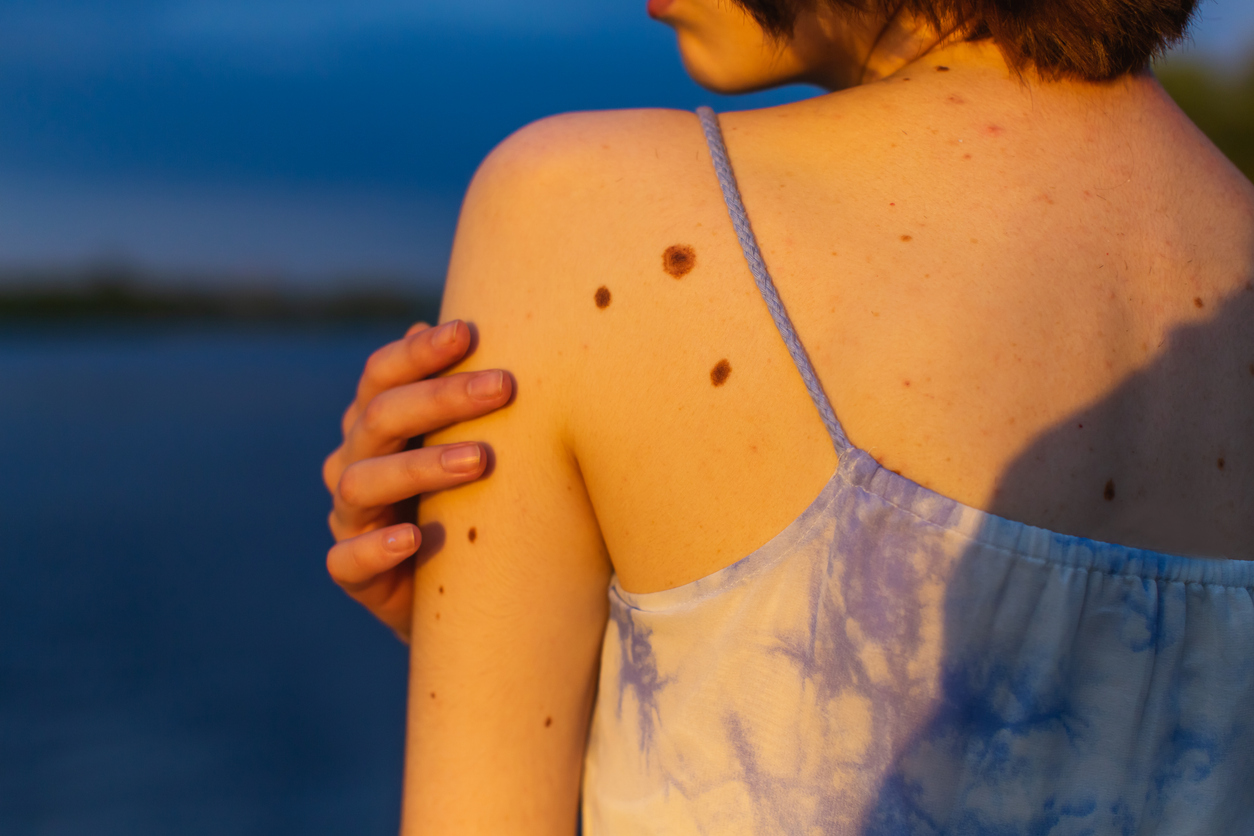
When to worry about a mole
Generally, moles are harmless features of your skin, which rarely cause any issues. But in some cases, UV exposure from the sun can cause a mole to change shape, size or colour and become cancerous. We explore what you need to look out for.
by Amberley Davis
Skin, nail and hair health
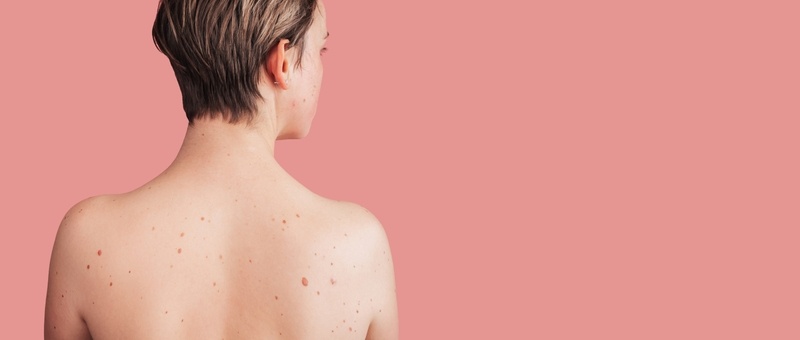
Whole body 3D mole mapping: the future of skin health?
Noticing changes in your moles is one of the best defences against skin cancer. But if you're someone who has moles in different places, it can be hard to keep track. Mole mapping is a way to look out for changes over time. The most technologically advanced form is whole body 3D imaging. Here's what you need to know.
by Amberley Davis
Skin, nail and hair health
Concerned about a mole? Get peace of mind with online mole checking
Many of us have moles - small, often harmless marks on the skin that may change slowly over time. But sometimes, a new mole or changes in an existing one can cause worry. While most changes are harmless, it’s important to know when to get a professional opinion, as early detection is key in spotting skin cancer.
by Thomas Andrew Porteus, MBCS

Brain and nerves
Young-onset dementia is linked to health and lifestyle, as well as genetics
Many of us fear dementia, not to mention developing it while we're young, but little is known about whether we can prevent it. However, a breakthrough study has identified 15 significant factors linked to young-onset dementia, which develops before the age of 65. And many of these are influenced by your health and lifestyle choices. With around 370,000 people developing young-onset dementia each year worldwide, experts believe this research brings us closer to finding ways to prevent, identify, and treat this devastating disease.
by Amberley Davis

Heart health and blood vessels
Breasts aren't barriers - the St John Ambulance 'CPR Bra' campaign
If someone needed cardiopulmonary resuscitation (CPR) and you had the skills, you’d give it to them without wasting a second, right? Wrong. Almost a third of men say they would hesitate to perform CPR on a woman for fear of being accused of inappropriate touching. A similar number also worry about accidentally hurting women, and almost a quarter are concerned they could make the situation worse. So, to remind everyone that it’s ok to touch someone’s chest when you’re trying to save their life, we’re raising awareness with St John Ambulance.
by Claire Kenny

Infections
Find out if you are eligible for a free NHS flu vaccination
Open the flu jab Is the flu vaccine free for you this winter? The flu vaccine is free on the NHS for people most likely to get seriously ill from flu, and for those who could easily pass it on to someone at risk. Whether you qualify depends on your age, your health, and a few other things such as being pregnant or caring for someone. The groups change a little each year, and some people can book earlier than others. For the 2026 to 2027 season, most people who are offered a free flu vaccine can get it from either 1 September 2026 or 1 October 2026. Use the free checker above to find out in under a minute whether you, or a child you look after, can get a free NHS flu vaccine this winter — and the date you can book from.
Related patient information and medicines

Patient information leaflet
Molar pregnancy
A molar pregnancy (hydatidiform mole) is when a mass of tissue grows inside your womb (uterus) that will not develop into a baby. Dr Sarah Jarvis MBE A hydatidiform mole is a growing mass of tissue inside your womb (uterus) that will not develop into a baby. It happens due to a problem with conception, when an egg becomes fertilised by sperm. A.
Patient information leaflet
Melanoma skin cancer
Being fair-skinned, pale and getting sunburnt on holiday are certainly risk factors for getting melanoma. For these people, the melanoma has developed because of a genetic mutation: this is beyond their control and there is nothing that can be done to prevent it. If a close blood relative develops melanoma then your risk is approximately doubled..

Patient information leaflet
Turner syndrome
Turner syndrome is a genetic condition that only affects girls. The most characteristic features of the syndrome are being short, having certain physical features (detailed below), and ovaries that do not work properly. Turner syndrome is a genetic condition. This means that th... Short fingers. Nail changes. Skin features Girls with Turner.

Patient information leaflet
Retinoblastoma
Retinoblastoma is an uncommon cancer of the eye which occurs in children under the age of 5. This leaflet describes retinoblastoma. It discusses the symptoms and signs of retinoblastoma and the managemen... What causes retinoblastoma. Retinoblastoma is a genetic disease. Genetic diseases are disorders of the 46 chromosomes which contain the coding.

Patient information leaflet
Actinic keratosis
In people who hav... See the separate leaflets called Types of Cancer Types of cancer and Non-melanoma Skin Cancer Non-melanoma skin cancer for more details. The reason that actinic keratoses can become cancerous is because the UV exposure from the sun's rays causes changes (mutations) to the genes in the DNA of skin cells. This causes the skin.
Patient information leaflet
Skin cancer types
What is cancer. Cancer is a disease of the cells in the body. There are many different types of cell in the body, and there are many different types of cancer which arise from different types of cell. What all types of cancer have in common is that the cancer cells are abnormal and multiply out of control. See the separate leaflet called Cancer.
Further reading and references
- Are moles determined by genetics?; MedlinePlus, National Library of Medicine.
- Dzwierzynski WW. Melanoma Risk Factors and Prevention. Clin Plast Surg. 2021 Oct;48(4):543-550. doi: 10.1016/j.cps.2021.05.001. Epub 2021 Jul 2. PMID: 34503715.
- Plasmeijer EI, Nguyen TM, Olsen CM, Janda M, Soyer HP, Green AC. The natural history of common melanocytic nevi: a systematic review of longitudinal studies in the general population. J Invest Dermatol. 2017 Sep;137(9):2017-2018. doi: 10.1016/j.jid.2017.03.040. Epub 2017 May 18. PubMed: 28528913.
- Roh MR, Eliades P, Gupta S, Tsao H. Genetics of melanocytic nevi. Pigment Cell Melanoma Res. 2015 Nov;28(6):661-72. doi: 10.1111/pcmr.12412. PubMed: 26300491. Free full-text available from PubMed Central: PMC4609613.
Share your thoughts or experiences with others in our patient communities.
Simple access to trusted treatments and health services online.
Common conditions
Get help with common conditions through the NHS, without a GP appointment.





Sign up to the Patient newsletter
Your weekly dose of clear, trustworthy health advice - written to help you feel informed, confident and in control.
By subscribing you accept our Privacy Policy. You can unsubscribe at any time. We never sell your data.