Autosomal recessive hypotrichosis
Last updated 18 Aug 2020
Meets Patient’s editorial guidelines
- DownloadDownload
- Share
- Language
- Discussion
- Audio Version
- Add to preferred sources on Google
Autosomal recessive hypotrichosis is a condition that affects hair growth. People with this condition have sparse hair (hypotrichosis) on the scalp beginning in infancy. This hair is usually coarse, dry, and tightly curled (often described as woolly hair). Scalp hair may also be lighter in colour than expected and is fragile and easily broken. Affected individuals often cannot grow hair longer than a few inches. The eyebrows, eyelashes, and other body hair may be sparse as well. Over time, the hair problems can remain stable or progress to complete scalp hair loss (alopecia) and a decrease in body hair.
Description
Autosomal recessive hypotrichosis is a condition that affects hair growth. People with this condition have sparse hair (hypotrichosis) on the scalp beginning in infancy. This hair is usually coarse, dry, and tightly curled (often described as woolly hair). Scalp hair may also be lighter in colour than expected and is fragile and easily broken. Affected individuals often cannot grow hair longer than a few inches. The eyebrows, eyelashes, and other body hair may be sparse as well. Over time, the hair problems can remain stable or progress to complete scalp hair loss (alopecia) and a decrease in body hair.
Rarely, people with autosomal recessive hypotrichosis have skin problems affecting areas with sparse hair, such as redness (erythema), itchiness (pruritus), or missing patches of skin (erosions) on the scalp. In areas of poor hair growth, they may also develop bumps called hyperkeratotic follicular papules that develop around hair follicles, which are specialized structures in the skin where hair growth occurs.
Inheritance patterns
The source lists the following possible inheritance patterns: Autosomal recessive. More than one pattern can apply in different cases.
Related genes
Other names
AH
Autosomal recessive localized hypotrichosis
Autosomal recessive woolly hair with or without hypotrichosis
HTL
Hypotrichoses
Hypotrichosis
LAH
Total hypotrichosis, Mari type
Related patient information and medicines
Patient information leaflet
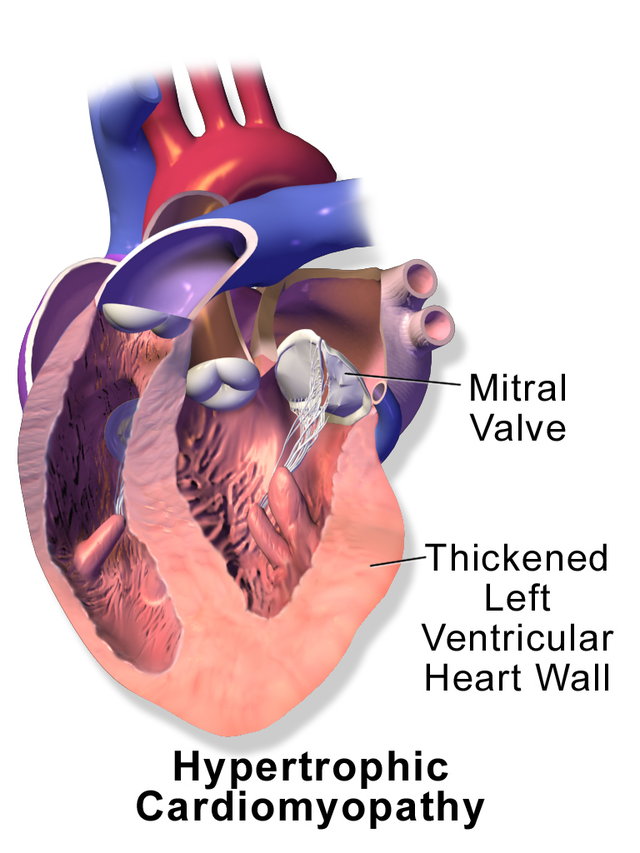
Hypertrophic cardiomyopathy
Causes of hypertrophic cardiomyopathy... In HCM the heart muscle thickens without an obvious cause. Genetics In most cases the condition is inherited. If a couple (where one person has HCM) has a child, there is a 1 in 2 chance of the child being affected. This pattern of inheritance is called autosomal dominant. It seems that affected people.

Patient information leaflet
Huntington's disease
Worldwide, it seems to be more common amongst white populations than amongst Asian or African people. Huntington's disease aff... What causes Huntington's disease. Huntington's disease is caused by a defective gene that you inherit from your parents. Huntington's disease is an autosomal dominant condition, meaning you can inherit the disease from.

Patient information leaflet
Wilson's disease
Wilson's disease is a genetic disorder in which copper builds up in the body, mainly in the liver and brain. Without any treatment, the build-up of copper can cause serious symptoms. Treatment is with medication to remove the excess copper and/or to prevent a further build-up of copper. How is Wilson's disease inherited. Wilson's disease is an.

Patient information leaflet
Marfan syndrome
You may have a history of Marfan syndrome in your family. If... It is the most common genetic problem affecting connective tissue. It is an autosomal dominant condition, meaning you only need one parent, not both, to have it to inherit it yourself. Marfan syndrome is caused by a change (mutation) in the genetic material on one of your chromosomes.

Patient information leaflet
Ehlers-Danlos syndrome
What are the Ehlers-Danlos syndromes. The Ehlers Danlos syndromes (EDS) are a group of conditions which are usually (although not always) inherited from parents. EDS affects connective tissue - people with EDS have a pro... These can be inherited via autosomal dominant inheritance (for hypermobile, classical and venous EDS) which means one in two.

Patient information leaflet
Haemophilia
. Haemophilia is a condition where there is a deficiency of clotting factors, so people with this condition usually have prolonged bleeding. Both haemophilias are inherited as X-linked recessive conditions. This describes how the abnormal haemophilia gene ... X-linked inheritance pattern Haemophilia is inherited in a pattern called 'X-linked.
Further reading and references
- Autosomal recessive hypotrichosis; MedlinePlus, National Library of Medicine.
- Azeem Z, Jelani M, Naz G, Tariq M, Wasif N, Kamran-Ul-Hassan Naqvi S, Ayub M, Yasinzai M, Amin-Ud-Din M, Wali A, Ali G, Chishti MS, Ahmad W. Novel mutations in G protein-coupled receptor gene (P2RY5) in families with autosomal recessive hypotrichosis (LAH3). Hum Genet. 2008 Jun;123(5):515-9. doi: 10.1007/s00439-008-0507-7. Epub 2008 May 7.
- Horev L, Tosti A, Rosen I, Hershko K, Vincenzi C, Nanova K, Mali A, Potikha T, Zlotogorski A. Mutations in lipase H cause autosomal recessive hypotrichosis simplex with woolly hair. J Am Acad Dermatol. 2009 Nov;61(5):813-8. doi: 10.1016/j.jaad.2009.04.020. Epub 2009 Sep 18.
- Khan S, Habib R, Mir H, Umm-e-Kalsoom, Naz G, Ayub M, Shafique S, Yamin T, Ali N, Basit S, Wasif N, Kamran-Ul-Hassan Naqvi S, Ali G, Wali A, Ansar M, Ahmad W. Mutations in the LPAR6 and LIPH genes underlie autosomal recessive hypotrichosis/woolly hair in 17 consanguineous families from Pakistan. Clin Exp Dermatol. 2011 Aug;36(6):652-4. doi: 10.1111/j.1365-2230.2011.04014.x. Epub 2011 Mar 21.
- Kurban M, Wajid M, Shimomura Y, Christiano AM. Mutations in LPAR6/P2RY5 and LIPH are associated with woolly hair and/or hypotrichosis. J Eur Acad Dermatol Venereol. 2013 May;27(5):545-9. doi: 10.1111/j.1468-3083.2012.04472.x. Epub 2012 Mar 5.
- Schaffer JV, Bazzi H, Vitebsky A, Witkiewicz A, Kovich OI, Kamino H, Shapiro LS, Amin SP, Orlow SJ, Christiano AM. Mutations in the desmoglein 4 gene underlie localized autosomal recessive hypotrichosis with monilethrix hairs and congenital scalp erosions. J Invest Dermatol. 2006 Jun;126(6):1286-91. doi: 10.1038/sj.jid.5700237.
- Shimomura Y, Wajid M, Petukhova L, Shapiro L, Christiano AM. Mutations in the lipase H gene underlie autosomal recessive woolly hair/hypotrichosis. J Invest Dermatol. 2009 Mar;129(3):622-8. doi: 10.1038/jid.2008.290. Epub 2008 Oct 2.
- Shimomura Y. Congenital hair loss disorders: rare, but not too rare. J Dermatol. 2012 Jan;39(1):3-10. doi: 10.1111/j.1346-8138.2011.01395.x. Epub 2011 Nov 2.
- Shinkuma S, Akiyama M, Inoue A, Aoki J, Natsuga K, Nomura T, Arita K, Abe R, Ito K, Nakamura H, Ujiie H, Shibaki A, Suga H, Tsunemi Y, Nishie W, Shimizu H. Prevalent LIPH founder mutations lead to loss of P2Y5 activation ability of PA-PLA1alpha in autosomal recessive hypotrichosis. Hum Mutat. 2010 May;31(5):602-10. doi: 10.1002/humu.21235.
Join the conversation
Share your thoughts or experiences with others in our patient communities.

Ask, share, connect.
Browse discussions, ask questions, and share experiences across hundreds of health topics.
Sign up to the Patient newsletter
Your weekly dose of clear, trustworthy health advice - written to help you feel informed, confident and in control.
By subscribing you accept our Privacy Policy. You can unsubscribe at any time. We never sell your data.