Carney complex
Last updated 10 Mar 2025
Meets Patient’s editorial guidelines
- DownloadDownload
- Share
- Language
- Discussion
- Ask Patient
- Audio Version
- Add to preferred sources on Google
Carney complex is a disorder that is characterised by changes in skin coloring (pigmentation) and an increased risk of tumours. Many of the signs and symptoms of Carney complex become apparent during adolescence or early adulthood.
Video picks for Genetic conditionsVideo library
Description
Carney complex is a disorder that is characterised by changes in skin coloring (pigmentation) and an increased risk of tumours. Many of the signs and symptoms of Carney complex become apparent during adolescence or early adulthood.
Almost all people with Carney complex have areas of unusual skin pigmentation. Brown or black skin spots called lentigines may appear anywhere on the body, but they tend to occur around the lips, eyes, or genitalia. In addition, some affected individuals have at least one blue-black mole called a blue nevus.
People with Carney complex have an increased risk of developing noncancerous (benign) tumours called myxomas in the heart (cardiac myxoma), skin, breast, and other parts of the body. Cardiac myxomas may be found in one or more chambers of the heart. These tumours can block the flow of blood through the heart, which can cause serious complications, including sudden death. Skin myxomas appear as small bumps on the surface of the skin or as lumps underneath the skin. In people with Carney complex, myxomas tend to recur after they are removed.
Individuals with Carney complex may also develop tumours in hormone-producing (endocrine) glands, such as the adrenal glands located on top of each kidney. Approximately 25 percent of people with Carney complex develop a specific type of adrenal tumour called primary pigmented nodular adrenocortical disease (PPNAD). PPNAD causes the adrenal glands to produce too much of the hormone cortisol. High levels of cortisol can lead to the development of Cushing syndrome, which is characterised by weight gain in the face and upper body, slow growth in children, bone loss, fragile skin, fatigue, and other health problems.
Tumours of other endocrine tissues, such as the thyroid, testes, and ovaries, are also seen in people with Carney complex. Many affected individuals have tumours on the thyroid gland called adenomas. Occasionally, people with thyroid adenomas develop thyroid cancer.
In people with Carney complex, adenomas may also form in the pituitary gland, which is located at the base of the brain. A pituitary adenoma usually causes the production of too much growth hormone. Excess growth hormone can lead to a condition called acromegaly, which is characterised by large hands and feet, arthritis, and distinctive facial features that are often described as "coarse."
Approximately 10 percent of people with Carney complex develop a rare tumour called psammomatous melanotic schwannoma (PMS). This tumour occurs in specialized cells called Schwann cells that wrap around and insulate nerve cells. These tumours are usually benign, but they can become cancerous (malignant).
Although most tumours that develop in people with Carney complex are benign, some affected individuals develop cancer over time. Complications associated with cardiac myxomas, PMS, or cancer can shorten the life expectancy for some affected individuals.
Inheritance patterns
The source lists the following possible inheritance patterns: Autosomal dominant+New variant. More than one pattern can apply in different cases.
Related genes
Other names
Carney complex type 1
Carney complex type 2
Carney Syndrome
LAMB (Lentigines, atrial myxoma, mucocutaneous myoma, blue nevi)
NAME (Nevi, atrial myxoma, skin myxoma, ephelides)
Patient picks for Genetic conditions

Drug interactions checker
Can I take Devil's claw and Vitamin B complex together?
There are no known significant interactions between devil's claw and a standard vitamin B complex supplement. It is generally considered safe to take these two together.

Drug interactions checker
Can I take Black garlic and Vitamin B complex together?
There are no known harmful interactions between black garlic and Vitamin B complex supplements. In fact, black garlic is naturally rich in several B vitamins, and taking them together is generally considered safe.

Podcasts
Making work work
Work can take up so much of our waking hours but how often do we look at our relationship with work. Are you a workaholic or just going through the motions? Does it inspire or drain you? What about the people we work with: colleagues, managers and those unrequited crushes or unwanted attentions? When it comes to work, things can get complicated. Clare and Aileen delve into the tangled world of work to help you think about your relationship with work and give tips on how to navigate those complex relationships in the workplace.
by Thomas Andrew Porteus, MBCS

Drug interactions checker
Can I take Turmeric with black pepper and Vitamin B complex together?
There are no known harmful interactions between turmeric (with black pepper) and Vitamin B complex. In fact, black pepper may slightly improve the absorption of certain B vitamins.

Drug interactions checker
Can I take Vitamin B complex and Vitamin C together?
There is no harmful interaction between Vitamin B complex and Vitamin C. In fact, these water-soluble vitamins are often found together in the same supplement (such as Berocca or multivitamin tablets) because they work well together to support energy levels and the immune system.

Drug interactions checker
Can I take Magnesium and Vitamin B complex together?
There is no known harmful interaction between magnesium and Vitamin B complex. In fact, these two supplements are often taken together because they work well as a team in the body.
Related patient information and medicines

Patient information leaflet
Coronary angioplasty
Coronary angioplasty is a treatment to widen narrowed sections of the heart (coronary) arteries. It is also known as percutaneous coronary intervention (PCI). It involves the use of a thin, flexible tube (called a catheter) which is inserted into coronary arteries, via an art... How safe is a coronary angioplasty. A coronary angioplasty is a.
Patient information leaflet
Ventricular septal defect
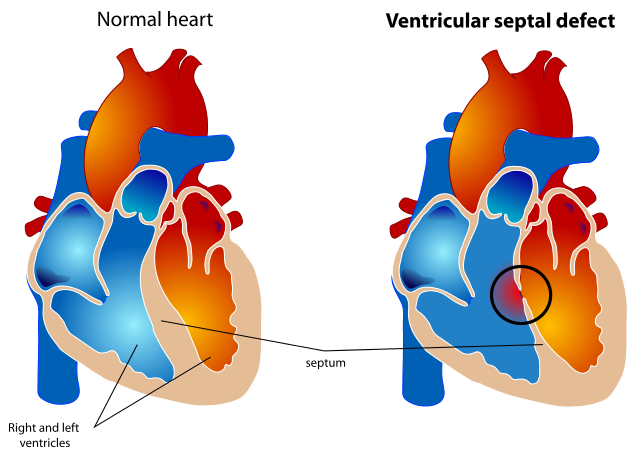
Ventricular septal defect (VSD) is a gap or defect in the septum between the heart's two lower chambers (ventricles). The septum is a wall that separates the heart's right and left side of the heart. Septal defects are sometimes called a 'hole' in the heart. When the holes are large the things that happen are similar but more severe. Does.

Patient information leaflet
Charles Bonnet syndrome
Charles Bonnet syndrome is a common condition experienced by people who are losing, or have lost, their sight. It involves seeing things which are not really there (having visual hallucinations). The hallucinations are most marked in low light or when relaxing and are o... Who was Charles Bonnet. Charles Bonnet was an eighteenth century Swiss.

Patient information leaflet
Can I take Reishi and Shiitake together?
General Food Intake These medicinal mushrooms contain complex polysaccharides (beta-glucans). For the best absorption, it is often recommended to take them on an empty stomach, at least 30 minutes before a meal, or with ... Our Medicines Interaction Checker helps you check whether your prescriptions, over-the-counter medicines, and supplements are.

Patient information leaflet
Can I take Tetracycline and Calcium together?
Why this happens This is a pharmacokinetic interaction involving absorption. Calcium is a multivalent cation that undergoes 'chelation' with tetracycline. They bind together to form an insoluble complex in the digestive tract that is too large to pass through the gut wall. Our Medicines Interaction Checker helps you check whether your.

Patient information leaflet
Can I take Royal sun and White button together?
Both Royal Sun (Agaricus blazei) and White Button mushrooms contain compounds that may lower blood sugar levels. General Food Intake These medicinal mushrooms contain complex polysaccharides (beta-glucans). Disclaimer This information is for general educational purposes only and should not be relied upon as a substitute for professional medical.
Further reading and references
- Carney complex; MedlinePlus, National Library of Medicine.
- Bertherat J, Horvath A, Groussin L, Grabar S, Boikos S, Cazabat L, Libe R, Rene-Corail F, Stergiopoulos S, Bourdeau I, Bei T, Clauser E, Calender A, Kirschner LS, Bertagna X, Carney JA, Stratakis CA. Mutations in regulatory subunit type 1A of cyclic adenosine 5'-monophosphate-dependent protein kinase (PRKAR1A): phenotype analysis in 353 patients and 80 different genotypes. J Clin Endocrinol Metab. 2009 Jun;94(6):2085-91. doi: 10.1210/jc.2008-2333. Epub 2009 Mar 17.
- Bouys L, Bertherat J. MANAGEMENT OF ENDOCRINE DISEASE: Carney complex: clinical and genetic update 20 years after the identification of the CNC1 (PRKAR1A) gene. Eur J Endocrinol. 2021 Mar;184(3):R99-R109. doi: 10.1530/EJE-20-1120.
- Carney JA, Gordon H, Carpenter PC, Shenoy BV, Go VL. The complex of myxomas, spotty pigmentation, and endocrine overactivity. Medicine (Baltimore). 1985 Jul;64(4):270-83. doi: 10.1097/00005792-198507000-00007.
- Harbeck B, Flitsch J, Kreitschmann-Andermahr I. Carney complex- why thorough medical history taking is so important - report of three cases and review of the literature. Endocrine. 2023 Apr;80(1):20-28. doi: 10.1007/s12020-022-03209-2. Epub 2022 Oct 18.
- Horvath A, Bertherat J, Groussin L, Guillaud-Bataille M, Tsang K, Cazabat L, Libe R, Remmers E, Rene-Corail F, Faucz FR, Clauser E, Calender A, Bertagna X, Carney JA, Stratakis CA. Mutations and polymorphisms in the gene encoding regulatory subunit type 1-alpha of protein kinase A (PRKAR1A): an update. Hum Mutat. 2010 Apr;31(4):369-79. doi: 10.1002/humu.21178.
- Horvath A, Bossis I, Giatzakis C, Levine E, Weinberg F, Meoli E, Robinson-White A, Siegel J, Soni P, Groussin L, Matyakhina L, Verma S, Remmers E, Nesterova M, Carney JA, Bertherat J, Stratakis CA. Large deletions of the PRKAR1A gene in Carney complex. Clin Cancer Res. 2008 Jan 15;14(2):388-95. doi: 10.1158/1078-0432.CCR-07-1155.
- Horvath A, Stratakis CA. Carney complex and lentiginosis. Pigment Cell Melanoma Res. 2009 Oct;22(5):580-7. doi: 10.1111/j.1755-148X.2009.00613.x. Epub 2009 Jul 24.
- Kirschner LS. Use of mouse models to understand the molecular basis of tissue-specific tumorigenesis in the Carney complex. J Intern Med. 2009 Jul;266(1):60-8. doi: 10.1111/j.1365-2796.2009.02114.x.
- Mateus C, Palangie A, Franck N, Groussin L, Bertagna X, Avril MF, Bertherat J, Dupin N. Heterogeneity of skin manifestations in patients with Carney complex. J Am Acad Dermatol. 2008 Nov;59(5):801-10. doi: 10.1016/j.jaad.2008.07.032. Epub 2008 Sep 19.
- Stratakis CA. Carney Complex. 2003 Feb 5 [updated 2023 Sep 21]. In: Adam MP, Bick S, Mirzaa GM, Wallace SE, Amemiya A, editors. GeneReviews(R) [Internet]. Seattle (WA): University of Washington, Seattle; 1993-2026. Available from http://www.ncbi.nlm.nih.gov/books/NBK1286/
Share your thoughts or experiences with others in our patient communities.
Simple access to trusted treatments and health services online.
Common conditions
Get help with common conditions through the NHS, without a GP appointment.





Sign up to the Patient newsletter
Your weekly dose of clear, trustworthy health advice - written to help you feel informed, confident and in control.
By subscribing you accept our Privacy Policy. You can unsubscribe at any time. We never sell your data.