Inherited thyroxine-binding globulin deficiency
Last updated 13 Mar 2025
Meets Patient’s editorial guidelines
- DownloadDownload
- Share
- Language
- Discussion
- Ask Patient
- Audio Version
- Add to preferred sources on Google
Inherited thyroxine-binding globulin deficiency is a genetic condition that typically does not cause health problems.
Video picks for Genetic conditionsVideo library
Description
Inherited thyroxine-binding globulin deficiency is a genetic condition that typically does not cause health problems.
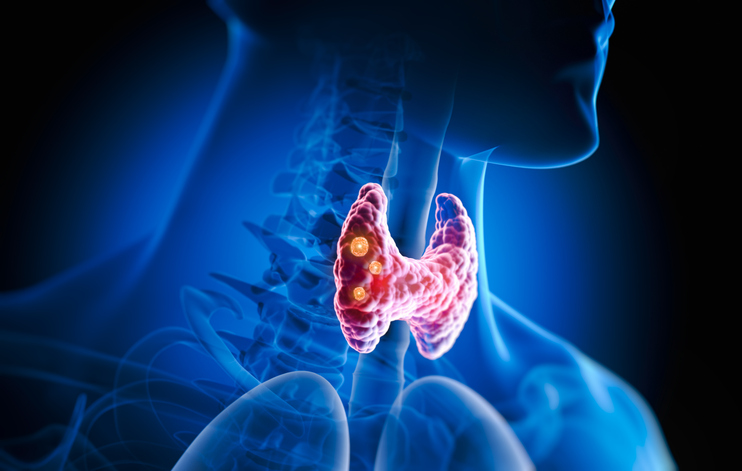
Thyroxine-binding globulin is one of three major proteins in the bloodstream that carries hormones made by the thyroid gland, a butterfly-shaped tissue in the lower neck. Thyroid hormones play an important role in regulating growth, brain development, and the rate of chemical reactions in the body (metabolism). Thyroxine is the primary hormone produced by the thyroid gland. In the bloodstream, thyroxine and other thyroid hormones are typically attached (bound) to thyroxine-binding globulin and similar proteins. A shortage (deficiency) of thyroxine-binding globulin reduces the total amount of thyroxine in the blood.
Researchers have identified two forms of inherited thyroxine-binding globulin deficiency: the partial form and the complete form. The partial form reduces the amount of functioning thyroxine-binding globulin. The complete form causes a more significant loss of functioning thyroxine-binding globulin. These conditions typically do not cause problems with thyroid function and are usually identified when bloodwork is performed to rule out other conditions.
Although inherited thyroxine-binding globulin deficiency typically does not cause health problems, it can be mistaken for more serious thyroid disorders, such as hypothyroidism. Therefore, it is important to correctly diagnose the condition to avoid unnecessary treatments.
Inheritance patterns
The source lists the following possible inheritance patterns: X-linked. More than one pattern can apply in different cases.
Related genes
Other names
TBG deficiency
TBGQTL
Thyroxine-binding globulin quantitative trait locus
Patient picks for Genetic conditions
Allergies, blood and immune system
Vitamin B12 deficiency and pernicious anaemia
Vitamin B12 is essential for life. It is needed to make new cells in the body, such as the many new red blood cells which are made every day. Vitamin B12 is found in meat, fish, eggs and milk - but not in fruit or vegetables. A normal balanced diet must contain enough vitamin B12. A lack of vitamin B12 leads to anaemia and sometimes to other problems.
by Dr Colin Tidy, MRCGP

Allergies, blood and immune system
Vitamin B12 deficiency signs you need to know
Your body doesn't make vitamin B12. That means you need to get it from food or supplements. We'll explore why this nutrient is needed, the best sources and the signs you're not getting enough.
by Dr Carrie Ruxton, PhD, Child Nutrition
Hormones
Iodine deficiency
Iodine is essential for the body to make thyroid hormone. Low levels of iodine may cause an underactive thyroid gland and symptoms of hypothyroidism (eg, tiredness, constipation and weight gain). Iodine deficiency in pregnant women may cause problems for the baby, including learning disability. There has been a worldwide campaign to prevent iodine deficiency by using salt containing added iodine. However, iodine deficiency is still a widespread problem in many countries. Mild iodine deficiency may still affect some people in the UK.
by Dr Rosalyn Adleman, MRCGP
Eye health
Colour vision deficiency
Colour vision deficiency, also called colour blindness, is when you are unable to see certain colours. The most common form of the condition is red-green colour vision deficiency.
by Dr Hayley Willacy, FRCGP
Healthy living
Zinc deficiency, excess and supplementation
Zinc is needed for many of the chemical reactions which are going on inside us all the time at micro-level. We get zinc from our diets but not getting enough can cause a wide variety of symptoms, some of which are very vague.
by Dr Toni Hazell, FRCGP

Bones, joints and muscles
Vitamin D deficiency
Vitamin D deficiency happens when your body does not have enough vitamin D. This is a nutrient that helps keep bones, teeth, and muscles healthy. Vitamin D deficiency is common, especially in people who get little sunlight or have low vitamin D intake from their diet.
by Dr Hayley Willacy, FRCGP
Related patient information and medicines

Patient information leaflet
Pituitary gland disorders
This leaflet gives a brief overview of the pituitary gland and the hormones it makes. The pituitary gland is found at the base of the brain and is 'pea-sized'. The pituitary gland is a... Men also have prolactin but its function is not understood well. Thyroid-stimulating hormone (TSH) Thyroid gland TSH stimulates the thyroid gland to produce its.
Patient information leaflet
Treating newborn health problems
Treatments include medicines, early antibiotics for infections, physiotherapy and special diets. Hypothyroidism Underactive thyroid gland : babies with this condition do not produce enough of the thyroxine hormone and this can damage their development. If picked up early they can be treated with a medicine form of thyroxine hormone so that they.
Patient information leaflet
Goitre
A goitre (pronounced goy-ter, sometimes spelt as 'goiter') is an enlarged thyroid gland. This gives you a lump at the front of your neck. The thyroid gland makes thyroid hormones - called thyroxine (T4) and triiodothyronine (T3). These hormones are ca... For example: Graves' disease Overactive thyroid gland - an autoimmune disease which causes the.
Patient information leaflet
Thyroid function tests
Thyroid function tests are blood tests which help to check the function of your thyroid gland. They are mainly used to detect an underactive thyroid gland (hypothyroidism) and an overactive thyroid gland (hyperthyroidism). Lots of basic information about the thyroid gland can be found in the separate leaflet called Thyroid Problems (also including.
Patient information leaflet
Underactive thyroid gland
In hypothyroidism, there is a reduced level of thyroid hormone in the body. Treatment usually involves taking a daily tablet of thyroid hormone to replace the missing thyroxine. Neck cross-section showing the thyroid gland Cross section of neck showing the thyroid gland The thyroid gland is located in the neck and produces thyroid hormones. These.

Patient information leaflet
Newborn bloodspot test
Mothers of all newborn babies are offered testing for certain rare but serious health conditions by testing blood taken from the baby's heel. Conditions which the heel prick test can screen for are as follows: Sickle cell disease Sickle cell disease (SCD) - this is an inherited blood disorder. Medium-chain acyl-Co-A dehydrogenase deficiency.
Further reading and references
- Inherited thyroxine-binding globulin deficiency; MedlinePlus, National Library of Medicine.
- Chakravarthy V, Ejaz S. Thyroxine-Binding Globulin Deficiency. 2023 Jul 4. In: StatPearls [Internet]. Treasure Island (FL): StatPearls Publishing; 2023 Jan-. Available from http://www.ncbi.nlm.nih.gov/books/NBK544274/
- Fang Y, Chen H, Chen Q, Wang C, Liang L. Compound hemizygous variants in SERPINA7 gene cause thyroxine-binding globulin deficiency. Mol Genet Genomic Med. 2021 Feb;9(2):e1571. doi: 10.1002/mgg3.1571. Epub 2021 Feb 7.
- Knobel M, Medeiros-Neto G. An outline of inherited disorders of the thyroid hormone generating system. Thyroid. 2003 Aug;13(8):771-801. doi: 10.1089/105072503768499671.
- Mandel S, Hanna C, Boston B, Sesser D, LaFranchi S. Thyroxine-binding globulin deficiency detected by newborn screening. J Pediatr. 1993 Feb;122(2):227-30. doi: 10.1016/s0022-3476(06)80117-4.
- Okamoto H, Mori Y, Tani Y, Nakagomi Y, Sano T, Ohyama K, Saito H, Oiso Y. Molecular analysis of females manifesting thyroxine-binding globulin (TBG) deficiency: selective X-chromosome inactivation responsible for the difference between phenotype and genotype in TBG-deficient females. J Clin Endocrinol Metab. 1996 Jun;81(6):2204-8. doi: 10.1210/jcem.81.6.8964852.
- Pappa T, Ferrara AM, Refetoff S. Inherited defects of thyroxine-binding proteins. Best Pract Res Clin Endocrinol Metab. 2015 Oct;29(5):735-47. doi: 10.1016/j.beem.2015.09.002. Epub 2015 Sep 30.
- Schussler GC. The thyroxine-binding proteins. Thyroid. 2000 Feb;10(2):141-9. doi: 10.1089/thy.2000.10.141.
Share your thoughts or experiences with others in our patient communities.
Simple access to trusted treatments and health services online.
Common conditions
Get help with common conditions through the NHS, without a GP appointment.





Sign up to the Patient newsletter
Your weekly dose of clear, trustworthy health advice - written to help you feel informed, confident and in control.
By subscribing you accept our Privacy Policy. You can unsubscribe at any time. We never sell your data.