Leukoencephalopathy with brainstem and spinal cord involvement and lactate elevation
Last updated 18 Aug 2020
Meets Patient’s editorial guidelines
- DownloadDownload
- Share
- Language
- Discussion
- Ask Patient
- Audio Version
- Add to preferred sources on Google
Leukoencephalopathy with brainstem and spinal cord involvement and lactate elevation (commonly referred to as LBSL) is a progressive disorder that affects the brain and spinal cord. Leukoencephalopathy refers to abnormalities in the white matter of the brain, which is tissue containing nerve cell fibers (axons) that transmit nerve impulses.
Video picks for Genetic conditionsVideo library
Description
Leukoencephalopathy with brainstem and spinal cord involvement and lactate elevation (commonly referred to as LBSL) is a progressive disorder that affects the brain and spinal cord. Leukoencephalopathy refers to abnormalities in the white matter of the brain, which is tissue containing nerve cell fibers (axons) that transmit nerve impulses.
Most affected individuals begin to develop movement problems during childhood or adolescence. However, in some individuals, these problems do not develop until adulthood. People with LBSL have abnormal muscle stiffness (spasticity) and difficulty with coordinating movements (ataxia). In addition, affected individuals lose the ability to sense the position of their limbs or vibrations with their limbs. These movement and sensation problems affect the legs more than the arms, making walking difficult. Most affected individuals eventually require wheelchair assistance, sometimes as early as their teens, although the age varies.
People with LBSL can have other signs and symptoms of the condition. Some affected individuals develop recurrent seizures (epilepsy), speech difficulties (dysarthria), learning problems, or mild deterioration of mental functioning. Some people with this disorder are particularly vulnerable to severe complications following minor head trauma, which may trigger a loss of consciousness, other reversible neurological problems, or fever.
Distinct changes in the brains of people with LBSL can be seen using magnetic resonance imaging (MRI). These characteristic abnormalities typically involve particular parts of the white matter of the brain and specific regions (called tracts) within the brainstem and spinal cord, especially the pyramidal tract and the dorsal column. In addition, most affected individuals have a high level of a substance called lactate in the white matter of the brain, which is identified using another test called magnetic resonance spectroscopy (MRS).
Inheritance patterns
The source lists the following possible inheritance patterns: Autosomal recessive. More than one pattern can apply in different cases.
Related genes
Other names
LBSL
Mitochondrial aspartyl-tRNA synthetase deficiency
Patient picks for Genetic conditions
Tests and investigations
Lumbar puncture
A lumbar puncture is used to diagnose meningitis and some other brain and spinal cord disorders.
by Dr Toni Hazell, FRCGP

Allergies, blood and immune system
Sjögren's syndrome
Sjögren's syndrome is an autoimmune disease that causes the glands that produce tears and saliva to stop working. It is a life-long condition but treatments can help control symptoms such as dry eyes and dry mouth.
by Dr Doug McKechnie, MRCGP
Bones, joints and muscles
Axial spondyloarthritis
Axial spondyloarthritis (also known as axSpA or axial SpA) is a painful, chronic arthritis that mainly affects the joints of the spine, and also the joints connecting each side of the base of the spine with the pelvis (sacroiliac joints). It can also affect other joints in the body, as well as tendons and ligaments. It is divided into: 1) Ankylosing spondylitis. 2) Non radiographic axial spondyloarthritis.
by Dr Philippa Vincent, MRCGP
Infections
6-in-1 vaccine
The 6-in-1 vaccine is part of routine childhood immunisations and protects babies against six different serious illnesses. Three doses are given. Further boosters without all six components are given at other times later in childhood and in adult life. The 6-in-1 vaccine used to be given as the 3-in-1 vaccine DTaP along with the polio vaccine which was given by mouth, but has gradually been extended so that it now protects against even more diseases. It is given in one single injection into the thigh from one single syringe. This leaflet explains when this vaccine is given and why. It also explains which components of the 6-in-1 vaccine are given later in the UK immunisation schedule as the 4-in-1, 3-in-1 etc.
by Dr Philippa Vincent, MRCGP

Pregnancy
Multiple pregnancy
In a multiple pregnancy, there is more than one baby growing in the womb (uterus) at the same time. Being pregnant with twins is the most common example. Both mother and babies need extra monitoring during pregnancy as the risks are higher than in a singleton pregnancy.
by Dr Toni Hazell, FRCGP
Preventative health
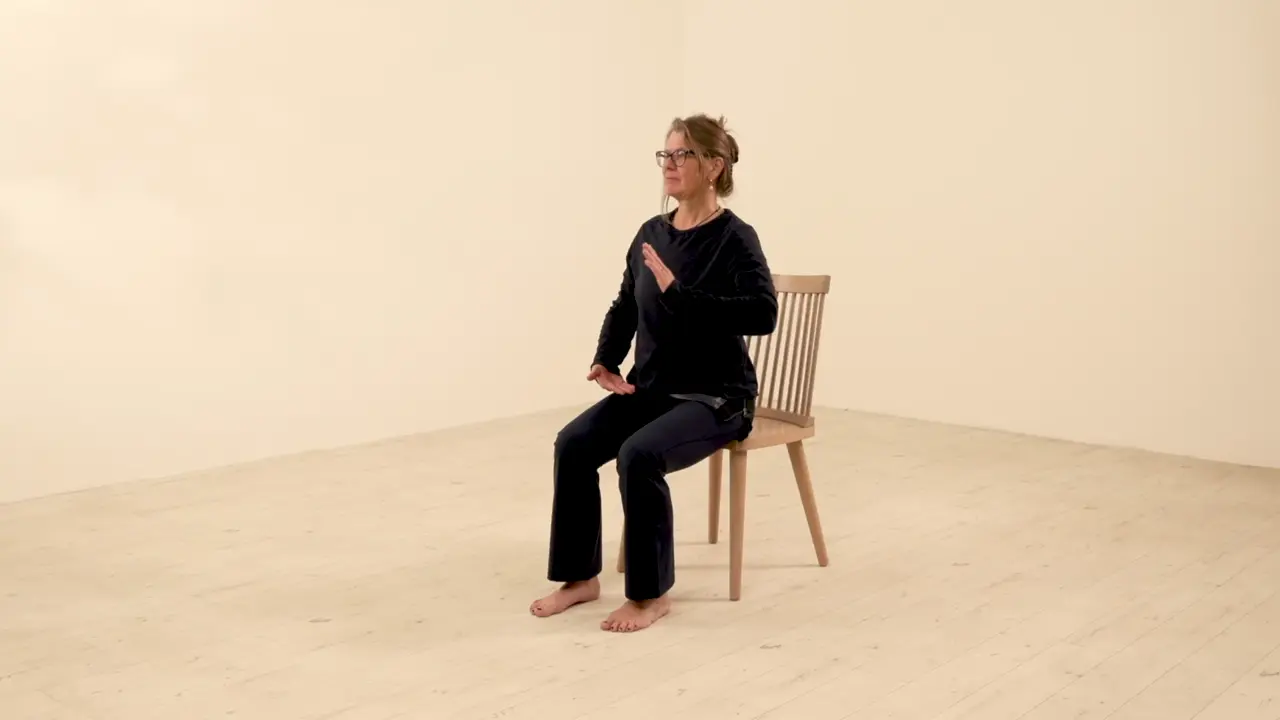
Spinal Twist and Back Glance
Spinal Twist and Back Glance combines a gentle torso rotation with a backward gaze to release tension in the spine and shoulders. It enhances mobility, balance, and postural awareness.
Related patient information and medicines
Patient information leaflet
CT scan
Note : the information below is a general guide only. The arrangements, and the way tests are performed, may vary between different hospitals. Always follow the instructions given by your doctor or local hospital. What is a CT scan. A CT scan is a specialised X-ray test. It can give quite clear pictures of the inside of your body. In particular,.

Patient information leaflet
Neck pain
Persistent (chronic) pain develops in some cases and further treatment may then be needed. [https://patient.info/health/neck-pain](https://patient.info/health/neck-pain) Neck pain symptoms Pain develops in the neck and may spread to the shoulder, upper back or base of the skull. The spinal cord, which contains nervous tissue carrying messages to.
Patient information leaflet
Cervical spondylosis
Cervical spondylosis is a 'wear and tear' of the vertebrae and discs in the neck. It is a normal part of ageing and does not cause symptoms in many people. The spinal cord, which contains nervous tissue carrying messages to and from the brain, is protected by the spine. Cervical spine Cervica... Cervical spondylosis is an age-related degeneration.
Patient information leaflet
Spinal stenosis
Spinal stenosis is a term used to describe a narrowing of your spinal canal. The narrowing may not cause any symptoms. However, the narrowing may progress to cause squeezing (compression) of your spinal nerves or compression of your spine. Spinal stenosis causes back pain and leg pain. Most often it occurs when you walk. Weakness of the legs may.
Patient information leaflet
Back and spine pain
This leaflet gives some general information about the back and back pain. For more information, go to [https://patient.info/health/back-and-spine-pain](https://patient.info/health/back-and-spine-pain) Understanding the back The spine is made up of many bones called vertebrae. Spinal cord Whole spinal cord Close-up diagram lumbar spinal cord Lumbar.
Patient information leaflet
Spina bifida
Spina bifida is caused by an abnormal development of the spine and spinal cord which leaves a gap in the spine. Treatment of spina bifida may not be needed or may include operations, physiotherapy and walking aids. The best way to prevent a baby from having spina bifida is to take folic acid supplements before pregnancy and during the first 12.
Further reading and references
- Leukoencephalopathy with brainstem and spinal cord involvement and lactate elevation; MedlinePlus, National Library of Medicine.
- Engelen M, Abbink TEM, Salomons GS, van der Knaap MS. Leukoencephalopathy with Brain Stem and Spinal Cord Involvement and Lactate Elevation. 2010 May 25 [updated 2026 Aug 20]. In: Adam MP, Bick S, Mirzaa GM, Wallace SE, Amemiya A, editors. GeneReviews(R) [Internet]. Seattle (WA): University of Washington, Seattle; 1993-2026. Available from http://www.ncbi.nlm.nih.gov/books/NBK43417/
- Lin J, Chiconelli Faria E, Da Rocha AJ, Rodrigues Masruha M, Pereira Vilanova LC, Scheper GC, Van der Knaap MS. Leukoencephalopathy with brainstem and spinal cord involvement and normal lactate: a new mutation in the DARS2 gene. J Child Neurol. 2010 Nov;25(11):1425-8. doi: 10.1177/0883073810370897. Epub 2010 May 25.
- Scheper GC, van der Klok T, van Andel RJ, van Berkel CG, Sissler M, Smet J, Muravina TI, Serkov SV, Uziel G, Bugiani M, Schiffmann R, Krageloh-Mann I, Smeitink JA, Florentz C, Van Coster R, Pronk JC, van der Knaap MS. Mitochondrial aspartyl-tRNA synthetase deficiency causes leukoencephalopathy with brain stem and spinal cord involvement and lactate elevation. Nat Genet. 2007 Apr;39(4):534-9. doi: 10.1038/ng2013. Epub 2007 Mar 25.
- Uluc K, Baskan O, Yildirim KA, Ozsahin S, Koseoglu M, Isak B, Scheper GC, Gunal DI, van der Knaap MS. Leukoencephalopathy with brain stem and spinal cord involvement and high lactate: a genetically proven case with distinct MRI findings. J Neurol Sci. 2008 Oct 15;273(1-2):118-22. doi: 10.1016/j.jns.2008.06.002. Epub 2008 Jul 10.
- van der Knaap MS, van der Voorn P, Barkhof F, Van Coster R, Krageloh-Mann I, Feigenbaum A, Blaser S, Vles JS, Rieckmann P, Pouwels PJ. A new leukoencephalopathy with brainstem and spinal cord involvement and high lactate. Ann Neurol. 2003 Feb;53(2):252-8. doi: 10.1002/ana.10456.
Share your thoughts or experiences with others in our patient communities.
Simple access to trusted treatments and health services online.
Common conditions
Get help with common conditions through the NHS, without a GP appointment.





Sign up to the Patient newsletter
Your weekly dose of clear, trustworthy health advice - written to help you feel informed, confident and in control.
By subscribing you accept our Privacy Policy. You can unsubscribe at any time. We never sell your data.