Megalencephalic leukoencephalopathy with subcortical cysts
Last updated 18 Aug 2020
Meets Patient’s editorial guidelines
- DownloadDownload
- Share
- Language
- Discussion
- Ask Patient
- Audio Version
- Add to preferred sources on Google
Megalencephalic leukoencephalopathy with subcortical cysts is a progressive condition that affects brain development and function. Individuals with this condition typically have an enlarged brain (megalencephaly) that is evident at birth or within the first year of life. Megalencephaly leads to an increase in the size of the head (macrocephaly). Affected people also have leukoencephalopathy, an abnormality of the brain's white matter. White matter consists of nerve fibers covered by a fatty substance called myelin. Myelin insulates nerve cells (neurons) and promotes the rapid transmission of nerve impulses. In megalencephalic leukoencephalopathy with subcortical cysts, the myelin is swollen and contains numerous fluid-filled pockets (vacuoles). Over time, the swelling decreases and the myelin begins to waste away (atrophy). Individuals affected with this condition may develop cysts in the brain; because these cysts form below an area of the brain called the cerebral cortex, they are called subcortical cysts. These cysts can grow in size and number.
Video picks for Genetic conditionsVideo library
Description
Megalencephalic leukoencephalopathy with subcortical cysts is a progressive condition that affects brain development and function. Individuals with this condition typically have an enlarged brain (megalencephaly) that is evident at birth or within the first year of life. Megalencephaly leads to an increase in the size of the head (macrocephaly). Affected people also have leukoencephalopathy, an abnormality of the brain's white matter. White matter consists of nerve fibers covered by a fatty substance called myelin. Myelin insulates nerve cells (neurons) and promotes the rapid transmission of nerve impulses. In megalencephalic leukoencephalopathy with subcortical cysts, the myelin is swollen and contains numerous fluid-filled pockets (vacuoles). Over time, the swelling decreases and the myelin begins to waste away (atrophy). Individuals affected with this condition may develop cysts in the brain; because these cysts form below an area of the brain called the cerebral cortex, they are called subcortical cysts. These cysts can grow in size and number.
The brain abnormalities in people with megalencephalic leukoencephalopathy with subcortical cysts affect the use of muscles and lead to movement problems. Affected individuals typically experience muscle stiffness (spasticity) and difficulty coordinating movements (ataxia). Walking ability varies greatly among those affected. Some people lose the ability to walk early in life and need wheelchair assistance, while others are able to walk unassisted well into adulthood. Minor head trauma can further impair movements and may lead to coma. Affected individuals may also develop uncontrolled muscle tensing (dystonia), involuntary writhing movements of the limbs (athetosis), difficulty swallowing (dysphagia), and impaired speech (dysarthria). More than half of all people with this condition have recurrent seizures (epilepsy). Despite the widespread brain abnormalities, people with this condition typically have only mild to moderate intellectual disability.
There are three types of megalencephalic leukoencephalopathy with subcortical cysts, which are distinguished by their signs and symptoms and genetic cause. Types 1 and 2A have different genetic causes but are nearly identical in signs and symptoms. Types 2A and 2B have the same genetic cause but the signs and symptoms of type 2B often begin to improve after one year. After improvement, individuals with type 2B usually have macrocephaly and may have intellectual disability.
Inheritance patterns
The source lists the following possible inheritance patterns: Autosomal recessive; Autosomal dominant. More than one pattern can apply in different cases.
Related genes
Other names
Infantile leukoencephalopathy and megalencephaly
Leukoencephalopathy with swelling and a discrepantly mild course
Leukoencephalopathy with swelling and cysts
LVM
MLC
Vacuolating leukoencephalopathy
Vacuolating megalencephalic leukoencephalopathy with subcortical cysts
Van der Knaap disease
Patient picks for Genetic conditions

General health and lifestyle
Book a Pharmacy First online consultation
NHS Pharmacy First is a new scheme from the Government and NHS in England. It allows patients to get treatment, including prescription medications where necessary, for common conditions without the need for a GP appointment. Through NHS Pharmacy First, My Local Surgery offers fast, free private online consultations with an NHS pharmacist for quick.
by Thomas Andrew Porteus, MBCS

Skin, nail and hair health
Epidermoid and pilar cysts
Epidermoid and pilar cysts are commonly referred to as 'sebaceous cysts' (pronounced 'seb-ay-shuss'). They are overgrowths of skin cells (called keratin) held together in a little capsule, or sac. They are harmless smooth lumps just under the surface of the skin. They are not cancerous and do not require removal unless they are bothering you by the look or the feel of them. They can occur almost anywhere in the body, but are commonly found on the back or scalp.
by Dr Doug McKechnie, MRCGP

Skin, nail and hair health
How to prevent and soothe skin cysts: a simple guide
If you find a little round lump on your skin, you may have developed a cyst. These growths are generally harmless and can vary in size. We examine the various types of skin cysts and when to check in with your doctor.
by Victoria Raw

Women's health
Understanding vaginal cysts
Noticing a cyst in and around your vagina can be worrying and unexpected. However, they are very common and usually nothing to worry about. Here we explain what these cysts are, and the possible causes of having one.
by Victoria Raw

Podcasts
Losing it!
Why losing your erection doesn’t have to be the catastrophe you might think it is. Clare and Janet discuss ways to help with erection problems.
by Thomas Andrew Porteus, MBCS

Preventative health
Spinal Twist and Back Glance
Spinal Twist and Back Glance combines a gentle torso rotation with a backward gaze to release tension in the spine and shoulders. It enhances mobility, balance, and postural awareness.
Related patient information and medicines

Patient information leaflet
Neck lumps and bumps
Neck lumps and bumps are common and they have many possible causes. They may arise from the skin or from structures underneath. Key points Neck lumps have many causes including swollen lymph nodes or salivary glands, cysts or abscesses, and tumours. Most lumps are nothing to worry about and are often linked to infections such as colds,.
Patient information leaflet
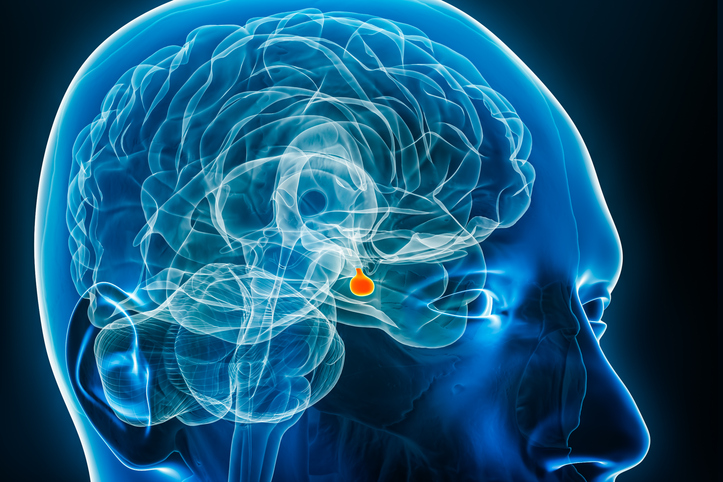
Pituitary gland disorders
This leaflet gives a brief overview of the pituitary gland and the hormones it makes. The pituitary gland is found at the base of the brain and is 'pea-sized'. The pituitary gland is an overall controller of a number of other glands in the body, overseeing the function of these organs through hormones. Some of the pituitary gland disorders.

Patient information leaflet
Mediastinoscopy
Mediastinoscopy is a type of 'keyhole' surgery that allows doctors to look inside the chest. It can be used to take samples of body tissue for further testing. Note : the information below is a general guide only. The arrangements, and the way tests are performed, may vary between different hospitals. Always follow the instructions given by your.

Patient information leaflet
Decongestants
Dr Krishna Vakharia , 21st February 2024 A note on pseudoephedrine-containing products. Following a review by MHRA - the safety information of all pseudoephedrine-containing medicines will be updated to provide clearer descriptions of these risks and potential risk factors for these conditions for both patients and healthcare professionals. PRES-.
Patient information leaflet
Endoscopic ultrasound scan
An endoscopic ultrasound scan uses an endoscope with an ultrasound probe attached to create detailed pictures of internal organs and structures. Note : the information below is a general guide only. The arrangements and the way tests are performed, may vary between different hospitals. Always follow the instructions given by your doctor or local.
Patient information leaflet
Epidermoid and pilar cysts
Epidermoid and pilar cysts are commonly referred to as 'sebaceous cysts' (pronounced 'seb-ay-shuss'). They are overgrowths of skin cells (called keratin) held together in a little capsule, or sac. They are harmless smooth lumps just under the surface of the skin. They are not cancerous and do not require removal unless they are bothering you by.
Further reading and references
- Megalencephalic leukoencephalopathy with subcortical cysts; MedlinePlus, National Library of Medicine.
- Arnedo T, Aiello C, Jeworutzki E, Dentici ML, Uziel G, Simonati A, Pusch M, Bertini E, Estevez R. Expanding the spectrum of megalencephalic leukoencephalopathy with subcortical cysts in two patients with GLIALCAM mutations. Neurogenetics. 2014 Mar;15(1):41-8. doi: 10.1007/s10048-013-0381-x. Epub 2013 Nov 8.
- Arnedo T, Lopez-Hernandez T, Jeworutzki E, Capdevila-Nortes X, Sirisi S, Pusch M, Estevez R. Functional analyses of mutations in HEPACAM causing megalencephalic leukoencephalopathy. Hum Mutat. 2014 Oct;35(10):1175-8. doi: 10.1002/humu.22622. Epub 2014 Aug 18.
- Ilja Boor PK, de Groot K, Mejaski-Bosnjak V, Brenner C, van der Knaap MS, Scheper GC, Pronk JC. Megalencephalic leukoencephalopathy with subcortical cysts: an update and extended mutation analysis of MLC1. Hum Mutat. 2006 Jun;27(6):505-12. doi: 10.1002/humu.20332.
- Lopez-Hernandez T, Sirisi S, Capdevila-Nortes X, Montolio M, Fernandez-Duenas V, Scheper GC, van der Knaap MS, Casquero P, Ciruela F, Ferrer I, Nunes V, Estevez R. Molecular mechanisms of MLC1 and GLIALCAM mutations in megalencephalic leukoencephalopathy with subcortical cysts. Hum Mol Genet. 2011 Aug 15;20(16):3266-77. doi: 10.1093/hmg/ddr238. Epub 2011 May 30.
- Montagna G, Teijido O, Eymard-Pierre E, Muraki K, Cohen B, Loizzo A, Grosso P, Tedeschi G, Palacin M, Boespflug-Tanguy O, Bertini E, Santorelli FM, Estevez R. Vacuolating megalencephalic leukoencephalopathy with subcortical cysts: functional studies of novel variants in MLC1. Hum Mutat. 2006 Mar;27(3):292. doi: 10.1002/humu.9407.
- Pascual-Castroviejo I, van der Knaap MS, Pronk JC, Garcia-Segura JM, Gutierrez-Molina M, Pascual-Pascual SI. Vacuolating megalencephalic leukoencephalopathy: 24 year follow-up of two siblings. Neurologia. 2005 Jan-Feb;20(1):33-40.
- Singhal BS, Gorospe JR, Naidu S. Megalencephalic leukoencephalopathy with subcortical cysts. J Child Neurol. 2003 Sep;18(9):646-52. doi: 10.1177/08830738030180091201.
Share your thoughts or experiences with others in our patient communities.
Simple access to trusted treatments and health services online.
Common conditions
Get help with common conditions through the NHS, without a GP appointment.





Sign up to the Patient newsletter
Your weekly dose of clear, trustworthy health advice - written to help you feel informed, confident and in control.
By subscribing you accept our Privacy Policy. You can unsubscribe at any time. We never sell your data.