hepatic and glial cell adhesion molecule
Last updated 18 Aug 2020
Meets Patient’s editorial guidelines
- DownloadDownload
- Share
- Language
- Discussion
- Ask Patient
- Audio Version
- Add to preferred sources on Google
The HEPACAM gene provides instructions for making a protein called GlialCAM. This protein is found in liver cells and certain brain cells known as glial cells. In liver cells, GlialCAM plays a role in the attachment of cells to one another (adhesion) and cell movement. In glial cells, GlialCAM attaches (binds) to other GlialCAM proteins or to other proteins called MLC1 and ClC-2. GlialCAM ensures that these proteins are transported to junctions that connect neighboring glial cells. The function of GlialCAM at the cell junction is unclear.
Video picks for GenesVideo library
Normal function
The HEPACAM gene provides instructions for making a protein called GlialCAM. This protein is found in liver cells and certain brain cells known as glial cells. In liver cells, GlialCAM plays a role in the attachment of cells to one another (adhesion) and cell movement. In glial cells, GlialCAM attaches (binds) to other GlialCAM proteins or to other proteins called MLC1 and ClC-2. GlialCAM ensures that these proteins are transported to junctions that connect neighboring glial cells. The function of GlialCAM at the cell junction is unclear.
Conditions referring to this gene or chromosome
Other names
FLJ25530
glial cell adhesion molecule
GlialCAM
HECAM_HUMAN
hepatocyte and glial cell adhesion molecule
hepatocyte cell adhesion molecule
Patient picks for Genes
Tests and investigations
CT scan
Note: the information below is a general guide only. The arrangements, and the way tests are performed, may vary between different hospitals. Always follow the instructions given by your doctor or local hospital.
by Dr Rachel Hudson, MRCGP

Treatment and medication
Check your medicines for interactions
Use this medicine and drug interaction checker to see whether your medicines, supplements, vitamins, foods, or certain health conditions may interact with each other. It can help you understand potential risks, avoid unwanted side effects, and decide when it’s important to speak to a pharmacist, GP, or other healthcare professional. The tool is suitable for checking both prescription and over-the-counter medicines, as well as common supplements and herbal remedies. Open in a new window
Allergies, blood and immune system
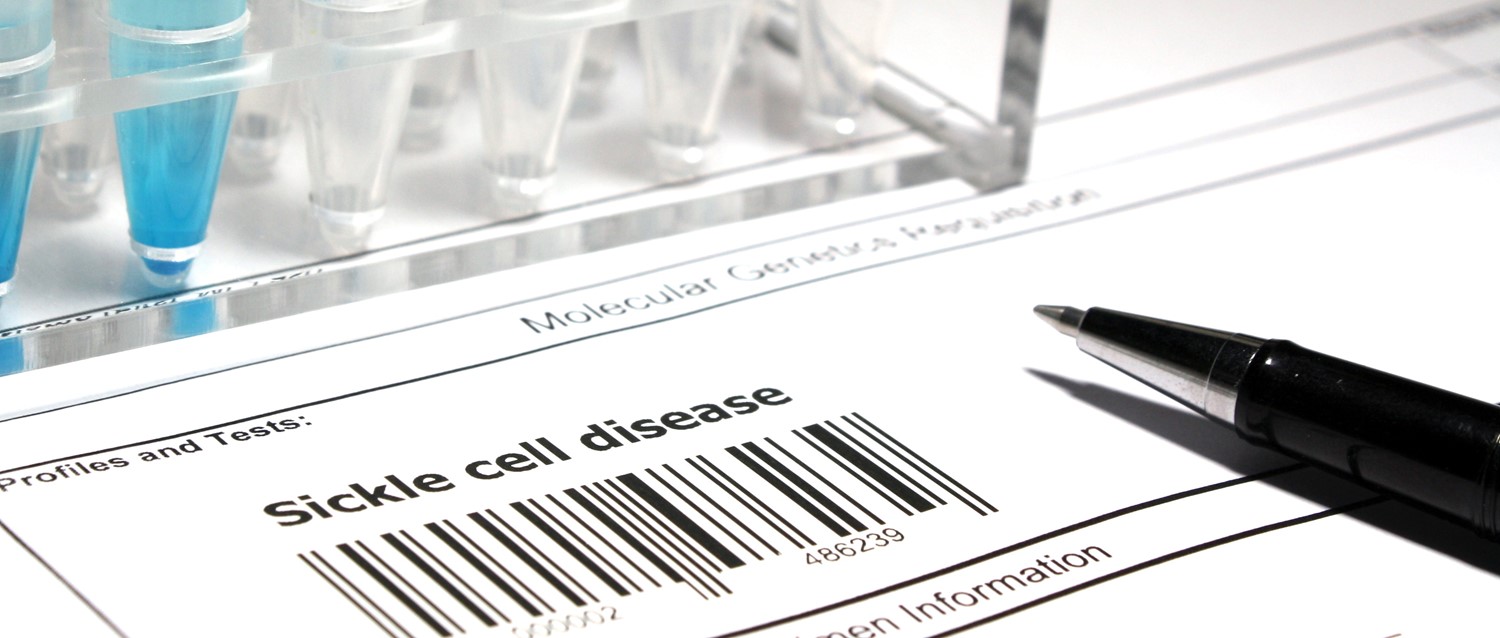
What does the new treatment for sickle cell disease mean for sickle cell patients?
It has been over 20 years since the last breakthrough in the treatment of sickle cell disease. Now a new antibody-based drug has been approved that can significantly reduce the number of episodes of severe pain experienced by patients. What does this step mean for the 15,000 people living with sickle cell disorder in the UK?
by Amberley Davis

Allergies, blood and immune system
Mastocytosis and mast cell disorders
A mast cell is a type of white blood cell. There are several forms of mastocytosis. In one, there are too many mast cells in the body: in another the number of mast cells is normal but they are too active.
by Dr Laurence Knott

Allergies, blood and immune system
Polycythaemia rubra vera
Polycythaemia rubra vera (PRV) is a myeloproliferative disorder, which means the bone marrow makes too many blood cells. It is also sometimes just called polycythaemia (PV). There is an abnormally high number of red blood cells in your blood. You may also have an abnormally high number of platelets and white blood cells.
by Dr Hayley Willacy, FRCGP

Pregnancy
Multiple pregnancy
In a multiple pregnancy, there is more than one baby growing in the womb (uterus) at the same time. Being pregnant with twins is the most common example. Both mother and babies need extra monitoring during pregnancy as the risks are higher than in a singleton pregnancy.
by Dr Toni Hazell, FRCGP
Related patient information and medicines
Patient information leaflet
Brain tumours
This leaflet aims to give a brief overview of the various types of brain tumours. The treatment and survival rates vary greatly, depending on factors such as the type of tumour and the location in the brain. The brain also contains glial cells. These provide support, nourishment and prot... There are various types of glial cells, including.
Patient information leaflet
CT scan
Note : the information below is a general guide only. The arrangements, and the way tests are performed, may vary between different hospitals. Always follow the instructions given by your doctor or local hospital. What is a CT scan. A CT scan is a specialised X-ray test. It can give quite clear pictures of the inside of your body. CT stands for.

Patient information leaflet
The immune system
This leaflet gives a brief overview of the immune system and how it works. A person with a weak immune system might have difficulty fighting off infections. In autoimmune diseases the body is unable to tell what is its own and what is foreign, so it attacks itself. Autoimmune diseases can attack any part of the body - eg, type 1 diabetes.
Patient information leaflet
Check your medicines for interactions
Use this medicine and drug interaction checker to see whether your medicines, supplements, vitamins, foods, or certain health conditions may interact with each other. It can help you understand potential risks, avoid unwanted side effects, and decide when it’s important to speak to a pharmacist, GP, or other healthcare professional. The tool is.

Patient information leaflet
Gilbert's syndrome
Gilbert's syndrome is due to an inherited defect in processing bilirubin in the liver. Bilirubin is produce... What is Gilbert's syndrome. Gilbert's syndrome - also known as constitutional hepatic dysfunction - is a condition where the liver does not process bilirubin very well. It is sometimes called Gilbert's disease although it does not cause.
Patient information leaflet
Cirrhosis
Cirrhosis is a serious condition where normal liver tissue is replaced by scar tissue (fibrosis). It tends to progress slowly and often does not cause symptoms in its early stages. In the UK, the two commonest causes of cirrhosis are alcohol drinking above recommended limits and hepatitis C infection. If cirrhosis becomes severe, a liver.
Further reading and references
- hepatic and glial cell adhesion molecule; MedlinePlus, National Library of Medicine.
- Arnedo T, Aiello C, Jeworutzki E, Dentici ML, Uziel G, Simonati A, Pusch M, Bertini E, Estevez R. Expanding the spectrum of megalencephalic leukoencephalopathy with subcortical cysts in two patients with GLIALCAM mutations. Neurogenetics. 2014 Mar;15(1):41-8. doi: 10.1007/s10048-013-0381-x. Epub 2013 Nov 8.
- Arnedo T, Lopez-Hernandez T, Jeworutzki E, Capdevila-Nortes X, Sirisi S, Pusch M, Estevez R. Functional analyses of mutations in HEPACAM causing megalencephalic leukoencephalopathy. Hum Mutat. 2014 Oct;35(10):1175-8. doi: 10.1002/humu.22622. Epub 2014 Aug 18.
- Barrallo-Gimeno A, Estevez R. GlialCAM, a glial cell adhesion molecule implicated in neurological disease. Adv Neurobiol. 2014;8:47-59. doi: 10.1007/978-1-4614-8090-7_3.
- Lopez-Hernandez T, Ridder MC, Montolio M, Capdevila-Nortes X, Polder E, Sirisi S, Duarri A, Schulte U, Fakler B, Nunes V, Scheper GC, Martinez A, Estevez R, van der Knaap MS. Mutant GlialCAM causes megalencephalic leukoencephalopathy with subcortical cysts, benign familial macrocephaly, and macrocephaly with retardation and autism. Am J Hum Genet. 2011 Apr 8;88(4):422-32. doi: 10.1016/j.ajhg.2011.02.009. Epub 2011 Mar 17.
- Lopez-Hernandez T, Sirisi S, Capdevila-Nortes X, Montolio M, Fernandez-Duenas V, Scheper GC, van der Knaap MS, Casquero P, Ciruela F, Ferrer I, Nunes V, Estevez R. Molecular mechanisms of MLC1 and GLIALCAM mutations in megalencephalic leukoencephalopathy with subcortical cysts. Hum Mol Genet. 2011 Aug 15;20(16):3266-77. doi: 10.1093/hmg/ddr238. Epub 2011 May 30.
Share your thoughts or experiences with others in our patient communities.
Simple access to trusted treatments and health services online.
Common conditions
Get help with common conditions through the NHS, without a GP appointment.





Sign up to the Patient newsletter
Your weekly dose of clear, trustworthy health advice - written to help you feel informed, confident and in control.
By subscribing you accept our Privacy Policy. You can unsubscribe at any time. We never sell your data.