Mucolipidosis III alpha/beta
Last updated 2 Oct 2024
Meets Patient’s editorial guidelines
- DownloadDownload
- Share
- Language
- Discussion
- Ask Patient
- Audio Version
- Add to preferred sources on Google
Mucolipidosis III alpha/beta is a disorder that affects many parts of the body. Signs and symptoms of this condition typically appear around age 3 and worsen slowly over time.
Video picks for Genetic conditionsVideo library
Description
Mucolipidosis III alpha/beta is a disorder that affects many parts of the body. Signs and symptoms of this condition typically appear around age 3 and worsen slowly over time.
Individuals with mucolipidosis III alpha/beta grow slowly and have short stature. They also have stiff joints and dysostosis multiplex, which refers to multiple skeletal abnormalities seen on x-ray. Many affected individuals develop low bone mineral density (osteoporosis), which weakens the bones and makes them prone to fracture. Osteoporosis and progressive joint problems also cause bone pain that becomes more severe over time in people with mucolipidosis III alpha/beta.
People with mucolipidosis III alpha/beta often have heart valve abnormalities and mild clouding of the clear covering of the eye (cornea). Their facial features become slightly thickened or "coarse" over time. Affected individuals may also develop frequent ear and respiratory infections. About half of people with this condition have mild intellectual disability or learning problems. Individuals with mucolipidosis III alpha/beta generally survive into adulthood, but they may have a shortened lifespan.
Inheritance patterns
The source lists the following possible inheritance patterns: Autosomal recessive. More than one pattern can apply in different cases.
Related genes
Other names
ML III
ML IIIA
Mucolipidosis III
Mucolipidosis III, variant
Mucolipidosis IIIA
Pseudo-Hurler polydystrophy
Patient picks for Genetic conditions
Treatment and medication
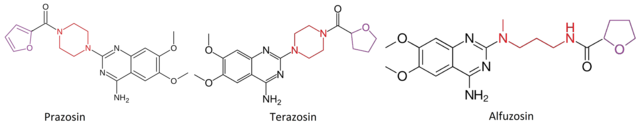
Alpha-blockers
Alpha-blockers are medicines that are mainly used to treat high blood pressure (hypertension) and problems with passing urine in men who have enlargement of the prostate gland. Prostate gland enlargement is also called benign prostatic hyperplasia (BPH).
by Dr Doug McKechnie, MRCGP
Treatment and medication
Extended-spectrum beta-lactamases
Extended-spectrum beta-lactamases (ESBLs) have so far only been reported in certain bacteria called Gram-negative bacterial infections.
by Dr Colin Tidy, MRCGP

Children's health
Alpha-1 antitrypsin deficiency
Alpha-1 antitrypsin deficiency is an inherited genetic condition. A genetic condition is one that can be passed on from parents through genes. In alpha-1 antitrypsin deficiency the result of a genetic abnormality leads to lung and, in some people, liver damage. Lung symptoms are the most common and include shortness of breath, cough and wheezing. Symptoms can worsen over time. At present, there is no cure for alpha-1 antitrypsin deficiency. Treatment aims at slowing down the progression of the disease.
by Dr Philippa Vincent, MRCGP

Drug interactions checker
Can I take Betahistine and Citalopram together?
There are no known significant interactions between betahistine and citalopram. It is generally considered safe to take these two medicines together.

Treatment and medication
Beta-blockers
Beta-blockers are medicines that are used to treat a variety of conditions. Their full correct name is beta-adrenoceptor blocking medicines (or beta-adrenergic blocking agents), but they are commonly just called beta-blockers.
by Dr Rosalyn Adleman, MRCGP

Treatment and medication
Do beta blockers help with anxiety symptoms?
Whether you had sweaty palms before an exam or a racing heart before a driving test, we’ve all experienced the symptoms of anxiety from time to time. These physical reactions can be hard to cope with - especially if you need to perform under pressure - but medication called beta blockers can help provide some relief.
by Lydia Smith
Related patient information and medicines

Patient information leaflet
Can I take Royal sun and White button together?
Both Royal Sun (Agaricus blazei) and White Button mushrooms contain compounds that may lower blood sugar levels. Taking them together... General Food Intake These medicinal mushrooms contain complex polysaccharides (beta-glucans). Our Medicines Interaction Checker helps you check whether your prescriptions, over-the-counter medicines, and.

Patient information leaflet
Testicular cancer
Testicular cancer is a cancer that arises from a testicle (testis). Around half of all cases occur in men aged under 35 but testicular cancer rarely occurs before puberty. Another useful test i... The tumour markers commonly tested for are alpha-fetoprotein (AFP), beta human chorionic gonadotrophin (beta-hCG), lactic dehydrogenase (LDH) and.

Patient information leaflet
Can I take Turkey tail and White button together?
There are no known negative interactions between Turkey Tail (Trametes versicolor) and White Button mushrooms (Agaricus bisporus). Why this happens Both mushrooms contain bioactive compounds called polysaccharides (such as beta-glucans). Rather than interfering with each other, they may have a complementary effect on the immune system without.

Patient information leaflet
High blood pressure
High blood pressure (hypertension) happens when the force on the walls of blood vessels (caused by the blood within them) is more than normal. ...vessels (caused by the blood within them) is more than normalHealthcare professionals sometimes call high blood pressure 'hypertension'..

Patient information leaflet
Can I take Royal sun and Shiitake together?
Both Royal Sun (Agaricus blazei) and Shiitake (Lentinula edodes) mushrooms contain high levels of beta-glucans, which are substances that stimulate the immune system. Taking them together may cause your immune system to become overactive. Both mushrooms can lower blood sugar levels and thin the blood. Taking them together might increase the risk.

Patient information leaflet
Can I take Royal sun and Turkey tail together?
Both Royal Sun (Agaricus blazei) and Turkey Tail (Trametes versicolor) are medicinal mushrooms that can stimulate the immune system. Why this happens These mushrooms contain beta-glucans which activate various immune cells (like natural killer cells and macrophages). General Food Intake These medicinal mushrooms contain complex polysaccharides.
Further reading and references
- Mucolipidosis III alpha/beta; MedlinePlus, National Library of Medicine.
- Bargal R, Zeigler M, Abu-Libdeh B, Zuri V, Mandel H, Ben Neriah Z, Stewart F, Elcioglu N, Hindi T, Le Merrer M, Bach G, Raas-Rothschild A. When Mucolipidosis III meets Mucolipidosis II: GNPTA gene mutations in 24 patients. Mol Genet Metab. 2006 Aug;88(4):359-63. doi: 10.1016/j.ymgme.2006.03.003. Epub 2006 Apr 21.
- Cathey SS, Kudo M, Tiede S, Raas-Rothschild A, Braulke T, Beck M, Taylor HA, Canfield WM, Leroy JG, Neufeld EF, McKusick VA. Molecular order in mucolipidosis II and III nomenclature. Am J Med Genet A. 2008 Feb 15;146A(4):512-3. doi: 10.1002/ajmg.a.32193. No abstract available.
- Cathey SS, Leroy JG, Wood T, Eaves K, Simensen RJ, Kudo M, Stevenson RE, Friez MJ. Phenotype and genotype in mucolipidoses II and III alpha/beta: a study of 61 probands. J Med Genet. 2010 Jan;47(1):38-48. doi: 10.1136/jmg.2009.067736. Epub 2009 Jul 16.
- Kudo M, Brem MS, Canfield WM. Mucolipidosis II (I-cell disease) and mucolipidosis IIIA (classical pseudo-hurler polydystrophy) are caused by mutations in the GlcNAc-phosphotransferase alpha / beta -subunits precursor gene. Am J Hum Genet. 2006 Mar;78(3):451-63. doi: 10.1086/500849. Epub 2006 Jan 24.
- Otomo T, Muramatsu T, Yorifuji T, Okuyama T, Nakabayashi H, Fukao T, Ohura T, Yoshino M, Tanaka A, Okamoto N, Inui K, Ozono K, Sakai N. Mucolipidosis II and III alpha/beta: mutation analysis of 40 Japanese patients showed genotype-phenotype correlation. J Hum Genet. 2009 Mar;54(3):145-51. doi: 10.1038/jhg.2009.3. Epub 2009 Feb 6.
- Steet RA, Hullin R, Kudo M, Martinelli M, Bosshard NU, Schaffner T, Kornfeld S, Steinmann B. A splicing mutation in the alpha/beta GlcNAc-1-phosphotransferase gene results in an adult onset form of mucolipidosis III associated with sensory neuropathy and cardiomyopathy. Am J Med Genet A. 2005 Feb 1;132A(4):369-75. doi: 10.1002/ajmg.a.30498.
- Tiede S, Muschol N, Reutter G, Cantz M, Ullrich K, Braulke T. Missense mutations in N-acetylglucosamine-1-phosphotransferase alpha/beta subunit gene in a patient with mucolipidosis III and a mild clinical phenotype. Am J Med Genet A. 2005 Sep 1;137A(3):235-40. doi: 10.1002/ajmg.a.30868.
- Tylki-Szymanska A, Czartoryska B, Groener JE, Lugowska A. Clinical variability in mucolipidosis III (pseudo-Hurler polydystrophy). Am J Med Genet. 2002 Mar 15;108(3):214-8. doi: 10.1002/ajmg.10224.
- van Meel E, Qian Y, Kornfeld SA. Mislocalization of phosphotransferase as a cause of mucolipidosis III alphabeta. Proc Natl Acad Sci U S A. 2014 Mar 4;111(9):3532-7. doi: 10.1073/pnas.1401417111. Epub 2014 Feb 18.
Share your thoughts or experiences with others in our patient communities.
Simple access to trusted treatments and health services online.
Common conditions
Get help with common conditions through the NHS, without a GP appointment.





Sign up to the Patient newsletter
Your weekly dose of clear, trustworthy health advice - written to help you feel informed, confident and in control.
By subscribing you accept our Privacy Policy. You can unsubscribe at any time. We never sell your data.