Müllerian aplasia and hyperandrogenism
Last updated 13 Nov 2023
Meets Patient’s editorial guidelines
- DownloadDownload
- Share
- Language
- Discussion
- Ask Patient
- Audio Version
- Add to preferred sources on Google
Müllerian aplasia and hyperandrogenism is a condition that affects the reproductive system in females. This condition is caused by abnormal development of the Müllerian ducts, which are structures in the embryo that develop into the uterus, fallopian tubes, cervix, and the upper part of the vagina. Individuals with Müllerian aplasia and hyperandrogenism typically have an underdeveloped or absent uterus and may also have abnormalities of other reproductive organs. Women with this condition have normal female external genitalia, and they develop breasts and pubic hair normally at puberty; however, they do not begin menstruation by age 16 (primary amenorrhea) and will likely never have a menstrual period. Affected women are unable to have children (infertile).
Video picks for Genetic conditionsVideo library
Description
Müllerian aplasia and hyperandrogenism is a condition that affects the reproductive system in females. This condition is caused by abnormal development of the Müllerian ducts, which are structures in the embryo that develop into the uterus, fallopian tubes, cervix, and the upper part of the vagina. Individuals with Müllerian aplasia and hyperandrogenism typically have an underdeveloped or absent uterus and may also have abnormalities of other reproductive organs. Women with this condition have normal female external genitalia, and they develop breasts and pubic hair normally at puberty; however, they do not begin menstruation by age 16 (primary amenorrhea) and will likely never have a menstrual period. Affected women are unable to have children (infertile).
Women with Müllerian aplasia and hyperandrogenism have higher-than-normal levels of male sex hormones called androgens in their blood (hyperandrogenism), which can cause acne and excessive facial hair (facial hirsutism). Kidney abnormalities may be present in some affected individuals.
Inheritance patterns
The source lists the following possible inheritance patterns: Autosomal dominant. More than one pattern can apply in different cases.
Related genes
Other names
Biason-Lauber syndrome
Mayer-Rokitansky-Küster-Hauser-Biason-Lauber syndrome
Mayer-Rokitansky-Küster-Hauser-like syndrome
Mullerian aplasia and hyperandrogenism
Müllerian duct failure
WNT4 deficiency
WNT4 Müllerian aplasia
WNT4 Müllerian aplasia and ovarian dysfunction
Patient picks for Genetic conditions

Tests and investigations
CT scan
Note: the information below is a general guide only. The arrangements, and the way tests are performed, may vary between different hospitals. Always follow the instructions given by your doctor or local hospital.
by Dr Rachel Hudson, MRCGP

Treatment and medication
Check your medicines for interactions
Use this medicine and drug interaction checker to see whether your medicines, supplements, vitamins, foods, or certain health conditions may interact with each other. It can help you understand potential risks, avoid unwanted side effects, and decide when it’s important to speak to a pharmacist, GP, or other healthcare professional. The tool is suitable for checking both prescription and over-the-counter medicines, as well as common supplements and herbal remedies. Open in a new window

Allergies, blood and immune system
Sjögren's syndrome
Sjögren's syndrome is an autoimmune disease that causes the glands that produce tears and saliva to stop working. It is a life-long condition but treatments can help control symptoms such as dry eyes and dry mouth.
by Dr Doug McKechnie, MRCGP
Cancer
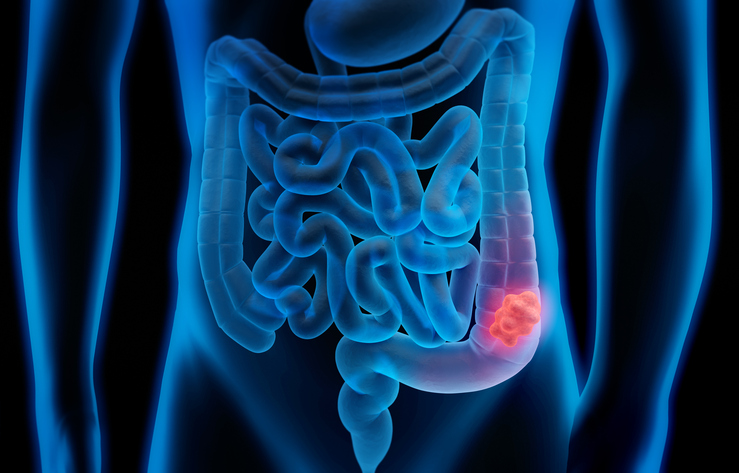
Bowel cancer
Colon cancer and rectal cancer (also called colorectal cancer) are common in the UK. The colon and rectum are parts of your bowel. Most cases occur in people aged over 50. If bowel cancer is diagnosed at an early stage, there is a good chance of a cure. In general, the more advanced the cancer (the more it has grown and spread), the less chance that treatment will be curative. However, treatment can often slow the progress of the cancer.
by Dr Doug McKechnie, MRCGP

Podcasts
Me and myself
In this episode, Clare and Aileen turn their attention to what they describe as the primary relationship - the relationship we have with ourselves - and why it is so often the one we neglect, misunderstand or actively sideline.
by Thomas Andrew Porteus, MBCS
Podcasts
Me-topia
If you always come last on the priority list, it’s time to learn why ‘Being Selfish for the Team’ helps everyone.
by Thomas Andrew Porteus, MBCS
Related patient information and medicines
Patient information leaflet
Menopause
The menopause is the time when your ovaries stop working to make an egg each month - it occurs 12 months after your last period. Dr Sarah Jarvis MBE In medical terms, the menopause is usually defined as the time reached one year after a woman's last menstrual period. Anti-Müllerian hormone is not tested for the diagnosis of the menopause and is.
Patient information leaflet
CT scan
Note : the information below is a general guide only. The arrangements, and the way tests are performed, may vary between different hospitals. What is a CT scan. A CT scan is a specialised X-ray test. It can give quite clear pictures of the inside of your body. The most commonly performed CT scan is of the brain - to determine the cause of a.

Patient information leaflet
Neck lumps and bumps
Neck lumps and bumps are common and they have many possible causes. They may arise from the skin or from structures underneath. Key points Neck lumps have many causes including swollen lymph nodes or salivary glands, cysts or abscesses, and tumours. Most lumps are nothing to worry about and are often linked to infections such as colds,.
Patient information leaflet
Epidermoid and pilar cysts
Epidermoid and pilar cysts are commonly referred to as 'sebaceous cysts' (pronounced 'seb-ay-shuss'). They are overgrowths of skin cells (called keratin) held together in a little capsule, or sac. They are harmless smooth lumps just under the surface of the skin. They are not cancerous and do not require removal unless they are bothering you by.

Patient information leaflet
Back and spine pain
Children can get back pain but it is more common in adults. This leaflet gives some general information about the back and back pain. It will also direct you to pages with more detailed information ... Dr Sarah Jarvis MBE Back pain is pain that is felt anywhere from the bottom of the neck to your bottom. For more information, go to.
Patient information leaflet
Check your medicines for interactions
Use this medicine and drug interaction checker to see whether your medicines, supplements, vitamins, foods, or certain health conditions may interact with each other. It can help you understand potential risks, avoid unwanted side effects, and decide when it’s important to speak to a pharmacist, GP, or other healthcare professional. The tool is.
Further reading and references
- Müllerian aplasia and hyperandrogenism; MedlinePlus, National Library of Medicine.
- Bernard P, Harley VR. Wnt4 action in gonadal development and sex determination. Int J Biochem Cell Biol. 2007;39(1):31-43. doi: 10.1016/j.biocel.2006.06.007. Epub 2006 Jul 5.
- Biason-Lauber A, De Filippo G, Konrad D, Scarano G, Nazzaro A, Schoenle EJ. WNT4 deficiency--a clinical phenotype distinct from the classic Mayer-Rokitansky-Kuster-Hauser syndrome: a case report. Hum Reprod. 2007 Jan;22(1):224-9. doi: 10.1093/humrep/del360. Epub 2006 Sep 7.
- Biason-Lauber A, Konrad D, Navratil F, Schoenle EJ. A WNT4 mutation associated with Mullerian-duct regression and virilization in a 46,XX woman. N Engl J Med. 2004 Aug 19;351(8):792-8. doi: 10.1056/NEJMoa040533.
- Biason-Lauber A, Konrad D. WNT4 and sex development. Sex Dev. 2008;2(4-5):210-8. doi: 10.1159/000152037. Epub 2008 Nov 5.
- Biason-Lauber A. WNT4, RSPO1, and FOXL2 in sex development. Semin Reprod Med. 2012 Oct;30(5):387-95. doi: 10.1055/s-0032-1324722. Epub 2012 Oct 8.
- Philibert P, Biason-Lauber A, Gueorguieva I, Stuckens C, Pienkowski C, Lebon-Labich B, Paris F, Sultan C. Molecular analysis of WNT4 gene in four adolescent girls with mullerian duct abnormality and hyperandrogenism (atypical Mayer-Rokitansky-Kuster-Hauser syndrome). Fertil Steril. 2011 Jun 30;95(8):2683-6. doi: 10.1016/j.fertnstert.2011.01.152. Epub 2011 Mar 5.
- Philibert P, Biason-Lauber A, Rouzier R, Pienkowski C, Paris F, Konrad D, Schoenle E, Sultan C. Identification and functional analysis of a new WNT4 gene mutation among 28 adolescent girls with primary amenorrhea and mullerian duct abnormalities: a French collaborative study. J Clin Endocrinol Metab. 2008 Mar;93(3):895-900. doi: 10.1210/jc.2007-2023. Epub 2008 Jan 8.
- Prunskaite-Hyyrylainen R, Shan J, Railo A, Heinonen KM, Miinalainen I, Yan W, Shen B, Perreault C, Vainio SJ. Wnt4, a pleiotropic signal for controlling cell polarity, basement membrane integrity, and antimullerian hormone expression during oocyte maturation in the female follicle. FASEB J. 2014 Apr;28(4):1568-81. doi: 10.1096/fj.13-233247. Epub 2013 Dec 26.
Share your thoughts or experiences with others in our patient communities.
Simple access to trusted treatments and health services online.
Common conditions
Get help with common conditions through the NHS, without a GP appointment.





Sign up to the Patient newsletter
Your weekly dose of clear, trustworthy health advice - written to help you feel informed, confident and in control.
By subscribing you accept our Privacy Policy. You can unsubscribe at any time. We never sell your data.