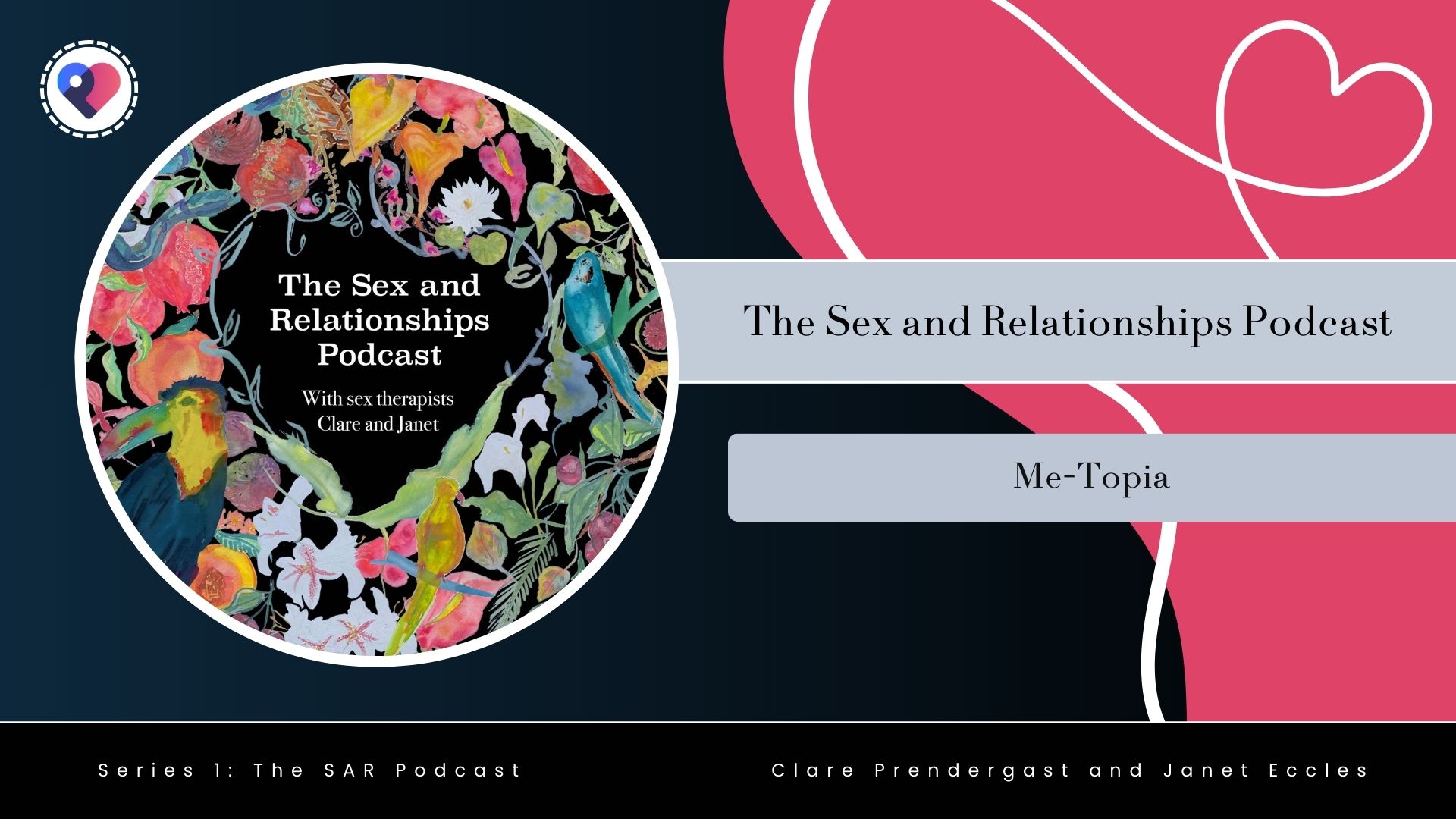
Me-topia
How self-care can boost your life and your relationships.
Authored by Thomas Andrew Porteus, MBCSOriginally published 8 Dec 2025
Meets Patient’s editorial guidelines
- DownloadDownload
- Share
- Language
- Discussion
- Ask Patient
- Audio Version
- Add to preferred sources on Google
In this series:Coming, ready or notLust or bustVictims and villainsThe Big O... Oh No!The arousal paradoxWhat is sex anyway?A dangerous liaison?Losing it!
If you always come last on the priority list, it’s time to learn why ‘Being Selfish for the Team’ helps everyone.
This podcast contains explicit language and content of a sexual nature.
If you’re always last on your own priority list, it might be time to rethink what self-care really means. In this final episode of the series, Clare and Janet explore Me-Topia - the relationship you have with yourself - and why tending to it is not selfish, but essential. They discuss how self-neglect affects mood, resilience and even sexual desire, and why so many people, especially women, struggle to keep anything back “just for me.”
Drawing on personal reflections and years of therapeutic work, they look at the powerful forces that shape how we treat ourselves: family patterns, martyr behaviour, cultural expectations, perfectionism, Instagram pressure and the fear of appearing self-indulgent. Clare and Janet challenge the idea that good self-care has to look a certain way, instead emphasising that it must be personal, authentic and tailored to what genuinely nourishes you whether that’s a cold-weather circuit class or a quiet walk in the park.
They also explore the “community of selves” within us - the inner critic, the loving parent, the rebellious teenager - and how learning which version of ourselves we bring to different situations can transform both self-esteem and relationships. Building on this, they introduce Damien Hughes’ four pillars of wellbeing (safety, control, value and belonging) as a practical way to check in with yourself when things feel off.
Clare and Janet explain why poor self-care often shows up first in our sex lives: reduced desire, less capacity for intimacy, quicker conflict and a shorter emotional fuse. They share the everyday practices from tiny pauses throughout the day to solo pleasure, hobbies, exercise, baths, dancing in the kitchen or simply breathing that sustain our emotional reserves and keep relationships steady, connected and joyful.
Patient picks for The Sex and Relationships Podcast

Mental health
Why self-care for men is so important
Men account for three-quarters of all suicides, yet they are less likely to access therapies to support their mental wellbeing. This is why self-care for men has never been so important, and shouldn't be treated as an afterthought or indulgence. We explore why the pressure from society on many men to 'stay strong' - and to prioritise work over their health - can be dangerous and harmful.
by Lynn Stephen
Hormones
Insulin resistance: the common thread linking metabolic conditions
You may have come across the term “insulin resistance” - particularly if you’ve been having conversations about weight and metabolic health - but be a little unclear about what it actually is. Whilst it’s easy to think insulin resistance just means reduced glucose control, it’s actually far more complex than that. Dr Nienke Lees, Women's Health Service Lead, Genwell UK, explains what it means and how it connects conditions including type 2 diabetes, fatty liver disease, cardiovascular disease, and PCOS.
by Dr Nienke Lees

Men's health
Is 'male menopause' real?
Menopause is a natural stage of life that women go through as they age. During this time, their reproductive hormone levels fluctuate and gradually decline, causing a range of physical and emotional symptoms. But can men experience something similar? Often referred to as ‘male menopause’, hormonal changes as men get older can also affect their health and wellbeing. We explore the symptoms, causes, and science behind 'male menopause' and why it deserves more attention.
by Victoria Raw

Healthy living
The Scandinavian Sleep Method - could separate duvets help you sleep better?
The Scandinavian Sleep Method involves having your own duvet instead of sharing one with your partner. But why is this trend gaining popularity, how could it affect your sleep, and is it worth trying for yourself? We explore all you need to know.
by Victoria Raw

Women's health
10-Week Menopause Course
We're excited to launch our new 10-week menopause course. Each week, we'll explore different topics to help you better understand and navigate your menopausal journey, including HRT, diet, exercise, and mental health.
by Lynn Stephen

Treatment and medication
What happens when medicines interact
All my patients seem to know the rule about not drinking when you're on antibiotics - the trouble is, it isn't a rule! In fact, it's safe to drink some alcohol when you're taking most kinds of antibiotics (the antibiotic you should never drink with is metronidazole, also known as Flagyl®, by the way).
by Dr Sarah Jarvis
About the authorView full bio
Authored by

Thomas Andrew Porteus, MBCS
HealthTech
MBCS
Thomas writes to inform, inspire, and equip practice leaders and health professionals navigating change, drawing on two decades of hands-on work across the UK health system.
Share your thoughts or experiences with others in our patient communities.
Sign up to the Patient newsletter
Your weekly dose of clear, trustworthy health advice - written to help you feel informed, confident and in control.
By subscribing you accept our Privacy Policy. You can unsubscribe at any time. We never sell your data.