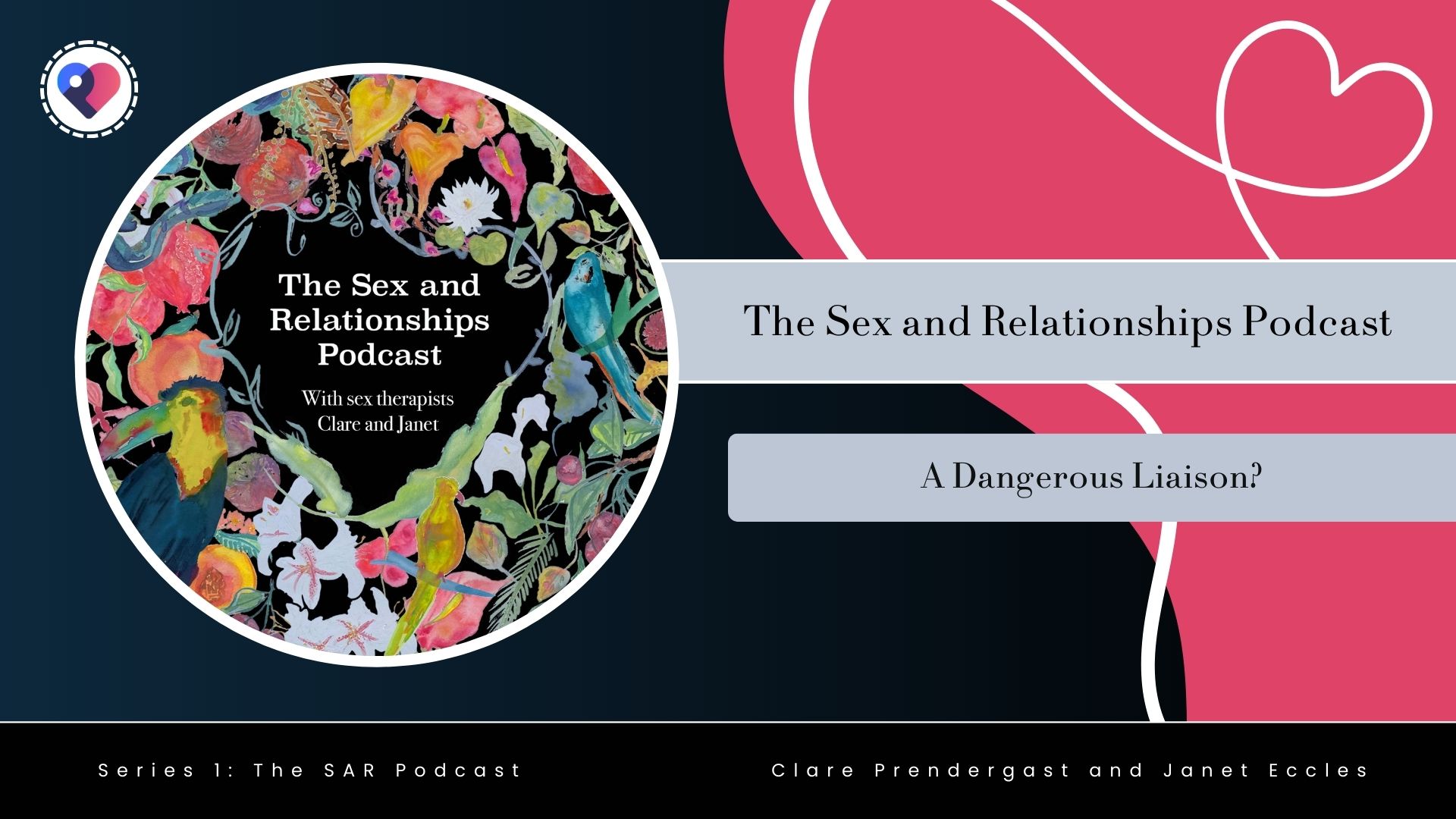
A dangerous liaison?
Affairs, non-monogamy and how to deal with betrayal.
Authored by Thomas Andrew Porteus, MBCSOriginally published 8 Dec 2025
Meets Patient’s editorial guidelines
- DownloadDownload
- Share
- Language
- Discussion
- Ask Patient
- Audio Version
- Add to preferred sources on Google
In this series:Coming, ready or notLust or bustVictims and villainsMe-topia The Big O... Oh No!The arousal paradoxWhat is sex anyway?Losing it!
What happens when one of you decides to go outside of the relationship for sex? (with or without consent). Why non-monogamy happens and how to deal with the aftermath of a betrayal.
This podcast contains explicit language and content of a sexual nature.
In this powerful and sensitive episode, Clare and Janet explore what happens when one person goes outside a relationship - whether through a consensual decision, a moment of vulnerability, or a secret affair. They unpack why non-monogamy happens, what emotional needs can fuel desire elsewhere, and why affairs often emerge not from malice but from unmet needs, escapism, loneliness or feeling unseen.
Drawing on years of clinical experience, they look at emotional affairs, opportunistic encounters, longstanding relationships, and situations where someone is discovering a polyamorous identity for the first time. They also discuss how cultural narratives, boredom, low self-esteem, systemic family patterns and fear of intimacy can all play a part in why someone crosses a boundary.
Clare and Janet make an important distinction between consensual non-monogamy - which requires communication, boundaries and trust - and secretive affairs that rupture the foundations of a partnership. They highlight the pitfalls, the emotional risks, and the need for honest, ongoing negotiation when a couple chooses to open their relationship or explore kink, desire differences, or sexual needs that don’t align.
The episode also offers a grounded, hopeful guide for couples dealing with the aftermath of betrayal. From the immediate crisis and the “howl of pain”, to understanding why it happened, to rebuilding trust and setting new agreements, Clare and Janet show that while recovery is hard, many couples can and do survive an affair - and sometimes emerge stronger.
Patient picks for The Sex and Relationships Podcast

Bones, joints and muscles
Is cracking your joints dangerous?
You've probably heard the old saying that cracking your joints gives you arthritis - but is there any truth in it? The truth is all our joints can crack naturally on their own, so it's not as dangerous as you might think.
by Andrea Downey

Podcasts
Me and myself
In this episode, Clare and Aileen turn their attention to what they describe as the primary relationship - the relationship we have with ourselves - and why it is so often the one we neglect, misunderstand or actively sideline.
by Thomas Andrew Porteus, MBCS

General health
Medical negligence
Most people receive good care from healthcare professionals. Sometimes, people receive poor care. If this happens, they may wish to make a complaint. If sub-standard care has led to avoidable harm, they may also wish to make a claim for compensation for medical negligence.
by Dr Doug McKechnie, MRCGP

Health news
Influencers are promoting dangerous peptides on social media – and regulators are struggling to keep up
Once confined to niche bodybuilding forums and hardcore gyms, unproven injectable peptides are now being openly marketed online to the average gym-goer by social media influencers – and regulators struggling to keep up. Across Instagram, TikTok or YouTube, unapproved and harmful peptide products are being promoted as shortcuts to fat loss, anti-ageing, health and recovery and muscle growth. Peptides actually occur naturally in our body. They regulate a variety of important functions, including metabolism, appetite, hormone production and tissue repair. Synthetic versions of peptides are also used in some medicines, which are legitimate and have been clinically proven. These include GLP-1s (which are used for weight loss and managing diabetes) and insulin. But a booming, parallel “grey market” now exists online for unapproved peptide compounds. These products are primarily being sold by so-called wellness brands and in influencer-led storefronts. Many of these products are marketed as cutting-edge solutions for optimising health and body enhancement. The problem is that many of these substances have not undergone full clinical safety evaluation and are not approved for human use. Many have also been found to be contaminated with other harmful ingredients. Unapproved injectable peptides therefore pose serious health risks. Some of the risks they may pose00092-0/abstract) include nausea, vomiting, abdominal pain, gastrointestinal issues, headaches and fatigue or weakness. Immune issues, as well as allergic reactions and infections have also been reported. Moreover, there’s a clear lack of rigorous human safety data. Yet these risks often aren’t disclosed by the people selling them.
by Luke Cox

Healthy living
Drinking in the sun: a dangerous cocktail
Picture the scene - it's a hot, sunny day and you're strolling through the park, or perhaps along a beach. Chances are, you'd see people drinking alcohol with their friends. However, did you know that drinking in the sun can come with a number of risks?
by Emily Jane Bashforth

Pregnancy
Unassisted birth: is the free birthing trend dangerous?
The trend for 'free birthing', - undergoing childbirth without medical support - is causing worry among midwives and doctors. Here we discuss unassisted births, your rights, and the risks it carries.
by Amberley Davis
About the authorView full bio
Authored by

Thomas Andrew Porteus, MBCS
HealthTech
MBCS
Thomas writes to inform, inspire, and equip practice leaders and health professionals navigating change, drawing on two decades of hands-on work across the UK health system.
Share your thoughts or experiences with others in our patient communities.
Sign up to the Patient newsletter
Your weekly dose of clear, trustworthy health advice - written to help you feel informed, confident and in control.
By subscribing you accept our Privacy Policy. You can unsubscribe at any time. We never sell your data.