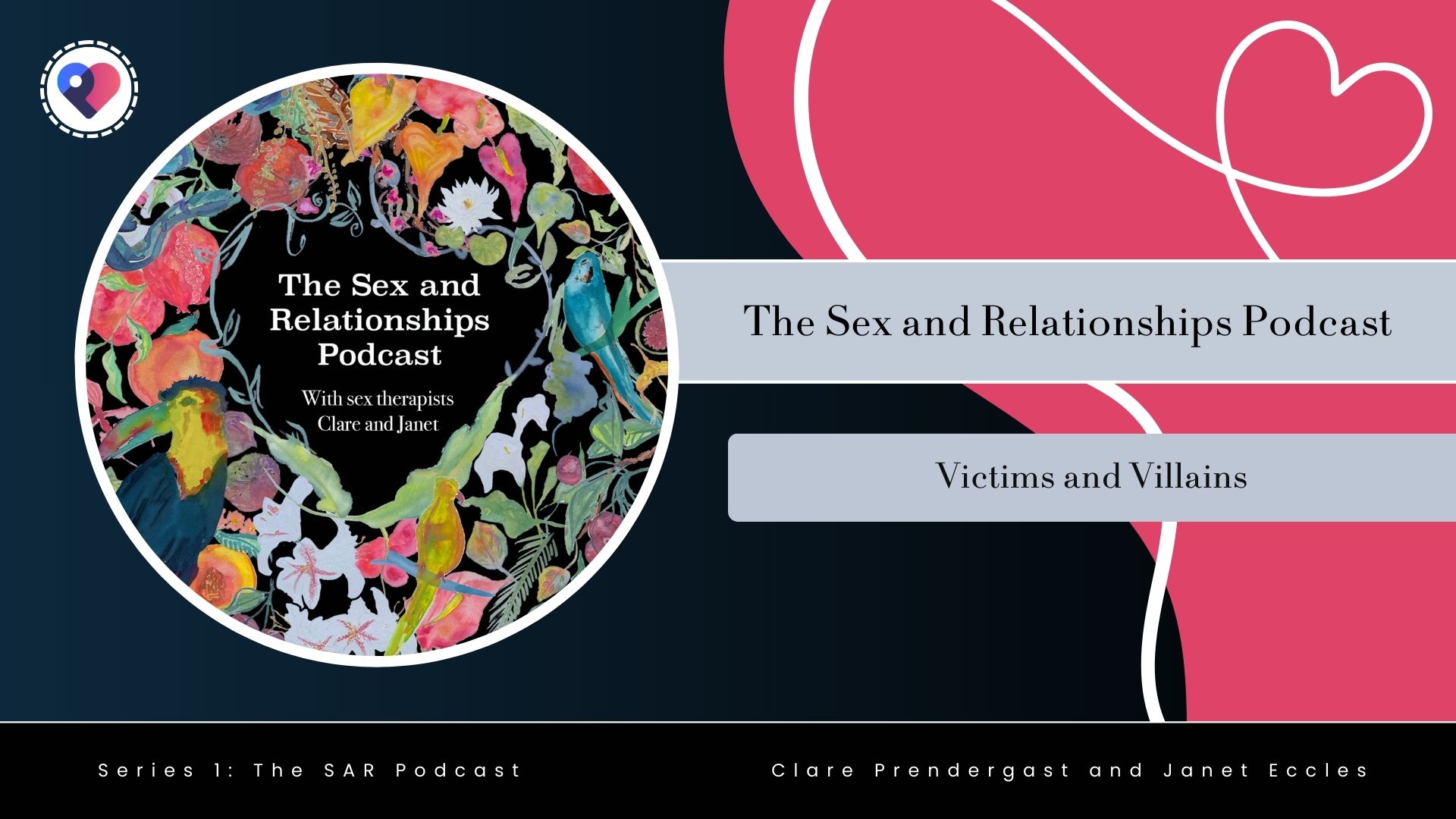
Victims and villains
Why relationship issues can lead to arguments, how to do conflict better.
Authored by Thomas Andrew Porteus, MBCSOriginally published 8 Dec 2025
Meets Patient’s editorial guidelines
- DownloadDownload
- Share
- Language
- Discussion
- Ask Patient
- Audio Version
- Add to preferred sources on Google
In this series:Coming, ready or notLust or bustMe-topia The Big O... Oh No!The arousal paradoxWhat is sex anyway?A dangerous liaison?Losing it!
What happens when you argue with your partner? Clare and Janet explore the real reasons we fight and how to do conflict well.
This podcast contains explicit language and content of a sexual nature.
What really happens when you argue with your partner - and why do the smallest things so often spark the biggest reactions? and how our family histories shape the patterns we repeat in adult relationships.
Drawing on decades of therapeutic experience, they reveal that most fights aren’t about the presenting issue at all - not the dishwasher, the shoes in the hallway or the late arrival home. Instead, these everyday flashpoints unearth deeper fears about fairness, being valued, being loved, or feeling invisible. Clare and Janet show how quickly disagreements can activate old childhood wounds, shifting us from adult reasoning into that frightened, vulnerable five-year-old self.
They introduce the Drama Triangle - victim, persecutor and rescuer - a dynamic that plays out in countless relationships. By learning to step out of these roles and into a more grounded, assertive and vulnerable adult self, couples can transform conflict into understanding rather than escalation.
The episode also explores practical tools for “doing conflict well”: using pauses and code words to break unhelpful patterns, taking responsibility for our emotional state, practising repair after rupture, and recognising when self-care is the missing piece that determines how much capacity we have for our partners.
Patient picks for The Sex and Relationships Podcast

Video
Victims and Villains I The Sex and Relationships Podcast I S1E6
Clare and Janet explore the relationship issues that lead to arguments and how to do conflict better. Dip into some of things Clare and Janet chat about in this episode: 00:43 Shouting, crying, slamming doors, walking away, silence - common reactions to arguments but what’s really going on in conflict? What are you really fighting for? 13:30 So what to do about conflict in relationships? How to understand conflict through Karpman's Drama Triangle 23:24 Why having some ‘me’ time is really important for improving relationships. 26:56 Janet’s 10 minute exercise to help you manage relationship issues and arguments better. 34:45 Clare and Janet’s top tips Want to know more? If you want to hear more about why it’s so important for your relationships to have ‘me’ time listen to episode 9 Me-topia: [https://www.youtube.com/watch?v=_OeNvaVV6Hg](https://www.youtube.com/watch?v=_OeNvaVV6Hg) Visit our website The Sex and Relationships Podcast for more information on the issues discussed in this episode: [https://thesexandrelationshipspodcast.com/](https://thesexandrelationshipspodcast.com/) You can also Ask Clare a question or suggest a topic for future episodes. Follow us on social media: Instagram: [https://www.instagram.com/s3x_and_relationships_podcast/profilecard/?igsh=MXIza3BxeWg3OTJxOA%3D%3D](https://www.instagram.com/s3x_and_relationships_podcast/profilecard/?igsh=MXIza3BxeWg3OTJxOA%3D%3D) Facebook: [https://www.facebook.com/people/The-Sex-and-Relationships-Podcast-With-Therapists-Clare-Janet/61558082319934/](https://www.facebook.com/people/The-Sex-and-Relationships-Podcast-With-Therapists-Clare-Janet/61558082319934/) About The Sex and Relationships Podcast: This podcast is for anyone looking for information or help with their sex lives or relationships. Your hosts Clare Prendergast and Janet Eccles are sex and relationship therapists. In each episode they chat about common problems they see in the therapy room and draw on their years of experience to give you some insights, advice and top tips to help guide you through your relationships and sex lives.
Podcasts
Me-topia
If you always come last on the priority list, it’s time to learn why ‘Being Selfish for the Team’ helps everyone.
by Thomas Andrew Porteus, MBCS
General health
Safeguarding children
Abuse of a child can cause harm emotionally, physically, sexually or through neglect of their basic needs. The effects on a child of any of these types of harm can be severe and last into adulthood. It is essential that any abuse of a child is noticed, and action taken to prevent further harm.
by Dr Philippa Vincent, MRCGP

Podcasts
From bliss to blame
Have you ever found yourself thinking, ‘What on earth was I doing? This person is all wrong for me’, when only a few months ago they seemed perfect? How did that feeling of bliss when you’re finishing each other’s sentences and laughing at the same jokes turn to irritation, resentment and blaming them for everything that’s wrong? Clare and Aileen help you understand the natural cycle from falling-in-love bliss to relationship blame, why it happens, and how to navigate your way through it.
by Thomas Andrew Porteus, MBCS
Podcasts
A dangerous liaison?
What happens when one of you decides to go outside of the relationship for sex? (with or without consent). Why non-monogamy happens and how to deal with the aftermath of a betrayal.
by Thomas Andrew Porteus, MBCS
Podcasts
Green eyes
Have you ever had that knot in your stomach when your partner is spending a lot of time with someone else, or that emotional reaction when a colleague gets promoted over you? Then it’s likely you’ve experienced this week’s topic: jealousy. In this episode, Clare and Aileen discuss what jealousy is, where it comes from and tips on what you can do about it. They will give you a set of tools to help you work with your jealous emotions in a better way when you feel them welling up inside you.
by Thomas Andrew Porteus, MBCS
About the authorView full bio
Authored by

Thomas Andrew Porteus, MBCS
HealthTech
MBCS
Thomas writes to inform, inspire, and equip practice leaders and health professionals navigating change, drawing on two decades of hands-on work across the UK health system.
Share your thoughts or experiences with others in our patient communities.
Sign up to the Patient newsletter
Your weekly dose of clear, trustworthy health advice - written to help you feel informed, confident and in control.
By subscribing you accept our Privacy Policy. You can unsubscribe at any time. We never sell your data.