North American Indian childhood cirrhosis
Last updated 18 Aug 2020
Meets Patient’s editorial guidelines
- DownloadDownload
- Share
- Language
- Discussion
- Ask Patient
- Audio Version
- Add to preferred sources on Google
North American Indian childhood cirrhosis is a rare liver disorder that occurs in children. The liver malfunction causes yellowing of the skin and whites of the eyes (jaundice) in affected infants. The disorder worsens with age, progressively damaging the liver and leading to chronic, irreversible liver disease (cirrhosis) in childhood or adolescence. Unless it is treated with liver transplantation, North American Indian childhood cirrhosis typically causes life-threatening complications including liver failure.
Video picks for Genetic conditionsVideo library
Description
North American Indian childhood cirrhosis is a rare liver disorder that occurs in children. The liver malfunction causes yellowing of the skin and whites of the eyes (jaundice) in affected infants. The disorder worsens with age, progressively damaging the liver and leading to chronic, irreversible liver disease (cirrhosis) in childhood or adolescence. Unless it is treated with liver transplantation, North American Indian childhood cirrhosis typically causes life-threatening complications including liver failure.
Inheritance patterns
The source lists the following possible inheritance patterns: Autosomal recessive. More than one pattern can apply in different cases.
Related genes
Other names
NAIC
Patient picks for Genetic conditions
Digestive health
Cirrhosis
Cirrhosis is a serious condition where normal liver tissue is replaced by scar tissue (fibrosis). It tends to progress slowly and often does not cause symptoms in its early stages. However, as the function of the liver gradually becomes worse, serious problems can develop. In the UK, the two commonest causes of cirrhosis are alcohol drinking above recommended limits and hepatitis C infection. Treatments may vary, depending on the cause. If cirrhosis becomes severe, a liver transplant may be the only option.
by Dr Philippa Vincent, MRCGP

Digestive health
Why has there been an increase of hepatitis in children?
Despite global efforts to eliminate viral hepatitis by 2030, the UK and many other countries experienced a mysterious outbreak of hepatitis in children in 2022. While the surge has now largely subsided, 2023 research reveals a link with a common childhood virus.
by Amberley Davis

Children's health
What childhood illnesses can adults get?
Many illnesses are commonly associated with children, but adults can catch them too. In some cases, adults may experience more severe symptoms or have a higher risk of complications than children.
by Josh Alderman
Children's health
Childhood gastro-oesophageal reflux
Gastro-oesophageal reflux is very common in babies and young children. Regurgitation of a small quantity of milk after a feed without any other symptoms (possetting) is harmless in young infants and doesn't need any investigations or treatment. Reflux may be more severe and associated with other symptoms. This condition is usually diagnosed without needing any tests but some babies with more troublesome symptoms may be referred for further investigations. There are various treatments available including feed thickeners, anti-regurgitant milks, Gaviscon® and various medications. However, for the majority of cases, gastro-oesophageal reflux is a self-limiting condition and, with time, improves without any complications.
by Dr Doug McKechnie, MRCGP
Children's health
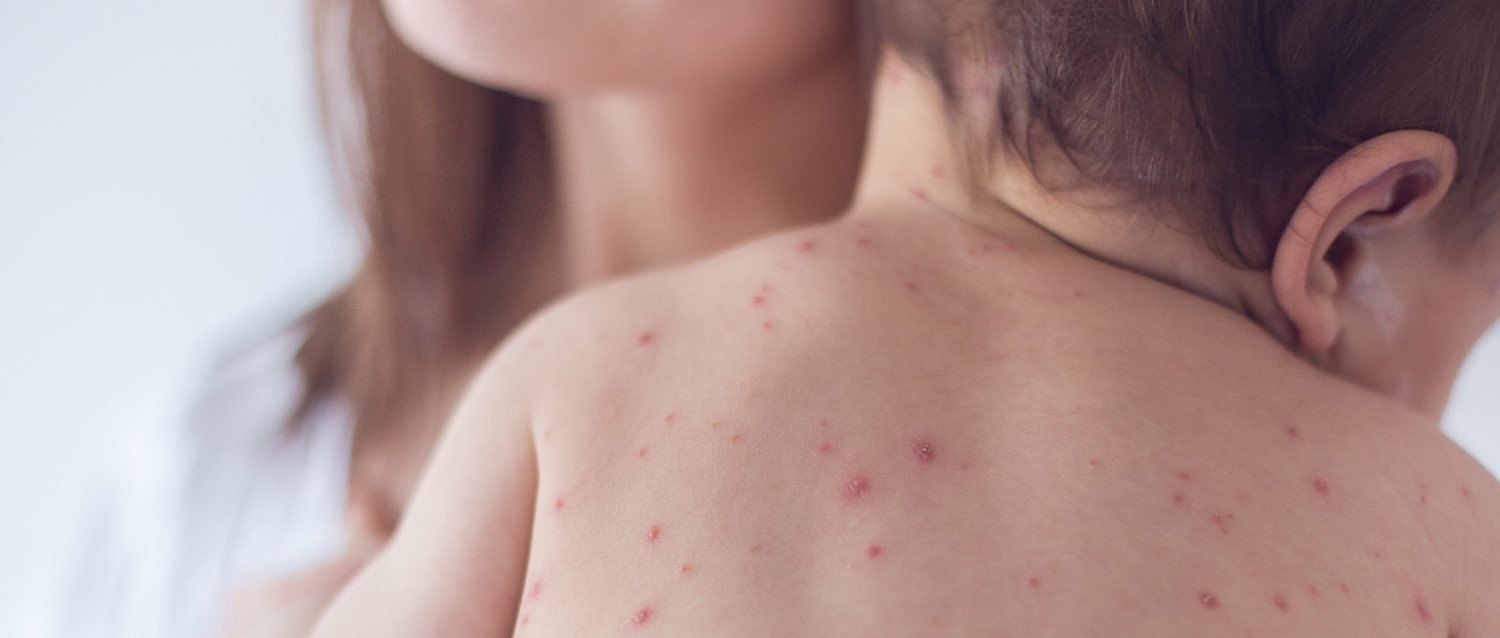
Chickenpox in children
Chickenpox causes spots (a rash) and can make a child feel generally unwell. Treatment aims to ease symptoms until the illness goes. Full recovery is usual in children aged under 12 years. Serious complications are rare but are more likely to occur in children with a poor immune system, such as those on chemotherapy.
by Dr Colin Tidy, MRCGP

Infections
Why measles is on the rise
Measles, a highly contagious virus which can cause serious complications in anyone who contracts it, is on the rise across the globe and outbreaks continue in England. We look at how to recognise the symptoms, why it is so important to be vaccinated against the disease, and why travellers have been warned about going abroad this summer.
by Lawrence Higgins
Related patient information and medicines

Patient information leaflet
Liver function tests
Autoimmune hepatitis. Chronic hepatitis and liver cirrhosis Cirrhosis. Very high levels (>75 times upper reference limit) suggest ischaemic or toxic (poison or medicine-related) injury to the liver. Alkaline phosphatase (ALP) comes mainly from the cells lining bile ducts and from bones - particularly growing bones. Therefore it is commonly raised.

Patient information leaflet
Wilson's disease
Wilson's disease is an autosomal recessive disorder. This means that, in order to develop Wilson's disease, two abnormal ATP7B genes... If left untreated, damage to liver cells causes scarring of the liver (cirrhosis). Eventually, severe cirrhosis Cirrhosis and liver failure develop in untreated cases, causing severe problems. ( Note : there are.

Patient information leaflet
Osler-Weber-Rendu syndrome
Osler-Weber-Rendu syndrome is a disorder of the blood vessels that can cause excessive bleeding. Complications The complications of Osler-Weber-Rendu Syndrome may include severe bleeding (haemorrhage), heart failure and high blood pressure in the lungs (pulmonary ... Severe liver disease ( liver cirrhosis Cirrhosis ) may occur in a small number of.

Patient information leaflet
Cystic fibrosis
Cystic fibrosis is an inherited disease which mainly affects the lungs and pancreas but can involve other organs. Symptoms usually begin in early childhood and include persistent cough, wheeze, repeated chest infections, difficulty digesting food and general ill health. This can cause various symptoms and problems (which ... Cystic fibrosis.
Patient information leaflet
Cirrhosis
Cirrhosis is a serious condition where normal liver tissue is replaced by scar tissue (fibrosis). It tends to progress slowly and often does not cause symptoms in its early stages. However, as the function of the liver gradually becomes worse, serious problems can develop. In the UK, the two commonest causes of cirrhosis are alcohol drinking above.
Patient information leaflet
Liver failure
These include haemochromatosis Haemochromatosis , alpha-1 antitry... Reye's syndrome This is a rare condition that mainly affects children and young adults. It can cause brain injury as well as liver failure. However, known triggers include an infection or drinking alcohol. See the separate leaflet called Cirrhosis for more information about.
Further reading and references
- North American Indian childhood cirrhosis; MedlinePlus, National Library of Medicine.
- Betard C, Rasquin-Weber A, Brewer C, Drouin E, Clark S, Verner A, Darmond-Zwaig C, Fortin J, Mercier J, Chagnon P, Fujiwara TM, Morgan K, Richter A, Hudson TJ, Mitchell GA. Localization of a recessive gene for North American Indian childhood cirrhosis to chromosome region 16q22-and identification of a shared haplotype. Am J Hum Genet. 2000 Jul;67(1):222-8. doi: 10.1086/302993. Epub 2000 May 11.
- Chagnon P, Michaud J, Mitchell G, Mercier J, Marion JF, Drouin E, Rasquin-Weber A, Hudson TJ, Richter A. A missense mutation (R565W) in cirhin (FLJ14728) in North American Indian childhood cirrhosis. Am J Hum Genet. 2002 Dec;71(6):1443-9. doi: 10.1086/344580. Epub 2002 Nov 4.
- Drouin E, Russo P, Tuchweber B, Mitchell G, Rasquin-Weber A. North American Indian cirrhosis in children: a review of 30 cases. J Pediatr Gastroenterol Nutr. 2000 Oct;31(4):395-404. doi: 10.1097/00005176-200010000-00013.
- Weber AM, Tuchweber B, Yousef I, Brochu P, Turgeon C, Gabbiani G, Morin CL, Roy CC. Severe familial cholestasis in North American Indian children: a clinical model of microfilament dysfunction? Gastroenterology. 1981 Oct;81(4):653-62.
Share your thoughts or experiences with others in our patient communities.
Simple access to trusted treatments and health services online.
Common conditions
Get help with common conditions through the NHS, without a GP appointment.





Sign up to the Patient newsletter
Your weekly dose of clear, trustworthy health advice - written to help you feel informed, confident and in control.
By subscribing you accept our Privacy Policy. You can unsubscribe at any time. We never sell your data.