clarin 1
Last updated 3 Apr 2025
Meets Patient’s editorial guidelines
- DownloadDownload
- Share
- Language
- Discussion
- Ask Patient
- Audio Version
- Add to preferred sources on Google
The CLRN1 gene provides information for making a protein called clarin 1. This protein is probably involved in normal hearing and vision. Clarin 1 has been found in several areas of the body, including sensory cells in the inner ear called hair cells. These cells help transmit sound and motion signals to the brain. This protein is also active in the retina, which is the light-sensing tissue that lines the back of the eye. Although the function of clarin 1 has not been determined, studies suggest that it plays a role in communication between nerve cells (neurons) in the inner ear and in the retina. Clarin 1 may be important for the development and function of synapses, which are junctions between neurons where cell-to-cell communication occurs.
Video picks for GenesVideo library
Normal function
The CLRN1 gene provides information for making a protein called clarin 1. This protein is probably involved in normal hearing and vision. Clarin 1 has been found in several areas of the body, including sensory cells in the inner ear called hair cells. These cells help transmit sound and motion signals to the brain. This protein is also active in the retina, which is the light-sensing tissue that lines the back of the eye. Although the function of clarin 1 has not been determined, studies suggest that it plays a role in communication between nerve cells (neurons) in the inner ear and in the retina. Clarin 1 may be important for the development and function of synapses, which are junctions between neurons where cell-to-cell communication occurs.
Conditions referring to this gene or chromosome
Other names
USH3
USH3A
USH3A_HUMAN
Usher syndrome 3A
Usher syndrome type 3 protein
Patient picks for Genes

Video
From Bliss to Blame I The Sex and Relationships Podcast I S2E5
Have you ever found yourself thinking, ‘What on earth was I doing? This person is all wrong for me’, when only a few months ago they seemed perfect? How did that feeling of bliss when you’re finishing each other’s sentences and laughing at the same jokes turn to irritation, resentment and blaming them for everything that’s wrong? Clare and Aileen help you understand the natural cycle from falling-in-love bliss to relationship blame, why it happens, and how to navigate your way through it. Dip into some of the things Clare and Aileen chat about in this episode: 03:51 What’s happening to our bodies during the bliss phase 10:54 Difference – the good, the bad and the ugly 17:35 The danger of confiding in people who agree with you 20:49 Tips for navigating through the bliss to blame phases 23:50 Esther Perel – many different marriages within the same marriage 26:08 Tips on better communication 28:03 Has this relationship come to the end of the road? 34:22 Tips on how to have honest conversations with partners and friends Want to know more? If you want to hear more about what to do when sexual attraction starts to fade in a relationship listen to Episode 7 “Lust or Bust” from Season 1: [https://www.youtube.com/watch?v=oczHRWuev30&list=PLx6Nf3acNljjvrnko9zfaOBzGCQxLrTic&index=7](https://www.youtube.com/watch?v=oczHRWuev30&list=PLx6Nf3acNljjvrnko9zfaOBzGCQxLrTic&index=7) Visit our website The Sex and Relationships Podcast for more information on the issues discussed in this episode: [https://thesexandrelationshipspodcast.com/](https://thesexandrelationshipspodcast.com/) You can also Ask Clare a question or suggest a topic for future episodes. Follow us on social media: Instagram: [https://www.instagram.com/s3x_and_relationships_podcast/profilecard/?igsh=MXIza3BxeWg3OTJxOA%3D%3D](https://www.instagram.com/s3x_and_relationships_podcast/profilecard/?igsh=MXIza3BxeWg3OTJxOA%3D%3D) Facebook: [https://www.facebook.com/people/The-Sex-and-Relationships-Podcast-With-Therapists-Clare-Janet/61558082319934/](https://www.facebook.com/people/The-Sex-and-Relationships-Podcast-With-Therapists-Clare-Janet/61558082319934/) About the Sex and Relationships Podcast This podcast is for anyone looking for information or help with their sex lives or relationships. In this season your hosts Clare Prendergast and Aileen Gonsalves deep dive into the world of relationships to give you insights, advice and top tips to help guide you through your relationships. Your hosts Clare Prendergast is a sex and relationships therapist and draws on her knowledge and years of experience in the therapy room to give you help and guidance. Aileen Gonsalves is fascinated in human behaviour and drawing on her many years in the theatre has developed the unique Gonsalves Method which helps people be more present and develop authentic connections with those around them.

Heart conditions
How to perform CPR
Without #CPR, your chance of dying dramatically increases after cardiac arrest. By learning CPR, you can become a hero and save someone else's life. Minutes spent learning CPR can mean a lifetime saved. The British Heart Foundation's RevivR campaign puts this power in your hands. Taking its free 15-minute online CPR course means you could be ready to act in an emergency: [https://revivr.bhf.org.uk/?_gl=1*fkc6u0*_gcl_au*ODQxNTE0NjAzLjE3MjM0NjU0MjM.*_ga*MTk4MDI3MTAyMC4xNzIzNDY1NDI0*_ga_L1TRS9RE0M*MTcyMzQ2NzQyOC4yLjAuMTcyMzQ2NzQyOC42MC4wLjA](https://revivr.bhf.org.uk/?_gl=1*fkc6u0*_gcl_au*ODQxNTE0NjAzLjE3MjM0NjU0MjM.*_ga*MTk4MDI3MTAyMC4xNzIzNDY1NDI0*_ga_L1TRS9RE0M*MTcyMzQ2NzQyOC4yLjAuMTcyMzQ2NzQyOC42MC4wLjA). Visuals: Ben Hudson

Risks of diabetes
What can someone with type 1 diabetes do to stop their glucose going too high?
Dr Sarah Jarvis MBE For more information on continuous glucose monitoring, go to [https://patient.info/health/type-1-diabetes/features/continuous-glucose-monitoring-in-type-1-diabetes](https://patient.info/health/type-1-diabetes/features/continuous-glucose-monitoring-in-type-1-diabetes)
by Dr Sarah Jarvis

Diabetes Q&A
What should you do if you have a hypo while driving?
Dr Sarah Jarvis If you have type 1 diabetes, you'll often be encouraged to control your blood sugar to almost the same levels as someone who doesn't have diabetes, especially if you're young and don't have complications of diabetes or other medical conditions. This is because high blood glucose in the long term is linked to damage to your kidneys, eyes, nerves, feet and heart. However, keeping tight control of your blood glucose does increase the risk of hypos. [https://patient.info/health/type-1-diabetes/features/how-low-blood-sugar-is-dangerous](https://patient.info/health/type-1-diabetes/features/how-low-blood-sugar-is-dangerous)
by Dr Sarah Jarvis

Diabetes Q&A
Can you drive if you have diabetes?
Dr Sarah Jarvis MBE Hypos can cause drowsiness, dizziness and confusion: in severe cases they can lead to loss of consciousness or even be fatal. But hypos can also affect your ability to drive safely. So the DVLA has set out guidelines for people with all diabetes - and whether you have type 1 or type 2 diabetes, you need to know about them. For more information on diabetes and driving, go to [https://patient.info/health/diabetes-mellitus-leaflet/driving-and-diabetes](https://patient.info/health/diabetes-mellitus-leaflet/driving-and-diabetes)
by Dr Sarah Jarvis
Asthma & COPD
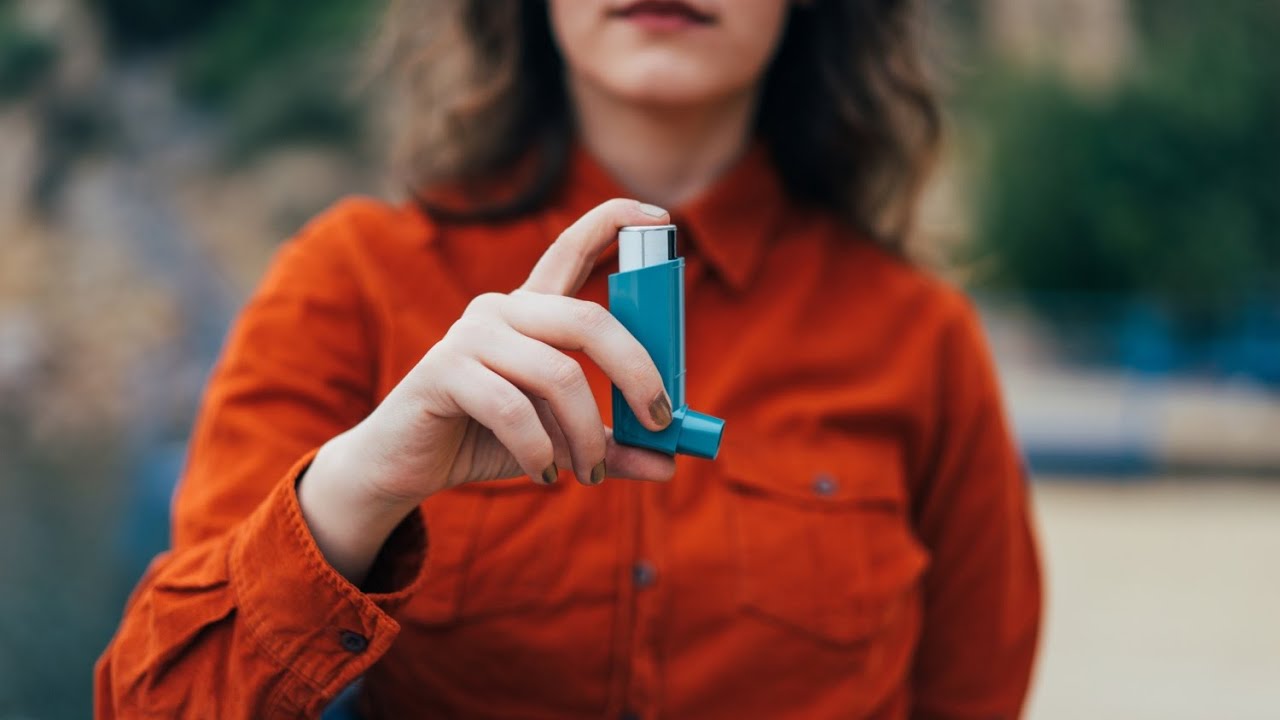
How do I know if I have asthma?
Dr Sarah Jarvis MBE The common symptoms are cough and wheeze. You may also become breathless and develop a feeling of chest tightness. Symptoms can range from mild to severe between different people and at different times in the same person. Each episode of symptoms may last just an hour or so, or persist for days or weeks unless treated. [https://patient.info/health/asthma-leaflet#nav-1](https://patient.info/health/asthma-leaflet#nav-1)
by Dr Sarah Jarvis
Related patient information and medicines

Patient information leaflet
Immunisation for flu
Influenza (flu) Flu is a common viral infection that tends to be. Flu can cause much more severe symptoms than the common cold Common cold. Some people can become seriously ill with flu, needing hospital treatment, and it can be life-threatening. Certain groups of people, such as older adults and young children, are at higher risk from flu.

Patient information leaflet
Giant Cell Arteritis
This is why the condition is also called temporal arteritis. Giant cell arteritis (temporal arteritis) causes No one really knows exactly what causes giant cell arteritis (temporal arteritis). We do know that there are genetic changes in some people which make them more likely to develop giant cell (temporal) arteritis. Who is likely to develop.

Patient information leaflet
Wilson's disease
Wilson's disease is a genetic disorder in which copper builds up in the body, mainly in the liver and brain. Without any treatment, the build-up of copper can cause serious symptoms. Treatment is with medication to remove the excess copper and/or to prevent a further build-up of copper. What is Wilson's disease. Wilson's disease is a condition.

Patient information leaflet
Haemochromatosis
If treatment is started early enough and before complications occur then the outlook for people with haemochromatosis is very good. Find out more here: [https://patient.info/health/haemochromatosis-leaflet](https://patient.info/health/haemochromatosis-leaflet) People with haemochromatosis have inherited a faulty gene, which directs the body to.
Patient information leaflet
Atrial fibrillation and stroke prevention
The medicines used to prevent a atrial fibrillation-related stroke are called anticoagulants. These help to stop blood clots forming in your blood vessels. Why does atrial fibrillation increase your risk of having a stroke. The main complication of atrial fibrillation (AF) Atrial fibrillation is an increased risk of having a stroke Stroke. AF can.
Patient information leaflet
Dealing with a child who is unresponsive
For those not trained in paediatric resuscitation, seek... In any case, calling an ambulance and taking immediate action is critical. This leaflet is created from first aid advice provided by St John Ambulance, the nation's leading first aid charity. This advice is no substitute for first aid training - find a training course near you..
Further reading and references
- clarin 1; MedlinePlus, National Library of Medicine.
- Adato A, Vreugde S, Joensuu T, Avidan N, Hamalainen R, Belenkiy O, Olender T, Bonne-Tamir B, Ben-Asher E, Espinos C, Millan JM, Lehesjoki AE, Flannery JG, Avraham KB, Pietrokovski S, Sankila EM, Beckmann JS, Lancet D. USH3A transcripts encode clarin-1, a four-transmembrane-domain protein with a possible role in sensory synapses. Eur J Hum Genet. 2002 Jun;10(6):339-50. doi: 10.1038/sj.ejhg.5200831.
- Aller E, Jaijo T, Oltra S, Alio J, Galan F, Najera C, Beneyto M, Millan JM. Mutation screening of USH3 gene (clarin-1) in Spanish patients with Usher syndrome: low prevalence and phenotypic variability. Clin Genet. 2004 Dec;66(6):525-9. doi: 10.1111/j.1399-0004.2004.00352.x.
- Fields RR, Zhou G, Huang D, Davis JR, Moller C, Jacobson SG, Kimberling WJ, Sumegi J. Usher syndrome type III: revised genomic structure of the USH3 gene and identification of novel mutations. Am J Hum Genet. 2002 Sep;71(3):607-17. doi: 10.1086/342098. Epub 2002 Jul 16.
- Geng R, Geller SF, Hayashi T, Ray CA, Reh TA, Bermingham-McDonogh O, Jones SM, Wright CG, Melki S, Imanishi Y, Palczewski K, Alagramam KN, Flannery JG. Usher syndrome IIIA gene clarin-1 is essential for hair cell function and associated neural activation. Hum Mol Genet. 2009 Aug 1;18(15):2748-60. doi: 10.1093/hmg/ddp210. Epub 2009 May 3.
- Geng R, Melki S, Chen DH, Tian G, Furness DN, Oshima-Takago T, Neef J, Moser T, Askew C, Horwitz G, Holt JR, Imanishi Y, Alagramam KN. The mechanosensory structure of the hair cell requires clarin-1, a protein encoded by Usher syndrome III causative gene. J Neurosci. 2012 Jul 11;32(28):9485-98. doi: 10.1523/JNEUROSCI.0311-12.2012.
- Isosomppi J, Vastinsalo H, Geller SF, Heon E, Flannery JG, Sankila EM. Disease-causing mutations in the CLRN1 gene alter normal CLRN1 protein trafficking to the plasma membrane. Mol Vis. 2009 Sep 8;15:1806-18.
- Joensuu T, Hamalainen R, Yuan B, Johnson C, Tegelberg S, Gasparini P, Zelante L, Pirvola U, Pakarinen L, Lehesjoki AE, de la Chapelle A, Sankila EM. Mutations in a novel gene with transmembrane domains underlie Usher syndrome type 3. Am J Hum Genet. 2001 Oct;69(4):673-84. doi: 10.1086/323610. Epub 2001 Aug 27.
- Khan MI, Kersten FF, Azam M, Collin RW, Hussain A, Shah ST, Keunen JE, Kremer H, Cremers FP, Qamar R, den Hollander AI. CLRN1 mutations cause nonsyndromic retinitis pigmentosa. Ophthalmology. 2011 Jul;118(7):1444-8. doi: 10.1016/j.ophtha.2010.10.047. Epub 2011 Feb 18.
Share your thoughts or experiences with others in our patient communities.
Simple access to trusted treatments and health services online.
Common conditions
Get help with common conditions through the NHS, without a GP appointment.





Sign up to the Patient newsletter
Your weekly dose of clear, trustworthy health advice - written to help you feel informed, confident and in control.
By subscribing you accept our Privacy Policy. You can unsubscribe at any time. We never sell your data.