histidine triad nucleotide binding protein 1
Last updated 18 Aug 2020
Meets Patient’s editorial guidelines
- DownloadDownload
- Share
- Language
- Discussion
- Ask Patient
- Audio Version
- Add to preferred sources on Google
The HINT1 gene provides instructions for making a protein called histidine triad nucleotide-binding protein 1 (HINT1). The function of this protein is not clear. Laboratory studies show that the HINT1 protein has the ability to attach (bind) to certain types of molecules called nucleotides. HINT1 breaks down particular nucleotides through a process called hydrolysis. However, it is not known if the HINT1 protein performs the same reaction in the body or what effects it has.
Video picks for GenesVideo library
Normal function
The HINT1 gene provides instructions for making a protein called histidine triad nucleotide-binding protein 1 (HINT1). The function of this protein is not clear. Laboratory studies show that the HINT1 protein has the ability to attach (bind) to certain types of molecules called nucleotides. HINT1 breaks down particular nucleotides through a process called hydrolysis. However, it is not known if the HINT1 protein performs the same reaction in the body or what effects it has.
Although the mechanisms are not completely understood, the HINT1 protein is involved in the nervous system. In nerve cells (neurons), HINT1 binds to signaling proteins called receptors that relay signals affecting nervous system function. HINT1 appears to stabilize the interaction of different receptors and regulate the effects of their signaling.
The HINT1 protein is also involved in programmed cell death (apoptosis), which occurs when cells are no longer needed. In addition, by blocking the activity of certain genes, HINT1 acts as a tumour suppressor, which means that it keeps cells from growing and dividing too rapidly or in an uncontrolled way.
Conditions referring to this gene or chromosome
Other names
adenosine 5'-monophosphoramidase
HINT
histidine triad nucleotide-binding protein 1
NMAN
PKCI-1
PRKCNH1
protein kinase C inhibitor 1
protein kinase C-interacting protein 1
Patient picks for Genes

Diet and nutrition
How a protein-packed breakfast can boost your health
When we think of breakfast, we often picture a bowl of cornflakes with milk. While it’s a classic morning staple, it might not be the most effective way to start your day, as it lacks protein. Adding more protein to your breakfast can boost your energy levels and help keep you feeling full for longer.
by Victoria Raw

Kidney and urinary tract
Proteinuria
Proteins are molecules that are found in almost every part of the body, including in the blood. The kidneys normally have a filter which stops protein from entering the urine, except in very tiny amounts; however, kidney problems can cause higher levels of protein to be found in the urine.
by Dr Doug McKechnie, MRCGP

Healthy living
8 high-protein nuts to boost your strength
Packed with protein, delicious, easy to eat, and versatile - nuts are a great source of fuel for people building their fitness and strength. But not all nuts are created equal, which is why we count down the top eight nuts you should eat while strength training and serve these up with tasty recipe ideas.
by Lynn Stephen

Diet and nutrition
10 sources of plant-based protein for bone health
Plant-based diets are growing in popularity. People choose this way of eating for various reasons - to boost their health, help animals, and protect the environment. But switching to a plant-based diet may mean you're missing out on vital, bone-friendly nutrients. One of these is protein.
by Victoria Raw

Healthy living
Natural protein verses protein powder: which is better for strength training?
Consuming enough protein is essential for building strong muscles. Protein powder shakes are not a complete replacement for natural protein sources found in your food. However, you may consider supplementing your diet and strength-training regime with protein shakes. Before you decide if this is right for you, there are several benefits and considerations to take into account.
by Amberley Davis

Diet and nutrition
Plant-based proteins could help prevent high blood pressure
Eating a greater amount of minimally processed plant-based proteins - such as beans, nuts and lentils - may lower your chance of developing high blood pressure, according to new research.
by Laura Williamson
Related patient information and medicines

Patient information leaflet
The immune system
This leaflet gives a brief overview of the immune system and how it works. A person with a weak immune system might have difficulty fighting off infections. In autoimmune diseases the body is unable to tell what is its own and what is foreign, so it attacks itself. Autoimmune diseases can attack any part of the body - eg, type 1 diabetes.

Patient information leaflet
Wilson's disease
Wilson's disease is a genetic disorder in which copper builds up in the body, mainly in the liver and brain. Without any treatment, the build-up of copper can cause serious symptoms. Treatment is with medication to remove the excess copper and/or to prevent a further build-up of copper. What is Wilson's disease. Wilson's disease is a condition.
Patient information leaflet
Blood tests
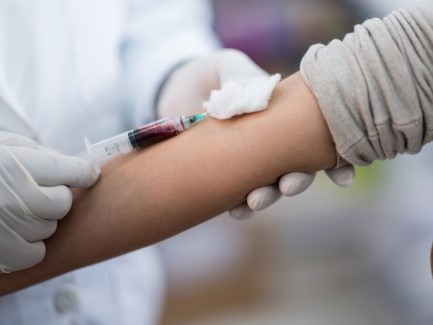
Blood cells are divided into three main types: Red cells (erythrocytes) These make blood a red colour. One drop of blood contains about five million red cells. A constant new supply of red blood cells is needed to replace old cells that break down. Millions of red blood cells are made each day. Red cells contain a chemical called haemoglobin. This.

Patient information leaflet
Liver function tests
Liver function tests are a set of blood tests commonly done to check on the health of your liver. Changes in liver function tests give a clue as to whether your liver is under strain, inflamed, infected or diseased, and how badly. The pattern of the liver function tests can give a clue to the cause and can allow early detection of unsuspected.

Patient information leaflet
Primary biliary cholangitis
Primary biliary cholangitis (PBC) is a condition that slowly damages the bile ducts in your liver, leading to liver damage and, sometimes, liver scarring (cirrhosis). Primary biliary cholangitis (PBC) is an auto-immune condition in which your immune system gradually destroys the tiny tubes (bile ducts) which take bile from the liver to the gut.

Patient information leaflet
Nephrotic syndrome
Nephrotic syndrome is a condition where the 'filters' in the kidney become 'leaky' and large amounts of protein leak from the blood into the urine. The main symptom is fluid retention (oedema) which is mainly due to the low protein level in the blood. Various diseases can cause nephrotic syndrome, some more serious than others. Nephrotic syndrome.
Further reading and references
- histidine triad nucleotide binding protein 1; MedlinePlus, National Library of Medicine.
- Caetano JS, Costa C, Baets J, Zimon Phd M, Venancio Phd M, Saraiva Phd J, Negrao L, Fineza I. Autosomal recessive axonal neuropathy with neuromyotonia: a rare entity. Pediatr Neurol. 2014 Jan;50(1):104-7. doi: 10.1016/j.pediatrneurol.2013.08.028. Epub 2013 Oct 13.
- Rodriguez-Munoz M, Sanchez-Blazquez P, Vicente-Sanchez A, Bailon C, Martin-Aznar B, Garzon J. The histidine triad nucleotide-binding protein 1 supports mu-opioid receptor-glutamate NMDA receptor cross-regulation. Cell Mol Life Sci. 2011 Sep;68(17):2933-49. doi: 10.1007/s00018-010-0598-x. Epub 2010 Dec 14.
- Vicente-Sanchez A, Sanchez-Blazquez P, Rodriguez-Munoz M, Garzon J. HINT1 protein cooperates with cannabinoid 1 receptor to negatively regulate glutamate NMDA receptor activity. Mol Brain. 2013 Oct 5;6:42. doi: 10.1186/1756-6606-6-42.
- Weiske J, Huber O. The histidine triad protein Hint1 interacts with Pontin and Reptin and inhibits TCF-beta-catenin-mediated transcription. J Cell Sci. 2005 Jul 15;118(Pt 14):3117-29. doi: 10.1242/jcs.02437.
- Weiske J, Huber O. The histidine triad protein Hint1 triggers apoptosis independent of its enzymatic activity. J Biol Chem. 2006 Sep 15;281(37):27356-66. doi: 10.1074/jbc.M513452200. Epub 2006 Jul 11.
- Zhao H, Race V, Matthijs G, De Jonghe P, Robberecht W, Lambrechts D, Van Damme P. Exome sequencing reveals HINT1 mutations as a cause of distal hereditary motor neuropathy. Eur J Hum Genet. 2014 Jun;22(6):847-50. doi: 10.1038/ejhg.2013.231. Epub 2013 Oct 9.
- Zhou X, Chou TF, Aubol BE, Park CJ, Wolfenden R, Adams J, Wagner CR. Kinetic mechanism of human histidine triad nucleotide binding protein 1. Biochemistry. 2013 May 21;52(20):3588-600. doi: 10.1021/bi301616c. Epub 2013 May 7.
- Zimon M, Baets J, Almeida-Souza L, De Vriendt E, Nikodinovic J, Parman Y, Battaloglu E, Matur Z, Guergueltcheva V, Tournev I, Auer-Grumbach M, De Rijk P, Petersen BS, Muller T, Fransen E, Van Damme P, Loscher WN, Barisic N, Mitrovic Z, Previtali SC, Topaloglu H, Bernert G, Beleza-Meireles A, Todorovic S, Savic-Pavicevic D, Ishpekova B, Lechner S, Peeters K, Ooms T, Hahn AF, Zuchner S, Timmerman V, Van Dijck P, Rasic VM, Janecke AR, De Jonghe P, Jordanova A. Loss-of-function mutations in HINT1 cause axonal neuropathy with neuromyotonia. Nat Genet. 2012 Oct;44(10):1080-3. doi: 10.1038/ng.2406. Epub 2012 Sep 9.
Share your thoughts or experiences with others in our patient communities.
Simple access to trusted treatments and health services online.
Common conditions
Get help with common conditions through the NHS, without a GP appointment.





Sign up to the Patient newsletter
Your weekly dose of clear, trustworthy health advice - written to help you feel informed, confident and in control.
By subscribing you accept our Privacy Policy. You can unsubscribe at any time. We never sell your data.