sodium voltage-gated channel alpha subunit 9
Last updated 18 May 2023
Meets Patient’s editorial guidelines
- DownloadDownload
- Share
- Language
- Discussion
- Ask Patient
- Audio Version
- Add to preferred sources on Google
The SCN9A gene belongs to a family of genes that provide instructions for making sodium channels. These channels, which transport positively charged sodium atoms (sodium ions) into cells, play a key role in a cell's ability to generate and transmit electrical signals.
Video picks for GenesVideo library
Normal function
The SCN9A gene belongs to a family of genes that provide instructions for making sodium channels. These channels, which transport positively charged sodium atoms (sodium ions) into cells, play a key role in a cell's ability to generate and transmit electrical signals.
The SCN9A gene provides instructions for making one part (the alpha subunit) of a sodium channel called NaV1.7. NaV1.7 sodium channels are found in nerve cells called nociceptors. Nociceptors are part of the peripheral nervous system, which connects the brain and spinal cord to cells that detect sensations such as touch, smell, and pain. Nociceptors are primarily involved in transmitting pain signals. The cell bodies of nociceptors are located in the spinal cord. Fibers called axons extend from the cell bodies, reaching throughout the body to receive sensory information. Axons transmit the information back to the spinal cord, which then sends it to the brain.
NaV1.7 sodium channels are also found in olfactory sensory neurons, which are nerve cells in the nasal cavity that transmit smell-related signals to the brain.
Conditions referring to this gene or chromosome
Other names
hNE
Nav1.7
NE-NA
NENA
PN1
SCN9A_HUMAN
sodium channel, voltage gated, type IX alpha subunit
sodium channel, voltage-gated, type IX, alpha
sodium channel, voltage-gated, type IX, alpha polypeptide
sodium channel, voltage-gated, type IX, alpha subunit
voltage-gated sodium channel alpha subunit Nav1.7
Patient picks for Genes
Mental health
Mind and body control - how to channel your ‘internal telekinesis’
The dark nights have arrived, and right on cue, Mike Flanagan has turned his attention to one of Stephen King’s most iconic tales of teenage torment and supernatural terror... Carrie. The story of a schoolgirl with telekinetic powers - the fictional ability to move objects using the mind alone - has gripped our morbid imaginations for decades. Little wonder, then, that this horror classic is getting a new lease of life in a television adaptation. But while we ourselves may not be able to bend spoons or move furniture, we do possess our own real-world form of ‘internal-telekinesis’. Through mental focus and controlled breathing, we can influence our heart rate and help calm an overworked nervous system.
by Hannah Boynton-Forshaw

Treatment and medication
Calcium channel blockers
Calcium channel blockers (sometimes called calcium antagonists) are a group of medicines that affect the way calcium passes into certain muscle cells. They are commonly prescribed to manage high blood pressure, angina, Raynaud's phenomenon and some abnormal heart rhythms (arrhythmias). They are also used to try to stop premature labour in pregnancy. A calcium-channel blocker can be used alone. However, one is often combined with another medicine to treat high blood pressure or angina, when one medicine alone has not worked so well.
by Dr Toni Hazell, FRCGP
Healthy living
How much sodium should you have?
Sodium in the diet primarily comes from eating salt. While some of it comes from directly adding it to food, most of the salt we eat is already present in processed foods.
by Dr Hayley Willacy, FRCGP
Medicine
Phenoxybenzamine - an alpha-blocker
Adults will normally start with one capsule a day. This dose may then be increased over the next few days. It is common to feel dizzy or light-headed initially. This should soon settle. You may be given other medicines to take alongside phenoxybenzamine.
by Michael Stewart, MRPharmS
Treatment and medication
Alpha-blockers
Alpha-blockers are medicines that are mainly used to treat high blood pressure (hypertension) and problems with passing urine in men who have enlargement of the prostate gland. Prostate gland enlargement is also called benign prostatic hyperplasia (BPH).
by Dr Doug McKechnie, MRCGP
Medicine
Prazosin - an alpha-blocker
Your first dose of prazosin may make you feel dizzy or faint, or start sweating. Take your first dose at bedtime and remain lying down until these symptoms have completely passed. Prazosin can cause dizziness which may affect your ability to drive. Make sure your reactions are normal before you drive and before you use tools or machines.
by Michael Stewart, MRPharmS
Related patient information and medicines

Patient information leaflet
High blood pressure
This means the heart has to work harder and the blood vessels are under mor... Healthcare professionals sometimes call high blood pressure 'hypertension'. [https://patient.info/health/high-blood-pressure-hypertension](https://patient.info/health/high-blood-pressure-hypertension) Understanding a blood pressure reading Blood pressure readings are.

Patient information leaflet
Can I take Magnesium and Flecainide together?
In some cases, magnesium can actually be helpful for heart rhythm issues, but it must be balanced correctly. Why this happens Both magnesium and flecainide affect the electrical signals and mineral channels (like sodium and potassium) in your heart cells. While they don't usually stop each other from being absorbed, having too much or too little.
Patient information leaflet
Raynaud's phenomenon
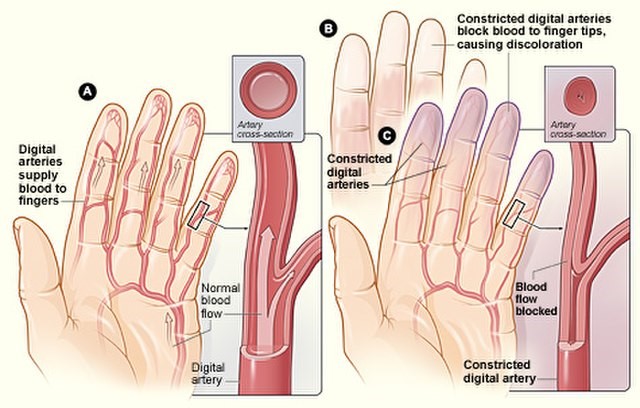
Ideally, keep gloves, socks and headgear in an airing cupboard or near a radiator so they will be warm when put on. If you have severe symptoms, or symptoms that are easily triggered then portable heat packs and battery-heated gloves and socks are useful. The charity Scleroderma & Raynaud's UK has a list of suppliers - see below for their details..

Patient information leaflet
Tear duct blockage in babies
Tear duct blockage means that there is a blockage of the tiny channels (ducts) that drain tears from the inside corner of the eye into the side of nose. Many babies are born with blocked tear ducts. They usually open up without any treatment by the time they are one year old. What causes tear duct blockage in babies. Many babies are born with a.

Patient information leaflet
ERCP
ERCP is a procedure that uses an endoscope and X-rays to look at the bile duct and the pancreatic duct. ERCP can also be used to remove gallstones or take small samples of tissue for analysis (a biopsy). Note : the information below is a general guide only. The arrangements and the way tests are performed may vary between different hospitals..

Patient information leaflet
Angina
Angina is a pain that comes from the heart. It is usually caused by narrowing of the heart's blood vessels - the (coronary) arteries. Usual treatment includes a statin medicine to lower your cholesterol level, low-dose aspirin to help prevent a heart attack, and a beta-blocker medicine to help protect the heart and to prevent angina pains. An.
Further reading and references
- sodium voltage-gated channel alpha subunit 9; MedlinePlus, National Library of Medicine.
- Cox JJ, Reimann F, Nicholas AK, Thornton G, Roberts E, Springell K, Karbani G, Jafri H, Mannan J, Raashid Y, Al-Gazali L, Hamamy H, Valente EM, Gorman S, Williams R, McHale DP, Wood JN, Gribble FM, Woods CG. An SCN9A channelopathy causes congenital inability to experience pain. Nature. 2006 Dec 14;444(7121):894-8. doi: 10.1038/nature05413.
- Dib-Hajj SD, Cummins TR, Black JA, Waxman SG. From genes to pain: Na v 1.7 and human pain disorders. Trends Neurosci. 2007 Nov;30(11):555-63. doi: 10.1016/j.tins.2007.08.004. Epub 2007 Oct 22.
- Dib-Hajj SD, Yang Y, Waxman SG. Genetics and molecular pathophysiology of Na(v)1.7-related pain syndromes. Adv Genet. 2008;63:85-110. doi: 10.1016/S0065-2660(08)01004-3.
- Doty CN. SCN9A: another sodium channel excited to play a role in human epilepsies. Clin Genet. 2010 Apr;77(4):326-8. doi: 10.1111/j.1399-0004.2009.01366_1.x. Epub 2010 Jan 20. No abstract available.
- Drenth JP, Waxman SG. Mutations in sodium-channel gene SCN9A cause a spectrum of human genetic pain disorders. J Clin Invest. 2007 Dec;117(12):3603-9. doi: 10.1172/JCI33297.
- Faber CG, Hoeijmakers JG, Ahn HS, Cheng X, Han C, Choi JS, Estacion M, Lauria G, Vanhoutte EK, Gerrits MM, Dib-Hajj S, Drenth JP, Waxman SG, Merkies IS. Gain of function Nanu1.7 mutations in idiopathic small fiber neuropathy. Ann Neurol. 2012 Jan;71(1):26-39. doi: 10.1002/ana.22485. Epub 2011 Jun 22.
- Fertleman CR, Ferrie CD, Aicardi J, Bednarek NA, Eeg-Olofsson O, Elmslie FV, Griesemer DA, Goutieres F, Kirkpatrick M, Malmros IN, Pollitzer M, Rossiter M, Roulet-Perez E, Schubert R, Smith VV, Testard H, Wong V, Stephenson JB. Paroxysmal extreme pain disorder (previously familial rectal pain syndrome). Neurology. 2007 Aug 7;69(6):586-95. doi: 10.1212/01.wnl.0000268065.16865.5f.
- Fischer TZ, Waxman SG. Familial pain syndromes from mutations of the NaV1.7 sodium channel. Ann N Y Acad Sci. 2010 Jan;1184:196-207. doi: 10.1111/j.1749-6632.2009.05110.x.
- Goldberg YP, MacFarlane J, MacDonald ML, Thompson J, Dube MP, Mattice M, Fraser R, Young C, Hossain S, Pape T, Payne B, Radomski C, Donaldson G, Ives E, Cox J, Younghusband HB, Green R, Duff A, Boltshauser E, Grinspan GA, Dimon JH, Sibley BG, Andria G, Toscano E, Kerdraon J, Bowsher D, Pimstone SN, Samuels ME, Sherrington R, Hayden MR. Loss-of-function mutations in the Nav1.7 gene underlie congenital indifference to pain in multiple human populations. Clin Genet. 2007 Apr;71(4):311-9. doi: 10.1111/j.1399-0004.2007.00790.x.
- Hoeijmakers JG, Merkies IS, Gerrits MM, Waxman SG, Faber CG. Genetic aspects of sodium channelopathy in small fiber neuropathy. Clin Genet. 2012 Oct;82(4):351-8. doi: 10.1111/j.1399-0004.2012.01937.x. Epub 2012 Aug 7.
- Houlden H. Extending the clinical spectrum of pain channelopathies. Brain. 2012 Feb;135(Pt 2):313-6. doi: 10.1093/brain/aws007. No abstract available.
- Lampert A, O'Reilly AO, Reeh P, Leffler A. Sodium channelopathies and pain. Pflugers Arch. 2010 Jul;460(2):249-63. doi: 10.1007/s00424-009-0779-3. Epub 2010 Jan 26.
- Meisler MH, O'Brien JE, Sharkey LM. Sodium channel gene family: epilepsy mutations, gene interactions and modifier effects. J Physiol. 2010 Jun 1;588(Pt 11):1841-8. doi: 10.1113/jphysiol.2010.188482. Epub 2010 Mar 29.
- Singh NA, Pappas C, Dahle EJ, Claes LR, Pruess TH, De Jonghe P, Thompson J, Dixon M, Gurnett C, Peiffer A, White HS, Filloux F, Leppert MF. A role of SCN9A in human epilepsies, as a cause of febrile seizures and as a potential modifier of Dravet syndrome. PLoS Genet. 2009 Sep;5(9):e1000649. doi: 10.1371/journal.pgen.1000649. Epub 2009 Sep 18.
- Waxman SG. Neurobiology: a channel sets the gain on pain. Nature. 2006 Dec 14;444(7121):831-2. doi: 10.1038/444831a. No abstract available.
- Waxman SG. Neuroscience: Channelopathies have many faces. Nature. 2011 Apr 14;472(7342):173-4. doi: 10.1038/472173a. No abstract available.
- Young FB. When adaptive processes go awry: gain-of-function in SCN9A. Clin Genet. 2008 Jan;73(1):34-6. doi: 10.1111/j.1399-0004.2007.00922.x. Epub 2007 Dec 6. No abstract available.
Share your thoughts or experiences with others in our patient communities.
Simple access to trusted treatments and health services online.
Common conditions
Get help with common conditions through the NHS, without a GP appointment.





Sign up to the Patient newsletter
Your weekly dose of clear, trustworthy health advice - written to help you feel informed, confident and in control.
By subscribing you accept our Privacy Policy. You can unsubscribe at any time. We never sell your data.