transforming growth factor beta receptor 1
Last updated 2 May 2023
Meets Patient’s editorial guidelines
- DownloadDownload
- Share
- Language
- Discussion
- Ask Patient
- Audio Version
- Add to preferred sources on Google
The TGFBR1 gene provides instructions for making a protein called transforming growth factor-beta (TGF-β) receptor type 1. This receptor transmits signals from the cell surface into the cell through a process called signal transduction. Through this type of signaling, the environment outside the cell affects activities inside the cell such as stimulation of cell growth and division.
Video picks for GenesVideo library
Normal function
The TGFBR1 gene provides instructions for making a protein called transforming growth factor-beta (TGF-β) receptor type 1. This receptor transmits signals from the cell surface into the cell through a process called signal transduction. Through this type of signaling, the environment outside the cell affects activities inside the cell such as stimulation of cell growth and division.
To carry out its signaling function, TGF-β receptor type 1 spans the cell membrane, so that one end of the protein projects from the outer surface of the cell (the extracellular domain) and the other end remains inside the cell (the intracellular domain). A protein called TGF-β attaches (binds) to the extracellular domain of TGF-β receptor type 1, which turns on (activates) the receptor and allows it to bind to another receptor on the cell surface. These three proteins form a complex, which triggers signal transduction by activating other proteins in a signaling pathway called the TGF-β pathway.
Signals transmitted by the TGF-β receptor complex trigger various responses by the cell, including the growth and division (proliferation) of cells, the maturation of cells to carry out specific functions (differentiation), cell movement (motility), and controlled cell death (apoptosis). Because TGF-β receptor type 1 helps prevent cells from growing and dividing too rapidly or in an uncontrolled way, it can suppress the formation of tumours.
Conditions referring to this gene or chromosome
Other names
serine/threonine-protein kinase receptor R4
TBR-i
TBRI
TGF-beta receptor type I
TGF-beta receptor type-1
TGF-beta type I receptor
TGFR-1
TGFR1_HUMAN
transforming growth factor beta receptor I
transforming growth factor-beta receptor type I
Patient picks for Genes

Treatment and medication
Beta-blockers
Beta-blockers are medicines that are used to treat a variety of conditions. Their full correct name is beta-adrenoceptor blocking medicines (or beta-adrenergic blocking agents), but they are commonly just called beta-blockers.
by Dr Rosalyn Adleman, MRCGP

Children's health
Restricted growth
Dwarfism is a medical or genetic condition which causes people to have restricted growth so that they are shorter than average. Specifically, people with dwarfism grow no higher than 4 ft 10 ins (147 cm). It can be due to literally hundreds of different causes, so the term actually includes many different medical conditions. The cause and type of dwarfism will therefore affect the outlook and problems that may be associated with it. The most common condition causing dwarfism is achondroplasia.
by Dr Hayley Willacy, FRCGP

Treatment and medication
Do beta blockers help with anxiety symptoms?
Whether you had sweaty palms before an exam or a racing heart before a driving test, we’ve all experienced the symptoms of anxiety from time to time. These physical reactions can be hard to cope with - especially if you need to perform under pressure - but medication called beta blockers can help provide some relief.
by Lydia Smith

Drug interactions checker
Can I take Betahistine and Citalopram together?
There are no known significant interactions between betahistine and citalopram. It is generally considered safe to take these two medicines together.
Treatment and medication
Extended-spectrum beta-lactamases
Extended-spectrum beta-lactamases (ESBLs) have so far only been reported in certain bacteria called Gram-negative bacterial infections.
by Dr Colin Tidy, MRCGP

Treatment and medication
What factors are causing antimicrobial resistance?
Following a recent study by health economists at the University of Manchester and the University of Southern Denmark, the tremendous pressure GPs are currently working under has been linked to increasing broad-spectrum antibiotic prescribing in England. Because excess antibiotic prescribing has been closely linked to antibiotic resistance, there are concerns that these higher prescribing levels may be contributing to antimicrobial resistance.
by Emily Jane Bashforth
Related patient information and medicines
Patient information leaflet
High blood pressure in pregnancy
Medicine to lower the blood pressure may be prescribed for a while. The most commonly used medicine is labetalol. Labetalol - a beta-blocker This may allow your pregnancy to progress further before delivering your baby. The best time to induce the birth (or deliver by caesarean section) varies depending on the factors mentioned above. If you have.

Patient information leaflet
Breast cancer
For more information on the stages of cancer, go to [https://patient.info/health/cancer/stages-of-cancer](https://patient.info/health/cancer/stages-of-cancer) Like any other cancer, breast cancer can be divided into stages depending on how much the cancer has spread both within the breast and also to other parts of the body. Treatment can block.
Patient information leaflet
Beta-blockers
Beta-blockers are medicines that are used to treat a variety of conditions. Their full correct name is beta-adrenoceptor blocking medicines (or beta-adrenergic blocking agents), but they are commonly just called beta-blockers. How do beta-blockers work. Beta-blockers work by blocking the transmission of certain nerve impulses. The ends of some.

Patient information leaflet
Coronary artery bypass graft
C oronary artery bypass grafting (CABG) is a type of heart surgery to treat coronary artery disease. The standard surgery requires open heart surgery and stopping of the heart temporarily. Coronary artery bypass grafting, called CABG for short (pronounced 'cabbage'), is a heart operation. It is also called coronary artery bypass surgery. A CABG is.

Patient information leaflet
Throat cancer
Throat cancer symptoms A hoarse voice is often the first symptom because most cancers of the larynx first start on, or close by, a vocal cord. The problem is a hoarse voice is a common symptom of a viral infection of the larynx ( laryngitis Laryngitis ). Most people with hoarseness do not have cancer. However, laryngitis usually clears within a.
Patient information leaflet
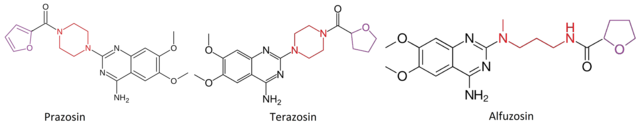
Alpha-blockers
Alpha-blockers are medicines that are mainly used to treat high blood pressure (hypertension) and problems with passing urine in men who have enlargement of the prostate gland. Prostate gland enlargement is also called benign prostatic hyperplasia (BPH). For hi... Alpha-blockers are normally only started if: Other medicines such as beta-blockers.
Further reading and references
- transforming growth factor beta receptor 1; MedlinePlus, National Library of Medicine.
- Cardoso S, Robertson SP, Daniel PB. TGFBR1 mutations associated with Loeys-Dietz syndrome are inactivating. J Recept Signal Transduct Res. 2012 Jun;32(3):150-5. doi: 10.3109/10799893.2012.664553. Epub 2012 Mar 14.
- Goudie DR, D'Alessandro M, Merriman B, Lee H, Szeverenyi I, Avery S, O'Connor BD, Nelson SF, Coats SE, Stewart A, Christie L, Pichert G, Friedel J, Hayes I, Burrows N, Whittaker S, Gerdes AM, Broesby-Olsen S, Ferguson-Smith MA, Verma C, Lunny DP, Reversade B, Lane EB. Multiple self-healing squamous epithelioma is caused by a disease-specific spectrum of mutations in TGFBR1. Nat Genet. 2011 Feb 27;43(4):365-9. doi: 10.1038/ng.780.
- Loeys BL, Schwarze U, Holm T, Callewaert BL, Thomas GH, Pannu H, De Backer JF, Oswald GL, Symoens S, Manouvrier S, Roberts AE, Faravelli F, Greco MA, Pyeritz RE, Milewicz DM, Coucke PJ, Cameron DE, Braverman AC, Byers PH, De Paepe AM, Dietz HC. Aneurysm syndromes caused by mutations in the TGF-beta receptor. N Engl J Med. 2006 Aug 24;355(8):788-98. doi: 10.1056/NEJMoa055695.
- Pezzini A, Del Zotto E, Giossi A, Volonghi I, Costa P, Padovani A. Transforming growth factor beta signaling perturbation in the Loeys-Dietz syndrome. Curr Med Chem. 2012;19(3):454-60. doi: 10.2174/092986712803414286.
- Van Hemelrijk C, Renard M, Loeys B. The Loeys-Dietz syndrome: an update for the clinician. Curr Opin Cardiol. 2010 Nov;25(6):546-51. doi: 10.1097/HCO.0b013e32833f0220.
Share your thoughts or experiences with others in our patient communities.
Simple access to trusted treatments and health services online.
Common conditions
Get help with common conditions through the NHS, without a GP appointment.





Sign up to the Patient newsletter
Your weekly dose of clear, trustworthy health advice - written to help you feel informed, confident and in control.
By subscribing you accept our Privacy Policy. You can unsubscribe at any time. We never sell your data.