Can a change in the number of genes affect health and development?
Meets Patient’s editorial guidelines
- DownloadDownload
- Share
- Language
- Discussion
- Ask Patient
- Audio Version
- Add to preferred sources on Google
People have two copies of most genes, one copy inherited from each parent. In some cases, however, the number of copies varies—meaning that a person can have one, three, or more copies of particular genes. Less commonly, both copies of a gene may be missing. These types of genetic difference are known as copy number variations (CNV).
Video picks for Understanding geneticsVideo library
Overview
People have two copies of most genes, one copy inherited from each parent. In some cases, however, the number of copies varies—meaning that a person can have one, three, or more copies of particular genes. Less commonly, both copies of a gene may be missing. These types of genetic difference are known as copy number variations (CNV).
Copy number variation results from insertions, deletions, and duplications of large segments of DNA that are at least one thousand nucleotides (also called 1 kilobase or 1kb) in length. These segments are often big enough to include whole genes. Variation in gene copy number can influence the activity of genes and the functioning of proteins made from them, which may affect body processes.
Copy number variation accounts for a significant amount of genetic difference between people. More than 10 percent of the human genome appears to contain differences in gene copy number. While much of this variation does not affect health or development, some differences influence a person’s risk of disease, particularly some types of cancer, or response to certain drugs.
Patient picks for Understanding genetics

Women's health
Endometrial hyperplasia
Endometrial hyperplasia is a thickening of the womb (uterus) lining. The womb lining is called the endometrium. Hyperplasia means over ("hyper" in Latin) growth ("plasia" in Latin).
by Dr Philippa Vincent, MRCGP
Children's health
Developmental dysplasia of the hip
Developmental dysplasia of the hip is a problem with the way that the hip joint develops. It is usually present from birth although may develop later. It is more common in girls. When developmental dysplasia of the hip is diagnosed and treated early in a young baby, the outcome is usually excellent. If treatment is delayed, the treatment is more complex and has less chance of being successful.
by Dr Jacqueline Payne, FRCGP
Yorkshire talks series 3
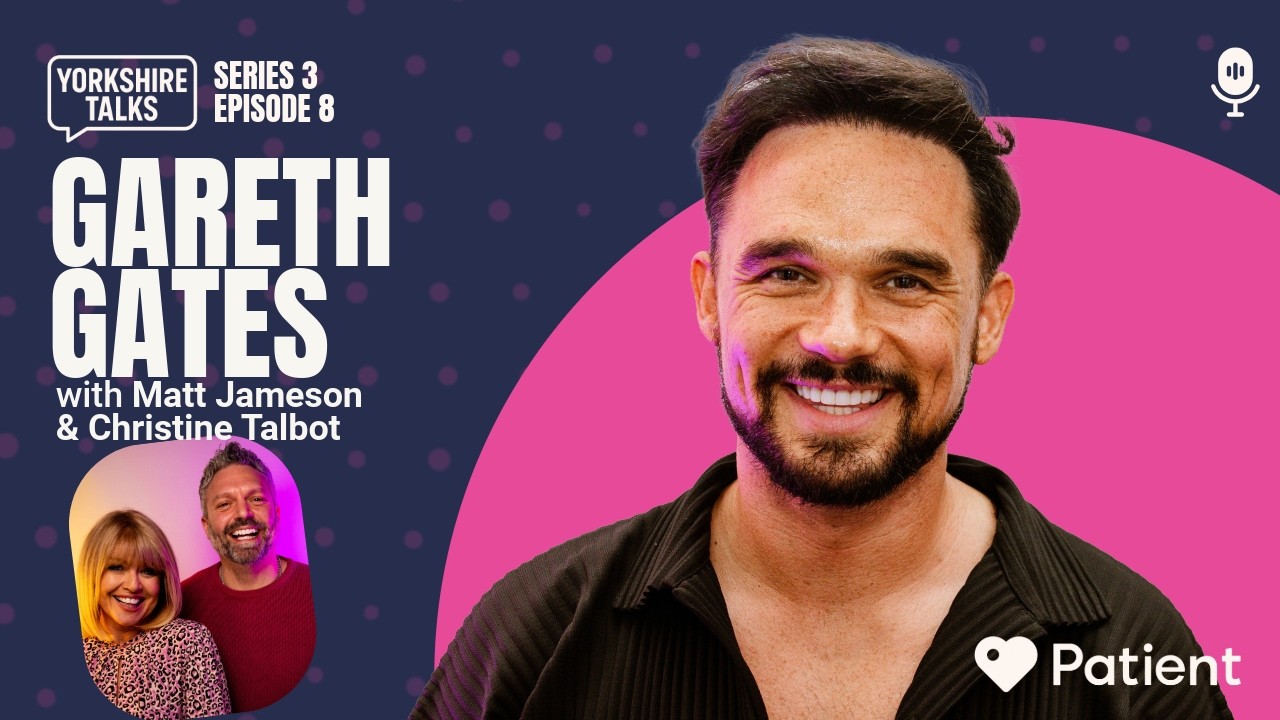
Gareth Gates: "I believed I was defective — my stammer was my superpower" | Yorkshire Talks
In our final episode of Series Three, our Yorkshire Talks guest is former Pop Idol star, producer and performer Gareth Gates. Bradford lad Gareth was first interviewed by Christine for a YTV talent show for young people nearly 30 years ago — so this episode was a bit of a reunion. Now all grown up, Gareth joins Matt and Christine to talk openly and honestly about his journey: from being bullied at school and living with a debilitating stammer, to reaching the final of the very first Pop Idol and having his whole life changed overnight. Gareth explains how taking part in the McGuire Programme has helped him manage his stammer, and how his experiences have shaped the work he does today. He also chats about his role in Boyband in the Buff, currently touring, his journey into becoming a music producer and entrepreneur, and his exciting new project — Speechless, a musical about stammering, due to hit the stage next year. Now a dad himself, with a daughter the same age he was when he first found fame, Gareth reflects on the last few decades with warmth, honesty and plenty of Yorkshire humour. 🎙️ It's a fascinating, funny and incredibly inspiring conversation — one you won't want to miss. If you enjoy the episode, don't forget to LIKE, SUBSCRIBE and leave us a comment. Follow Gareth: 📸 Instagram: @gareth_gates See Gareth on tour: 🎭 Boyband in the Buff is currently on tour. Find tour dates here: [paste official tour dates link] See Gareth in Beauty and the Beast: ✨ Gareth stars as the Beast in Beauty and the Beast at the Britannia Pier, Great Yarmouth, 8–31 December: britannia-pier.co.uk Follow the hosts: Matt Jameson: @matt_d_jameson Christine Talbot: @christineetalbot Yorkshire Talks is presented by Christine Talbot and Matt Jameson, and produced by Simon Fogal at Chapter 81 Studios in Leeds. Proudly sponsored by Patient.info.
Bones, joints and muscles
Scoliosis and kyphosis
Scoliosis is a back condition that causes the (back) spine to curve to the side - either left or right. Most cases develop in children between the ages of 9 and 14 years during the growth spurt of puberty. Scoliosis is usually mild and needs no treatment. For more severe cases treatments include specific exercises, a back brace or occasionally surgery to straighten the spine. A very pronounced front-to-back curve is called a kyphosis, which does not usually need treatment.
by Dr Colin Tidy, MRCGP

Podcasts
Me and myself
In this episode, Clare and Aileen turn their attention to what they describe as the primary relationship - the relationship we have with ourselves - and why it is so often the one we neglect, misunderstand or actively sideline.
by Thomas Andrew Porteus, MBCS

Podcasts
Surviving holidays
Holidays, thanksgiving, Christmas, birthdays - those special, wonderful moments we dream of. But if you’ve ever walked away from a Christmas dinner or a family holiday wondering what on earth went wrong - this podcast is for you.
by Thomas Andrew Porteus, MBCS
Related patient information and medicines

Patient information leaflet
Restricted growth
Dwarfism is a medical or genetic condition which causes people to have restricted growth so that they are shorter than average. Specifically, people with dwarfism grow no higher than 4 ft 10 ins (147 cm). What caus... Dwarfism is due to a genetic or medical condition, and there are hundreds of causes. In a genetic cause there is a change.

Patient information leaflet
BRCA genes
There are a few known gene changes (mutations) that can increase the risk of certain cancers, and tests available for some of them, including BRCA1 and BRCA2 gene mutations. The BRCA1 and BRCA2 genes normally protect against certain cancers, particularly breast cancer and ovarian cancer. Genes contain the ... Sometimes a gene may change (this is.

Patient information leaflet
Duchenne muscular dystrophy
It is a genetic condition and can be inherited. It usually affects only boys, although girls may... Duchenne muscular dystrophy (DMD) is an inherited (genetic) condition which affects muscle strength and function. It causes progressive muscle weakness and is a serious condition which starts in early childhood. Duchenne muscular dystrophy is caused.

Patient information leaflet
Cerebral palsy
Cerebral palsy is a name for a group of life-long conditions that have problems with muscle function and control. For many people with cerebral palsy, the cause of the damage to the brain is not known. Genetic means that the condition is passed on through families through special codes inside cells called genes. Many other factors are known to.
Patient information leaflet
Juvenile idiopathic arthritis
Juvenile idiopathic arthritis is a condition in which persisting joint inflammation first occurs in children under the age of 16 years. So, juvenile idiopathic arthritis (JIA) is a con... Juvenile idiopathic arthritis causes JIA is an autoimmune condition, where the body's immune system attacks its own cells and tissues. It's thought that some.
Patient information leaflet
Dyslexia
Dyslexia is common. It is usually first noticed during the first few years at school. There is no cure but early diagnosis and good help and support are essential and can be very effective. The exact cause of dyslexia is not known. It often seems to run in families. It is thought that certain genes may act together in a way that affects how some.
Further reading and references
- Can a change in the number of genes affect health and development?; MedlinePlus, National Library of Medicine.
Share your thoughts or experiences with others in our patient communities.
Simple access to trusted treatments and health services online.
Common conditions
Get help with common conditions through the NHS, without a GP appointment.





Sign up to the Patient newsletter
Your weekly dose of clear, trustworthy health advice - written to help you feel informed, confident and in control.
By subscribing you accept our Privacy Policy. You can unsubscribe at any time. We never sell your data.