Guanidinoacetate methyltransferase deficiency
Last updated 18 Aug 2020
Meets Patient’s editorial guidelines
- DownloadDownload
- Share
- Language
- Discussion
- Ask Patient
- Audio Version
- Add to preferred sources on Google
Guanidinoacetate methyltransferase deficiency is an inherited disorder that primarily affects the brain and muscles. Without early treatment, people with this disorder have neurological problems that are usually severe. These problems include intellectual disability, speech development limited to a few words, and recurrent seizures (epilepsy). Affected individuals may also exhibit autistic behaviors that affect communication and social interaction or self-injurious behaviors such as head-banging. Other features of this disorder can include involuntary movements (extrapyramidal dysfunction) such as tremors or facial tics.
Video picks for Genetic conditionsVideo library
Description
Guanidinoacetate methyltransferase deficiency is an inherited disorder that primarily affects the brain and muscles. Without early treatment, people with this disorder have neurological problems that are usually severe. These problems include intellectual disability, speech development limited to a few words, and recurrent seizures (epilepsy). Affected individuals may also exhibit autistic behaviors that affect communication and social interaction or self-injurious behaviors such as head-banging. Other features of this disorder can include involuntary movements (extrapyramidal dysfunction) such as tremors or facial tics.
People with guanidinoacetate methyltransferase deficiency may have weak muscle tone and delayed development of motor skills such as sitting or walking. In severe cases they may lose previously acquired skills such as the ability to support their head or to sit unsupported.
Inheritance patterns
The source lists the following possible inheritance patterns: Autosomal recessive. More than one pattern can apply in different cases.
Related genes
Other names
Creatine deficiency syndrome due to GAMT deficiency
Deficiency of guanidinoacetate methyltransferase
GAMT deficiency
Patient picks for Genetic conditions
Diet and nutrition
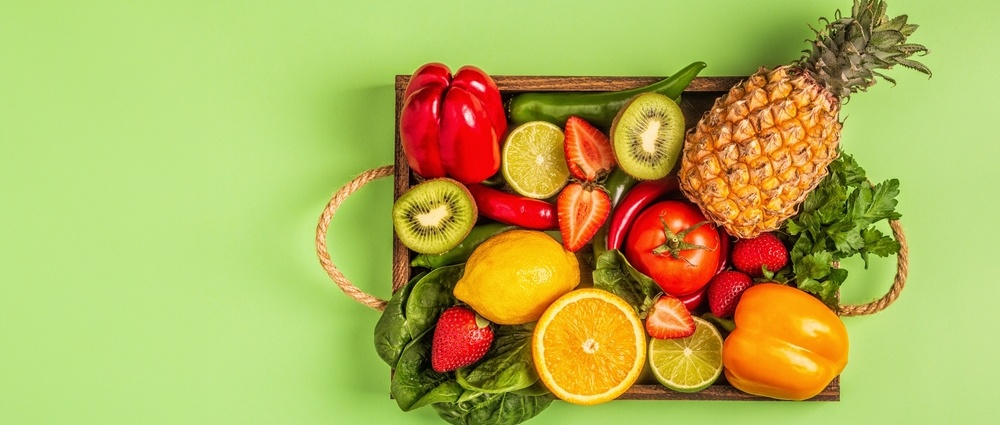
Vitamin C: benefits, sources, and deficiency
Most of us know vitamin C is good for us, but do you know all the ways that this essential nutrient benefits your health? Here you can find out how easy it is to get enough vitamin C, as well as what happens when you consume too little and too much.
by Lynn Stephen
Healthy living
Vitamin A deficiency
Vitamins are a group of substances needed in small amounts by the body to maintain health. Vitamin A cannot be made by the human body and so it is an essential part of the diet. Vitamin A is important for healthy eyes, good eyesight (vision), healthy skin and to help you fight infections. Vitamin A is sometimes also called retinol. Foods that contain vitamin A include liver, milk, eggs and fish-liver oils. Another substance called beta carotene (which is found in green leafy and orange/yellow vegetables and fruits) can also be converted by your body to vitamin A. Mild forms of vitamin A deficiency can usually be treated without any long-term problems. Vitamin A deficiency is much more common in low-income countries, where it is often very severe and can cause loss of vision and even death.
by Dr Toni Hazell, FRCGP

Children's health
Alpha-1 antitrypsin deficiency
Alpha-1 antitrypsin deficiency is an inherited genetic condition. A genetic condition is one that can be passed on from parents through genes. In alpha-1 antitrypsin deficiency the result of a genetic abnormality leads to lung and, in some people, liver damage. Lung symptoms are the most common and include shortness of breath, cough and wheezing. Symptoms can worsen over time. At present, there is no cure for alpha-1 antitrypsin deficiency. Treatment aims at slowing down the progression of the disease.
by Dr Philippa Vincent, MRCGP
Healthy living
Zinc deficiency, excess and supplementation
Zinc is needed for many of the chemical reactions which are going on inside us all the time at micro-level. We get zinc from our diets but not getting enough can cause a wide variety of symptoms, some of which are very vague.
by Dr Toni Hazell, FRCGP

Allergies, blood and immune system
Vitamin B12 deficiency signs you need to know
Your body doesn't make vitamin B12. That means you need to get it from food or supplements. We'll explore why this nutrient is needed, the best sources and the signs you're not getting enough.
by Dr Carrie Ruxton, PhD, Child Nutrition
Allergies, blood and immune system
Vitamin B12 deficiency and pernicious anaemia
Vitamin B12 is essential for life. It is needed to make new cells in the body, such as the many new red blood cells which are made every day. Vitamin B12 is found in meat, fish, eggs and milk - but not in fruit or vegetables. A normal balanced diet must contain enough vitamin B12. A lack of vitamin B12 leads to anaemia and sometimes to other problems.
by Dr Colin Tidy, MRCGP
Related patient information and medicines
Patient information leaflet
Can I take Vitamin B12 and Vitamin C together?
G6PD deficiency Very high doses of vitamin C can cause oxidative stress and lead to the breakdown of red blood cells (haemolysis) in individuals with G6PD deficiency. Food and drink wa... Our Medicines Interaction Checker helps you check whether your prescriptions, over-the-counter medicines, and supplements are safe to take together. Disclaimer.
Patient information leaflet
Can I take Vitamin B complex and Vitamin C together?
Kidney stones (renal calculi) High doses of vitamin C can increase the amount o... G6PD deficiency Very high doses of vitamin C can cause oxidative stress and lead to the breakdown of red blood cells (haemolysis) in individuals with G6PD deficiency. Food and drink warnings Alcohol It is best to avoid or strictly limit alcohol while taking Vitamin.
Patient information leaflet
Can I take Vitamin C and Vitamin D together?
G6PD deficiency Very high doses of vitamin C can cause oxidative stress and lead to the breakdown of red blood cells (haemolysis) in individuals with G6PD deficiency. Food and drink warnings High-fat meals Vitamin D i... Using other medicines Taking multiple medicines. Our Medicines Interaction Checker helps you check whether your prescriptions,.
Patient information leaflet
Can I take Vitamin B2 and Vitamin C together?
Important precautions Kidney stones (oxalate) High doses of vitamin C can increase the amou... G6PD deficiency If you have a G6PD deficiency (a genetic enzyme condition), high doses of vitamin C can cause your red blood cells to break down (haemolysis). Food and drink warnings Alcohol It is best to avoid or strictly limit alcohol when taking these.
Patient information leaflet
Can I take Magnesium and Vitamin C together?
Ou... Simply search for your medicines to see potential interactions and what to do about them. Disclaimer This information is for general educational purposes only and should not be relied upon as a substitute for professional medical advice. Always consult your GP, pharmacist, or another qualified healthcare professional before making decisions.
Patient information leaflet
Can I take Iron and Vitamin C together?
Kidney stones High doses of vitamin C can increase the amount of oxalate in your urine, which significantly raises the risk of developing kidney stones, especially if you have had them before. G6PD deficiency If you have glucose-6-phosphate dehydrogenase (G6PD) deficiency, high doses of vitamin C can cause your red blood cells to break down.
Further reading and references
- Guanidinoacetate methyltransferase deficiency; MedlinePlus, National Library of Medicine.
- Almeida LS, Vilarinho L, Darmin PS, Rosenberg EH, Martinez-Munoz C, Jakobs C, Salomons GS. A prevalent pathogenic GAMT mutation (c.59G>C) in Portugal. Mol Genet Metab. 2007 May;91(1):1-6. doi: 10.1016/j.ymgme.2007.01.005. Epub 2007 Mar 1.
- Beard E, Braissant O. Synthesis and transport of creatine in the CNS: importance for cerebral functions. J Neurochem. 2010 Oct;115(2):297-313. doi: 10.1111/j.1471-4159.2010.06935.x. Epub 2010 Aug 25.
- Braissant O, Henry H, Beard E, Uldry J. Creatine deficiency syndromes and the importance of creatine synthesis in the brain. Amino Acids. 2011 May;40(5):1315-24. doi: 10.1007/s00726-011-0852-z. Epub 2011 Mar 10.
- Braissant O. GAMT deficiency: 20 years of a treatable inborn error of metabolism. Mol Genet Metab. 2014 Jan;111(1):1-3. doi: 10.1016/j.ymgme.2013.11.002. Epub 2013 Nov 10. No abstract available.
- Dhar SU, Scaglia F, Li FY, Smith L, Barshop BA, Eng CM, Haas RH, Hunter JV, Lotze T, Maranda B, Willis M, Abdenur JE, Chen E, O'Brien W, Wong LJ. Expanded clinical and molecular spectrum of guanidinoacetate methyltransferase (GAMT) deficiency. Mol Genet Metab. 2009 Jan;96(1):38-43. doi: 10.1016/j.ymgme.2008.10.008. Epub 2008 Nov 21.
- El-Gharbawy AH, Goldstein JL, Millington DS, Vaisnins AE, Schlune A, Barshop BA, Schulze A, Koeberl DD, Young SP. Elevation of guanidinoacetate in newborn dried blood spots and impact of early treatment in GAMT deficiency. Mol Genet Metab. 2013 Jun;109(2):215-7. doi: 10.1016/j.ymgme.2013.03.003. Epub 2013 Mar 16.
- Gordon N. Guanidinoacetate methyltransferase deficiency (GAMT). Brain Dev. 2010 Feb;32(2):79-81. doi: 10.1016/j.braindev.2009.01.008. Epub 2009 Mar 16.
- Mercimek-Mahmutoglu S, Ndika J, Kanhai W, de Villemeur TB, Cheillan D, Christensen E, Dorison N, Hannig V, Hendriks Y, Hofstede FC, Lion-Francois L, Lund AM, Mundy H, Pitelet G, Raspall-Chaure M, Scott-Schwoerer JA, Szakszon K, Valayannopoulos V, Williams M, Salomons GS. Thirteen new patients with guanidinoacetate methyltransferase deficiency and functional characterization of nineteen novel missense variants in the GAMT gene. Hum Mutat. 2014 Apr;35(4):462-9. doi: 10.1002/humu.22511. Epub 2014 Mar 6.
- Mercimek-Mahmutoglu S, Sinclair G, van Dooren SJ, Kanhai W, Ashcraft P, Michel OJ, Nelson J, Betsalel OT, Sweetman L, Jakobs C, Salomons GS. Guanidinoacetate methyltransferase deficiency: first steps to newborn screening for a treatable neurometabolic disease. Mol Genet Metab. 2012 Nov;107(3):433-7. doi: 10.1016/j.ymgme.2012.07.022. Epub 2012 Aug 3.
- Nasrallah F, Feki M, Kaabachi N. Creatine and creatine deficiency syndromes: biochemical and clinical aspects. Pediatr Neurol. 2010 Mar;42(3):163-71. doi: 10.1016/j.pediatrneurol.2009.07.015.
- Pasquali M, Schwarz E, Jensen M, Yuzyuk T, DeBiase I, Randall H, Longo N. Feasibility of newborn screening for guanidinoacetate methyltransferase (GAMT) deficiency. J Inherit Metab Dis. 2014 Mar;37(2):231-6. doi: 10.1007/s10545-013-9662-7. Epub 2013 Nov 26.
- Stockler-Ipsiroglu S, van Karnebeek C, Longo N, Korenke GC, Mercimek-Mahmutoglu S, Marquart I, Barshop B, Grolik C, Schlune A, Angle B, Araujo HC, Coskun T, Diogo L, Geraghty M, Haliloglu G, Konstantopoulou V, Leuzzi V, Levtova A, Mackenzie J, Maranda B, Mhanni AA, Mitchell G, Morris A, Newlove T, Renaud D, Scaglia F, Valayannopoulos V, van Spronsen FJ, Verbruggen KT, Yuskiv N, Nyhan W, Schulze A. Guanidinoacetate methyltransferase (GAMT) deficiency: outcomes in 48 individuals and recommendations for diagnosis, treatment and monitoring. Mol Genet Metab. 2014 Jan;111(1):16-25. doi: 10.1016/j.ymgme.2013.10.018. Epub 2013 Nov 7.
- Stockler-Ipsiroglu S, van Karnebeek CD. Cerebral creatine deficiencies: a group of treatable intellectual developmental disorders. Semin Neurol. 2014 Jul;34(3):350-6. doi: 10.1055/s-0034-1386772. Epub 2014 Sep 5.
- Viau KS, Ernst SL, Pasquali M, Botto LD, Hedlund G, Longo N. Evidence-based treatment of guanidinoacetate methyltransferase (GAMT) deficiency. Mol Genet Metab. 2013 Nov;110(3):255-62. doi: 10.1016/j.ymgme.2013.08.020. Epub 2013 Sep 8.
Share your thoughts or experiences with others in our patient communities.
Simple access to trusted treatments and health services online.
Common conditions
Get help with common conditions through the NHS, without a GP appointment.





Sign up to the Patient newsletter
Your weekly dose of clear, trustworthy health advice - written to help you feel informed, confident and in control.
By subscribing you accept our Privacy Policy. You can unsubscribe at any time. We never sell your data.